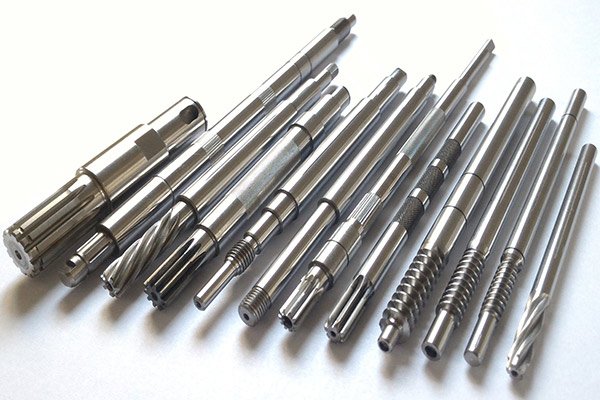
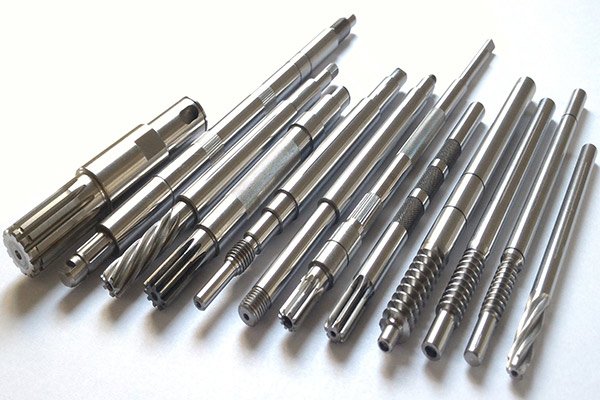
- Shaft
- Molds&Tools
- Hydraulics And Pump
- Hair transplant needle
- Hydraulics And Pump
- Precision CNC Shaft Machining Manufacturer for High Performance Applications
- Energy Industry CNC Machining Parts Supplier
- Aerospace CNC Machining Parts Manufacturer
- Aerospace CNC Machining Parts Manufacturer
- Automotive & EV CNC Machining Parts Supplier for OEM and Tier 1
- Medical CNC Machining Parts Supplier for Precision Medical Devices
Ruby and Sapphire Component Machining for Fluid Control Systems: A B2B Engineering & Supply Chain Analysis

Executive Summary
In fluid control systems where tolerances are measured in microns and failure is not an option, the choice of component material is a critical engineering decision. Synthetic ruby and sapphire — single-crystal aluminum oxide (Al₂O₃) in its purest forms — have emerged as the materials of choice for high-performance fluid control components including valve seats, orifice jewels, nozzle tips, and flow restrictors. Their exceptional hardness (Mohs 9), near-zero porosity, and outstanding chemical inertness make them uniquely suited for applications where conventional metals and engineering plastics fail prematurely.
This analysis examines the engineering rationale behind ruby and sapphire component selection, the precision machining processes required to produce them at scale, and how a vertically integrated ODM partner like IndustryApex Technology (IndustryApex CNC) delivers supply chain certainty for global OEM and Tier 1 suppliers sourcing these critical components.
Technical Deep Dive: Machining Ruby and Sapphire for Fluid Control
Material Properties That Drive Engineering Decisions
Synthetic ruby and sapphire share the same corundum crystal structure but differ in trace dopants — chromium oxide gives ruby its characteristic red color, while sapphire remains optically clear. From a fluid control engineering standpoint, both materials offer a nearly identical performance profile:
- Hardness: Vickers hardness of approximately 2,000 HV, second only to diamond among practical engineering materials. This translates directly to exceptional wear resistance in abrasive fluid environments.
- Chemical Inertness: Resistant to virtually all acids, alkalis, and organic solvents at temperatures up to 1,000°C, making these components viable in aggressive chemical dosing, pharmaceutical fluid handling, and corrosive hydraulic media.
- Surface Finish: Capable of achieving surface roughness values below Ra 0.01 µm through precision lapping, enabling leak-tight sealing performance that metal seats cannot match at equivalent geometries.
- Dimensional Stability: Near-zero thermal expansion anisotropy in the machining plane ensures that orifice diameters and seat geometries remain stable across wide operating temperature ranges — a critical parameter in precision metering applications.
- Biocompatibility: Fully biocompatible and sterilizable, qualifying ruby and sapphire components for use in medical fluid delivery systems and laboratory instrumentation.
The Machining Challenge
The same properties that make ruby and sapphire ideal for fluid control components make them extraordinarily difficult to machine. Conventional CNC tooling is ineffective against Mohs 9 hardness. Producing precision ruby and sapphire components requires a specialized process chain that combines multiple advanced manufacturing technologies:
- Diamond Grinding: The primary material removal process. Multi-axis CNC grinding centers equipped with diamond-bonded wheels shape external geometries, bores, and seating surfaces. Wheel selection, dressing frequency, coolant chemistry, and feed rates must be precisely controlled to prevent subsurface cracking in the brittle crystalline structure.
- Ultrasonic-Assisted Machining: For complex internal geometries such as shaped orifices and non-circular bores, ultrasonic vibration superimposed on the cutting tool dramatically reduces cutting forces and improves surface integrity in hard-brittle materials.
- EDM (Electrical Discharge Machining): While sapphire is electrically non-conductive in its pure form, EDM is applied in hybrid processes and for tooling preparation. IndustryApex Technology’s EDM capabilities support the production of precision grinding fixtures and form tools that define final component geometry.
- Precision Lapping and Polishing: Final surface finishing to sub-micron Ra values is achieved through multi-stage lapping using progressively finer diamond abrasive slurries. This stage is critical for valve seat flatness and orifice edge geometry, directly determining flow coefficient (Cv) accuracy and sealing performance.
- Metrology and Inspection: Given the tolerances involved — orifice diameters routinely specified to ±0.001 mm or tighter — 100% dimensional inspection using calibrated optical comparators, air gauging, and coordinate measuring machines (CMM) is standard practice for production lots.
Key Component Geometries in Fluid Control
The most common ruby and sapphire components in fluid control systems include:
- Orifice Jewels: Precision-drilled discs with calibrated through-holes used as flow restrictors and metering orifices in hydraulic systems, fuel injection, and analytical instrumentation. Orifice diameters range from under 0.05 mm to several millimeters.
- Valve Seats and Balls: Matched ruby or sapphire ball-and-seat assemblies provide leak-tight shutoff in miniature check valves, needle valves, and proportional control valves operating under high differential pressures.
- Nozzle Tips and Inserts: Used in spray nozzles, inkjet printheads, and chemical dosing systems where the combination of wear resistance and precise orifice geometry determines spray pattern consistency over service life.
- Bearing Jewels: In precision flow meters and turbine meters, ruby and sapphire pivot bearings support rotating elements with minimal friction and exceptional wear life, maintaining calibration accuracy over extended service intervals.
The ODM & Supply Chain Advantage: Why Vertical Integration Matters
For OEM procurement engineers and Tier 1 supply chain managers, sourcing precision ruby and sapphire components presents a familiar challenge: a fragmented supplier landscape where specialist jewel manufacturers often lack the broader manufacturing integration, quality systems, and commercial scalability that industrial customers require. This is where IndustryApex Technology’s position as a supply chain integrator and ODM solution provider creates measurable value.
Fully Controlled Precision Manufacturing
With over 30 years of precision manufacturing experience, IndustryApex Technology operates a fully controlled production system governed by enterprise resource planning (ERP) from raw material receipt through final inspection and shipment. For ruby and sapphire components, this means complete traceability of crystal boule origin, grinding wheel lot, lapping compound batch, and inspection records — documentation that aerospace, medical, and analytical instrument customers require for qualification and ongoing production audits.
The manufacturing technology stack supporting ruby and sapphire production includes:
- 3-axis to 5-axis CNC machining centers for complex multi-surface geometries in a single setup, reducing cumulative tolerance stack-up.
- Precision grinding systems with in-process gauging for bore and OD dimensions.
- EDM capabilities supporting fixture and form tool production that define component geometry.
- Industrial ceramics processing infrastructure that shares process knowledge and equipment with hard-crystal component production, enabling cross-material engineering expertise.
ODM Capability: From Specification to Production-Ready Design
Many OEM customers arrive with a performance specification — a required flow coefficient, a maximum leak rate, a service life target — rather than a fully detailed component drawing. IndustryApex Technology’s ODM model means engineering resources are available to translate performance requirements into manufacturable component designs, select appropriate crystal orientation for anisotropic property optimization, and validate designs through prototype iterations before committing to production tooling. This capability compresses development timelines and reduces the engineering burden on the customer’s internal team.
Supply Chain Risk Mitigation
Single-source dependency on specialist jewel suppliers is a recognized supply chain risk in industries where ruby and sapphire components are safety-critical. IndustryApex Technology’s integrated model — controlling grinding, lapping, inspection, and logistics under one quality management system — reduces the number of supply chain nodes and associated handoff risks. ERP-driven production scheduling provides customers with reliable lead time commitments and early warning of capacity constraints, enabling proactive procurement planning.
Global OEM and Tier 1 suppliers evaluating their fluid control component supply chains can explore IndustryApex Technology’s full precision component capabilities at IndustryApex CNC.
Industry Applications: Where Ruby and Sapphire Components Deliver Critical Value
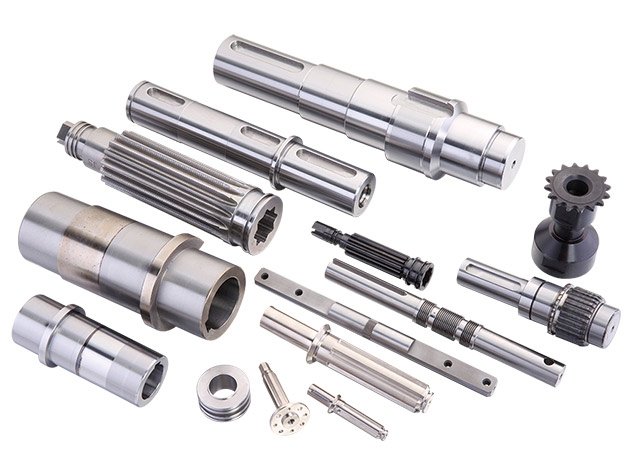
Hydraulics and Precision Fluid Power
In high-pressure hydraulic systems, contamination-induced wear of valve seats and orifice components is a primary failure mode. Ruby and sapphire orifice inserts and valve seats in hydraulic pump and valve assemblies deliver service life multiples of 10–50× compared to hardened steel equivalents in abrasive fluid environments, reducing maintenance intervals and unplanned downtime in industrial and mobile hydraulic applications.
Aerospace Fuel and Fluid Systems
Aerospace fluid system components face simultaneous demands of extreme temperature cycling, aggressive fuel chemistries, and zero-tolerance for in-service failure. Ruby and sapphire metering orifices and check valve seats in fuel control units, hydraulic actuators, and environmental control systems meet these demands while satisfying the stringent traceability and documentation requirements of aerospace qualification programs. IndustryApex Technology’s experience in aerospace CNC machining provides the quality infrastructure — process controls, material traceability, first article inspection protocols — that aerospace fluid system OEMs require from their component suppliers.
Medical and Laboratory Fluid Handling
In vitro diagnostic (IVD) instruments, liquid chromatography systems, and drug delivery devices depend on precision fluid metering where orifice diameter consistency directly determines assay accuracy or dosing precision. Ruby and sapphire orifice jewels and valve seats in these applications combine biocompatibility, chemical resistance to aggressive reagents, and dimensional stability that maintains calibration over instrument service life. IndustryApex Technology’s ISO-certified medical component machining capabilities extend naturally to the hard-crystal components used in medical fluid systems.
Analytical Instrumentation and Semiconductor Process Equipment
Gas chromatographs, mass spectrometers, and semiconductor wet process tools require fluid control components that introduce zero contamination into ultra-pure process streams. The non-reactive, non-outgassing nature of synthetic sapphire makes it the preferred material for orifice and valve components in these applications, where even trace metal ion contamination from conventional materials would compromise analytical results or semiconductor yield.
Industrial Spray and Dosing Systems
Agricultural chemical application, industrial coating, and precision dispensing systems benefit from ruby and sapphire nozzle inserts that maintain calibrated spray patterns over millions of operating cycles. The wear resistance of these materials eliminates the orifice enlargement that progressively degrades spray uniformity in metal nozzles, reducing chemical waste and improving process consistency.
Partner with IndustryApex Technology for Precision Ruby and Sapphire Components
Engineering teams and procurement professionals sourcing ruby and sapphire components for fluid control applications face a clear choice: navigate a fragmented specialist supplier market, or engage a vertically integrated ODM partner with the manufacturing depth, quality systems, and supply chain infrastructure to support both development programs and high-volume production.
IndustryApex Technology (IndustryApex CNC) brings over 30 years of precision manufacturing experience, fully integrated ERP-governed production, and multi-technology machining capabilities — including 3–5 axis CNC, precision grinding, EDM, and industrial ceramics processing — to every ruby and sapphire component program. Whether your requirement is a prototype orifice jewel for a new instrument design or a qualified production supply for a Tier 1 hydraulic assembly, our engineering and supply chain teams are ready to engage.
Contact IndustryApex Technology today to discuss your ruby and sapphire component requirements and receive a technical consultation from our precision machining engineering team.