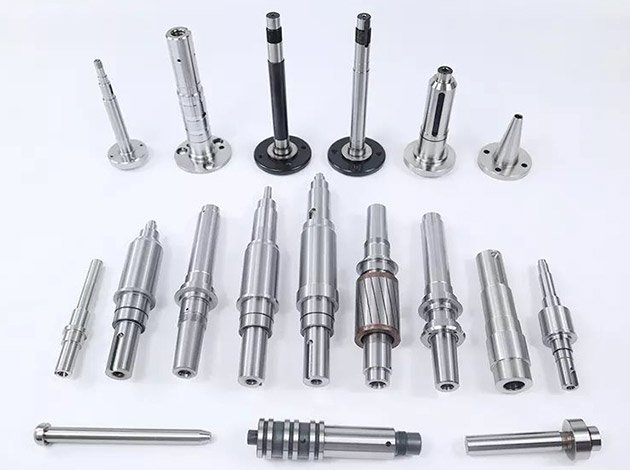
- Shaft
- Molds&Tools
- Hydraulics And Pump
- Hair transplant needle
- Hydraulics And Pump
- Precision CNC Shaft Machining Manufacturer for High Performance Applications
- Energy Industry CNC Machining Parts Supplier
- Aerospace CNC Machining Parts Manufacturer
- Aerospace CNC Machining Parts Manufacturer
- Automotive & EV CNC Machining Parts Supplier for OEM and Tier 1
- Medical CNC Machining Parts Supplier for Precision Medical Devices

The Future of Robotics Components: Micron-Level Precision in 2026 | IndustryApex Technology

The Future of Robotics Components: Micron-Level Precision in 2026
Executive Summary
The global robotics industry is undergoing a fundamental transformation in 2026. As collaborative robots, surgical systems, and autonomous industrial platforms proliferate across manufacturing floors and operating theaters alike, the tolerance thresholds that once defined “precision” have been rendered obsolete. Today, the competitive frontier is measured in microns — and the supply chains that can consistently deliver at that level are becoming the decisive differentiator for OEMs and Tier 1 suppliers worldwide.
This analysis examines the engineering forces driving demand for micron-level robotic components, the supply chain architectures capable of meeting that demand, and how vertically integrated ODM partners like IndustryApex Technology (IndustryApex CNC) are positioning global manufacturers to compete in an era where a single out-of-tolerance part can ground an aircraft, compromise a surgical outcome, or halt an entire automated production line.
Technical Deep Dive: Engineering at the Micron Threshold
Modern robotics platforms — from six-axis industrial arms to minimally invasive surgical robots — demand component tolerances that push conventional machining to its absolute limits. In 2026, leading-edge robotic joint assemblies routinely specify dimensional tolerances of ±1–3 µm, surface roughness values below Ra 0.2 µm, and roundness deviations under 0.5 µm on critical bearing seats and actuator shafts. These are not aspirational figures; they are contractual requirements embedded in OEM procurement specifications.
Achieving this level of consistency at production scale requires a convergence of three engineering disciplines: multi-axis CNC machining, precision grinding, and advanced metrology. Five-axis simultaneous machining eliminates the repositioning errors that accumulate across multiple setups, allowing complex robotic joint housings and harmonic drive components to be completed in a single clamping. Precision cylindrical and surface grinding then refines critical mating surfaces to the sub-micron level, while in-process gauging and coordinate measuring machines (CMMs) with sub-micron probing resolution provide closed-loop feedback that prevents out-of-tolerance parts from advancing downstream.
Material selection compounds the challenge. Robotic end-effectors and structural linkages increasingly specify titanium alloys for their exceptional strength-to-weight ratio, while wear-critical components such as guide rails, valve spools, and encoder housings demand tungsten carbide or advanced industrial ceramics. Each material class presents distinct machinability challenges: titanium’s low thermal conductivity accelerates tool wear and promotes built-up edge, while carbide and ceramic components require diamond or CBN tooling and tightly controlled grinding parameters to avoid subsurface damage that would compromise fatigue life in cyclic-load applications.
Electrical Discharge Machining (EDM) has emerged as an indispensable process for robotic component production, particularly for intricate internal geometries — fluid passages in hydraulic actuators, complex cavity profiles in harmonic drive flexsplines, and micro-features in sensor housings — where conventional cutting tools cannot reach. Wire EDM achieves positional accuracies of ±1 µm on hardened materials without inducing the mechanical stresses associated with grinding, making it the process of choice for final-stage finishing of hardened steel and carbide robotic components where dimensional stability is non-negotiable.
The ODM & Supply Chain Advantage: Why Integration Wins in 2026
The robotics supply chain crisis of the early 2020s exposed a structural vulnerability that procurement teams are still correcting: over-reliance on fragmented, single-process suppliers. When a robotic joint housing requires CNC turning, precision grinding, EDM finishing, and ceramic insert installation, sourcing each operation from a separate vendor multiplies lead times, introduces inter-supplier dimensional variation, and creates accountability gaps that are nearly impossible to audit. In 2026, the OEMs and Tier 1 suppliers gaining market share are those who have consolidated their precision component supply into vertically integrated ODM partners.
IndustryApex Technology operates as precisely this kind of supply chain integrator. With over 30 years of precision manufacturing experience and a fully controlled production system governed by enterprise resource planning (ERP) software, the company provides end-to-end visibility from raw material procurement through final inspection — a capability that translates directly into shorter lead times, tighter lot-to-lot consistency, and a single point of accountability for global OEM customers.
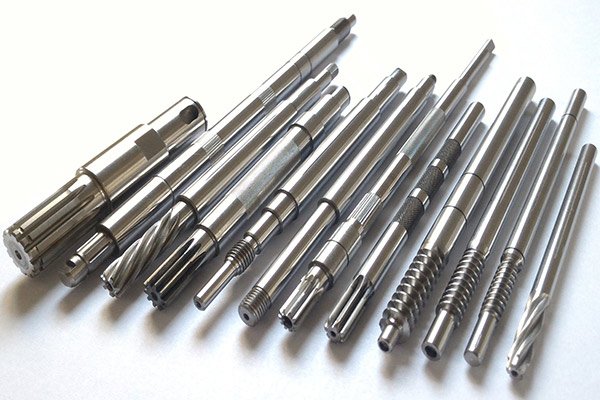
The technical breadth of an integrated ODM matters as much as its process depth. IndustryApex’s manufacturing capabilities span 3-axis and 5-axis CNC machining, EDM (both wire and sinker), precision grinding, and industrial ceramics fabrication — the exact process portfolio required to produce the full spectrum of robotic components, from structural titanium linkages to ceramic guide components and carbide wear parts. For global OEM and Tier 1 suppliers managing complex bills of materials across multiple robotic platforms, consolidating these processes under a single qualified supplier reduces qualification overhead, simplifies logistics, and enables design-for-manufacturability collaboration that can shave weeks from new product introduction cycles.
ERP-driven production management provides a further competitive advantage that is often underestimated in supplier selection. Real-time capacity visibility, automated material traceability, and integrated quality data systems allow IndustryApex to provide customers with accurate delivery commitments and full material certifications — critical requirements for regulated industries such as aerospace and medical devices, where component traceability is a compliance obligation, not merely a preference.
Industry Applications: Where Micron Precision Delivers Measurable Value
Aerospace Robotics & Structural Components
Automated assembly robots used in aircraft manufacturing — wing-drilling systems, fuselage fastening platforms, and composite layup machines — must themselves be built to aerospace tolerances. A positional error in the robot translates directly into a structural defect in the aircraft. IndustryApex’s aerospace CNC machining capabilities, including 5-axis titanium machining for aircraft structural components, serve both the robots performing assembly and the aircraft structures they produce — a dual-market position that reflects the depth of precision engineering required at this tier.
Surgical Robotics & Medical Devices
Surgical robotic systems represent the most demanding application environment for precision components. Instrument shafts, wrist joint assemblies, and trocar guide components must maintain dimensional integrity across thousands of sterilization cycles while delivering sub-millimeter positional accuracy during procedures. Biocompatibility requirements further constrain material selection, making titanium and medical-grade ceramics the dominant choices. ISO-certified CNC machining for medical components, including titanium implants and surgical instruments, addresses this market with the process controls and documentation standards that medical OEMs require.
Hydraulic Actuation Systems
Industrial robots increasingly rely on hydraulic actuation for high-force applications — heavy payload handling, press-fit assembly, and metal forming automation. The performance of these systems is governed almost entirely by the precision of their internal components: valve spools, pump rotors, and cylinder bores where clearances of 5–10 µm determine both efficiency and service life. Precision hydraulic pump parts machined to these specifications enable robotic hydraulic systems to deliver consistent force output and predictable cycle life — performance characteristics that directly impact the total cost of ownership calculations driving OEM purchasing decisions.
Semiconductor & Electronics Manufacturing Automation
Wafer handling robots, pick-and-place systems, and automated optical inspection platforms operate in cleanroom environments where nanometer-scale positioning accuracy is required. The structural components of these systems — linear guide carriages, rotary stage housings, and vacuum end-effector bodies — must be machined to tolerances that preserve the geometric accuracy of the motion system over millions of operating cycles. Ceramic components are particularly valued in this segment for their dimensional stability, chemical resistance, and non-magnetic properties.
Partner with a Precision ODM Built for the Robotics Era
The robotics component supply chain of 2026 rewards suppliers who can deliver micron-level precision consistently, at scale, with full traceability — and penalizes those who cannot. For global OEM and Tier 1 suppliers evaluating their precision component supply strategy, the question is no longer whether to consolidate with a vertically integrated ODM partner, but which partner has the process depth, quality infrastructure, and supply chain integration to support next-generation robotic platforms.
IndustryApex Technology combines over three decades of precision manufacturing expertise with a fully integrated process portfolio — 3-5 axis CNC, EDM, precision grinding, and industrial ceramics — governed by ERP-driven production management and rigorous quality systems. Whether your application demands titanium aerospace linkages, ceramic robotic guide components, or precision hydraulic actuator parts, our engineering team is equipped to support your program from design review through volume production.
Contact our engineering team today to discuss your robotic component requirements and discover how IndustryApex Technology’s ODM capabilities can strengthen your supply chain for the precision demands of 2026 and beyond.