- Shaft
- Molds&Tools
- Hydraulics And Pump
- Hair transplant needle
- Hydraulics And Pump
- Precision CNC Shaft Machining Manufacturer for High Performance Applications
- Energy Industry CNC Machining Parts Supplier
- Aerospace CNC Machining Parts Manufacturer
- Aerospace CNC Machining Parts Manufacturer
- Automotive & EV CNC Machining Parts Supplier for OEM and Tier 1
- Medical CNC Machining Parts Supplier for Precision Medical Devices

How ODM Solution Providers Are Transforming Medical Device Manufacturing in 2026

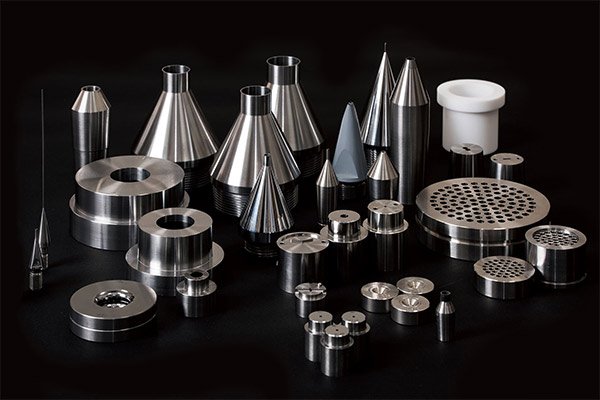
Executive Summary
The global medical device manufacturing landscape is undergoing a fundamental structural shift. Original Equipment Manufacturers (OEMs) and Tier 1 suppliers are under mounting pressure to reduce time-to-market, tighten regulatory compliance, and control costs — all simultaneously. The answer increasingly lies not in expanding internal production capacity, but in partnering with vertically integrated ODM (Original Design Manufacturer) solution providers who can absorb complexity across the entire supply chain.
At IndustryApex Technology (IndustryApex CNC), we have observed this transition accelerating across our global client base. Medical device OEMs that once managed 15 to 30 separate component vendors are consolidating to two or three strategic ODM partners capable of delivering precision-machined assemblies, validated to ISO standards, with full traceability. This article examines the engineering and supply chain mechanics driving that consolidation — and what it means for procurement leaders, design engineers, and operations executives navigating the next generation of medical device production.
Technical Deep Dive: Precision Manufacturing Requirements in Medical Device Production
Medical device components operate at the intersection of extreme mechanical precision and biological safety. A surgical instrument must hold tolerances measured in microns. A titanium implant must achieve surface finishes that promote osseointegration while resisting corrosion in a saline physiological environment. These are not aspirational specifications — they are regulatory minimums enforced by ISO 13485, FDA 21 CFR Part 820, and the EU MDR framework.
The manufacturing technologies required to meet these standards are not universally available. 5-axis CNC machining is essential for producing complex anatomical geometries — acetabular cups, femoral stems, patient-specific cutting guides — in a single setup, eliminating cumulative positional error introduced by multiple fixturing operations. EDM (Electrical Discharge Machining) enables the production of micro-features, sharp internal radii, and hardened tool steel components that conventional cutting cannot achieve. Precision grinding delivers the sub-micron surface finishes demanded by bearing surfaces in surgical robotics and implantable joint systems.
Beyond individual process capability, the critical differentiator is process integration. A component that passes through five separate subcontractors — each with its own quality system, documentation protocol, and scheduling logic — introduces five points of potential non-conformance and five gaps in the traceability chain. Regulatory auditors and OEM quality teams are acutely aware of this risk. The shift toward ODM partners who control the full manufacturing sequence under a single ISO-certified quality management system is a direct response to this structural vulnerability.
Material selection adds another layer of complexity. Titanium alloys (Ti-6Al-4V ELI grade for implantable applications), medical-grade stainless steels (316L, 17-4 PH), PEEK, and advanced industrial ceramics each demand distinct tooling strategies, cutting parameters, and post-processing protocols. An ODM partner with genuine multi-material capability — including industrial ceramic machining for components such as ceramic femoral heads, zirconia dental prosthetics, and alumina insulating substrates — provides OEMs with a single qualified source across an entire device family rather than a fragmented network of material-specific specialists.
The ODM & Supply Chain Advantage: Why Vertical Integration Wins
The traditional Tier 1 supplier model was built for a world of stable, high-volume production runs with long design cycles. That world no longer exists in medical devices. Regulatory pathways are accelerating for breakthrough technologies. Personalized medicine is driving demand for lower-volume, higher-mix production. Post-pandemic supply chain disruptions have exposed the fragility of geographically dispersed, single-source component networks.
ODM solution providers address these pressures through a fundamentally different operating model. Rather than functioning as a passive contract manufacturer executing customer-supplied drawings, a true ODM partner engages at the design stage — contributing manufacturing process knowledge, material expertise, and design-for-manufacturability (DFM) analysis that reduces downstream engineering changes and accelerates regulatory submission timelines.
With over 30 years of precision manufacturing experience and a fully controlled production system governed by enterprise ERP, IndustryApex Technology operates as a supply chain integrator for global OEM and Tier 1 suppliers. Our ERP-driven production environment provides real-time visibility into capacity, material inventory, in-process inspection data, and delivery scheduling — the kind of operational transparency that procurement teams require when managing critical-path medical device programs. Every job is tracked from raw material receipt through final inspection, with complete digital traceability records available for regulatory audit at any point in the product lifecycle.

The financial logic of ODM consolidation is equally compelling. When an OEM reduces its active supplier base from 20 vendors to 4 strategic ODM partners, the administrative overhead of supplier qualification, annual audits, incoming inspection, and purchase order management drops proportionally. Engineering change orders that previously required coordination across a dozen suppliers can be implemented through a single point of contact. Tooling investments are amortized across a broader component portfolio. And the ODM partner, with greater visibility into the OEM’s full product roadmap, can make capital investments in equipment and process capability that a transactional subcontractor would never justify.
This is the structural advantage that separates an ODM solution provider from a conventional machine shop: the relationship is designed for long-term program partnership, not individual purchase orders.
Industry Applications: Where ODM Precision Manufacturing Delivers Critical Value
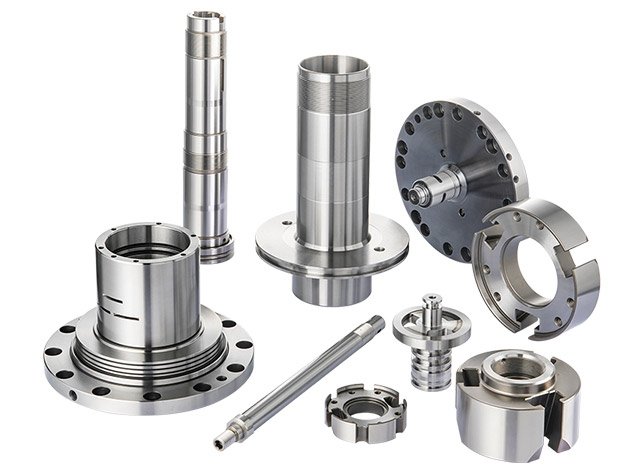
Implantable Orthopedic Devices: Hip, knee, and spinal implant systems represent the highest-stakes application of precision CNC machining in medical manufacturing. Titanium alloy components machined to ASTM F136 specifications, with surface roughness values below Ra 0.4 μm on articulating surfaces, require the full integration of 5-axis machining, precision grinding, and rigorous in-process metrology. Our ISO-certified medical CNC machining capabilities are specifically engineered to meet the dimensional and surface integrity requirements of implantable orthopedic systems.
Surgical Robotics and Instrumentation: The rapid growth of robotic-assisted surgery platforms has created demand for ultra-precision mechanical assemblies — end effectors, instrument shafts, force-sensing components — that combine tight tolerances with complex geometries. These components often integrate multiple materials and require EDM finishing for features that cannot be produced by conventional cutting. The ability to machine hardened stainless steel instrument bodies to ±0.005 mm tolerances, with full dimensional reporting on every part, is a baseline requirement for surgical robotics OEMs.
Diagnostic and Imaging Equipment: Medical imaging systems — CT, MRI, ultrasound — contain precision structural and optical components that demand the same manufacturing rigor as implantable devices. Ceramic components for high-voltage insulation, precision-ground bearing housings for gantry rotation systems, and machined aluminum structural frames all fall within the ODM scope. The overlap between medical imaging and our aerospace-grade 5-axis machining capabilities is significant — both sectors demand the same process discipline and metrology standards.
Fluid Control and Drug Delivery Systems: Precision-machined valve bodies, pump housings, and manifold assemblies are critical to infusion pumps, dialysis machines, and drug delivery platforms. The dimensional accuracy of flow-control orifices and sealing surfaces directly determines device performance and patient safety. Our fluid control and hydraulic component manufacturing expertise translates directly to the demanding tolerances of medical fluid management systems.
Sterilization-Compatible Assemblies: Medical device components must survive repeated sterilization cycles — autoclave, EtO, gamma irradiation — without dimensional change or surface degradation. Material selection and surface treatment protocols are as important as machining precision. An ODM partner with validated experience across titanium, stainless steel, PEEK, and advanced ceramics provides OEMs with a single qualified source for sterilization-compatible component families.
Partner with a Proven ODM Solution Provider
The medical device manufacturers gaining competitive advantage in 2026 are those who have moved beyond transactional component sourcing and into strategic ODM partnerships. They are reducing supply chain complexity, accelerating regulatory timelines, and accessing manufacturing process expertise that would take decades to build internally.
IndustryApex Technology brings over 30 years of precision manufacturing experience, a fully integrated ERP-governed production system, and ISO-certified quality management to every medical device program we support. From titanium implants and surgical instruments to ceramic components and fluid control assemblies, our capabilities are engineered for the demands of global OEM and Tier 1 medical device suppliers.
If your organization is evaluating ODM partners for current or upcoming medical device programs, we invite you to engage our engineering team directly. Contact us today to discuss your component requirements, review our process capabilities, and explore how a consolidated ODM partnership can reduce risk and accelerate your program timeline.