- Shaft
- Molds&Tools
- Hydraulics And Pump
- Hair transplant needle
- Hydraulics And Pump
- Precision CNC Shaft Machining Manufacturer for High Performance Applications
- Energy Industry CNC Machining Parts Supplier
- Aerospace CNC Machining Parts Manufacturer
- Aerospace CNC Machining Parts Manufacturer
- Automotive & EV CNC Machining Parts Supplier for OEM and Tier 1
- Medical CNC Machining Parts Supplier for Precision Medical Devices

2026 Trends in 5-Axis CNC Machining for Aerospace Components: Engineering Precision and Supply Chain Advantage


Executive Summary
As aerospace manufacturers navigate increasingly stringent regulatory requirements, tighter lead times, and the relentless drive toward lightweighting, 5-axis CNC machining has emerged as the defining production technology of 2026. From titanium structural airframes to complex turbine housings, the aerospace supply chain is demanding tighter tolerances, superior surface finishes, and vertically integrated manufacturing partners capable of compressing development timelines without compromising quality.
This analysis examines the key engineering and supply chain trends reshaping aerospace component manufacturing in 2026—and explores how precision ODM partners like IndustryApex CNC by IndustryApex Technology are positioning global OEMs and Tier 1 suppliers to capture a decisive competitive edge.
Technical Deep Dive: The 2026 Landscape of 5-Axis CNC Machining
1. Simultaneous 5-Axis Interpolation as the New Baseline
In previous cycles, 5-axis CNC capability was a premium differentiator. In 2026, simultaneous 5-axis interpolation has become a baseline expectation for any supplier serving aerospace prime contractors. The ability to machine complex, contoured geometries—turbine blade profiles, structural rib pockets, and bulkhead frames—in a single setup eliminates datum transfer errors that historically introduced cumulative tolerancing risk across multi-fixturing workflows.
Modern machining centers equipped with dual-rotary trunnion tables and high-torque direct-drive spindles now hold dimensional tolerances of ±0.005 mm across titanium Ti-6Al-4V and Inconel 718 workpieces, even under aggressive metal removal rates. This capability is not just a throughput advantage; it is a certification advantage. AS9100D and NADCAP compliance frameworks increasingly evaluate suppliers on their ability to demonstrate process repeatability through statistical process control (SPC) data generated by in-machine probing systems integrated directly into the machining cycle.
2. Titanium Machinability Breakthroughs
Titanium’s low thermal conductivity has long been the Achilles’ heel of high-volume aerospace machining. In 2026, two converging innovations are changing the equation: high-pressure coolant delivery at 80–120 bar directed precisely at the cutting zone, and the widespread adoption of polycrystalline cubic boron nitride (PCBN) and ceramic cutting inserts engineered specifically for titanium alloys. Cutting speeds that were unthinkable five years ago—sustained at 120–150 m/min for Ti-6Al-4V milling—are now achievable in controlled production environments.
For OEMs sourcing aerospace CNC machined titanium aircraft parts and 5-axis aerospace structural components, this represents a material shift in supplier commitments: shorter cycle times, more consistent surface integrity, and significantly reduced part rejection rates at final dimensional inspection.
3. Digital Twin Integration and In-Process Metrology
The integration of digital twin environments into the CNC machining process is maturing rapidly in aerospace. Machine tool builders now offer native interfaces that feed real-time spindle load, thermal compensation data, and vibration signatures into a part-level digital twin. When deviations from the nominal process window are detected, adaptive control algorithms adjust feed rates and tool paths dynamically—making the machine a closed-loop quality system rather than an open-loop metal-removal device.
In-process metrology, specifically touch-trigger probing and non-contact laser scanning integrated within the machine envelope, provides dimension verification at critical program stages without breaking the setup. For aerospace structural components with flight-critical features, this represents a fundamental shift from end-of-line inspection to continuous, embedded quality assurance throughout the machining cycle.
4. Automation and Lights-Out Machining for Aerospace Cells
Aerospace machining has historically resisted full automation due to the complexity and low-volume, high-mix nature of part families. In 2026, that resistance is diminishing. Robotic pallet changers, automated tool presetter systems, and AI-assisted programming environments now enable aerospace machining cells to operate unattended for 16–20 hours per day. For global OEMs managing supply chain risk, a manufacturing partner with proven lights-out capability translates directly into more predictable lead times, lower cost-per-part on complex billets, and buffer capacity to absorb demand surges driven by aircraft delivery ramp schedules.
The ODM & Supply Chain Advantage: Why Vertical Integration Wins in 2026
The most significant supply chain trend of 2026 is not a specific technology—it is consolidation. Aerospace OEMs and Tier 1 suppliers are actively reducing their approved vendor lists, preferring deeper, more capable partnerships over broad, fragmented supplier networks. This consolidation rewards manufacturers who can offer true ODM integration: from design consultation and material sourcing through precision manufacturing, finishing, and quality documentation.
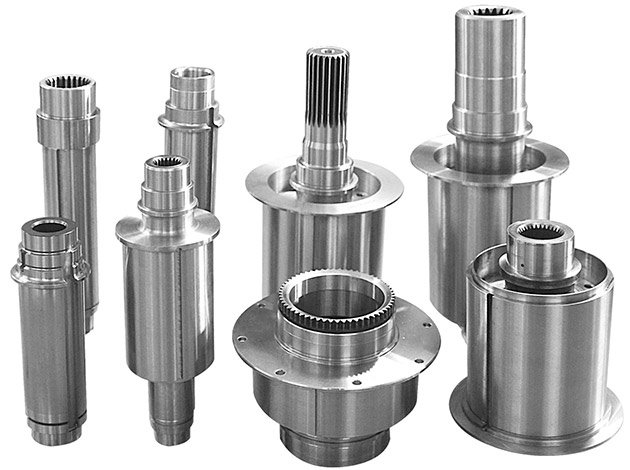
The IndustryApex Technology Manufacturing Ecosystem
With over 30 years of precision manufacturing experience, IndustryApex CNC operates as a fully controlled, vertically integrated supply chain solution. The facility’s ERP-driven production management system provides end-to-end traceability from raw material certification through first article inspection (FAI) reports—a non-negotiable requirement for AS9100D-qualified aerospace supply chains. Every work order, every material heat lot, and every dimensional result is captured, linked, and retrievable.
The technology stack spans 3- to 5-axis CNC machining, Electrical Discharge Machining (EDM) for intricate internal geometries, precision grinding for final dimensional and surface finish requirements, and industrial ceramics manufacturing for thermally critical components. This breadth means that a complex aerospace assembly—combining machined titanium structure, precision-ground mating surfaces, EDM-cut cooling channels, and ceramic thermal barrier inserts—can be produced within a single controlled environment rather than across five separate sub-suppliers, each introducing handling risk and documentation gaps.
For global OEMs and Tier 1 suppliers evaluating supply chain risk, the practical implication is substantial: fewer inter-supplier handoffs, unified quality documentation, a single point of accountability, and dramatically compressed new product introduction (NPI) timelines. The same integrated precision manufacturing platform that serves aerospace also supports adjacent high-stakes industries, including ISO-certified medical device components and titanium implants and high-precision hydraulic pump parts—demonstrating the process discipline and cross-sector versatility that aerospace customers increasingly require of strategic partners.
ERP-Enabled Traceability as a Competitive Moat
One of the most underappreciated supply chain advantages a precision manufacturer can offer in 2026 is real-time ERP visibility. As aerospace OEMs push toward digital supply chain management, they are demanding suppliers who can report on work-in-progress status, material heat lot traceability, and dimensional inspection data through integrated platforms. Manufacturers operating on fragmented legacy systems cannot meet this bar. Those who have invested in unified ERP environments—linking procurement, production scheduling, in-process quality, and outbound shipping—can provide the supply chain transparency that program managers and quality engineers depend on to avoid production line disruptions.
This operational capability is the moat that separates a commodity sub-supplier from a strategic ODM partner in 2026’s aerospace supply chain.
Industry Applications: Where 5-Axis Aerospace Machining Creates Value in 2026
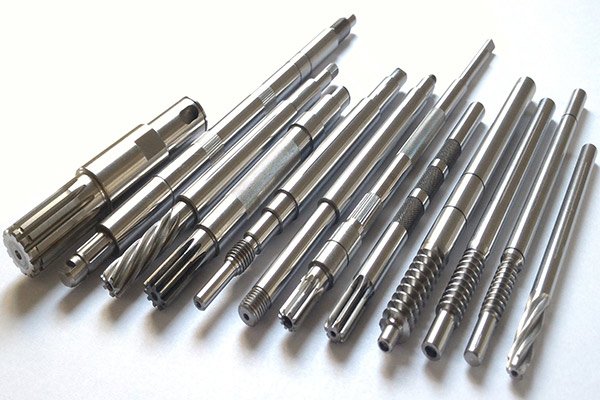
Structural Airframe Components
Fuselage frames, wing ribs, and bulkheads machined from titanium or high-strength aluminum alloys represent the highest volume opportunity for 5-axis aerospace suppliers. The geometric complexity of modern airframe structures—driven by topology optimization algorithms seeking maximum stiffness-to-weight ratios—now exceeds what 3-axis interpolation can reliably produce at production volumes. Five-axis simultaneous cutting eliminates the manual fixture repositioning that previously introduced datum errors and extended lead times on these safety-critical structural parts.
Turbine Engine Components
Compressor blades, turbine discs, and diffuser housings operate under extreme combined thermal and mechanical loading. The surface integrity of machined features—residual stress state, microstructural damage layer, and arithmetic surface roughness—directly affects component fatigue life and certification-life limits. Five-axis machining with carefully optimized tool paths and cutting parameters is now specified by turbine OEMs not as a preference but as a mandatory process requirement. Suppliers without demonstrated 5-axis capability are ineligible for RFQ consideration on new engine programs.
Hydraulic and Fuel System Components
Aerospace hydraulic manifolds, valve bodies, and actuator housings demand both geometric precision and internal bore surface quality that 5-axis machining with high-pressure through-coolant enables. The precision manufacturing capabilities that serve aircraft hydraulic systems translate directly to precision hydraulic pump and valve components for industrial OEMs—allowing a capable precision manufacturer to optimize machine utilization and amortize capital investment across diversified market demand while maintaining aerospace-grade process standards throughout.
Avionics and Structural Sensor Housings
As unmanned aerial systems and next-generation commercial platforms proliferate, demand for compact, lightweight avionics housings machined to tight EMI shielding and positional tolerances is accelerating. These components are typically thin-wall aluminum or titanium structures where distortion control during machining—managed through fixturing strategy, cutting sequence, and thermal stabilization protocols—is as critical as dimensional accuracy. Advanced 5-axis suppliers with validated distortion control methodologies are positioned to serve this fast-growing segment.
Partner With a Precision Aerospace Machining Specialist
In 2026, the aerospace supply chain is not rewarding the lowest bidder—it is rewarding the most capable, most integrated, and most reliable manufacturing partner. OEMs and Tier 1 suppliers who secure relationships with vertically integrated precision manufacturers today will be positioned to complete qualification cycles, lock in long-term supply agreements, and reduce single-source exposure before the next wave of new platform launches accelerates demand beyond current capacity.
Whether you are sourcing complex titanium structural assemblies, turbine-adjacent precision components, or evaluating a strategic ODM partner capable of supporting your full product development lifecycle, IndustryApex CNC by IndustryApex Technology delivers the engineering depth, manufacturing control, and supply chain reliability that aerospace programs require. Our ERP-integrated facility, 30-year manufacturing heritage, and multi-technology capability—spanning 5-axis CNC, EDM, precision grinding, and industrial ceramics—make us the supply chain partner built for the demands of 2026 and beyond.
Contact our engineering team today to discuss your aerospace program requirements, request a technical capability review, or initiate a first article qualification process. Our team is ready to support your supply chain objectives with the precision, speed, and accountability that flight-critical manufacturing demands.