- Shaft
- Molds&Tools
- Hydraulics And Pump
- Hair transplant needle
- Hydraulics And Pump
- Precision CNC Shaft Machining Manufacturer for High Performance Applications
- Energy Industry CNC Machining Parts Supplier
- Aerospace CNC Machining Parts Manufacturer
- Aerospace CNC Machining Parts Manufacturer
- Automotive & EV CNC Machining Parts Supplier for OEM and Tier 1
- Medical CNC Machining Parts Supplier for Precision Medical Devices

Precision Machining of Zirconia and Alumina: Industrial Ceramics Solutions for Global OEM and Tier 1 Supply Chains


Executive Summary
Advanced industrial ceramics—particularly zirconia (ZrO₂) and alumina (Al₂O₃)—have emerged as critical materials in high-performance manufacturing environments where conventional metals reach their physical limits. From semiconductor wafer-handling equipment to aerospace guidance systems and medical-grade implant components, ceramic parts deliver exceptional hardness, thermal stability, dimensional precision, and chemical inertness that no metallic alloy can replicate at equivalent operating temperatures or in aggressive chemical media.
For procurement engineers, supply chain managers, and OEM design teams sourcing precision components globally, the ability to machine zirconia and alumina to tight tolerances represents a decisive competitive differentiator. Yet ceramics machining is technically demanding: the same properties that make these materials valuable—extreme hardness (Vickers hardness up to 1,500 HV for alumina; 1,200 HV for zirconia), low fracture toughness, and near-zero ductility—make them notoriously difficult to process using standard CNC operations and conventional carbide tooling.
This analysis examines the material science behind zirconia and alumina machining, the production methodologies required to achieve sub-micron tolerances, and how an integrated ODM and supply chain model—such as the one operated by IndustryApex CNC—enables OEM buyers and Tier 1 suppliers to source precision ceramic components at scale, with full quality traceability and competitive lead times.
Technical Deep Dive: Material Properties and Machining Methodology
Material Properties and Performance Profiles
Zirconia (ZrO₂) and alumina (Al₂O₃) occupy distinct positions within the industrial ceramics hierarchy, each offering a specific performance profile that dictates machining strategy and application suitability.
Alumina (Al₂O₃) is the workhorse of industrial ceramics. Available in purities ranging from 96% to 99.9%, it delivers compressive strength up to 2,600 MPa, a service temperature ceiling of 1,700°C, outstanding electrical insulation, and excellent chemical resistance to most acids and alkalis. Its cost-to-performance ratio makes it the default choice for wear components, electrical insulators, and fluid-handling elements including pump seats and metering valve spools.
Yttria-stabilized zirconia (Y-TZP) surpasses alumina in fracture toughness—a critical advantage in dynamic load-bearing applications. Transformation toughening, whereby a stress-induced martensitic phase transformation absorbs crack energy at the fracture tip, gives zirconia a KIC value of 8–10 MPa·m½ versus alumina’s 3–4 MPa·m½. This mechanism makes zirconia the preferred material for precision bearings, orthopedic femoral heads, fuel cell membranes, and structural components subject to cyclic mechanical loading.
Machining Methodology for High-Hardness Ceramics
Because both zirconia and alumina score above 9 on the Mohs hardness scale, conventional carbide tooling is ineffective for finish machining. The primary production routes for precision industrial ceramics are:
- Diamond Grinding (Surface and Cylindrical): The gold standard for achieving flatness tolerances of ±1 μm and surface roughness values below Ra 0.05 μm. Electroplated and metal-bond diamond wheels are selected based on part geometry, required stock removal rate, and subsurface integrity requirements.
- Ultrasonic-Assisted Machining (UAM): High-frequency vibration (20–40 kHz) superimposed on the cutting tool reduces cutting force by up to 40%, significantly minimizing subsurface micro-cracking in brittle zirconia geometries and extending tool life in continuous-cut operations.
- Wire and Sinker EDM: Applicable to electrically conductive ceramics—such as partially stabilized zirconia composites with conductive additives—enabling complex internal profiles, narrow slots, and sharp internal radii that grinding cannot produce.
- Precision 3- and 5-Axis CNC Milling: Applied primarily in green-state (pre-sintered) machining, followed by controlled sintering with dimensional compensation built into the CAM model to offset the 20–25% linear shrinkage typical of pressureless sintering cycles. Net-shape green machining substantially reduces post-sinter grinding allowance and total machining cycle cost.
Achieving consistent tolerances across production batches requires not only the correct tooling strategy but also thermally stable machine environments, vibration-isolated platforms, and real-time in-process gauging. These are non-negotiable requirements for ceramic components destined for semiconductor lithography systems or precision aerospace structural and guidance assemblies.
The ODM and Supply Chain Advantage: Integrated Precision Manufacturing
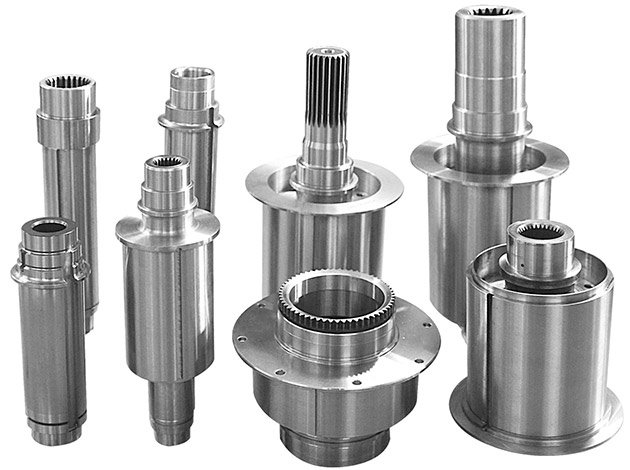
Sourcing precision ceramic components through a fragmented supply chain—separate material suppliers, machining subcontractors, and third-party quality inspection houses—introduces variability at every handoff. Lead times stretch, traceability gaps emerge, and the cost of non-conforming parts compounds across the chain. For global OEM buyers and Tier 1 suppliers managing tightly scheduled product development programs, this structural inefficiency represents an unacceptable operational risk.
IndustryApex Technology, operating under the IndustryApex CNC brand, addresses this challenge through a fully controlled, vertically integrated precision manufacturing system. With over 30 years of CNC machining experience and an ERP-governed production workflow, IndustryApex functions simultaneously as a supply chain integrator and an ODM solution provider—enabling customers to engage at any stage of the development cycle, from raw material selection and design-for-manufacture (DFM) consultation through to finished part delivery with full material certification and dimensional inspection reports.
Core manufacturing capabilities span 3-axis and 5-axis CNC machining, wire and sinker EDM, precision grinding, and industrial ceramics processing. This breadth of capability under a single quality management system eliminates inter-supplier dependency, compresses program lead times, and provides a single point of accountability for dimensional conformance and surface integrity. ERP integration delivers real-time production visibility, ensuring that OEM procurement teams can monitor job status, in-process inspection results, and shipping documentation without relying on manual reporting cycles.
For ceramic component programs specifically, the ability to control green-state machining parameters, sintering cycle management, and post-sinter precision grinding within the same quality framework is a significant differentiator. Part genealogy—from raw ceramic blank to finished component—is fully documented, supporting the audit requirements of AS9100 aerospace programs and ISO 13485 medical device supply chains. The same disciplined manufacturing infrastructure that underpins hydraulic pump and valve component production applies directly to ceramic fluid-handling elements: pump plungers, check valve seats, and precision metering orifices where dimensional stability under cyclic pressure loading is paramount.
Industry Applications: Where Zirconia and Alumina Deliver Measurable Value
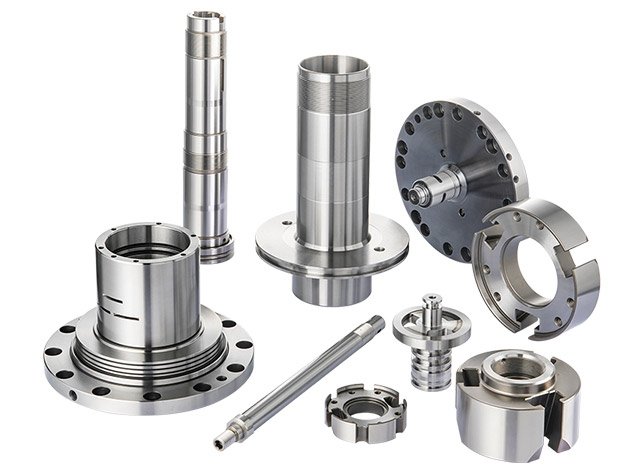
The demand for precision-machined zirconia and alumina spans an increasingly broad range of industrial sectors. Understanding sector-specific performance requirements enables engineering teams to make material selection decisions that optimize both technical performance and total cost of ownership over the component service life.
Semiconductor Equipment
Alumina components—wafer chucks, process chamber liners, pin lifters, and edge rings—must meet dimensional tolerances of ±2 μm while surviving repeated thermal cycling between ambient and 400°C. Particle generation during operation is a critical failure mode; surface roughness requirements below Ra 0.1 μm are standard specifications. Zirconia’s superior thermal shock resistance makes it the preferred choice for rapid thermal processing (RTP) chamber components and high-purity fluid delivery fittings.
Medical and Life Sciences
Zirconia’s biocompatibility, radiopacity, and fracture toughness make it the dominant ceramic material for orthopedic femoral heads and full-contour dental prosthetics. For ISO-certified medical component programs, ceramic machining must satisfy stringent surface finish and dimensional tolerance requirements—typically Ra ≤ 0.02 μm on articulating surfaces and roundness tolerances within 0.5 μm—to ensure tribological performance across the implant service life.
Aerospace and Defense
Radar-transparent alumina radome structures, gyroscope bearing rings machined from zirconia, and alumina-based thermal barrier substrates in turbine environments all require ceramic machining expertise combined with rigorous quality documentation. Programs aligned to aerospace CNC machining standards demand first-article inspection packages, statistical process control data, and material traceability to melt lot—requirements that an integrated ODM model is uniquely positioned to fulfill without supply chain fragmentation.
Fluid Control and Industrial Automation
Alumina and zirconia valve balls, seats, and plunger tips outperform stainless steel components in aggressive chemical environments including strong acids, concentrated alkalis, and abrasive slurry flows. Ceramic valve components deployed in metering pumps, chemical dosing systems, and hydraulic control assemblies consistently deliver service lifetimes 5–10× longer than metallic equivalents operating in corrosive or erosive media, reducing total lifecycle cost despite higher unit part cost.
Energy and Power Generation
Alumina insulators in high-voltage switchgear, yttria-stabilized zirconia oxygen sensors in combustion optimization systems, and ceramic shaft seals in geothermal pump assemblies represent rapidly growing application areas as the energy sector transitions toward higher-efficiency, higher-temperature operating regimes where metals-based designs are no longer thermally viable.
Partner with IndustryApex CNC for Industrial Ceramics Solutions
Precision machining of zirconia and alumina requires more than advanced equipment—it demands a manufacturing partner with deep material process knowledge, validated machining controls, and the supply chain infrastructure to deliver consistent quality at production scale. Whether your program involves qualifying a new ceramic component for a medical device, integrating alumina wear parts into a fluid handling platform, or scaling zirconia bearing production for a semiconductor capital equipment OEM, IndustryApex CNC provides the technical capability and ODM flexibility to meet your program requirements from prototype through series production.
Contact our engineering team to discuss material selection, DFM analysis, and production feasibility for your ceramic component application. Our applications engineers are available to review part drawings, advise on machining strategy, and define a qualification roadmap aligned to your program schedule.
Visit IndustryApex CNC to explore our complete range of precision manufacturing capabilities and request a competitive quotation.