- Shaft
- Molds&Tools
- Hydraulics And Pump
- Hair transplant needle
- Hydraulics And Pump
- Precision CNC Shaft Machining Manufacturer for High Performance Applications
- Energy Industry CNC Machining Parts Supplier
- Aerospace CNC Machining Parts Manufacturer
- Aerospace CNC Machining Parts Manufacturer
- Automotive & EV CNC Machining Parts Supplier for OEM and Tier 1
- Medical CNC Machining Parts Supplier for Precision Medical Devices

Navigating ISO Standards for Medical CNC Machined Parts: A Compliance Roadmap for OEM Procurement Leaders


Navigating ISO Standards for Medical CNC Machined Parts: A Compliance Roadmap for OEM Procurement Leaders
1. Executive Summary
The medical device industry operates under one of the most rigorous regulatory frameworks in modern manufacturing. For OEMs and Tier 1 suppliers sourcing precision CNC machined components, understanding the ecosystem of ISO standards is no longer a peripheral concern handled by quality assurance teams in isolation. It has become a strategic procurement variable that directly influences supplier qualification cycles, time-to-market, total landed cost, and ultimately patient safety. A non-conforming bone screw, a contaminated surgical instrument handle, or a dimensionally drifted catheter component can trigger consequences ranging from FDA 483 observations to full product recalls measured in tens of millions of dollars.
This analysis examines the layered ISO compliance architecture governing medical CNC machined parts, with particular focus on ISO 13485:2016 (medical device quality management), ISO 9001:2015 (foundational QMS), ISO 14971 (risk management), and ancillary standards such as ISO 10993 (biocompatibility) and ISO 11737 (sterilization microbiology). For procurement leaders evaluating contract manufacturers, the article provides a structured roadmap covering documentation requirements, traceability protocols, validated process controls, and the specific technical capabilities a supplier must demonstrate to credibly serve the medical sector.
IndustryApex Technology, operating under the IndustryApex CNC platform, brings over three decades of precision manufacturing experience to medical-grade component production. As an ODM solution provider with a fully controlled manufacturing system spanning 3 to 5-axis CNC, EDM, precision grinding, and industrial ceramics processing, our integrated quality architecture is engineered to satisfy the most demanding regulatory environments. The following sections translate compliance complexity into actionable supplier selection criteria.
2. Technical Deep Dive: The ISO Standards Architecture
Medical CNC machining is governed not by a single standard but by an interlocking system of requirements. Procurement leaders should treat these as concentric layers rather than a checklist.
ISO 13485:2016: The Cornerstone
ISO 13485 establishes the quality management system requirements specific to medical devices and their components. Unlike ISO 9001, which emphasizes customer satisfaction and continuous improvement, ISO 13485 prioritizes regulatory compliance, risk-based decision-making, and documented effectiveness. Critical clauses for CNC machining suppliers include Clause 7.5.6 on validation of production processes (where output cannot be fully verified by subsequent inspection, such as deburring of internal lumens), Clause 7.5.8 on identification and unique device identification (UDI), and Clause 7.5.9 on traceability. For implant components, traceability extends to raw material heat lot, machine spindle, operator credentials, tooling change history, and inspection results, all retained for the device lifetime plus a regulatory minimum.
ISO 14971: Risk Management Integration
Risk management is not a document produced once at design freeze. ISO 14971 requires that manufacturing risks be continuously assessed across the production lifecycle. For CNC operations, this translates into FMEA exercises covering tool wear progression, coolant contamination pathways, fixture-induced stress, and post-machining particulate generation. Suppliers must demonstrate how identified risks flow into control plans and statistical process control (SPC) monitoring.
ISO 10993 and Material Compliance
Biocompatibility under ISO 10993 governs which materials may contact patient tissue and under what duration of exposure. For CNC suppliers, the practical impact lies in cleanliness validation, residual cutting fluid analysis, and certified material traceability. Titanium Grade 23 (Ti-6Al-4V ELI), 316LVM stainless steel, PEEK, and cobalt-chromium alloys each carry distinct handling protocols. Cross-contamination between medical and non-medical work cells is unacceptable, which is why dedicated machining cells with segregated tooling and coolant systems represent a baseline expectation.
Process Validation: IQ, OQ, PQ
Installation Qualification, Operational Qualification, and Performance Qualification constitute the validation triad. A 5-axis CNC machine producing acetabular cups, for example, must be qualified across its operational envelope with documented evidence that critical-to-quality dimensions remain within specification across worst-case process variation. PQ runs typically demand 30+ consecutive parts demonstrating Cpk values above 1.33 for critical features, with many medical OEMs requiring 1.67 or higher for safety-critical dimensions.
Cleanroom and Particulate Control
While not all medical machining requires ISO 14644 cleanroom environments, finishing, deburring, passivation, and packaging operations frequently do. ISO Class 7 (10,000 particles) and Class 8 (100,000 particles) zones are common for non-implantable instruments, while implants and intraocular components may require Class 5 environments for final operations.
3. The ODM & Supply Chain Advantage
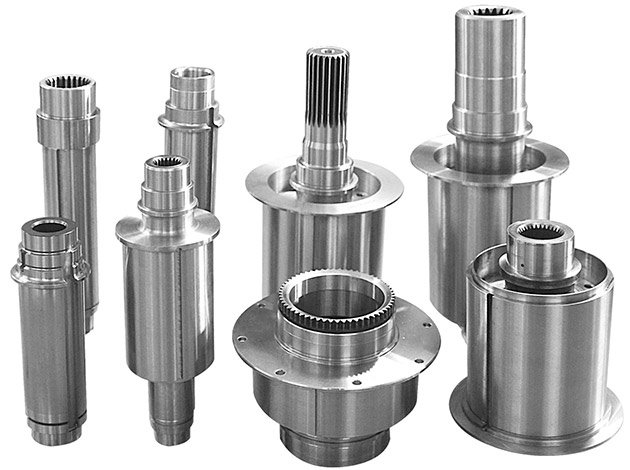
Procurement strategies in the medical sector are evolving away from transactional purchase orders toward integrated supplier partnerships. The reasons are structural: validated supplier changes trigger regulatory submissions, qualification of new sources can consume 12 to 18 months, and the documentation burden of multi-supplier coordination scales non-linearly. This is where the ODM solution model offers measurable advantage over conventional contract machining.
Vertical Integration as a Compliance Asset
IndustryApex Technology operates as a supply chain integrator with a fully controlled precision manufacturing system. Over 30 years of accumulated process knowledge is codified in our ERP-driven production environment, where every routing, inspection point, and material movement is digitally traced. For medical OEMs, this translates into a single point of accountability spanning raw material qualification through final packaging, eliminating the documentation gaps that plague multi-tier supply chains.
Multi-Process Capability Under One Roof
Medical components rarely require a single manufacturing process. A typical orthopedic instrument may demand 5-axis CNC milling for complex geometries, EDM for sharp internal corners impossible to produce with rotating tools, precision grinding for sealing surfaces, and industrial ceramic components for wear-critical interfaces. Coordinating these operations across separate vendors introduces handling risks, cumulative tolerance stack-up, and traceability fractures. Our integrated capability set, accessible through the medical CNC machining division, allows OEMs to consolidate sourcing without compromising specialization.
ODM Engineering Collaboration
Beyond build-to-print execution, our engineering team partners with medical OEMs during the design transfer phase to identify Design for Manufacturability (DFM) opportunities that improve yield and reduce validation risk. Subtle changes such as relocating a non-functional tolerance, specifying a corner radius compatible with available tooling, or recommending an alternative material grade with equivalent biocompatibility can compress qualification timelines by months. This consultative posture distinguishes a strategic ODM partner from a price-driven job shop.
Cross-Industry Engineering Discipline
The same precision discipline that serves aerospace structural components and hydraulic pump assemblies reinforces medical-grade execution. Aerospace teaches us titanium machining at scale; hydraulics teaches us sub-micron sealing surfaces; medical demands all of it under documentation regimes that leave no margin for ambiguity.
4. Industry Applications
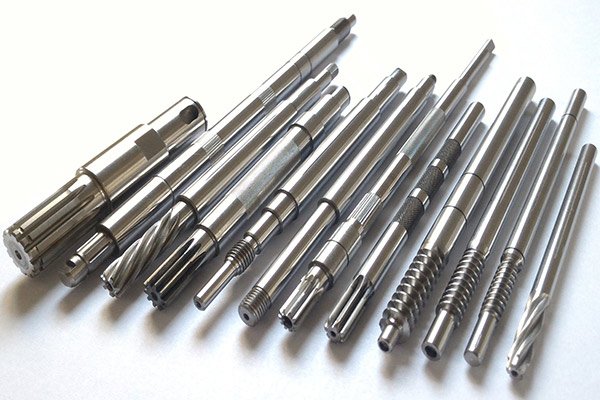
The practical scope of ISO-compliant medical CNC machining spans three principal categories, each with distinct technical and regulatory contours.
Orthopedic and Trauma Implants
Bone screws, plates, intramedullary nails, spinal cages, and joint replacement components represent some of the most demanding CNC applications in any industry. Titanium and cobalt-chromium alloys must be machined without inducing surface micro-cracks that could initiate fatigue failure post-implantation. Surface roughness requirements often specify Ra below 0.4 micrometers on articulating surfaces, transitioning to controlled porosity zones that promote osseointegration. Threaded features on bone screws require thread profile inspection at 100% sampling, with dimensional certificates accompanying each lot.
Surgical Instruments
Reusable surgical instruments such as forceps, retractors, drills, and reamers must withstand thousands of autoclave cycles without dimensional degradation or corrosion initiation. Material selection typically centers on 17-4 PH or 420 stainless steel, with passivation per ASTM A967 verifying chromium oxide layer integrity. Articulating mechanisms demand precision-ground pivot pins and matched bushings where clearance directly affects surgeon tactile feedback.
Diagnostic and Drug Delivery Device Components
Imaging systems, infusion pumps, dialysis equipment, and surgical robotics rely on precision-machined housings, manifolds, and motion components. Tolerance accumulation across assemblies of 50 or more machined parts must remain within system-level specifications, demanding statistical control at the component level. Fluid-contacting components require additional cleanliness validation under ISO 19227 or comparable protocols, with bioburden testing forming part of routine release criteria.
Emerging Application: Patient-Specific Instrumentation
The rise of personalized medicine has created demand for low-volume, high-mix CNC production of patient-specific surgical guides and custom implants. This application stresses traditional manufacturing economics and demands flexible production systems capable of validated single-piece flow, an area where digital ERP integration and 5-axis machining excellence intersect.
5. Call to Action
Selecting a CNC machining partner for medical components is a decision with multi-year regulatory consequences. The cost of supplier qualification, the risk of audit findings, and the opportunity cost of validation delays all compound when sourcing decisions are made on price alone. Engineering-driven OEMs are choosing partners that combine documented ISO 13485 quality systems, vertically integrated manufacturing capability, and the ODM engineering depth to support design transfer and lifecycle management.
IndustryApex Technology invites medical device OEMs and Tier 1 suppliers to evaluate our manufacturing capability through a structured technical engagement. Whether you are qualifying a new component, consolidating a fragmented supplier base, or seeking DFM input on a next-generation device platform, our engineering team is prepared to engage with the documentation, validation, and process discipline your program requires. Begin the conversation through our technical contact channel, and let us demonstrate how three decades of precision manufacturing converge on the standards your patients depend upon.