
- Shaft
- Molds&Tools
- Hydraulics And Pump
- Hair transplant needle
- Hydraulics And Pump
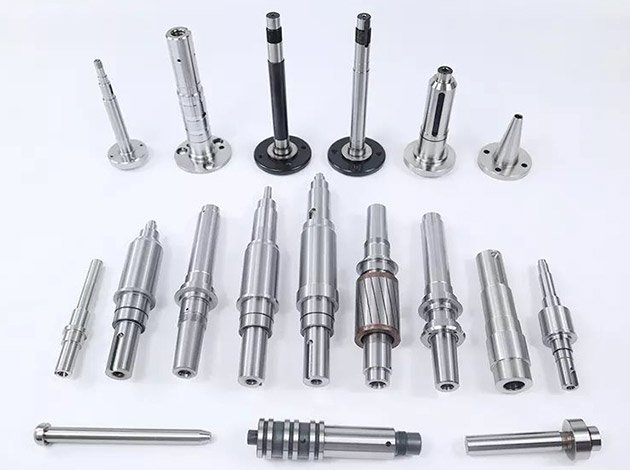
- Precision CNC Shaft Machining Manufacturer for High Performance Applications
- Energy Industry CNC Machining Parts Supplier
- Aerospace CNC Machining Parts Manufacturer
- Aerospace CNC Machining Parts Manufacturer
- Automotive & EV CNC Machining Parts Supplier for OEM and Tier 1
- Medical CNC Machining Parts Supplier for Precision Medical Devices

2026 Trends in 5-Axis CNC Machining for Aerospace Components: A Strategic Outlook for OEMs and Tier 1 Suppliers

2026 Trends in 5-Axis CNC Machining for Aerospace Components: A Strategic Outlook for OEMs and Tier 1 Suppliers
1. Executive Summary
As the aerospace sector accelerates toward leaner production cycles, lighter airframes, and tighter sustainability mandates, 5-axis CNC machining has emerged as the structural backbone of next-generation component manufacturing. Heading into 2026, OEMs and Tier 1 suppliers are no longer evaluating 5-axis capability as a competitive differentiator. They are treating it as a baseline requirement, with the real differentiation now occurring in the surrounding ecosystem: digital twins, adaptive toolpaths, integrated metrology, and supply chain resilience.
The aerospace machining market is projected to experience compound growth driven by widebody recovery, defense modernization programs, eVTOL commercialization, and the satellite constellation buildout. Each of these segments demands titanium, Inconel, and high-temperature alloy components produced with sub-10-micron tolerances and uncompromising traceability. At IndustryApex Technology (IndustryApex CNC), we view 2026 as a pivotal year where machining strategy, ERP-driven supply chain integration, and ODM partnership models converge into a single value proposition for global aerospace buyers.
This analysis examines the technical trajectory of 5-axis machining, outlines the supply chain considerations reshaping sourcing decisions, and details how a fully controlled precision manufacturing model delivers measurable risk reduction for aerospace programs.
2. Technical Deep Dive: Where 5-Axis Machining Is Heading in 2026
Five trends are defining the technical frontier of 5-axis aerospace machining in 2026.
2.1 Adaptive Machining and Closed-Loop Metrology
Modern aerospace components such as turbine blisks, structural ribs, and engine casings can no longer tolerate the variability of open-loop machining. Adaptive control systems now combine in-process probing, vibration sensing, and thermal compensation to adjust toolpaths in real time. This closed-loop methodology is critical for titanium Ti-6Al-4V and nickel-based superalloys where work-hardening and tool deflection historically eroded yield. For 2026, we expect to see adaptive machining transition from a premium feature to a standard expectation in any aerospace-qualified production cell.
2.2 High-Dynamic Spindles and Trochoidal Strategies
Spindle technology is shifting toward higher torque at lower RPM bands, optimized for difficult-to-machine alloys. Combined with trochoidal milling strategies, manufacturers are achieving 30 to 50 percent improvements in tool life on titanium structural components. This directly addresses one of the most stubborn cost drivers in aerospace machining: cutter consumption on long-cycle parts.
2.3 Digital Twin Integration
Digital twin platforms are no longer marketing language. By 2026, leading suppliers are simulating full fixture, tool, and machine kinematics before chips fly. This eliminates collision risk on complex 5-axis paths and compresses first-article qualification timelines, which is particularly valuable when supporting new aerospace platforms with aggressive ramp curves.
2.4 Hybrid Manufacturing
The integration of additive deposition with subtractive 5-axis finishing is maturing. For repair scopes on high-value engine components, hybrid cells reduce material waste and lead time. While hybrid is not yet mainstream for primary production, its role in MRO and near-net-shape blade manufacturing is expanding rapidly.
2.5 Sustainability and Energy-Conscious Machining
European and North American aerospace primes are now embedding scope 3 emissions targets into their supplier scorecards. Energy-efficient spindle design, coolant recycling, swarf reclamation, and grid-aware scheduling are becoming part of standard supplier qualification. Manufacturers that can document kilowatt-hour-per-part metrics will hold a clear commercial advantage in 2026.
3. The ODM and Supply Chain Advantage
Technical capability is necessary but not sufficient. The aerospace supply chain disruptions of recent years exposed the fragility of distributed, subcontractor-heavy sourcing models. Buyers are now consolidating around partners who can offer end-to-end precision manufacturing under a single quality and ERP umbrella.
3.1 IndustryApex Technology as a Supply Chain Integrator
IndustryApex Technology operates as a supply chain integrator and ODM solution provider rather than a transactional job shop. Our core identity is built around removing the burden of multi-vendor coordination from aerospace buyers. When a Tier 1 supplier engages with us, they receive design-for-manufacturability input, material sourcing, machining, finishing, inspection, and logistics through a single accountable interface.
3.2 Fully Controlled Precision Manufacturing
With over 30 years of manufacturing experience and a fully integrated ERP system, every order is tracked from raw material lot to final dimensional report. This level of traceability is non-negotiable for aerospace components governed by AS9100, NADCAP, and customer-specific PPAP requirements. Our ERP-driven workflow eliminates the data gaps that often emerge between machining, heat treatment, and surface finishing in fragmented supply chains.
3.3 Multi-Disciplinary Technical Capabilities
Our process portfolio spans 3 to 5 axis CNC machining, EDM (wire and sinker), precision grinding, and industrial ceramics. This breadth matters because aerospace components rarely require a single process. A titanium hydraulic manifold, for example, may demand 5-axis milling for the body, EDM for internal cross-drilled passages, and precision grinding for sealing surfaces. Owning all of these processes in-house compresses lead times and removes inter-process logistics risk.
3.4 Audience Alignment
Our target audience is global OEMs and Tier 1 suppliers operating in aerospace, medical, hydraulics, energy, and high-precision industrial sectors. We architect our quality systems, communication cadence, and engineering documentation to meet the expectations of buyers who measure suppliers on PPAP rigor, on-time delivery, and engineering responsiveness rather than unit price alone.
4. Industry Applications: Where 5-Axis Precision Delivers Measurable Value

The applications below illustrate how 2026 machining trends translate into tangible component-level outcomes across the industries we serve.
4.1 Aircraft Structural Components and Titanium Parts
Wing ribs, bulkhead fittings, engine pylons, and landing gear brackets represent the highest-volume use case for 5-axis machining in aerospace. These components combine deep pockets, thin webs, and complex geometric tolerances that simply cannot be produced economically on 3-axis platforms. Our work in aerospace CNC machining for titanium aircraft parts integrates adaptive toolpaths, fixture standardization, and in-process probing to deliver consistent yield on high-mix, low-to-medium volume programs.
4.2 Medical Implants and Surgical Instrumentation
The machining disciplines that drive aerospace performance translate directly to ISO-certified CNC machining for medical components. Titanium implants, surgical instruments, and high-precision device parts share the aerospace requirements of biocompatible material handling, sub-10-micron tolerances, and full traceability. For medical OEMs, leveraging an aerospace-grade supplier provides documentation rigor that many medical-only shops struggle to match.
4.3 Hydraulic and Fluid Power Components
Modern aircraft and industrial systems rely on hydraulic actuators, manifolds, and pump components machined to surface finish and concentricity standards that demand 5-axis capability combined with precision grinding. Our experience producing hydraulic pump parts with integrated EDM and grinding workflows demonstrates how cross-process integration eliminates the cumulative tolerance stack-up that plagues multi-vendor supply chains.
4.4 Engine and Drivetrain Components
Compressor blades, impellers, and shaft components benefit from the same trochoidal milling and adaptive machining advances reshaping aerospace structural work. The convergence of techniques across aerospace, automotive, and industrial drivetrain applications allows us to amortize process development investment across multiple sectors.
5. Call to Action: Partner With IndustryApex Technology for 2026 and Beyond
The aerospace programs launching production ramps in 2026 will be won by suppliers who combine technical depth in 5-axis machining with the supply chain discipline of an ERP-integrated, ODM-capable manufacturing partner. IndustryApex Technology offers both, supported by three decades of precision manufacturing experience and a portfolio of complementary processes ranging from EDM to industrial ceramics.
Whether you are qualifying a new titanium structural component, transitioning a legacy part to a more capable supplier, or evaluating a strategic ODM partnership for an emerging platform, we are positioned to engage at the engineering level your program demands.
To discuss your 2026 sourcing roadmap, request a capability briefing, or initiate a DFM review, please contact our engineering team. We respond to qualified OEM and Tier 1 inquiries within one business day.