- Shaft
- Molds&Tools
- Hydraulics And Pump
- Hair transplant needle
- Hydraulics And Pump
- Precision CNC Shaft Machining Manufacturer for High Performance Applications
- Energy Industry CNC Machining Parts Supplier
- Aerospace CNC Machining Parts Manufacturer
- Aerospace CNC Machining Parts Manufacturer
- Automotive & EV CNC Machining Parts Supplier for OEM and Tier 1
- Medical CNC Machining Parts Supplier for Precision Medical Devices

Titanium Implants: Overcoming Medical CNC Machining Challenges with Precision ODM Solutions

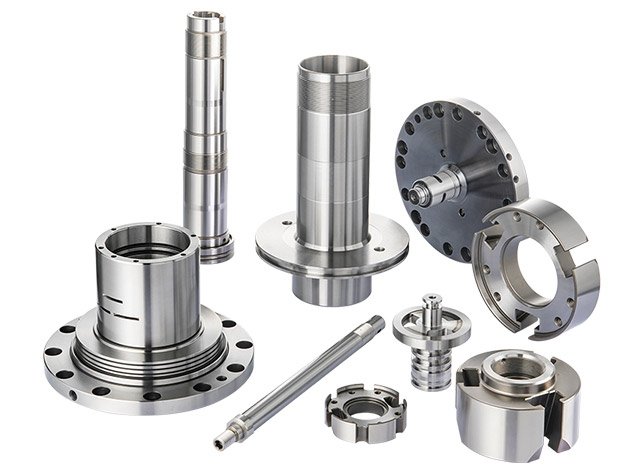
Titanium Implants: Challenges and Solutions in Medical CNC Machining
1. Executive Summary
The global market for titanium medical implants is expanding at an unprecedented rate, driven by aging demographics, rising orthopedic procedures, and the accelerating adoption of personalized medicine. For OEMs and Tier 1 medical device suppliers, the ability to source dimensionally stable, biocompatible, and surface-engineered titanium components is no longer a competitive advantage. It is a baseline requirement. Yet the machining of titanium alloys, particularly Ti-6Al-4V and Ti-6Al-4V ELI (Grade 23), continues to present some of the most demanding challenges in precision manufacturing.
This article examines the metallurgical, thermal, and process control challenges associated with titanium implant machining, and outlines how an integrated ODM and supply chain model resolves these issues at scale. At IndustryApex Technology (IndustryApex CNC), we have refined a fully controlled precision manufacturing system that consolidates 3-5 axis CNC machining, EDM, precision grinding, and industrial ceramics under a single ERP-managed workflow. The result is a measurable reduction in lead times, tighter tolerance retention, and improved traceability for medical device manufacturers serving regulated markets.
For procurement leaders and engineering directors evaluating their titanium implant supply base, the discussion below presents a technical roadmap and a proven manufacturing partnership model.
2. Technical Deep Dive: Why Titanium Resists Conventional Machining
Titanium alloys offer the strength-to-weight ratio, corrosion resistance, and osseointegration properties that make them indispensable for orthopedic, spinal, dental, and cardiovascular implants. These same properties, however, make the material exceptionally difficult to machine.
2.1 Thermal Conductivity and Heat Concentration
Titanium has a thermal conductivity of approximately 6.7 W/m·K, roughly one-seventh that of carbon steel. During cutting, nearly 80 percent of the generated heat is absorbed by the cutting tool rather than dissipating through the chip or workpiece. This concentrated heat accelerates tool wear, induces built-up edge formation, and can produce surface alpha-case contamination that compromises implant fatigue life.
2.2 Work Hardening and Chemical Reactivity
At elevated temperatures, titanium becomes chemically reactive with most cutting tool materials, including carbides and ceramics. The material also work-hardens rapidly, meaning suboptimal feed rates produce a hardened surface layer that defeats subsequent passes. Engineers must balance cutting speed, chip load, and coolant delivery within a narrow process window.
2.3 Low Modulus of Elasticity and Deflection
Titanium’s modulus of elasticity is approximately half that of steel, which causes thin-walled implant geometries such as acetabular cups, spinal cages, and dental abutments to deflect under cutting forces. This deflection introduces chatter, dimensional drift, and surface finish defects. Five-axis machining with adaptive toolpath strategies, combined with high-precision fixturing, is essential to maintain tolerances often specified at ±5 microns.
2.4 Regulatory and Traceability Requirements
Beyond pure metallurgy, medical implant manufacturing must conform to ISO 13485, FDA 21 CFR Part 820, and increasingly to EU MDR documentation standards. Every machining parameter, tool change, and inspection result must be recorded and retrievable. This places a heavy burden on legacy job shops that lack integrated digital traceability.
3. The ODM & Supply Chain Advantage
Solving the titanium machining challenge requires more than capable equipment. It requires a manufacturing partner that operates as a true supply chain integrator. IndustryApex Technology has spent over three decades building exactly this kind of partnership model.
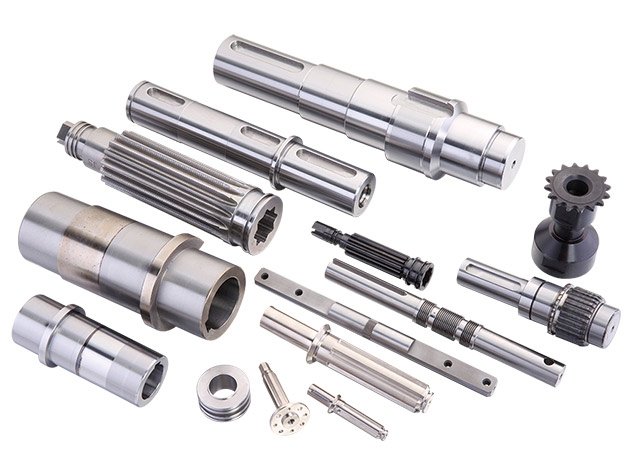
3.1 A Fully Controlled Precision Manufacturing System
Our identity as an ODM solution provider means we accept responsibility for the entire value stream, from raw bar stock qualification through final inspection and sterilization-ready packaging. Every titanium billet entering our facility is logged into our ERP system with its mill certificate, chemical composition, and heat treatment history. From that point forward, the material is tracked through every operation. This level of vertical integration eliminates the handoff errors that typically occur when implant manufacturers coordinate machining, grinding, finishing, and inspection across multiple disconnected vendors.
3.2 Multi-Technology Manufacturing Capabilities
Titanium implants rarely require only one machining process. A modern hip stem may demand 5-axis milling for the tapered neck geometry, EDM for the porous coating substrate, precision grinding for the bearing surface, and ceramic-tool finishing for the proximal sleeve. IndustryApex Technology brings all of these capabilities under one roof:
- 3-5 Axis CNC Machining: Simultaneous five-axis platforms with high-pressure through-spindle coolant for complex implant geometries.
- EDM (Wire and Sinker): For features that cannot be reached by rotary tools, including internal lattice structures.
- Precision Grinding: Sub-micron surface finishes critical for articulating implant surfaces.
- Industrial Ceramics: For zirconia and alumina components used in dental and orthopedic systems, leveraging the same precision discipline.
3.3 Serving Global OEMs and Tier 1 Suppliers
Our customer base consists primarily of global OEMs and Tier 1 suppliers who require both technical depth and commercial predictability. We engage early in the design cycle, contributing DFM feedback that reduces machining time, simplifies fixturing, and improves yield. This collaborative ODM relationship transforms us from a vendor into an engineering extension of our customers’ product development teams.
3.4 ERP-Driven Traceability and Quality Assurance
Each titanium implant component is associated with a unique digital record. CMM inspection data, surface roughness measurements, tool life logs, and operator certifications are stored against the part number and lot. When a regulatory audit occurs, or when a customer requests a corrective action investigation, the relevant data is available within minutes rather than days.
4. Industry Applications: Where Titanium Precision Matters
While medical implants represent one of the most demanding applications of titanium machining, the underlying competencies translate across multiple high-value industries. IndustryApex Technology applies the same precision discipline to several adjacent sectors.
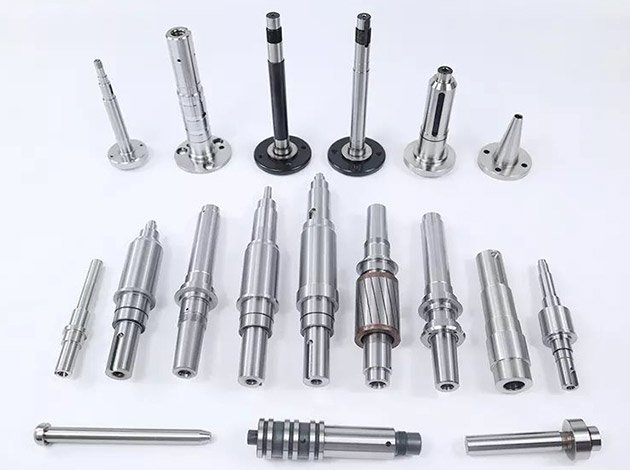
4.1 Medical Devices and Implants
Spinal cages, dental abutments, trauma plates, screws, and patient-specific orthopedic components form the core of our ISO-certified medical machining portfolio. Surgical instruments, including bone reamers and minimally invasive instrumentation, are produced with the same workflow integrity.
4.2 Aerospace Titanium Components
The same alloys and the same five-axis platforms that produce orthopedic implants also produce flight-critical structural parts. Our aerospace CNC machining for titanium aircraft parts demonstrates how cross-sector expertise reinforces process maturity. Lessons learned from aerospace fatigue requirements inform medical implant surface engineering, and vice versa.
4.3 Hydraulic and Fluid Control Systems
High-precision sealing surfaces and bore tolerances required for medical fluid delivery share common ground with industrial fluid power. Our hydraulic pump parts production demonstrates the transferable competency in tight-tolerance internal geometries and surface integrity.
4.4 Specialty Ceramics for Medical and Industrial Use
Industrial ceramics increasingly partner with titanium in hybrid implant designs, particularly in dental and joint replacement systems. Our integrated ceramic machining capability allows customers to source both materials from a single qualified supplier.
5. Call to Action: Partner with a Proven Titanium Machining Specialist
The technical and regulatory challenges of titanium implant manufacturing will continue to intensify as patient-specific devices, additive-subtractive hybrid workflows, and tighter biocompatibility standards reshape the medical device industry. OEMs and Tier 1 suppliers that align with a fully integrated ODM partner will be positioned to respond faster, control costs more effectively, and protect product quality across every production cycle.
IndustryApex Technology brings more than thirty years of precision manufacturing experience, a fully controlled ERP-driven workflow, and a multi-technology capability set spanning 3-5 axis CNC, EDM, precision grinding, and industrial ceramics. Whether you are launching a new implant program, qualifying a second source for an existing component, or rethinking your supply chain to reduce risk, we are prepared to engage as a strategic engineering and manufacturing partner.
To discuss your titanium implant machining requirements, request a DFM consultation, or initiate a supplier qualification audit, please contact our engineering team. Visit the IndustryApex CNC home page to explore our full capability portfolio and review case studies from global OEM partners.