- Shaft
- Molds&Tools
- Hydraulics And Pump
- Hair transplant needle
- Hydraulics And Pump
- Precision CNC Shaft Machining Manufacturer for High Performance Applications
- Energy Industry CNC Machining Parts Supplier
- Aerospace CNC Machining Parts Manufacturer
- Aerospace CNC Machining Parts Manufacturer
- Automotive & EV CNC Machining Parts Supplier for OEM and Tier 1
- Medical CNC Machining Parts Supplier for Precision Medical Devices

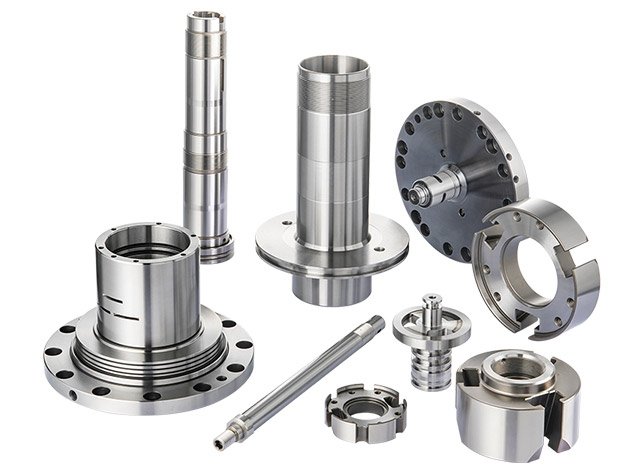
Titanium Implants: Engineering Challenges and CNC Machining Solutions for Medical OEMs

Titanium Implants: Engineering Challenges and CNC Machining Solutions for Medical OEMs
1. Executive Summary
Titanium and its alloys—particularly Ti-6Al-4V (Grade 5) and the more biocompatible Ti-6Al-4V ELI (Grade 23)—have become the backbone of modern orthopedic, dental, and cardiovascular implants. Their unmatched strength-to-weight ratio, corrosion resistance, and osseointegration capability make them the material of choice for load-bearing devices ranging from spinal cages and hip stems to dental abutments and bone screws. Yet the very properties that make titanium clinically superior also make it one of the most demanding materials in precision CNC machining.
Medical OEMs and Tier 1 suppliers face a triple constraint: sub-micron geometric accuracy required by ISO 13485 and FDA 21 CFR Part 820, surface integrity that directly governs cellular adhesion, and full traceability from raw bar stock to sterilized finished part. Compounding this, titanium’s low thermal conductivity, high chemical reactivity, and tendency toward work-hardening accelerate tool wear, increase scrap rates, and inflate cycle times by 30–50% compared to stainless steel benchmarks.
This article unpacks the technical bottlenecks of titanium implant machining and presents how IndustryApex Technology, operating under the IndustryApex CNC brand, applies a fully integrated ODM supply chain model—backed by over three decades of precision manufacturing—to deliver implant-grade components that meet the most stringent global medical standards.
2. Technical Deep Dive: Why Titanium Resists the Cutter
Machining titanium for implant applications is a high-stakes balancing act between productivity and biological performance. Four interrelated phenomena dominate the engineering conversation:
2.1 Thermal Management at the Cutting Edge
Titanium’s thermal conductivity (approximately 6.7 W/m·K for Ti-6Al-4V) is roughly one-seventh that of carbon steel. Heat generated at the shear zone cannot dissipate through the chip and instead concentrates at the tool tip, where temperatures routinely exceed 900°C. This accelerates diffusion wear, crater formation, and catastrophic edge failure. Mitigation requires high-pressure coolant delivery (70–100 bar), through-spindle cooling, and conservative cutting speeds in the 40–80 m/min range for solid carbide tooling with AlTiN or AlCrN coatings.
2.2 Chemical Reactivity and Built-Up Edge
Above 500°C, titanium becomes chemically aggressive toward most cutting tool substrates, forming intermetallic bonds with cobalt binders in tungsten carbide. The result is a built-up edge (BUE) that degrades surface finish and dimensional repeatability. Implant manufacturers cannot tolerate this on articulating surfaces, where Ra values below 0.2 µm are mandatory to prevent particulate generation in the body.
2.3 Low Modulus and Chatter
Titanium’s elastic modulus is roughly half that of steel, making thin-walled implant geometries—such as acetabular cups, spinal cages, and trauma plates—prone to deflection and chatter. This demands rigid 5-axis machine platforms, optimized toolpath strategies (trochoidal milling, dynamic chip thinning), and finite element-validated fixturing.
2.4 Surface Integrity and Biocompatibility
Beyond dimensional tolerance, the surface metallurgy of an implant determines its clinical fate. Residual tensile stresses can initiate fatigue cracks under cyclic loading, while microstructural alterations from improper machining (white layer formation, alpha-case contamination) compromise corrosion resistance. Validated finishing processes—precision grinding, electropolishing, and controlled passivation per ASTM F86—are non-negotiable.
3. The ODM and Supply Chain Advantage
Solving the titanium machining equation is not a single-machine problem; it is a supply chain problem. IndustryApex Technology positions itself not as a job shop, but as a supply chain integrator and ODM solution provider for global OEMs and Tier 1 medical suppliers. Three pillars define this model.
3.1 Fully Controlled Precision Manufacturing
With over 30 years of accumulated process know-how, our manufacturing system is governed end-to-end by a unified ERP platform that links raw material certification, in-process SPC data, heat-treatment records, and final inspection reports. Every titanium implant component carries a digital genealogy traceable to the mill heat number—a baseline requirement for medical device regulatory submissions in the EU MDR, FDA, and PMDA frameworks.
3.2 Multi-Technology Capability Under One Roof
Implant geometries rarely yield to a single process. Our integrated capability stack includes:
- 3-Axis and 5-Axis CNC Machining for complex contoured surfaces such as femoral knee components and patient-specific cranial plates.
- Wire and Sinker EDM for sharp internal corners, fine slots, and stress-free machining of hardened titanium features.
- Precision Grinding achieving Ra <0.1 µm on bearing surfaces and tapered Morse interfaces for modular implants.
- Industrial Ceramics Processing supporting hybrid implant designs that combine titanium with zirconia or alumina components for dental and joint applications.
3.3 ODM Engineering Partnership
Unlike contract machining where the customer carries full design risk, our ODM model embeds IndustryApex engineers into the customer’s development cycle—DFM reviews, fixture design, process FMEA, and first-article validation. The result is reduced time-to-market and a 15–25% lower total landed cost compared with fragmented multi-vendor sourcing. Customers source ISO-certified medical components from a single accountable partner.
4. Industry Applications

While titanium implants are the focal application, the underlying capability—machining high-performance, difficult-to-cut alloys to micron tolerances—extends across multiple regulated industries we serve.
4.1 Orthopedic and Trauma Implants
Hip stems, knee tibial trays, spinal pedicle screws, intramedullary nails, and bone plates form the largest volume segment. These parts demand the convergence of 5-axis contouring, deep-hole drilling for cannulated screws, and certified surface finishing.
4.2 Dental and Maxillofacial Devices
Dental implants and abutments require sub-10 µm thread accuracy on tapered hex and conical interfaces. Patient-specific cranio-maxillofacial plates, derived directly from CT data, leverage our 5-axis programming workflow.
4.3 Surgical Instruments and Robotic End-Effectors
Reusable titanium instruments—forceps, retractors, and robotic surgical tooling—share the same metallurgical and finishing challenges as implants, with added requirements for repeated autoclave sterilization cycles.
4.4 Cross-Industry Synergies
The same titanium expertise translates directly into aerospace structural components, where Ti-6Al-4V dominates airframe brackets and engine fittings. Our process portfolio also supports hydraulic pump and valve components, where dimensional stability and surface integrity drive sealing performance—technologies that share DNA with medical fluid-handling devices.
5. Call to Action: Engineer Your Next Implant Program with IndustryApex
Titanium implant manufacturing rewards partners who treat machining, metallurgy, and quality as a single integrated discipline. IndustryApex Technology delivers exactly that: three decades of precision manufacturing leadership, ISO-certified medical workflows, ERP-driven traceability, and an ODM engineering team that engages from concept through serial production.
Whether you are scaling a proven implant family, qualifying a new patient-specific platform, or consolidating a fragmented supplier base, our team is ready to review your drawings, run a DFM analysis, and quote a complete supply solution. Contact IndustryApex Technology today to schedule a technical consultation with our medical machining specialists and discover why leading global OEMs and Tier 1 suppliers trust IndustryApex CNC as their long-term titanium implant manufacturing partner.