- Shaft
- Molds&Tools
- Hydraulics And Pump
- Hair transplant needle
- Hydraulics And Pump
- Precision CNC Shaft Machining Manufacturer for High Performance Applications
- Energy Industry CNC Machining Parts Supplier
- Aerospace CNC Machining Parts Manufacturer
- Aerospace CNC Machining Parts Manufacturer
- Automotive & EV CNC Machining Parts Supplier for OEM and Tier 1
- Medical CNC Machining Parts Supplier for Precision Medical Devices

How ODM Solution Providers Are Transforming Medical Device Manufacturing: A Supply Chain Revolution

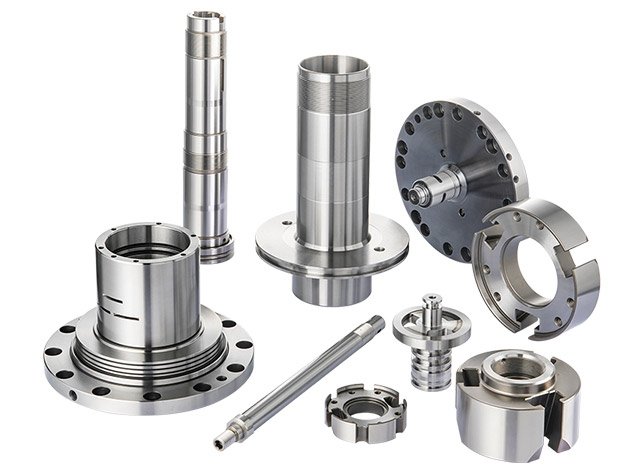
How ODM Solution Providers Are Transforming Medical Device Manufacturing: A Supply Chain Revolution
1. Executive Summary
The medical device industry stands at a critical inflection point. Global OEMs and Tier 1 suppliers face mounting pressure from tightening regulatory frameworks such as the EU MDR and FDA 21 CFR Part 820, accelerating product lifecycles, and an unrelenting demand for sub-micron precision in components destined for implants, surgical robotics, and diagnostic equipment. In this environment, the traditional contract manufacturing model, where suppliers simply execute drawings handed down from the OEM, is no longer sufficient.
Original Design Manufacturer (ODM) solution providers have emerged as strategic partners capable of compressing development cycles by 30 to 50 percent while simultaneously elevating quality benchmarks. By integrating design-for-manufacturing (DFM) expertise, vertically controlled precision machining, and end-to-end supply chain orchestration under a single ERP-driven framework, ODM partners are redefining how medical devices reach the market. IndustryApex Technology, operating under the IndustryApex CNC brand, exemplifies this transformation, leveraging more than three decades of precision manufacturing experience to deliver fully integrated ODM solutions to medical device OEMs worldwide.
This analysis examines the technical foundations, supply chain architecture, and industry applications that make ODM partnerships the decisive competitive lever in modern medical device manufacturing.
2. Technical Deep Dive: Precision Engineering for Life-Critical Components
Medical device components occupy one of the most demanding tolerance regimes in industrial manufacturing. Orthopedic implants machined from Ti-6Al-4V ELI require surface finishes below Ra 0.4 µm to promote osseointegration while resisting fatigue-driven failure. Surgical instruments manufactured from 17-4 PH stainless steel must withstand thousands of autoclave cycles without dimensional drift. Microfluidic housings for in-vitro diagnostic equipment demand positional accuracy within ±5 microns across multi-axis geometries.
Meeting these specifications consistently requires more than capable machine tools. It requires a manufacturing ecosystem engineered around process control. A modern ODM facility serving medical applications integrates several technical pillars:
- 5-axis CNC milling and turn-mill centers with thermal compensation and in-process probing, enabling single-setup machining of complex anatomical geometries such as acetabular cups, spinal cages, and bone plates.
- Wire and sinker EDM for producing micro-features in hardened tool steels and exotic alloys, including the fine cutting edges of arthroscopic instruments and the internal cavities of trocar housings.
- Precision grinding with CBN and diamond wheels, achieving cylindricity below 1 micron on dental implant abutments and surgical drill components.
- Industrial ceramics machining, including zirconia and alumina, for biocompatible bearing surfaces, dental prosthetics, and electrosurgical insulators where metal alternatives cannot meet wear or dielectric requirements.
Equally important is the metrology and validation infrastructure. ISO 13485-aligned ODM partners deploy CMMs with sub-micron accuracy, optical comparators, surface profilometers, and statistical process control (SPC) systems that feed real-time data into the ERP backbone. Every dimensional reading, material certificate, and process parameter is captured against the device master record, producing the documented evidence chain that regulators demand. For OEMs pursuing ISO-certified CNC machining for medical components, this digital traceability is not an optional add-on, it is the foundation of submission-ready quality documentation.
3. The ODM and Supply Chain Advantage
The structural difference between a job-shop contract manufacturer and a true ODM solution provider lies in where value is created. A contract manufacturer activates only when drawings are released. An ODM partner engages at the concept stage, contributing manufacturability analysis, material selection guidance, tolerance optimization, and tooling strategy before the first prototype is cut. This earlier engagement is where the largest cost and time savings are unlocked.
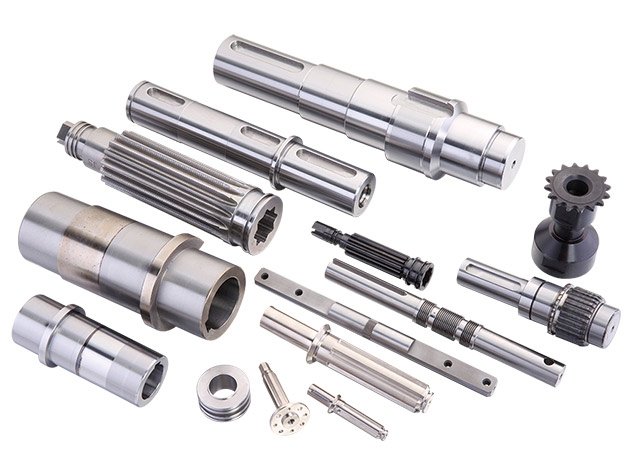
IndustryApex Technology’s identity as a supply chain integrator and ODM solution provider rests on four reinforcing capabilities:
Fully Controlled Precision Manufacturing System. Rather than coordinating a fragmented network of subcontractors, the manufacturing footprint consolidates 3-axis through 5-axis CNC, EDM, precision grinding, and industrial ceramics processing under one operational roof. This vertical integration eliminates the inter-vendor tolerance stack-up that often plagues medical device programs, where a 5-micron error introduced at one external supplier cascades into a non-conforming assembly downstream.
ERP-Driven Operational Backbone. Every work order, material lot, machine cycle, inspection result, and shipment is governed by a unified ERP system. For medical OEMs, this means real-time visibility into program status, automatic enforcement of revision control, and instantaneous traceability from finished component back to raw material heat number. When a regulatory authority requests a CAPA investigation, the evidence is retrievable in minutes rather than weeks.
Three Decades of Manufacturing Experience. Over 30 years of refining process windows across aerospace, hydraulics, optics, and medical sectors produces a tacit engineering knowledge base that cannot be replicated by capital expenditure alone. This cross-industry depth is particularly valuable in medical applications, where techniques proven in aerospace titanium machining translate directly to orthopedic implant production, and surface finish strategies developed for hydraulic pump components inform the manufacturing of high-pressure fluid pathways in dialysis and infusion equipment.
Alignment With Global OEM and Tier 1 Procurement Requirements. Medical device OEMs and their Tier 1 suppliers operate under purchasing frameworks that demand audited quality systems, financial stability, IP protection, and scalable capacity. An ODM partner structured around these expectations becomes an extension of the OEM’s own engineering and supply chain organization rather than a transactional vendor.
The net effect is a compression of the supply chain. Where a traditional model might involve a design house, a prototype shop, a production machining vendor, a finishing supplier, and an inspection service, the ODM model collapses these into a single accountable partner. For medical device companies racing to bring next-generation products to market, this consolidation translates directly into shorter time-to-revenue and reduced program risk.
4. Industry Applications
The practical impact of ODM-led manufacturing is best understood through specific medical device categories where precision components determine clinical performance.
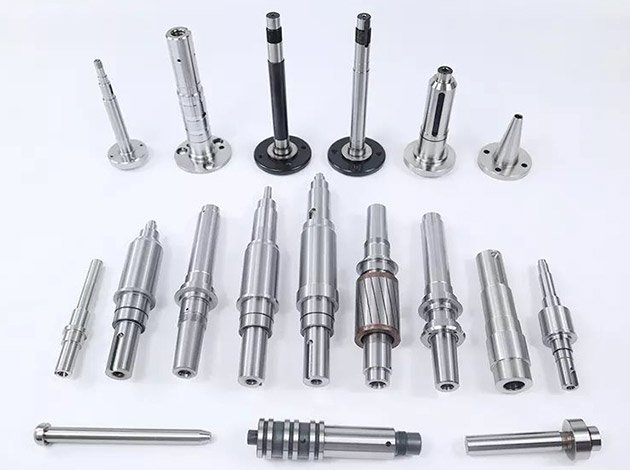
Orthopedic and Spinal Implants. Titanium and cobalt-chromium implants demand a combination of complex geometry, biocompatible surface finishing, and uncompromising material traceability. ODM partners machine pedicle screws, interbody fusion cages, and joint replacement components in single-setup 5-axis operations, then apply media blasting, passivation, and anodization within the same quality envelope. Every part carries a unique device identifier linked to its full manufacturing genealogy.
Surgical Instruments and Robotic End-Effectors. The rise of robotic-assisted surgery has driven demand for miniaturized instruments with articulating wrists, micro-actuators, and integrated sensors. EDM and precision grinding produce the fine cutting edges, articulation pins, and gear elements that enable these systems to operate within millimeter-scale anatomical corridors.
Diagnostic and Analytical Equipment. Mass spectrometers, DNA sequencers, and clinical chemistry analyzers rely on precision-machined fluid manifolds, optical mounts, and ceramic insulators. The combination of metal CNC machining and industrial ceramics capability under one ODM roof eliminates the integration headaches that arise when these subsystems are sourced from separate suppliers.
Dental and Prosthetic Components. Zirconia abutments, titanium implant bodies, and CAD/CAM-driven custom prosthetics require tight coordination between digital design files and machining execution. ODM partners with integrated CAM programming and ceramic machining capability deliver patient-specific components with predictable repeatability.
Drug Delivery and Fluid Management. Insulin pumps, infusion sets, and dialysis machines depend on precision-machined valve bodies, plungers, and pressure regulators where leak-tight performance is non-negotiable. Manufacturing disciplines refined for industrial fluid control transfer directly into these life-critical fluid pathways.
Across all of these applications, the underlying pattern is consistent: components that once required coordination across multiple specialist vendors are now delivered as integrated assemblies by ODM partners who own the entire process chain.
5. Call to Action: Partner With a Proven ODM Solution Provider
The medical device companies that will lead the next decade are those that recognize manufacturing as a strategic capability rather than a procurement line item. Selecting an ODM solution provider is therefore one of the highest-leverage decisions an OEM or Tier 1 supplier can make. The right partner shortens development cycles, de-risks regulatory submissions, and creates the manufacturing scalability needed to convert clinical success into commercial growth.
IndustryApex Technology, through the IndustryApex CNC platform, offers global medical device OEMs and Tier 1 suppliers a fully integrated ODM relationship grounded in over 30 years of precision manufacturing experience, a vertically controlled production system spanning 3-5 axis CNC, EDM, precision grinding, and industrial ceramics, and an ERP-driven quality and traceability infrastructure aligned with ISO 13485 expectations.
If your next medical device program requires a manufacturing partner who can engage at the design stage, execute against sub-micron tolerances, and deliver documented quality across the full supply chain, we invite a direct technical conversation. Contact our engineering team to discuss how an ODM partnership can accelerate your roadmap and strengthen your competitive position in the global medical device market.