- Shaft
- Molds&Tools
- Hydraulics And Pump
- Hair transplant needle
- Hydraulics And Pump
- Precision CNC Shaft Machining Manufacturer for High Performance Applications
- Energy Industry CNC Machining Parts Supplier
- Aerospace CNC Machining Parts Manufacturer
- Aerospace CNC Machining Parts Manufacturer
- Automotive & EV CNC Machining Parts Supplier for OEM and Tier 1
- Medical CNC Machining Parts Supplier for Precision Medical Devices

2026 Trends in 5-Axis CNC Machining for Aerospace Components: Engineering and Supply Chain Analysis

Executive Summary
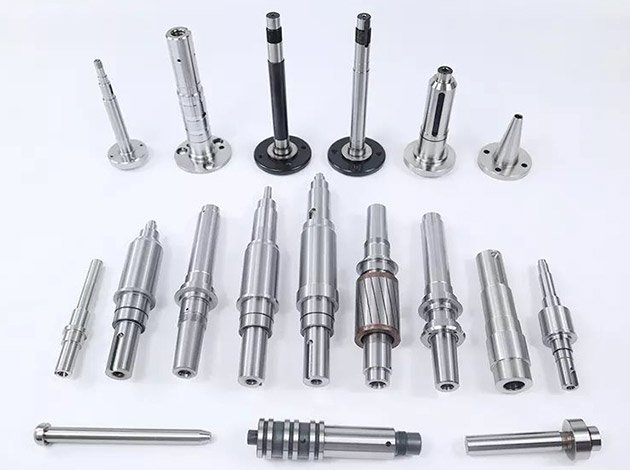
By 2026, 5-axis CNC machining for aerospace components will be shaped by three converging pressures: lighter aircraft structures, tighter production accountability, and more resilient sourcing models. Aerospace OEMs and Tier 1 suppliers are no longer evaluating machining partners only on spindle capacity or quoted price. They are looking for manufacturing systems that can hold micron-level precision across difficult materials, document every process variable, shorten development cycles, and stabilize delivery despite volatility in titanium, nickel alloys, specialty steels, ceramics, and qualified subcontract capacity.
For aircraft structural components, engine-adjacent parts, brackets, housings, manifolds, actuator bodies, turbine support hardware, and complex lightweight frames, 5-axis machining has moved from a premium capability to a strategic requirement. The geometry of modern aerospace parts increasingly includes compound angles, deep pockets, thin walls, integrated ribs, optimized weight-reduction features, and datum schemes that cannot be processed efficiently on conventional 3-axis equipment. In parallel, design teams are consolidating assemblies into fewer monolithic parts, which reduces fasteners and inspection burden but increases machining complexity.
IndustryApex Technology, operating through IndustryApex CNC, approaches this market as both a precision manufacturer and a supply chain integrator. The company supports global buyers through controlled CNC manufacturing, process engineering, EDM, precision grinding, industrial ceramics, and ODM services for demanding sectors. Aerospace customers can review relevant capabilities through the IndustryApex CNC home page and the dedicated aerospace CNC machining and titanium aircraft parts resource.
The key 2026 trend is not simply more machines with simultaneous 5-axis motion. The real shift is the integration of machining strategy, digital production control, material expertise, inspection planning, and supply chain responsibility. Aerospace procurement teams need partners who can make parts accurately, prove how they were made, and scale from prototype to qualified production without introducing unnecessary handoffs.
Technical Deep Dive
In 2026, 5-axis aerospace machining will continue to advance around process stability. Aircraft components are often machined from titanium alloys such as Ti-6Al-4V, aluminum-lithium alloys, Inconel, stainless steels, high-strength aluminum, and engineering ceramics. Each material imposes a different constraint. Titanium retains heat at the cutting edge and punishes poor toolpath planning. Inconel work-hardens quickly and requires disciplined chip load control. Thin-wall aluminum structures can distort after roughing or during final release from fixtures. Ceramic and hard material applications require a different blend of grinding, EDM, and precision finishing knowledge.
Simultaneous 5-axis machining allows the cutting tool to maintain the correct engagement angle while reducing setups. This is critical for aerospace parts where datums, bores, sealing surfaces, and structural interfaces must remain positionally consistent. Fewer setups reduce stacked tolerance error, fixture-induced distortion, and manual handling risk. For complex brackets, actuator housings, impellers, blisks, structural frames, and control system components, 5-axis machining can also improve surface finish because the tool can approach a feature from the most stable orientation.
One of the strongest 2026 trends is the use of adaptive and high-efficiency toolpaths. Instead of aggressive slotting or repeated full-width cuts, aerospace machining programs increasingly use constant engagement strategies to control heat and tool wear. This matters for titanium aircraft components, where excessive heat can shorten tool life, damage surface integrity, and create variation from part to part. A mature machining partner will evaluate tool projection, holder clearance, cutter geometry, coolant delivery, chip evacuation, and machine dynamics as one system rather than isolated variables.
Another trend is tighter alignment between CAM simulation and real machine behavior. Collision avoidance is only the baseline. Aerospace manufacturing teams now expect verification of tool reach, rotary axis limits, fixture clearance, residual stock, surface scallop height, and cycle-time realism. Digital simulation reduces trial cuts and protects expensive material, but it must be validated against proven machine kinematics and shop-floor feedback. A theoretical program is not enough if it cannot survive production realities such as tool wear, thermal growth, fixture loading variation, and batch-to-batch material inconsistency.
Inspection strategy is also changing. Coordinate measuring machines, optical inspection, in-process probing, surface roughness measurement, and documentation workflows are increasingly planned before production starts. Aerospace customers require confidence that critical characteristics are controlled, not discovered after machining. In many cases, in-process probing is used to confirm datum positions, detect stock variation, and compensate before finishing operations. This approach reduces scrap on high-value parts and improves first-pass yield.
Surface integrity deserves specific attention. Aerospace parts are not accepted only because the dimensions pass. Fatigue life, residual stress, burr condition, edge quality, and finish consistency are equally important. Thin structural components may require stress-relief sequencing, balanced roughing, controlled clamping, and intermediate inspection. Components exposed to fluid, pressure, or thermal cycling may require sealing surfaces, threaded interfaces, precision bores, and flatness controls that remain stable after finishing. This is where 5-axis capability must be supported by process engineering discipline.
Automation will also become more selective and practical in 2026. Aerospace work is often high-mix and medium-volume, so full automotive-style automation is not always economical. However, pallet systems, preset tooling, digital work instructions, ERP-driven scheduling, and standardized inspection plans can dramatically improve delivery reliability. The competitive advantage will come from connecting advanced machines to a controlled manufacturing system rather than treating each machine as a standalone asset.
The ODM & Supply Chain Advantage
The aerospace market is increasingly asking suppliers to do more than execute prints. Global OEMs and Tier 1 suppliers need partners who can support design-for-manufacturing discussions, prototype iteration, process selection, cost reduction, documentation, and long-term supply continuity. This is where IndustryApex Technology’s identity as a supply chain integrator and ODM solution provider becomes commercially important.
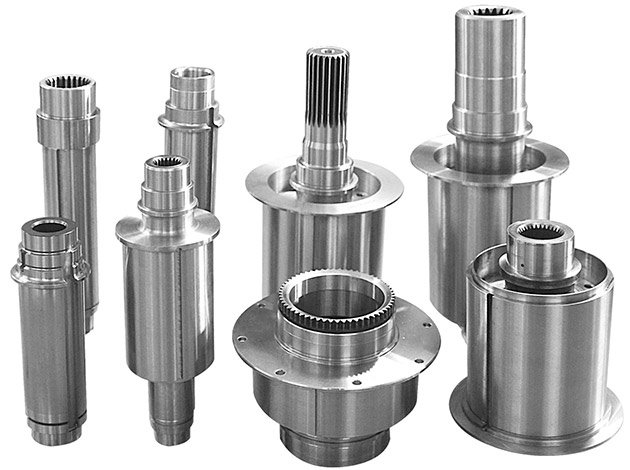
As IndustryApex CNC, IndustryApex Technology combines engineering support with a fully controlled precision manufacturing system. The company’s manufacturing foundation includes more than 30 years of experience, ERP-supported production control, 3-axis to 5-axis CNC machining, EDM, precision grinding, industrial ceramics, and custom precision component development. This mix is valuable for aerospace programs because a single project may require milled structural features, tight bores, ground surfaces, complex slots, hard material processing, or ceramic insulating components. Keeping these capabilities coordinated reduces communication loss and shortens the path from design intent to manufacturable part.
Supply chain risk is one of the defining aerospace topics for 2026. Many buyers experienced delays from fragmented sourcing models where machining, finishing, grinding, material procurement, and inspection were spread across disconnected suppliers. Each handoff creates schedule uncertainty, quality ambiguity, and engineering delay. A more integrated partner can review the full manufacturing route, identify process bottlenecks earlier, and manage production sequencing through ERP discipline.
For aerospace procurement teams, the value of ODM support is not limited to original product development. It also applies to part optimization, legacy component replacement, localization programs, and cost-down projects. A supplier with manufacturing engineering depth can recommend when a feature should be redesigned for better tool access, when a tolerance is driving unnecessary cost, when a material substitution should be evaluated, or when a part should move from multi-component assembly to a monolithic 5-axis machined structure.
This is especially important for titanium aircraft parts. Titanium is expensive, slow to machine, and sensitive to poor process choices. A small improvement in toolpath strategy, fixturing concept, stock allowance, or inspection sequence can materially affect total cost. The lowest unit quote may become the highest total cost if the process produces inconsistent yield, long lead times, or documentation gaps. Aerospace buyers should evaluate supplier maturity through questions about production planning, tool life control, traceability, inspection readiness, and corrective action discipline.
IndustryApex Technology’s broader manufacturing scope also supports adjacent industries that often share technical requirements with aerospace. Precision sealing, fluid control, and pressure components overlap with hydraulic and pump parts. Biocompatible materials, burr control, clean surfaces, and high-precision small features overlap with medical CNC machining and titanium implant components. These cross-industry capabilities strengthen process knowledge for aerospace customers that require precision, repeatability, and controlled documentation.
For global OEMs and Tier 1 suppliers, the supplier conversation in 2026 should move beyond capacity. A better evaluation framework includes engineering participation, manufacturing route ownership, risk management, quality planning, material understanding, and responsiveness. The aerospace supply base will reward partners who can absorb complexity and convert it into controlled production.
Industry Applications
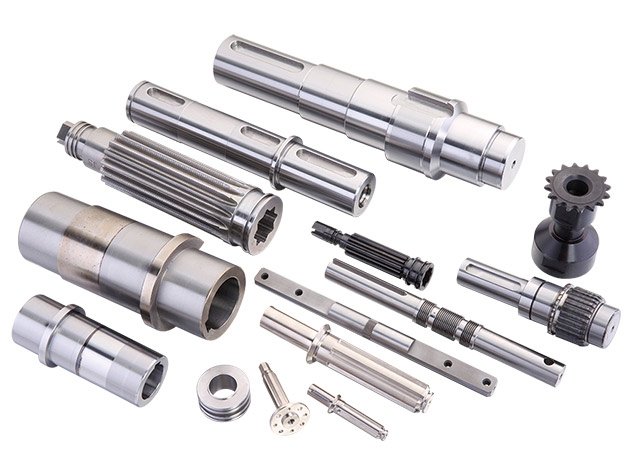
5-axis CNC machining is now central to multiple aerospace component families. Structural parts such as wing brackets, seat track components, fuselage fittings, bulkhead elements, ribs, frames, and mounting supports benefit from reduced setup time and improved geometric control. Many of these parts include pocketed lightweight features and thin walls that require careful roughing and finishing strategies to prevent distortion.
Aircraft engine and propulsion-related components also benefit from advanced 5-axis processing. While not every supplier machines rotating engine parts, many aerospace programs require precision housings, support structures, thermal management parts, actuator components, and complex interfaces near demanding temperature or vibration environments. These parts often combine positional accuracy, surface quality, and material difficulty, making process development as important as machine availability.
Fluid and motion control systems are another important application area. Aerospace hydraulic blocks, valve bodies, pump housings, manifolds, sleeves, and actuator parts require intersecting ports, precision bores, sealing faces, and consistent deburring. The machining challenge is not only dimensional accuracy but also internal cleanliness and edge condition. Burrs left in cross holes or internal channels can create downstream reliability issues, so aerospace suppliers must integrate machining, deburring, cleaning, and inspection as a complete process.
Interior, cabin, and safety system components also continue to demand better precision and documentation. Lightweight brackets, latching mechanisms, hinge components, sensor mounts, and high-reliability hardware often require small batches, rapid engineering changes, and dependable repeatability. A supplier with flexible 3-axis and 5-axis CNC capacity can support both prototype and production stages without forcing the customer to change partners between development and release.
Unmanned aerial systems, electric aircraft, and advanced air mobility platforms will further influence machining demand in 2026. These programs often prioritize weight reduction, fast development cycles, and compact integrated assemblies. Their supply chains may be less mature than traditional aerospace programs, but their technical expectations are high. They need suppliers who can support design iteration while still applying disciplined manufacturing controls.
Satellite, defense, and avionics hardware also align with the same trend. Compact housings, thermal plates, optical mounts, ceramic components, and precision structural parts require reliable control of flatness, perpendicularity, profile, and surface finish. Industrial ceramics and precision grinding can be particularly relevant where insulation, wear resistance, thermal stability, or dimensional stability are required.
The common theme across these applications is that aerospace components are becoming more integrated and more difficult to manufacture casually. The value of 5-axis machining lies in enabling smarter part design, but the value of the supplier lies in converting that design into repeatable production. This distinction matters. A shop can own a 5-axis machine and still struggle with aerospace work if it lacks process control, inspection planning, material expertise, and supply chain coordination.
Call to Action
For aerospace OEMs, Tier 1 suppliers, and engineering teams preparing 2026 sourcing strategies, the supplier decision should focus on long-term manufacturing resilience. Evaluate whether your machining partner can support prototype development, DFM review, controlled 5-axis production, EDM, precision grinding, industrial ceramics, ERP-based scheduling, inspection documentation, and stable communication across the full project lifecycle.
IndustryApex Technology, through IndustryApex CNC, supports global customers with precision manufacturing and ODM supply chain solutions for aerospace and other high-reliability industries. Whether the requirement is titanium aircraft components, structural aerospace parts, hydraulic system components, or precision assemblies with complex machining requirements, our engineering and production teams are prepared to review drawings, materials, tolerance requirements, and delivery expectations.
To discuss an upcoming aerospace machining program, visit the Contact Us page and share your drawings, material specifications, estimated annual demand, and critical quality requirements. Early manufacturing review is the most effective way to reduce cost, shorten qualification time, and build a more dependable aerospace supply chain for 2026 and beyond.