- Shaft
- Molds&Tools
- Hydraulics And Pump
- Hair transplant needle
- Hydraulics And Pump
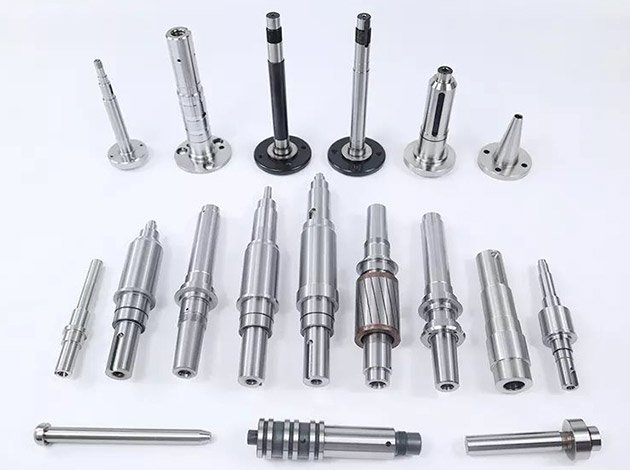
- Precision CNC Shaft Machining Manufacturer for High Performance Applications
- Energy Industry CNC Machining Parts Supplier
- Aerospace CNC Machining Parts Manufacturer
- Aerospace CNC Machining Parts Manufacturer
- Automotive & EV CNC Machining Parts Supplier for OEM and Tier 1
- Medical CNC Machining Parts Supplier for Precision Medical Devices
Advanced EDM and Wire Cutting for Hard and Brittle Materials: Engineering and Supply Chain Analysis for Global OEMs

1. Executive Summary
Hard and brittle materials are becoming essential to next-generation industrial systems. Aerospace structures require heat-resistant alloys and lightweight titanium. Medical devices demand biocompatible metals, micro-features, and ultra-clean surfaces. Fluid control systems need wear-resistant valve components, sleeves, and precision sealing geometries. Semiconductor, optics, energy, and high-performance machinery applications increasingly specify tungsten carbide, hardened tool steel, technical ceramics, sapphire, and nickel-based superalloys. These materials improve product performance, but they also create machining risk: cracking, burr formation, tool wear, recast layers, thermal damage, dimensional drift, and long lead times.
Advanced EDM, including sinker EDM and wire electrical discharge machining, has become a strategic manufacturing process for these challenges. Instead of removing material by mechanical cutting force, EDM uses controlled electrical discharge between an electrode and a conductive workpiece. This allows manufacturers to produce sharp internal corners, micro-slots, thin webs, complex cavities, carbide tooling features, precision punches, extrusion dies, and high-aspect-ratio profiles that are difficult or uneconomical by conventional milling or grinding alone.
For global OEM and Tier 1 sourcing teams, EDM capability should not be evaluated as an isolated workshop process. It should be assessed as part of a controlled manufacturing ecosystem that includes DFM review, process engineering, CNC machining, heat treatment coordination, precision grinding, metrology, surface finishing, documentation, and logistics. At IndustryApex Technology, operating through IndustryApex CNC, EDM and wire cutting are integrated with 3-axis to 5-axis CNC machining, precision grinding, industrial ceramics processing, and supply chain management to support complex custom component programs.
This article analyzes the technical principles, process risks, tolerance strategy, material considerations, and procurement value of advanced EDM and wire cutting for hard and brittle materials. It is written for engineering managers, sourcing leaders, quality teams, and product development groups that need reliable parts, shorter qualification cycles, and stable long-term manufacturing support.
2. Technical Deep Dive
EDM is most effective when the workpiece is electrically conductive and difficult to machine by conventional methods. Common EDM materials include hardened tool steels, stainless steels, titanium alloys, Inconel, cobalt-chromium, tungsten carbide, copper tungsten, molybdenum, and conductive technical ceramics. Wire EDM uses a continuously fed wire electrode, typically brass, coated brass, or specialized high-performance wire, to cut programmed profiles through the material. Sinker EDM uses a shaped electrode, usually graphite or copper, to form cavities, ribs, blind features, and complex negative geometries.
The key advantage is low mechanical cutting force. Milling a hard carbide insert pocket, thin titanium web, or brittle precision slot can induce vibration, tool deflection, chipping, and residual stress. Wire EDM cuts without tool pressure, which makes it valuable for delicate geometry, thin sections, narrow kerfs, micro-contours, and hardened parts that have already undergone heat treatment. This reduces distortion after machining and helps maintain stability in high-precision components.
However, EDM is not a universal shortcut. It is a thermal erosion process, and every discharge creates a tiny melt-and-flush event. The process engineer must control discharge energy, pulse duration, off-time, flushing pressure, wire tension, feed rate, dielectric condition, and number of skim passes. Aggressive rough cutting can remove material quickly, but it may create a thicker recast layer, micro-cracking risk, heat-affected zones, or poor surface finish. Precision work often requires multiple trim passes to improve straightness, corner accuracy, surface integrity, and dimensional repeatability.
In wire EDM, the main engineering variables include kerf width, wire lag, taper compensation, flushing access, slug management, start-hole location, and thermal stability. For tall components, wire deflection and flushing variation can affect taper and profile accuracy. For miniature parts, spark gap control and wire diameter become critical. For stacked cutting, engineers must consider burr-free separation, alignment, and traceability. For parts with extremely small radii, the minimum achievable internal radius is constrained by wire diameter plus spark gap.
Sinker EDM introduces a different set of trade-offs. Electrode design, electrode wear, orbiting strategy, rib aspect ratio, flushing channels, and surface finish requirements all influence cost and repeatability. Graphite electrodes are efficient for many mold, die, and hardened steel applications, while copper electrodes may be selected for fine detail, specific surface requirements, or material compatibility. In high-precision work, multiple electrodes may be needed for roughing, semi-finishing, and finishing to control wear and maintain feature accuracy.
For brittle or crack-sensitive materials, process planning should begin before the first spark. Engineers should evaluate whether EDM, grinding, laser processing, ultrasonic machining, or hybrid processing is most suitable. Conductive ceramics and carbide composites can be EDM-machined, but the binder phase, grain size, conductivity, and thermal shock behavior matter. Non-conductive ceramics typically require grinding, ultrasonic machining, laser-assisted processing, or specialized techniques rather than standard EDM. That is why a supplier with combined EDM, grinding, CNC, and ceramics capability can often reduce technical risk.
Surface integrity is another decisive factor. EDM surfaces may contain a recast layer and micro-texture. In tooling applications, this may be acceptable or even useful. In fatigue-critical aerospace, medical, hydraulic, or high-pressure components, additional finishing may be required. Precision grinding, lapping, polishing, passivation, electropolishing, or controlled deburring may follow EDM depending on the specification. Inspection should verify not only dimensions but also roughness, edge condition, perpendicularity, taper, micro-crack sensitivity, and functional fit.
From a tolerance perspective, EDM is highly capable, but tolerance must be tied to part size, thickness, material, geometry, and inspection method. A small wire-cut punch may achieve extremely tight profile control, while a thick carbide plate with deep profiles may require more conservative tolerances and additional trim passes. The best engineering practice is to define critical-to-function dimensions, datum strategy, surface finish zones, edge break requirements, and acceptable recast layer conditions before production release.
3. The ODM & Supply Chain Advantage
For many OEMs, the biggest challenge is not finding a shop with an EDM machine. The challenge is finding a partner that can translate material difficulty, production volume, regulatory expectations, and total landed cost into a stable manufacturing program. IndustryApex Technology’s core identity is as a supply chain integrator and ODM solution provider, not merely a single-process vendor. This matters when parts require multiple operations, cross-functional engineering, and repeatable delivery across prototype, pilot, and production stages.
With more than 30 years of manufacturing experience, IndustryApex Technology has built a fully controlled precision manufacturing system supported by ERP-based order management, process routing, production scheduling, quality traceability, and supplier coordination. For global OEM and Tier 1 suppliers, this structure helps reduce common sourcing risks: fragmented suppliers, unclear responsibility, inconsistent documentation, unplanned outsourcing, delayed feedback, and unstable quality between batches.
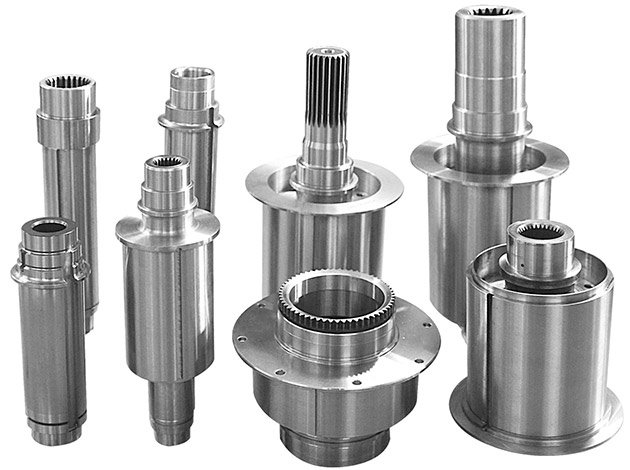
EDM and wire cutting are most valuable when integrated with upstream and downstream processes. A typical high-hardness component may require material procurement, stress relief, rough CNC machining, heat treatment, wire EDM, sinker EDM, precision grinding, polishing, coating, CMM inspection, and protective packaging. If these steps are managed by separate vendors, tolerances can be lost at interfaces. Datum transfer may be misunderstood. Lead time may expand. When one engineering team controls the complete process plan, manufacturability and accountability improve.
IndustryApex Technology combines 3-axis, 4-axis, and 5-axis CNC machining with EDM, precision grinding, and industrial ceramics capability. This allows the engineering team to choose the most appropriate process for each feature instead of forcing all geometry through one method. For example, a 5-axis machine may rough a titanium aerospace bracket efficiently, wire EDM may finish narrow slots or stress-sensitive features, and grinding may control mating surfaces. For carbide tooling, EDM may create complex profiles, while grinding produces final flatness and surface finish. For ceramic components, non-EDM finishing methods may be paired with metal inserts or assemblies.
This integrated approach also supports design-for-manufacturing collaboration. Early DFM review can identify whether a sharp corner is functional or cosmetic, whether a tolerance is inspection-limited, whether an EDM start hole will affect performance, whether a thin wall needs support tabs during cutting, and whether material substitution can reduce cost without compromising service life. These decisions influence not only unit price but also yield, lead time, and scalability.
For procurement teams, the ODM advantage extends to supplier consolidation. Instead of managing multiple niche vendors for CNC, EDM, grinding, ceramics, surface treatment, and inspection, OEMs can work with one accountable manufacturing partner. This is especially important for international sourcing, where communication speed, drawing interpretation, export packaging, documentation, and production transparency directly affect program success. IndustryApex Technology supports global customers by aligning engineering response, production planning, quality control, and logistics into one coordinated workflow.
ERP-supported manufacturing control provides another layer of value. In complex EDM programs, wire type, electrode revision, machining parameters, inspection reports, material certificates, and process history should be traceable. Repeat orders should not rely on operator memory. A controlled system allows lessons from prototype development to be converted into stable production routing. For OEMs and Tier 1 suppliers, this reduces the risk of quality drift when demand scales.
4. Industry Applications
Advanced EDM and wire cutting are used wherever geometry, material hardness, and precision exceed the economical limits of conventional cutting. In aerospace, EDM supports titanium, Inconel, stainless steel, and heat-resistant alloy components with difficult profiles and stress-sensitive features. Applications include brackets, structural fittings, turbine-related features, precision slots, lightweight frames, and tooling for composite or metal forming operations. OEMs working on flight-critical programs can explore IndustryApex Technology’s capabilities in aerospace CNC machining and titanium aircraft parts.
In medical manufacturing, EDM enables micro-slots, sharp profiles, fine surgical instrument features, implant-related tooling, and cobalt-chromium or titanium components that require high precision. Medical applications often require additional attention to surface integrity, cleaning, burr control, and documentation. EDM may be used in combination with 5-axis milling, polishing, passivation, and inspection to produce components for surgical instruments, orthopedic systems, diagnostic equipment, and high-precision medical devices. More information is available through IndustryApex Technology’s ISO-certified CNC machining for medical components.
In hydraulics and pump systems, hard materials and tight clearances are common. Valve spools, sleeves, sealing components, wear plates, plungers, metering parts, and high-pressure flow-control elements often require precise geometry and excellent surface finish. EDM can form small ports, slots, and complex flow paths, while grinding and honing can achieve sealing surfaces and roundness requirements. For these applications, dimensional consistency is directly related to leakage control, pressure stability, and service life. IndustryApex Technology’s hydraulic pump parts manufacturing capability supports such demanding fluid power programs.
Mold and die manufacturing is another major EDM application. Hardened tool steel, carbide inserts, cold heading dies, extrusion dies, injection mold inserts, stamping punches, and precision cavities frequently require EDM after heat treatment. Wire EDM produces accurate profiles and cutting edges, while sinker EDM creates ribs, cavities, logos, and deep features that are difficult to mill. For carbide and hardened tooling, EDM helps preserve geometry while minimizing mechanical stress.
In semiconductor, optics, and advanced equipment manufacturing, component features are becoming smaller and more complex. Precision slots, flexures, alignment features, wear-resistant guides, ceramic-metal assemblies, and micro-positioning components may require a mixture of wire EDM, grinding, lapping, and CNC machining. The manufacturing challenge is not only dimensional accuracy but also cleanliness, surface condition, flatness, and repeatable assembly behavior.
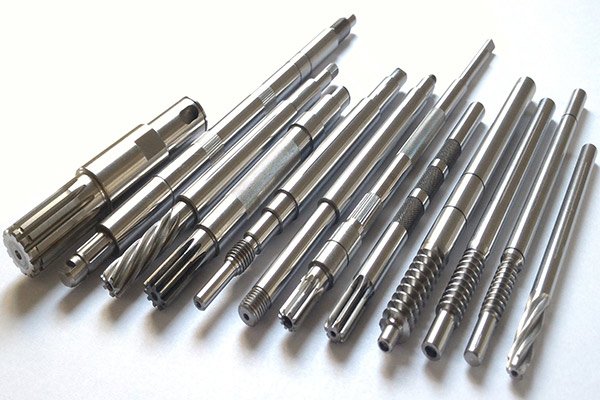
Energy, automotive, robotics, food packaging, and industrial automation also benefit from EDM where hardened materials, wear resistance, or miniature geometry are required. Examples include gears and transmission components, nozzles, cutting tools, sensor housings, wear inserts, carbide rolls, splined parts, and custom shafts. When production volumes grow, EDM may be combined with fixtures, multi-part cutting, standardized blanks, and automated inspection plans to improve throughput and cost stability.
The common factor across these industries is risk control. Hard and brittle materials are expensive. Scrap is costly. Late engineering changes can disrupt assembly schedules. Therefore, successful EDM sourcing depends on early supplier involvement, clear technical communication, and a manufacturing partner capable of managing the complete process chain.
5. Call to Action
Advanced EDM and wire cutting are powerful tools for hard and brittle materials, but the best results come from disciplined engineering and integrated supply chain execution. If your program involves tungsten carbide, hardened steel, titanium, Inconel, cobalt-chromium, conductive ceramics, precision tooling, micro-features, tight profiles, or complex multi-process components, IndustryApex Technology can support your team from DFM review to production delivery.
As IndustryApex CNC, IndustryApex Technology helps global OEM and Tier 1 suppliers reduce sourcing complexity through controlled precision manufacturing, ERP-based production management, 3-axis to 5-axis CNC machining, EDM, precision grinding, industrial ceramics capability, inspection, and export-ready supply chain coordination.
To evaluate your next EDM or wire cutting project, prepare your 2D drawings, 3D models, material requirements, annual demand, tolerance notes, surface finish requirements, and quality documentation expectations. Our engineering team can review manufacturability, identify process risks, and propose a practical production route.
Contact IndustryApex Technology today to discuss advanced EDM, wire cutting, and integrated precision manufacturing solutions for your next hard-material component program.