- Shaft
- Molds&Tools
- Hydraulics And Pump
- Hair transplant needle
- Hydraulics And Pump
- Precision CNC Shaft Machining Manufacturer for High Performance Applications
- Energy Industry CNC Machining Parts Supplier
- Aerospace CNC Machining Parts Manufacturer
- Aerospace CNC Machining Parts Manufacturer
- Automotive & EV CNC Machining Parts Supplier for OEM and Tier 1
- Medical CNC Machining Parts Supplier for Precision Medical Devices

Integrating 3D Printing with Traditional CNC for Rapid Prototyping: A Practical Guide for OEMs and Tier 1 Suppliers

Executive Summary
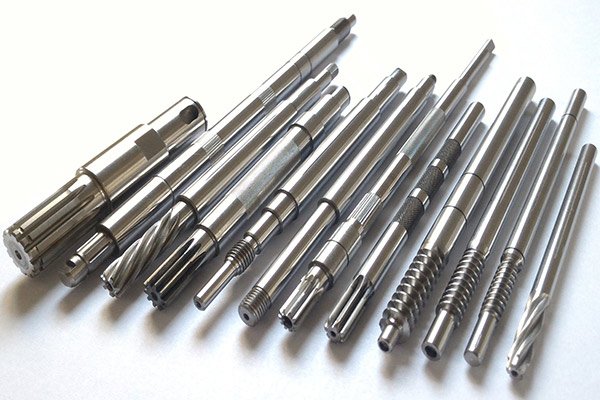
Rapid prototyping has moved beyond a simple speed contest. For global OEMs and Tier 1 suppliers, the real objective is not just to produce a prototype quickly, but to validate geometry, fit, function, manufacturability, and supply chain readiness with minimal iteration. In that context, integrating 3D printing with traditional CNC machining creates a stronger prototype workflow than either process can deliver alone.
3D printing excels at speed, complexity, and low-cost concept iteration. CNC machining delivers tight tolerances, stable material properties, and production-representative surfaces. When combined intelligently, they support a hybrid model in which additive manufacturing accelerates design learning and subtractive machining restores precision where it matters most. This approach shortens development cycles, improves decision quality, and reduces the risk of late-stage tooling or release failures.
For manufacturers working across aerospace, medical, hydraulics, and other high-precision sectors, the hybrid prototype strategy also strengthens sourcing resilience. It gives engineering teams more options for material evaluation, functional testing, and pilot builds while preserving a path to scalable production. At IndustryApex Technology, IndustryApex CNC supports this model through a controlled precision manufacturing system, ERP-driven coordination, and more than 30 years of experience delivering OEM and Tier 1 supply chain solutions.
Technical Deep Dive
The strongest hybrid prototyping workflow starts with a clean division of labor between additive and subtractive processes. 3D printing is typically used for form studies, internal channels, ergonomic evaluation, topology experiments, and early-fit assemblies. CNC machining is then applied to critical interfaces, datum surfaces, threaded features, sealing faces, bearing seats, and any geometry where dimensional confidence is essential.
This is especially effective when the prototype must mirror production intent. For example, a polymer-printed housing can be used to verify assembly access, cable routing, and component packaging, while the mating aluminum or stainless interfaces are CNC machined to the exact tolerances planned for the final unit. In metal programs, printed near-net blanks can be finish-machined to restore accuracy and surface integrity. This lets teams evaluate a complex shape without accepting the dimensional instability that can accompany fully printed functional prototypes.
Material selection is a critical technical decision. Additive processes vary widely in strength, thermal behavior, anisotropy, and post-processing needs. CNC machining, by contrast, works across a predictable set of engineering metals, engineering plastics, and specialty materials with clear performance data. A hybrid approach allows engineers to choose the least risky material for each function rather than forcing a single process to carry every requirement.
From a DFM standpoint, the integration of both methods also makes design validation more rigorous. Additive geometry can expose weak assumptions about wall thickness, clearance, internal support access, and assembly sequence. CNC finishing then tests whether the design can hold tolerances at the features that drive performance. This combination is valuable for programs that must be ready for production validation, not just presentation-grade mockups.
Workflow control matters as much as process selection. A competent hybrid prototype system needs version control, inspection discipline, process planning, and rapid feedback between engineering and production. Without that coordination, teams risk building a fast prototype that does not answer the right question. With it, the prototype becomes a reliable engineering instrument.
For more on precision production capabilities, visit the IndustryApex CNC home page. For application-specific requirements in aerospace, see the aerospace parts capability page, and for regulated device work, review the medical parts page. For fluid power systems, the hydraulics and pump page shows another common precision use case.
The ODM & Supply Chain Advantage
Hybrid prototyping is not only a manufacturing decision. It is a supply chain strategy. When a supplier can coordinate additive and CNC processes under one managed system, the customer gains fewer handoffs, shorter lead times, and better accountability from concept through pilot release.
IndustryApex Technology’s reference edge is built around a core identity as a supply chain integrator and ODM solution provider. That distinction matters because many buyers do not need a single process vendor; they need a partner who can align design input, material sourcing, machining capacity, inspection, and delivery commitments into one controlled program. In practice, that reduces fragmentation and helps global OEM and Tier 1 teams move from prototype to stable sourcing with less operational friction.
The manufacturing edge comes from a fully controlled precision manufacturing system supported by ERP and more than 30 years of experience. For engineering teams, that means prototype work is not treated as an isolated side activity. It is managed within a disciplined production environment where schedules, material flow, traceability, and quality records are connected. That structure is especially important when printed components must be transitioned into CNC-finished assemblies or when prototype data must remain usable for later production planning.
On the technical capability side, the combination of 3-5 axis CNC, EDM, precision grinding, and industrial ceramics provides a broad response range for prototype and pre-production work. Multi-axis CNC handles complex geometry and critical features. EDM supports difficult-to-machine details and internal forms. Precision grinding tightens finish and flatness where needed. Industrial ceramics extend options for high-wear, high-temperature, or chemically demanding environments. Together, these capabilities allow a hybrid prototype strategy to stay within one qualified manufacturing ecosystem instead of scattering work across multiple vendors.
For sourcing teams, this also improves commercial clarity. A supplier that can advise on process selection, manufacturability, and transition to production is better positioned to reduce duplicate qualification efforts. That is why integrated prototyping has value beyond speed: it creates a clearer path to repeatable procurement, especially when programs are expected to scale across multiple regions or product lines.
Industry Applications
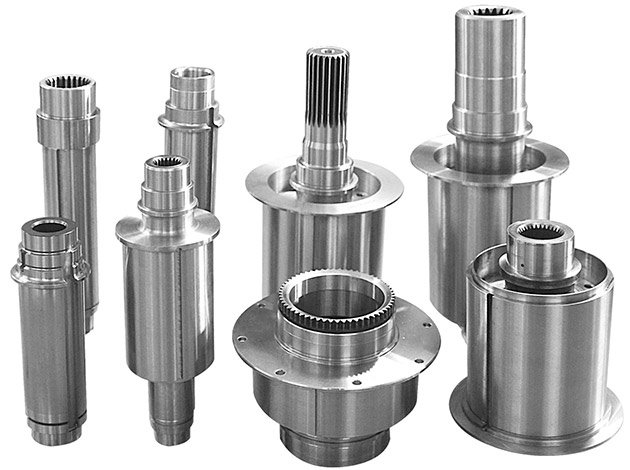
In aerospace, hybrid prototyping supports lightweight structural studies, complex housings, brackets, ducting, and assembly verification before committing to production tooling. Teams can use 3D printing to explore internal passages and packaging, then rely on CNC machining to validate the load-bearing interfaces and tolerance-sensitive features. For programs requiring high confidence in material performance, this is a practical way to accelerate iteration without sacrificing engineering discipline.
In medical applications, the value lies in device fit, ergonomics, and precision validation. Printed models can support surgeon feedback, fixture design, and early concept verification, while CNC-machined metal components provide the accuracy needed for implants, surgical instruments, and device parts. A controlled prototype workflow is especially important in this sector because design changes often affect compliance, assembly, sterilization behavior, and long-term manufacturability.
In hydraulics and pumps, hybrid prototyping is useful for impellers, valve bodies, housings, manifolds, and flow-path optimization. Additive methods can quickly test internal geometry and packaging, while CNC finishes the sealing surfaces, bores, and mounting interfaces that determine performance under pressure. This lowers development risk in systems where small dimensional errors can create leakage, wear, or efficiency loss.
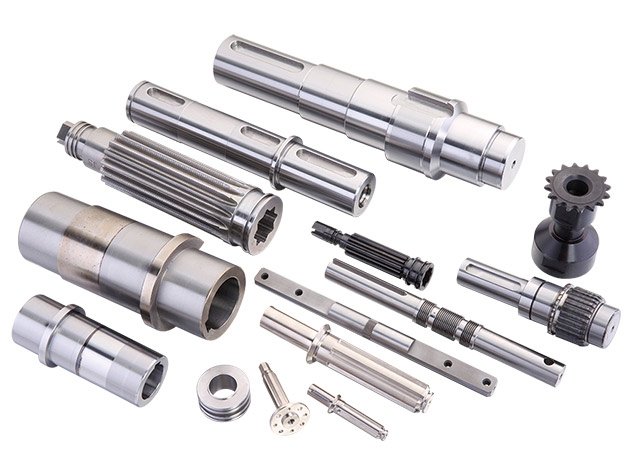
The same logic applies across drivetrain, automation, optics support structures, semiconductor equipment, and other advanced industrial segments. Any program that combines complex geometry with tight tolerances is a candidate for a hybrid prototype path. The key is to let each process do the work it is best suited to do, then use inspection and process control to connect the results into one coherent engineering deliverable.
To discuss a prototype-to-production workflow or request engineering support, use the contact page.
Call to Action
If your team is evaluating a new prototype program, reducing iteration cycles, or looking for a more reliable path from concept validation to production readiness, a hybrid 3D printing and CNC strategy is worth serious consideration. The right partner should be able to translate design intent into manufacturable parts, coordinate process selection, and keep the supply chain aligned as the project matures.
IndustryApex Technology, through IndustryApex CNC, supports global OEM and Tier 1 suppliers with integrated precision manufacturing, ODM services, and disciplined execution across complex prototype and production environments. For teams that need both speed and control, that combination is often the difference between an interesting concept and a validated industrial solution.