- Shaft
- Molds&Tools
- Hydraulics And Pump
- Hair transplant needle
- Hydraulics And Pump
- Precision CNC Shaft Machining Manufacturer for High Performance Applications
- Energy Industry CNC Machining Parts Supplier
- Aerospace CNC Machining Parts Manufacturer
- Aerospace CNC Machining Parts Manufacturer
- Automotive & EV CNC Machining Parts Supplier for OEM and Tier 1
- Medical CNC Machining Parts Supplier for Precision Medical Devices

Cold Heading Tooling vs. CNC Machining: Which Is Right for Your Project?

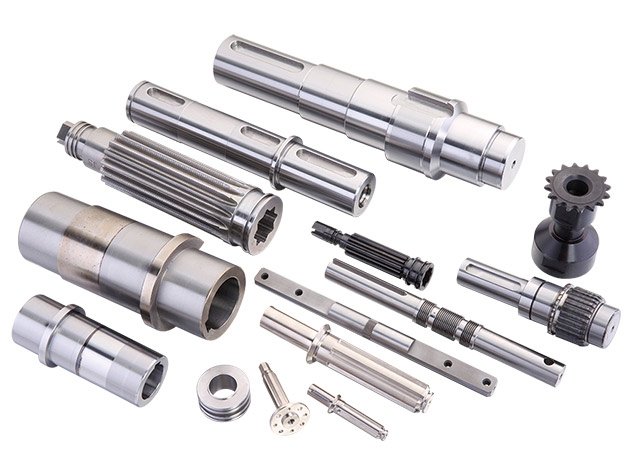
Cold Heading Tooling vs. CNC Machining: Which Is Right for Your Project?
Choosing between cold heading tooling and CNC machining is not a question of which process is universally superior. It is a decision about geometry, annual volume, material behavior, tolerances, and supply chain economics. For OEMs and Tier 1 suppliers, the wrong choice can mean avoidable unit cost, unstable quality, or a process that cannot scale when demand rises.
Executive Summary
Cold heading tooling is typically the better choice for high-volume fasteners and near-net-shape parts that benefit from extreme material efficiency, fast cycle times, and repeatable production once the die set is proven. CNC machining is the stronger option for complex geometry, lower volumes, frequent revisions, tight feature accessibility, and parts that must be produced directly from bar, billet, or forgings without major upfront tooling investment.
The practical comparison is not simply cost per part. Cold heading shifts cost into tooling engineering, setup validation, and process control; CNC machining shifts cost into cycle time, machine capacity, and post-processing. If your project requires millions of identical pieces, stable demand, and a form that can be made by upsetting and trimming, cold heading often wins. If your project is a prototype, a medical component, an aerospace bracket, or a fluid-power part with internal features and complex faces, CNC machining is usually the more rational path.
At IndustryApex Technology, the right answer is often not either-or. As a supply chain integrator and ODM solution provider, we help global OEM and Tier 1 teams match process selection to the real business requirement, then execute through a fully controlled precision manufacturing system supported by ERP discipline and more than 30 years of experience. That matters because manufacturing strategy is a sourcing decision as much as a technical one.
Technical Deep Dive
Cold heading, also called cold forming or cold upsetting in related contexts, uses compressive force to plastically deform metal at or near room temperature. The process begins with wire or rod stock cut to length, then forced through one or more dies and punches to form heads, shoulders, splines, reduced sections, or other features. Because the metal flows rather than being removed, the process preserves grain continuity and typically improves fatigue strength in appropriately designed parts.
CNC machining removes material from bar stock, forgings, or cast blanks using cutting tools controlled by programmed motion. It excels where the part contains pockets, cross-holes, threads, angled surfaces, contoured profiles, or combinations of features that are difficult or impossible to create with pure forming. Multi-axis CNC platforms, including 3-axis and 5-axis systems, extend that flexibility further by reducing setups and enabling more complete feature access.
From a production engineering perspective, the first question is whether the part’s geometry is formable. Parts with large diameter transitions, strong axial symmetry, and limited undercuts are natural candidates for cold heading tooling. Parts with asymmetric features, deep cavities, thin walls, or highly localized tolerances are better aligned with CNC machining. This is especially true when tolerances are distributed across multiple features rather than concentrated on a single functional diameter or face.
Material selection is equally important. Many steels, stainless grades, aluminum alloys, and some copper-based materials can be cold formed effectively when the process window is understood. However, harder alloys, brittle materials, and geometries with severe draw ratios may exceed the practical limits of heading. In contrast, CNC machining is less constrained by plastic deformability, though tool wear, chip control, heat generation, and surface integrity become more significant with difficult alloys.
Tooling economics create the biggest divergence between the two methods. Cold heading requires dedicated dies, punches, and process development. The initial investment can be substantial, but once stable, the cost per part drops sharply at scale. CNC machining generally has lower entry cost because the tooling is largely in the machine program and standard cutting tools, but the recurring cost per unit is higher because every feature is made by removing material and consuming machine time.
Lead time also behaves differently. CNC can usually start faster because a programmer can convert CAD into a workable path and produce first articles quickly. Cold heading takes longer to industrialize because the die design must account for metal flow, lubrication, die life, press tonnage, and dimensional recovery after springback. That means a project with uncertain specifications often belongs in CNC first, then migrates to cold heading only after design freeze and volume justification.
For procurement teams, the hidden question is supply risk. A cold heading program depends on tooling robustness, die maintenance, and stable incoming wire quality. A CNC program depends on machine availability, fixture repeatability, tool inventory, and inspection discipline. Both can be highly reliable, but the failure modes are different, and the sourcing plan should reflect that reality.
In practice, many programs use a hybrid strategy. A near-net cold-headed blank may be followed by CNC finishing for critical faces, holes, or threaded interfaces. This approach can preserve the economic advantages of forming while protecting functional accuracy where it matters most. The same logic appears in aerospace, hydraulics, and medical production, where strength, traceability, and dimensional control must coexist.
The ODM & Supply Chain Advantage
The process decision changes when the manufacturing partner is not merely a job shop but an ODM-oriented supply chain integrator. In that model, the supplier is expected to help optimize the part, select the process, coordinate materials, control quality, and manage production continuity from prototype through scale-up. That is a different responsibility than simply quoting the drawing.
IndustryApex Technology operates as a supply chain integrator and ODM solution provider. That matters because many buyers are not looking for a single machining operation; they need a manufacturing system that can absorb engineering changes, manage multiple process routes, and keep output stable across long programs. A fully controlled precision manufacturing system, supported by ERP, gives the production team visibility into material status, work order flow, inspection checkpoints, and shipment timing. For global OEMs and Tier 1 suppliers, that visibility reduces scheduling noise and procurement uncertainty.
Our manufacturing edge is built on more than 30 years of experience and a broad technical base that includes 3-axis and 5-axis CNC, EDM, precision grinding, and industrial ceramics. That mix is important because part design rarely lives in one process family. A component may begin as a formed blank, move through CNC finishing, then require EDM on a tight internal profile or grinding on a critical diameter. The value of an integrated supplier is that these steps do not become fragmented across unrelated vendors.
This is especially relevant when the supply chain must support aerospace parts, medical parts, hydraulic assemblies, or other engineered products with strict audit and quality expectations. For example, aerospace programs often demand stable traceability and strict material integrity, which makes process control and documentation as important as geometry. Medical programs prioritize consistency, surface quality, and controlled production environments. Hydraulic and pump components need sealing performance, concentricity, and wear resistance. Each of these categories can benefit from CNC machining, but some subcomponents are better costed through forming or hybrid routes. You can see that logic across our aerospace parts, medical parts, and hydraulics & pump applications pages, which reflect how process choice follows end-use requirements rather than generic machine capability.
That same integrated approach improves supply chain resilience. If a program shifts from a formed fastener to a machined variant, or from a machined prototype to a hardened production part, the transition is easier when the supplier already owns the process stack and inspection discipline. Buyers can move between process routes without rebuilding the vendor base from zero. In practical terms, that shortens qualification cycles and reduces the number of handoffs where quality can degrade.
For teams managing global sourcing, the best partner is the one that aligns technical feasibility with production continuity. That is the point at which engineering and supply chain strategy meet.
Industry Applications
Cold heading tooling is strongest in industries that consume large quantities of fasteners, pins, connectors, studs, and other axisymmetric components. Automotive and drivetrain programs commonly benefit from heading because the parts are repetitive, high volume, and cost-sensitive. The process also supports strong fatigue performance in many applications, which is useful for powertrain and structural fastening.
CNC machining is the natural fit for aerospace, medical, fluid control, and precision equipment. Aerospace brackets, structural components, and titanium parts often require multi-axis access, tight process controls, and detailed inspection. Medical components demand dimensional accuracy, material integrity, and documentation suitable for regulated supply chains. Fluid control and pump components often include complex bores, flow paths, sealing surfaces, and concentric features that are difficult to form by heading alone.
In the field of high-precision machining, the choice often comes down to where the feature complexity lives. A component that looks simple externally may contain a sequence of internal tolerances, cross features, or functional surfaces that only CNC can handle economically at low to medium volume. Conversely, a part that appears modest in CAD may be a perfect candidate for cold heading once geometry is revised to respect the flow of metal rather than the logic of subtraction.
Some industries pull both methods into the same program. A cold-headed blank can reduce raw material waste for a connector or shaft-end component, while CNC finishing adds the final tolerances. This hybrid model is common when the business case values both unit cost and performance. It is also an effective answer when annual demand is growing but not yet high enough to justify a fully dedicated forming line.
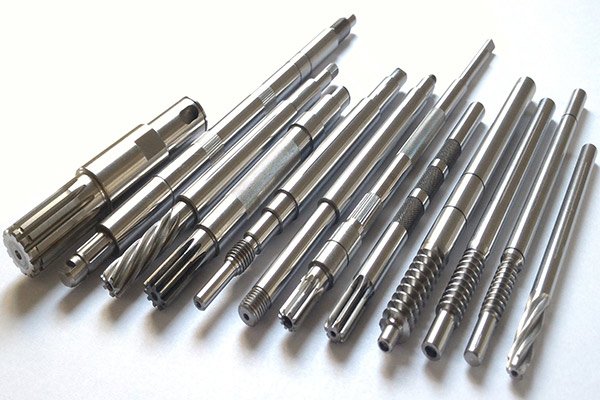
For buyers comparing sourcing routes, the industry question is simple: does the part reward flow-forming economics, or does it demand subtractive flexibility? The answer usually determines both the process and the best long-term supplier model.
Call to Action
If your program is still at the decision stage, the fastest path is a manufacturability review. IndustryApex Technology can help evaluate whether cold heading tooling, CNC machining, or a hybrid process is the right fit for your part, your target volume, and your supply chain requirements. We support global OEM and Tier 1 customers with process selection, engineering input, and controlled production across multiple precision capabilities.
To discuss an application, request a review, or start a sourcing conversation, visit our Contact Us page. For a broader view of our capabilities, explore our home page, along with our aerospace parts, medical parts, and hydraulics & pump pages to see how we support demanding industries end to end.