- Shaft
- Molds&Tools
- Hydraulics And Pump
- Hair transplant needle
- Hydraulics And Pump
- Precision CNC Shaft Machining Manufacturer for High Performance Applications
- Energy Industry CNC Machining Parts Supplier
- Aerospace CNC Machining Parts Manufacturer
- Aerospace CNC Machining Parts Manufacturer
- Automotive & EV CNC Machining Parts Supplier for OEM and Tier 1
- Medical CNC Machining Parts Supplier for Precision Medical Devices

Titanium Implants: Challenges and Solutions in Medical CNC Machining

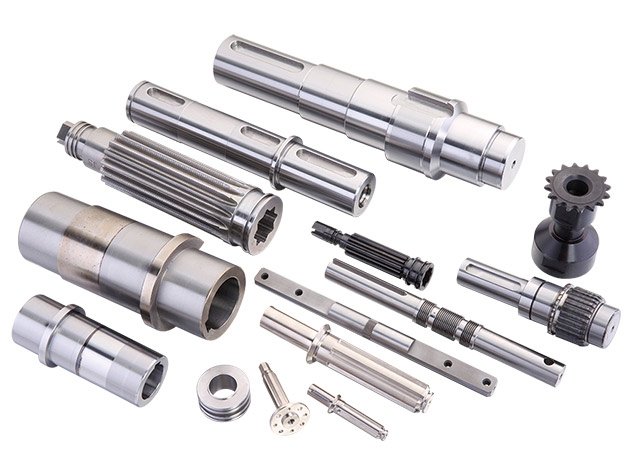
Titanium Implants: Challenges and Solutions in Medical CNC Machining
For global OEMs and Tier 1 medical device suppliers, titanium implant machining is no longer just a precision manufacturing task. It is a supply chain, validation, risk control, and lifecycle reliability challenge. As IndustryApex CNC, the international manufacturing brand of IndustryApex Technology, we see titanium implants as one of the clearest examples of where engineering discipline and supplier integration directly affect clinical device performance, cost stability, and launch timing.
Executive Summary
Titanium is widely used for orthopedic implants, spinal systems, dental implants, trauma plates, bone screws, surgical fixation devices, and selected minimally invasive device components because it combines high specific strength, corrosion resistance, biocompatibility, and favorable osseointegration behavior. Titanium alloys such as Ti-6Al-4V and Ti-6Al-4V ELI are especially common in implant applications where fatigue strength, dimensional stability, and long-term body fluid resistance are critical.
However, titanium is difficult to machine consistently. Its low thermal conductivity concentrates heat at the cutting edge, while its chemical reactivity and tendency toward work hardening increase tool wear and process variation. Thin implant features, deep pockets, small threads, porous surface zones, complex contours, and strict burr control requirements further raise the manufacturing difficulty. A medical titanium part may look small, but it often carries a much heavier engineering burden than a larger industrial component.
The solution is not a single machine or a single cutting tool. Successful medical CNC machining requires a controlled process system: robust design for manufacturability review, stable workholding, validated toolpaths, disciplined coolant strategy, in-process measurement, documented traceability, and supply chain control. This is why OEMs increasingly evaluate suppliers not only on quoted price, but also on their ability to manage tolerance risk, material traceability, inspection records, repeat production, and responsive engineering support.
IndustryApex Technology positions IndustryApex CNC as a precision manufacturing and ODM supply chain partner for demanding sectors, including medical, aerospace, fluid control, industrial equipment, and advanced materials. For titanium implants, the most valuable supplier is one that can combine machining know-how with process control and program-level support from prototype through qualified serial production.
Technical Deep Dive
The first machining challenge in titanium implants is heat. Titanium does not conduct heat away from the cutting zone efficiently, so heat remains concentrated at the tool-chip interface. This accelerates flank wear, crater wear, edge chipping, and built-up edge formation. In implant production, tool wear is not only a productivity issue. It can change surface finish, alter critical dimensions, create burrs, and increase the risk of microstructural damage if the process is not controlled.
Cutting parameter selection must therefore be conservative, repeatable, and matched to tool geometry, coolant delivery, fixture rigidity, and feature type. High spindle speed alone is rarely the answer. Many titanium implant features benefit from optimized chip load, sharp cutting edges, high-pressure coolant, trochoidal or adaptive milling strategies, and toolpaths that avoid prolonged rubbing. For small medical components, predictable chip evacuation can be just as important as cycle time reduction.
The second challenge is geometry. Implants are often designed around anatomy, so the part may include curved surfaces, bone-facing contours, angled holes, undercuts, small radii, and thin sections. Five-axis CNC machining is frequently required to reduce setups, maintain datum consistency, and reach complex features without excessive tool stick-out. Reducing setups is especially important for parts with tight positional tolerances between screw holes, mating surfaces, taper connections, and interface features.
The third challenge is burr control. Titanium burrs can be tough, flexible, and difficult to remove without damaging adjacent surfaces. For bone plates, spinal components, dental implant interfaces, and surgical instrument contact surfaces, uncontrolled burrs are unacceptable. Burr prevention should begin in the process design stage through toolpath direction, exit strategy, tool sharpness, feature sequencing, and edge-break specification. Manual deburring alone is not a reliable control plan for high-value medical parts unless it is supported by clear standards, trained operators, inspection criteria, and repeatable finishing methods.
Surface integrity is another critical issue. Implant components may require polished, blasted, etched, textured, or coating-ready surfaces depending on their function. A screw head interface needs torque transfer and wear resistance. A bone-contacting surface may require controlled roughness for biological fixation. A taper or mating surface may require extremely tight geometry and finish control. This means machining, grinding, EDM, and finishing steps must be planned as a sequence, not treated as independent operations.
Material traceability is equally important. Medical titanium production depends on certified material, heat lot records, chemical composition control, mechanical property verification, and documentation that supports regulatory and customer quality systems. When an OEM transfers a new implant component to production, the machining supplier must be able to preserve traceability from incoming bar, billet, plate, or forging through work order, inspection record, and shipment.
Inspection strategy must match the risk profile of the part. Coordinate measuring machines, optical measurement, thread gauges, surface roughness testers, profile projectors, and custom fixtures may all be needed. For complex implants, inspection planning should be completed during process development, not after parts are machined. Datums, freeform surfaces, small holes, threads, and critical mating interfaces must be measurable in a way that is repeatable between supplier and customer. For related precision medical manufacturing capabilities, OEM teams can review IndustryApex Technology medical CNC machining solutions.
The ODM & Supply Chain Advantage

Many titanium implant problems begin before machining starts. Drawings may include tolerance stacks that are difficult to verify, surface finish callouts that conflict with coating requirements, or thread and hole features that create unnecessary tool access problems. An ODM-oriented manufacturing partner helps identify these issues early and convert them into practical process decisions before they become production delays.
IndustryApex Technology operates as a supply chain integrator and ODM solution provider, not only as a machine shop. This matters because titanium implant programs often require more than milling and turning. They may involve precision grinding, EDM, laser marking coordination, passivation or cleaning coordination, ceramic or hard material subcomponents, custom fixtures, controlled packaging, and multi-stage inspection. A fragmented supply chain increases handoff risk, communication delay, and responsibility gaps. A coordinated manufacturing system reduces those risks.
Our manufacturing edge is built on a fully controlled precision manufacturing system supported by ERP management and more than 30 years of manufacturing experience. ERP control helps align orders, materials, process routes, inspection stages, delivery commitments, and revision status. For medical OEMs, this kind of control is valuable because a missed revision, undocumented material change, or uncontrolled process adjustment can create serious commercial and regulatory exposure.
IndustryApex Technology capabilities include 3-axis, 4-axis, and 5-axis CNC machining, EDM, precision grinding, and industrial ceramics manufacturing. These capabilities support complex medical parts as well as cross-industry precision components. For example, titanium process knowledge developed in aerospace structural machining can inform medical programs where lightweight strength and fatigue resistance are also priorities. OEMs can compare this broader titanium manufacturing background through our aerospace CNC machining for titanium aircraft parts capability page.
The supply chain advantage becomes especially clear during ramp-up. Prototype quantities are useful for design verification, but serial production requires control of tool life, setup repeatability, operator training, inspection throughput, packaging, and delivery cadence. A supplier that performs well on ten prototype implants may still struggle at one thousand pieces per month if it lacks process documentation, equipment planning, and production traceability. IndustryApex Technology supports global OEM and Tier 1 suppliers by treating each part as part of a larger manufacturing program, with engineering review, process planning, quality documentation, and delivery management working together.
Cost reduction also requires engineering depth. In titanium machining, aggressive cost cutting through faster feeds, lower-cost tooling, or reduced inspection can create hidden risk. Better cost improvement usually comes from fixture optimization, setup reduction, near-net material strategy, toolpath refinement, standardized cutters, stable inspection fixtures, and early DFM feedback. The goal is to reduce waste and variation without weakening the process controls that protect the implant program.
Industry Applications
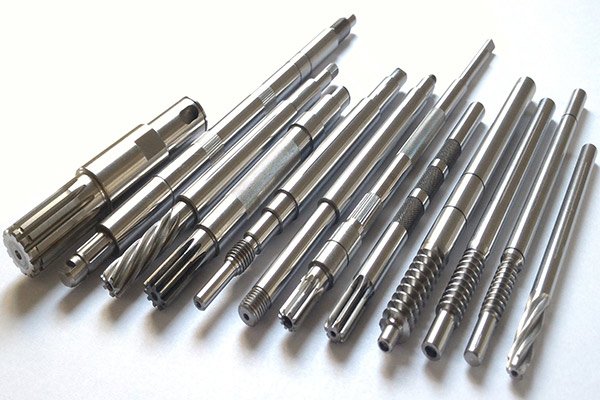
Titanium implant machining serves several high-value medical categories. Orthopedic applications include trauma plates, bone screws, intramedullary nail components, joint replacement features, and custom fixation hardware. These parts often demand high fatigue strength, reliable screw engagement, precise anatomical contours, and controlled edge conditions. Spinal applications can include cages, rods, hooks, connectors, and fixation assemblies where surface geometry, thread quality, and dimensional consistency affect surgical handling and construct stability.
Dental implant components represent another demanding category. Abutments, implant bodies, screws, and interface features require excellent concentricity, thread integrity, surface finish, and connection accuracy. Small deviations at a taper, hex, internal connection, or screw seat can create functional problems even when the part appears visually acceptable. This is why process capability and inspection planning are central to dental titanium production.
Surgical instruments and device components may also use titanium where low weight, corrosion resistance, and sterilization compatibility are important. These parts may not remain implanted in the body, but they still require clean surfaces, ergonomic geometry, repeatable function, and material documentation. CNC machining for medical devices often shares methods with high-reliability industrial sectors where precision, repeatability, and material performance are non-negotiable.
There are also useful lessons from adjacent industries. Fluid control components, for example, require tight clearances, reliable sealing surfaces, and high-quality internal geometry. IndustryApex Technology applies similar process discipline in hydraulic pump parts and precision fluid control components, where surface finish, roundness, and dimensional stability directly influence performance. While regulatory expectations differ, the engineering mindset is comparable: define the functional risk, control the process, verify the result, and protect repeatability.
For global OEMs and Tier 1 suppliers, supplier selection should consider technical capability, quality system maturity, documentation discipline, and supply chain responsiveness. A strong titanium implant supplier should be able to discuss material grade selection, manufacturability, feature sequencing, critical-to-quality dimensions, burr strategy, surface finish control, cleaning requirements, inspection methods, and production scaling. The conversation should move beyond unit price and into total program risk.
Medical device companies are also under pressure to shorten development cycles while maintaining quality. This creates demand for suppliers that can support prototype machining, pilot builds, design iteration, validation lots, and ongoing production without losing process knowledge between stages. When engineering feedback from early builds is captured and carried forward, customers avoid repeating the same manufacturability issues at each revision.
Call to Action
Titanium implants demand more than precision machines. They require a controlled manufacturing system, experienced process engineers, reliable inspection, stable documentation, and a supply chain partner that understands how medical device programs move from concept to production. IndustryApex Technology, through IndustryApex CNC, supports OEM and Tier 1 customers with CNC machining, EDM, precision grinding, industrial ceramics, ODM engineering support, and integrated supply chain execution.
If your team is developing titanium implants, surgical instruments, or high-precision medical device parts, involve manufacturing engineering early. A short DFM review can often prevent costly redesign, difficult inspection disputes, excessive burr removal, unstable cycle times, or delayed validation builds. The right supplier should help you protect clinical function, regulatory confidence, and commercial launch schedules at the same time.
To discuss a titanium implant machining project, prototype requirement, or serial production transfer, contact IndustryApex Technology. Our team can review drawings, materials, tolerances, finishing needs, inspection requirements, and supply chain expectations to help define a practical manufacturing path for your next medical CNC machining program.