- Shaft
- Molds&Tools
- Hydraulics And Pump
- Hair transplant needle
- Hydraulics And Pump
- Precision CNC Shaft Machining Manufacturer for High Performance Applications
- Energy Industry CNC Machining Parts Supplier
- Aerospace CNC Machining Parts Manufacturer
- Aerospace CNC Machining Parts Manufacturer
- Automotive & EV CNC Machining Parts Supplier for OEM and Tier 1
- Medical CNC Machining Parts Supplier for Precision Medical Devices

Cold Heading Tooling vs. CNC Machining: Which Process Fits Your Project?

Executive Summary
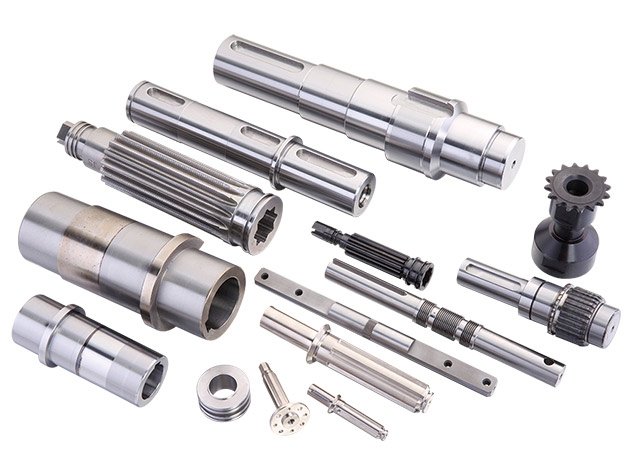
Cold heading tooling and CNC machining solve different manufacturing problems, and the right choice depends on geometry, volume, material behavior, tolerance stack-up, and supply chain risk. Cold heading is built for high-volume production of axisymmetric parts with excellent material utilization, fast cycle times, and strong work-hardened properties. CNC machining is better for complex geometries, lower volumes, tight feature variety, and faster design iteration.
For global OEMs and Tier 1 suppliers, the decision is rarely just technical. It is also commercial. Tooling investment, piece-price stability, lead time, inspection burden, and downstream assembly risk all matter. IndustryApex Technology, under the IndustryApex CNC platform, positions this decision inside a broader ODM and supply chain framework: not only making the part, but integrating process selection, precision manufacturing, and delivery control into one system. That matters when a program needs repeatability, cost-down pressure, and dependable ramp-up across multiple product phases.
In practical terms, choose cold heading when the part is mechanically suitable, the annual volume is high, and material waste must be minimized. Choose CNC machining when design flexibility, short-run responsiveness, or complex precision features outweigh the savings of forming. In many real programs, the best answer is hybrid: cold heading for the blank or core form, then CNC machining for critical secondary features.
Technical Deep Dive
Cold heading is a near-net-shape process that plastically deforms wire or rod at room temperature, often through multiple stations and high-tonnage tooling. Because the metal flows rather than being cut away, the process produces very high material efficiency. It is especially effective for fasteners, pins, shafts, sleeves, fittings, and other symmetrical components where grain flow, fatigue strength, and throughput are important. The process also reduces chips, coolant use, and secondary waste streams, which improves the economics of large production runs.
CNC machining, by contrast, removes material from billet, bar, casting, or forged stock using cutting tools controlled by a program. It excels when a part has pockets, undercuts, non-cylindrical surfaces, or mixed feature families that are difficult to form in one direction. Multi-axis systems can produce complicated components in fewer setups, and the technology is highly adaptable to design changes. For prototype work and low-to-medium volume production, that flexibility often outweighs the per-part cost of subtractive manufacture.
The first engineering question is not “which is cheaper,” but “which process is physically appropriate.” Cold heading is constrained by deformation limits, tooling access, material formability, and the feasibility of upsetting or extruding features without cracking, folding, or excessive die wear. Long, thin, or highly asymmetric sections are usually poor candidates. CNC machining is far less constrained in shape, but it pays for that freedom with longer cycle times, higher scrap from stock removal, and more exposure to operator, fixturing, and program variation.
Material selection also changes the answer. Medium-carbon steels, stainless steels, aluminum, brass, and some alloy grades can be cold headed if their mechanical response and lubrication window are well understood. Hardened or difficult-to-form materials may require alternative routes, including preform strategies, annealing, warm forming, or machining. CNC machining handles a broader range of materials, including titanium, hardened steels, engineering ceramics, and specialty alloys, provided the tooling and process controls are selected correctly.
From a quality standpoint, cold heading can produce strong dimensional consistency once the tooling is stabilized, but the upfront die design is critical. Flash, burr formation, eccentricity, and springback must be engineered out early. CNC machining offers easier dimensional correction through program compensation and process adjustment, but it can introduce tool wear drift, thermal effects, and surface integrity concerns if controls are weak. The deciding factor is often not tolerance alone, but whether the tolerance can be held economically at scale.
The cost model is equally different. Cold heading has a heavier upfront tooling commitment but an attractive marginal cost once production stabilizes. CNC machining typically has lower launch cost and faster setup, but the unit cost stays more sensitive to cycle time and material removal. For a sustained program, a one-time die investment can become dramatically more efficient than repeated machining time. For a changing program, CNC gives the commercial agility that forming cannot.
In many supply chains, a hybrid route is the best engineering compromise. A part may begin as a cold-headed preform to preserve grain flow and reduce stock, then move to CNC machining for threads, cross-holes, sealing faces, or precision interfaces. This approach is common in drivetrain, fluid handling, and structural hardware where both throughput and functional precision matter.
| Decision Factor | Cold Heading Tooling | CNC Machining |
|---|---|---|
| Best volume range | High volume | Low to medium volume |
| Geometry | Symmetrical, formable parts | Complex, mixed-feature parts |
| Material efficiency | Very high | Moderate to low |
| Launch cost | Higher tooling investment | Lower initial setup |
| Design flexibility | Lower after tooling release | High |
| Lead time response | Best at stable production | Best for changeable demand |
The ODM & Supply Chain Advantage

For IndustryApex Technology, the real question is not only whether a part can be made. It is whether it can be delivered as part of a managed manufacturing system. The company’s core identity is that of a supply chain integrator and ODM solution provider, which means process selection is connected to sourcing, production planning, inspection, packaging, and shipment discipline. That is a different operating model from a simple machine shop quoting a drawing.
This matters because the cold heading versus CNC decision is often tied to program maturity. Early-stage projects may need design support, DFM feedback, and rapid prototype iterations. Later-stage programs may need stable output, controlled cost, and repeatable quality across long production horizons. A fully controlled precision manufacturing system with ERP is valuable here because it links scheduling, traceability, inventory visibility, and production status into one coordinated framework. When lead times change or demand shifts, the system can absorb the impact more predictably.
IndustryApex Technology also brings over 30 years of manufacturing experience, which is important in process selection. In practice, many parts are over-designed for machining when a formed route would lower cost, or over-committed to tooling when the product is still unstable. Experience across 3-5 axis CNC, EDM, precision grinding, and industrial ceramics helps determine the right route for the real part, not just the theoretical drawing. That capability range supports both conventional machined components and harder engineering categories that require tight geometry or advanced surface control.
For global OEM and Tier 1 suppliers, this is a supply chain advantage, not just a manufacturing claim. Programs at that level need vendor discipline, documentation, and the ability to scale without losing process control. They also need partners who can manage mixed part families, engineering changes, and cross-functional sourcing decisions. IndustryApex Technology’s ODM framework helps reduce the friction between design intent and production reality.
For buyers evaluating sourcing pathways, the most useful lens is lifecycle cost. A cold-headed component may cost more to launch but less to sustain. A CNC-machined component may be easier to start but harder to scale economically. The right supplier should be able to model both and recommend the one that fits the product’s actual demand curve. That is where integrated manufacturing and supply chain control creates value.
Industry Applications
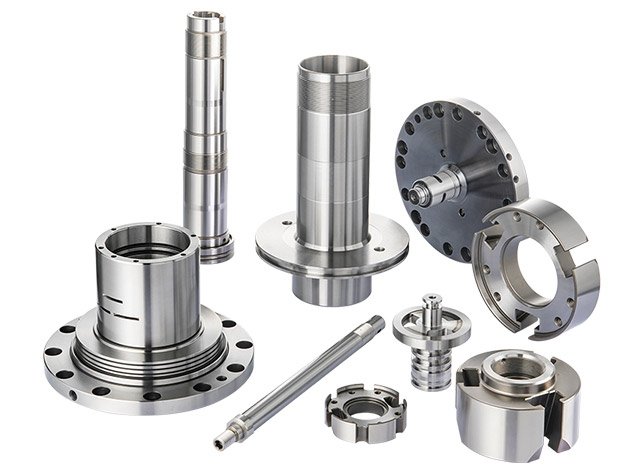
Cold heading tooling is widely used in fastener-intensive and high-repeatability industries. When parts are simple, strong, and high in annual demand, the process delivers excellent economics. CNC machining is more common where features are complex, tolerances are critical across multiple faces, or the application calls for frequent design updates. The following examples show how the decision changes by industry.
Aerospace. Aerospace programs often combine weight control, traceability, and demanding geometry. CNC machining is frequently the primary route for structural and precision components, especially when materials like titanium are involved. For these needs, see Aerospace Parts. Cold heading may still be useful for selected fastener-style hardware, but only where geometry and certification requirements align with the forming process.
Medical. Medical components demand repeatability, cleanliness, and precision, often with difficult materials and strict quality systems. CNC machining is usually the dominant route for implants, surgical instruments, and device parts. Learn more through Medical Parts. Cold heading is less common here unless the component is simple and the material and regulatory requirements support the process.
Hydraulics and pumps. Fluid power systems reward dimensional consistency, surface quality, and leak-resistant interfaces. Many valve and pump parts benefit from precision machining, while some connector-style or sleeve-like components may be candidates for forming depending on the design. Review the relevant range at Hydraulics & Pump.
Fasteners, shafts, and formed hardware. This is where cold heading tooling often wins. High-volume pins, screws, sleeves, and similar hardware can be produced with exceptional throughput and strong cost efficiency when the part geometry is well matched to forming. In these cases, the right tool investment can remove a large amount of machining time and material waste.
Custom industrial components. When programs include both formed and machined elements, the best supplier is one that can bridge both worlds. Hybrid routes are common in industrial equipment, automation, energy, and drivetrain systems where cost, strength, and precision all matter. The ability to switch between cold heading and CNC machining inside one managed supply chain is often the difference between a workable launch and a costly delay.
Call to Action
The right process choice starts with the part, but it should end with the supply chain. If your project is under review, IndustryApex Technology can help evaluate whether cold heading tooling, CNC machining, or a hybrid route gives the best balance of cost, quality, and delivery stability. For OEM and Tier 1 sourcing teams, that means less guesswork and a more defensible manufacturing plan.
Visit the IndustryApex CNC home page to review capabilities, or Contact Us to start a technical discussion. A clear process decision early in the program will usually save time, money, and escalation later.