- Shaft
- Molds&Tools
- Hydraulics And Pump
- Hair transplant needle
- Hydraulics And Pump
- Precision CNC Shaft Machining Manufacturer for High Performance Applications
- Energy Industry CNC Machining Parts Supplier
- Aerospace CNC Machining Parts Manufacturer
- Aerospace CNC Machining Parts Manufacturer
- Automotive & EV CNC Machining Parts Supplier for OEM and Tier 1
- Medical CNC Machining Parts Supplier for Precision Medical Devices

Titanium Implants in Medical CNC Machining: Engineering Challenges, Process Controls, and Supply Chain Solutions

Executive Summary
Titanium implants sit at the intersection of biology, precision engineering, and regulated supply chain execution. For orthopedic, dental, spinal, trauma, and surgical device OEMs, the performance of a machined titanium component is not defined only by geometry. It is defined by fatigue strength, surface integrity, cleanliness, traceability, repeatability, and the ability of the supplier to control variation across prototype, validation, and production volumes.
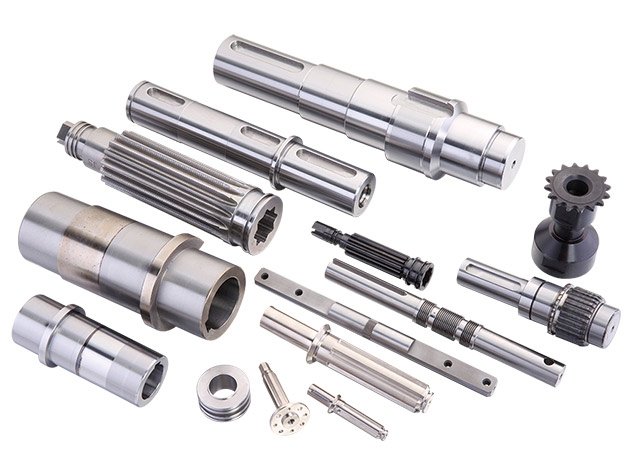
Medical CNC machining of titanium is challenging because the material is strong, chemically reactive, thermally resistant, and unforgiving when process control is weak. Ti-6Al-4V, commercially pure titanium, and other implant-grade alloys can generate heat at the cutting edge, accelerate tool wear, and develop problematic burrs or surface defects if machining parameters are not tightly managed. At the same time, implant features such as porous-interface geometry, bone screw threads, tapered locking interfaces, cannulations, slots, radii, and mating surfaces often require 3-5 axis machining, EDM, precision grinding, and validated inspection workflows.
For global OEM and Tier 1 suppliers, the core sourcing question is no longer whether a supplier can cut titanium. The question is whether the supplier can operate as a manufacturing and supply chain partner: controlling process capability, documentation, materials, subcontracted special processes, lead time, and engineering change response. Dixin Technology, operating through IndustryApex CNC, positions itself as a precision manufacturing partner for complex components across medical, aerospace, fluid control, and other high-reliability sectors. Buyers evaluating IndustryApex CNC manufacturing capabilities should look beyond machine lists and assess the complete system behind the parts.
Technical Deep Dive
Titanium is widely used in implants because it offers an exceptional strength-to-weight ratio, corrosion resistance, and biocompatibility. The same properties that make titanium valuable in the human body make it difficult in the machine shop. Titanium has low thermal conductivity, so heat concentrates at the cutting zone instead of dissipating through the chip. This increases tool temperature, promotes built-up edge, and can produce unstable cutting conditions. The material also has elasticity that can cause deflection, chatter, and spring-back, especially in thin implant walls or long slender features.
Successful titanium implant machining starts with process planning. Fixture design must hold the component without distorting sensitive geometry. Datum strategy must reflect final clinical function, not only convenience for the first operation. A bone plate, spinal cage, acetabular component, dental abutment, or trauma screw may require multiple coordinated setups, each with verified relationship to the functional datum structure. Poor datum transfer can create subtle angular or positional errors that only appear during final assembly, inspection, or clinical mating.
Cutting tool selection is equally critical. Sharp carbide tools with suitable coatings, controlled edge preparation, and optimized flute geometry help manage heat and chip evacuation. High-pressure coolant, correct tool engagement, and stable feed rates are necessary to avoid rubbing. Conservative cutting can be as damaging as aggressive cutting if it allows heat to build without efficient chip formation. For implant components, the goal is not simply cycle time reduction. The goal is controlled material removal that preserves surface integrity and dimensional stability.
Burr control is one of the most underestimated risks in medical CNC machining. Titanium burrs can be tough, elastic, and difficult to remove cleanly from cross holes, threads, internal passages, windows, or porous-like features. A burr left on an implant can interfere with assembly, create contamination risk, or compromise patient safety. Engineering teams should address burr formation during toolpath design, not after machining is complete. Deburring must be repeatable, validated, and compatible with the component surface requirements.
Surface integrity is another decisive factor. Implants may require polished, blasted, textured, passivated, or coating-ready surfaces depending on the application. Machining damage, microcracks, embedded tool particles, local overheating, and uncontrolled residual stress can all affect performance. A supplier should define process parameters, inspection methods, and acceptance criteria for surface finish and cleanliness. Coordinate measuring machines, optical inspection, surface roughness testing, thread gauging, and material traceability should be integrated into the process flow, not treated as a final sorting operation.
The same titanium machining discipline used in medical parts has parallels in high-performance aerospace work. Lessons from 5-axis titanium structural machining, including thermal management, toolpath stability, and inspection discipline, are directly relevant to implant production. Dixin Technology applies cross-industry process knowledge from sectors such as aerospace CNC machining for titanium aircraft parts while adapting controls to the specific regulatory and cleanliness expectations of medical components.
The ODM & Supply Chain Advantage
For a medical device OEM, the highest risk often appears after the first acceptable samples. Prototype success does not automatically translate into stable production. The true challenge is building a repeatable route that can survive material lot changes, tool life variation, operator handoff, inspection throughput, engineering updates, and demand volatility. This is where an ODM and supply chain integrator can create measurable value.
Dixin Technology acts as a supply chain integrator and ODM solution provider for global OEM and Tier 1 suppliers that need engineered precision components, not transactional machining capacity. With more than 30 years of manufacturing experience and a fully controlled precision manufacturing system supported by ERP, Dixin can coordinate materials, machining, secondary processes, inspection, scheduling, and documentation. ERP-driven control helps align purchase orders, routing, work-in-process status, lot traceability, and delivery commitments, which is especially important when implant programs move from development to recurring production.
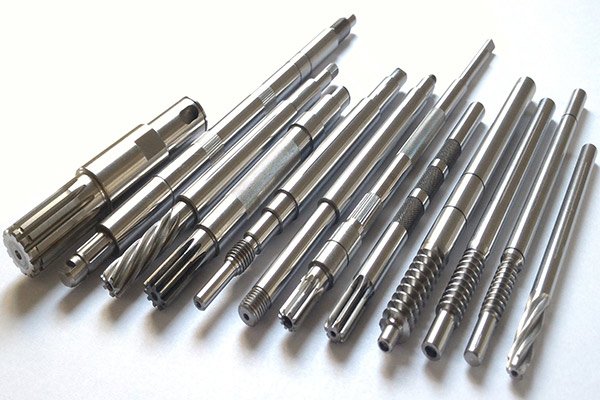
The manufacturing edge comes from combining complementary processes under a disciplined system. 3-5 axis CNC machining supports complex implant geometry and multi-surface accuracy. EDM can address fine slots, sharp internal features, or difficult profiles that are not efficient with conventional milling. Precision grinding supports tight tolerances, mating surfaces, pins, shafts, and finished interfaces. Industrial ceramics capabilities provide additional options for wear-resistant, insulating, or chemically stable components used in related medical, analytical, and device assemblies.
ODM involvement is valuable when the supplier can contribute manufacturability input early. For titanium implants, small design decisions can have large production consequences. Thread depth, corner radius, wall thickness, access for cutting tools, datum location, surface finish zones, and allowable witness marks all influence cost and yield. A supplier with deep process knowledge can help an OEM reduce machining instability, improve inspection access, simplify fixturing, and avoid tolerance stacks that are expensive to hold but not functionally necessary.
Supply chain strength also includes special process coordination. Many implant components require cleaning, passivation, anodizing, laser marking, heat treatment, coating preparation, sterile-pack interface controls, or validated packaging support. Even when these processes are performed by approved external partners, the machining supplier must control handoffs, documentation, and nonconformance response. A fragmented supply chain can hide root causes and extend recovery time. An integrated partner reduces that exposure by owning the manufacturing route as a system.
Companies sourcing ISO certified CNC machining for medical components, titanium implants, surgical instruments, and high-precision device parts should ask suppliers how they manage change control, first article inspection, tool life records, lot traceability, process capability, and corrective action. The best answers are practical and evidence-based: controlled drawings, inspection plans, calibrated equipment, ERP visibility, qualified operators, defined subcontractor controls, and rapid engineering communication.
Industry Applications
Titanium implant machining covers a broad range of medical applications. Orthopedic trauma products include screws, plates, rods, locking interfaces, and fixation components that must combine mechanical strength with consistent fit. Spinal implants may include cages, hooks, connectors, and complex 3D forms requiring 5-axis access and tight geometric control. Dental systems require small, precise parts with excellent surface finish, thread quality, and repeatable mating interfaces. Surgical instruments and device components may combine titanium with stainless steel, ceramics, polymers, or specialty alloys.
The engineering expectations vary by application. A trauma screw demands thread accuracy, clean drive geometry, controlled head form, and burr-free cannulation when applicable. A spinal cage may require windows, lattice-inspired surfaces, graft spaces, radiographic features, and coating-ready surfaces. A dental abutment depends on micron-level interface stability and cosmetic surface quality. A surgical device component may prioritize assembly repeatability, wear behavior, and sterilization compatibility. In all cases, the supplier must understand the functional intent behind the drawing.
Medical machining also benefits from experience in adjacent high-reliability industries. For example, the same discipline used for sealing surfaces, sliding fits, roundness, and fluid performance in hydraulic pump parts and fluid control components can inform medical device subassemblies that require precise movement, leak control, or repeatable actuation. Cross-sector manufacturing knowledge does not replace medical quality requirements, but it expands the process toolbox available to solve difficult machining problems.
For global buyers, supplier evaluation should include both technical and operational criteria. Technical evaluation should review machine capability, titanium experience, fixture strategy, inspection equipment, surface finish control, and deburring methods. Operational evaluation should review production capacity, ERP control, document handling, responsiveness, export experience, and ability to manage multi-process programs. The strongest suppliers can discuss tolerances and supply continuity in the same conversation because both affect the success of a medical product launch.
Call to Action
Titanium implants require more than precision equipment. They require a manufacturing partner that understands material behavior, process risk, regulatory expectations, and supply chain execution. Dixin Technology supports global OEM and Tier 1 suppliers with integrated precision manufacturing, ODM engineering support, ERP-controlled production, and cross-industry expertise in complex components.
If your team is developing or resourcing titanium implants, surgical instruments, or high-precision medical device components, engage Dixin Technology early in the design and sourcing process. Early manufacturing input can reduce avoidable cost, shorten validation cycles, and improve production stability. Share your drawings, material requirements, tolerance priorities, annual volume expectations, and special process needs through the Dixin Technology contact page to begin a technical review with IndustryApex CNC.