- Shaft
- Molds&Tools
- Hydraulics And Pump
- Hair transplant needle
- Hydraulics And Pump
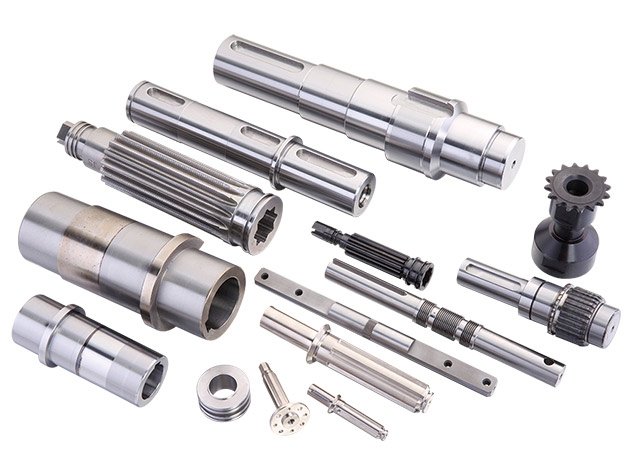
- Precision CNC Shaft Machining Manufacturer for High Performance Applications
- Energy Industry CNC Machining Parts Supplier
- Aerospace CNC Machining Parts Manufacturer
- Aerospace CNC Machining Parts Manufacturer
- Automotive & EV CNC Machining Parts Supplier for OEM and Tier 1
- Medical CNC Machining Parts Supplier for Precision Medical Devices
Industrial Ceramics Machining: Zirconia and Alumina Applications for OEM Supply Chains

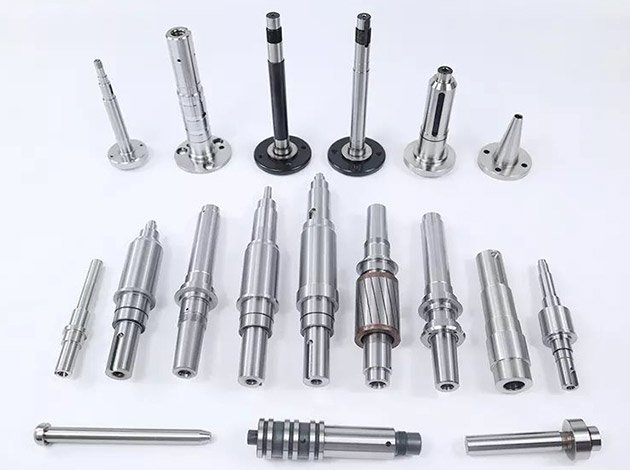
Industrial Ceramics Machining: Zirconia and Alumina Applications for OEM Supply Chains
Industrial ceramics are increasingly specified where metals, engineering plastics, and standard wear materials cannot sustain the combined demands of abrasive media, elevated temperature, corrosion, electrical insulation, dimensional stability, and long service life. For global OEMs and Tier 1 suppliers, zirconia and alumina components are not simply material substitutions; they are engineered production inputs that affect equipment uptime, qualification risk, assembly performance, and total landed cost.
Dixin Technology, operating through IndustryApex CNC, supports industrial customers with precision-machined ceramic components and integrated ODM manufacturing programs. This analysis explains the material and machining considerations behind zirconia and alumina applications, then connects those technical decisions to practical sourcing and supply-chain requirements.
1. Executive Summary
Zirconia and alumina are the two most widely adopted technical ceramics in precision industrial applications, but they solve different engineering problems. Alumina is commonly selected for its electrical insulation, hardness, chemical resistance, thermal stability, and cost-effective performance across a wide range of purities. Zirconia is generally selected when higher fracture toughness, impact resistance, fine surface finish, and low thermal conductivity are required. Both materials offer excellent wear resistance, but their processing behavior and application fit differ materially.
Machining these ceramics requires a manufacturing approach built around the realities of brittle, hard materials. Tool wear, grinding forces, thermal stress, edge integrity, feature geometry, and inspection strategy must be controlled from design review through final delivery. Conventional metal-machining assumptions can lead to chipped edges, microcracking, poor fit-up, low yield, and inconsistent functional performance.
For OEM procurement and engineering teams, the most reliable approach is to engage a supplier early enough to align material grade, tolerances, surface requirements, green-state or sintered-state processing, and inspection criteria. Dixin Technology combines ceramic expertise with 3-5 axis CNC machining, EDM, precision grinding, and supply-chain coordination to help customers source components that are technically viable and repeatable at production scale.
2. Technical Deep Dive
Alumina, typically aluminum oxide or Al2O3, is a mature technical ceramic used in grades ranging from approximately 90% to more than 99.5% purity. Increasing purity generally improves electrical, thermal, and chemical performance, while also affecting cost and processing behavior. High-purity alumina is frequently used for electrical insulators, semiconductor handling elements, wear guides, pump components, sealing faces, nozzles, and precision fixtures. Its high hardness provides excellent resistance to abrasion, and its dielectric performance makes it valuable where electrical isolation must be maintained under demanding operating conditions.
Zirconia, commonly stabilized with yttria to form Y-TZP, offers a distinctive combination of high strength and comparatively high fracture toughness for a ceramic. Transformation toughening enables zirconia to better resist crack propagation than many conventional ceramics. This makes it especially useful for small, detailed, impact-prone, or mechanically loaded parts such as valve components, plungers, wear sleeves, guide elements, medical-related parts, and fluid-control interfaces. Zirconia can also achieve very smooth finishes, which is important for sealing, sliding, and contamination-sensitive assemblies.
The material selection decision should begin with the service environment rather than a general preference for the hardest or toughest ceramic. Alumina is often the logical choice where electrical insulation, high-temperature stability, broad chemical resistance, and controlled cost are primary drivers. Zirconia is frequently the stronger candidate where contact loading, impact risk, fine geometry, sliding behavior, or polished surfaces dominate the functional requirement. The final choice should also account for thermal expansion, mating material, media chemistry, pressure, cycling conditions, and allowable part geometry.
Machining is typically performed after sintering, when the material reaches its final dense and hard state, or partially in the green or pre-sintered condition when geometry permits. Green machining can improve efficiency for selected forms, but sintering shrinkage must be accurately predicted and managed. Finished machining may use diamond grinding wheels, diamond tooling, lapping, polishing, ultrasonic-assisted processes, and precision metrology. Each process must be selected according to the ceramic grade, required flatness, hole diameter, surface roughness, edge condition, and batch volume.
Critical ceramic design-for-manufacturing considerations include avoiding unnecessarily sharp internal corners, specifying realistic tolerances, identifying functional surfaces, and distinguishing between cosmetic and performance-critical edge requirements. Small radii, thin walls, deep narrow holes, interrupted profiles, and unsupported projections can be achievable, but they require a process plan proportionate to the risk. Engineers should communicate the true purpose of each feature so machining, grinding, and inspection resources are applied where they matter most.
Surface integrity deserves particular attention. A ceramic component can meet dimensional measurements yet fail prematurely if grinding damage, subsurface microcracks, residual stress, or edge chips are not controlled. For dynamic sealing and sliding applications, surface roughness, waviness, roundness, and mating-surface compatibility may all affect leakage and wear. For insulating components, contamination control and dimensional consistency can influence assembly reliability. Robust manufacturing therefore combines appropriate machining parameters with in-process controls and final inspection matched to the component’s actual function.
3. The ODM & Supply Chain Advantage
Industrial ceramic sourcing is often treated as a narrow purchase of a difficult material. In practice, it is a cross-functional manufacturing problem. Material selection must align with functional requirements; ceramic blank availability must align with program volumes; machining and grinding routes must align with tolerances; and packaging, traceability, documentation, and logistics must align with the OEM’s receiving and production systems.
Dixin Technology is positioned as a supply-chain integrator and ODM solution provider for global OEMs and Tier 1 suppliers. This role extends beyond supplying a drawing-compliant part. It includes helping customers move from application requirements and design intent to a manufacturable component strategy, a qualified production route, and a dependable supply model. The objective is to reduce the coordination burden between ceramic material sources, machine shops, finishing specialists, quality teams, and logistics partners.
Our manufacturing edge is built on a fully controlled precision manufacturing system supported by ERP management and more than 30 years of experience. ERP visibility supports planning, material coordination, order tracking, and production control across programs with varied part numbers and demand patterns. For procurement organizations managing multi-region supply chains, this system-level discipline helps improve schedule transparency and supports repeatable fulfillment rather than isolated prototype transactions.
Dixin Technology’s technical capability combines 3-5 axis CNC machining, EDM, precision grinding, and industrial ceramics manufacturing expertise. This broad process coverage matters because ceramic assemblies often interact with metal shafts, stainless housings, carbide wear components, precision bores, threaded interfaces, and tight-tolerance mating parts. A supplier that understands these adjacent processes can identify interface risks before they become assembly or field-performance issues.
ODM support is especially valuable where customers need more than build-to-print execution. During technical review, Dixin Technology can help assess tolerance allocation, ceramic grade suitability, feature feasibility, inspection methods, and production sequencing. For mature programs, the same approach supports process consistency, controlled change management, and supply continuity. The focus is not to alter proven designs without reason, but to ensure that every specification supports a stable manufacturing process and the required lifecycle performance.
For global OEM and Tier 1 sourcing teams, a practical ceramic supply strategy should include clear specifications, sample validation, defined inspection criteria, lot traceability where required, realistic lead-time planning, and packaging that protects brittle precision surfaces during international transport. Early coordination is particularly important when a ceramic component is a critical item in a pump, valve, semiconductor tool, medical device, or aerospace-related assembly. A low-volume component can still create a high-cost production interruption if it is not qualified and replenished reliably.
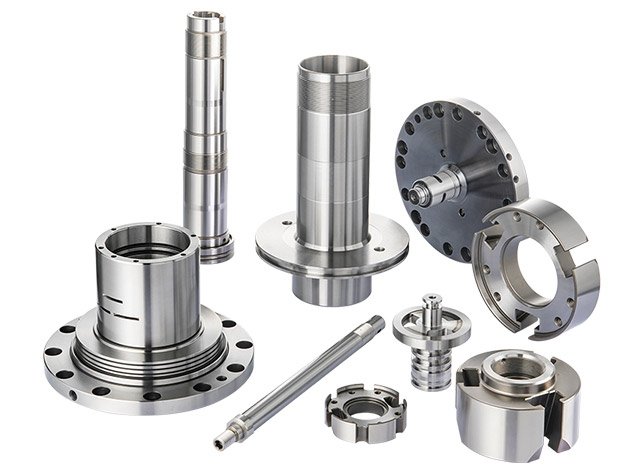
4. Industry Applications
Semiconductor and electronics manufacturing: Alumina is widely used for insulating fixtures, wafer-handling elements, wear components, vacuum-related parts, and process equipment interfaces. Its electrical insulation, cleanliness potential, thermal stability, and wear resistance support demanding production environments. Zirconia may be used where tougher, polished, or mechanically loaded components are needed.
Fluid control, pumps, and hydraulics: Ceramic plungers, valve seats, sleeves, nozzles, seal rings, and wear elements can improve durability in abrasive, corrosive, or high-pressure fluids. Zirconia is often favorable for impact and sliding interfaces, while alumina can provide high hardness and chemical resistance in appropriate media. For related engineered components, review Dixin Technology’s hydraulic pump parts capabilities.
Medical and laboratory equipment: Technical ceramics are used in precision guides, wear elements, insulating parts, chemical-handling components, and selected device mechanisms. Applications require disciplined control of dimensions, surface finish, material identity, and cleanliness. Dixin Technology also supports precision production programs for medical components and high-precision device parts, where manufacturing documentation and component consistency are critical.
Aerospace and advanced instrumentation: Ceramic components can contribute thermal stability, insulation, erosion resistance, and low-wear performance in specialized aerospace systems and test equipment. Aerospace programs require disciplined control of material, dimensional conformance, process documentation, and delivery reliability. Dixin Technology’s experience with aerospace CNC machining and aircraft structural components provides relevant support for assemblies that combine ceramics with high-performance metal parts.
Industrial automation, wire forming, and packaging: Ceramic guides, rollers, cutters, wear pads, nozzles, and positioning components help reduce abrasion and maintain dimensional consistency in repetitive automated processes. Alumina is commonly selected for high-wear, electrically insulating guides, while zirconia can be appropriate for precision parts exposed to contact stress or requiring a refined sliding surface.
Energy, chemical processing, and analytical equipment: Both alumina and zirconia can be used in aggressive environments that challenge conventional metals. The correct material depends on the operating temperature, chemistry, thermal cycling, mechanical load, and contamination limits. A component-level assessment is necessary because ceramic performance is strongly affected by grade, geometry, joining method, and interaction with neighboring materials.
5. Call to Action
When zirconia or alumina is being considered for a new component, a redesign, or a supply-chain improvement program, involve manufacturing engineering early. Dixin Technology can review drawings, application conditions, tolerance requirements, material options, and projected volumes to develop a practical precision ceramic manufacturing plan.
For sourcing support, ODM development, and production inquiries, contact Dixin Technology. Our team supports global OEMs and Tier 1 suppliers with integrated industrial ceramics, precision machining, grinding, and supply-chain solutions designed for repeatable production performance.