- Shaft
- Molds&Tools
- Hydraulics And Pump
- Hair transplant needle
- Hydraulics And Pump
- Precision CNC Shaft Machining Manufacturer for High Performance Applications
- Energy Industry CNC Machining Parts Supplier
- Aerospace CNC Machining Parts Manufacturer
- Aerospace CNC Machining Parts Manufacturer
- Automotive & EV CNC Machining Parts Supplier for OEM and Tier 1
- Medical CNC Machining Parts Supplier for Precision Medical Devices

How ODM Solution Providers Are Transforming Medical Device Manufacturing

How ODM Solution Providers Are Transforming Medical Device Manufacturing
Medical device manufacturing is being reshaped by a combination of tighter regulatory expectations, more complex product architectures, compressed development timelines, and heightened supply-chain risk. For global OEMs and Tier 1 suppliers, the traditional model of sourcing individual machined parts from disconnected vendors is increasingly difficult to manage. Original Design Manufacturing (ODM) solution providers are addressing this challenge by combining engineering support, precision production, quality control, and supply-chain coordination into one accountable operating system.
Dixin Technology, operating through IndustryApex CNC, supports this transition as a supply-chain integrator and ODM solution provider for demanding precision components. The value is not limited to producing parts to print. It lies in helping customers industrialize designs, control process variation, secure capacity, manage specialized materials, and maintain traceability across the life of a medical product.
1. Executive Summary
Medical OEMs are under pressure to bring differentiated devices to market without compromising safety, quality, or supply continuity. Implantable components, surgical instruments, diagnostic equipment, robotic surgery assemblies, fluid-management systems, and laboratory automation platforms all require precision parts with increasingly difficult geometries, materials, and inspection requirements. At the same time, procurement teams must reduce supplier fragmentation, engineering teams need rapid design-for-manufacturing feedback, and operations leaders need predictable delivery performance.
ODM solution providers are transforming the manufacturing model by taking responsibility for the connection between product intent and stable production. Rather than treating machining, grinding, electrical discharge machining, ceramic processing, finishing, inspection, packaging, and logistics as isolated transactions, an integrated provider coordinates the full manufacturing route. This approach helps reduce technical handoffs, shortens feedback loops, and gives OEMs a clearer basis for controlling cost, quality, risk, and change.
The most effective ODM relationship begins early, when engineering decisions still influence manufacturability and total landed cost. It then extends into validation, ramp-up, serial production, engineering changes, and lifecycle support. For medical-device programs, this continuity is particularly valuable because a minor change in a critical dimension, material condition, surface state, cleaning route, or inspection method can create a disproportionate compliance and patient-safety risk.
2. Technical Deep Dive
Medical devices are rarely defined by one manufacturing process. A single finished assembly may contain titanium implant features, stainless-steel instrument bodies, miniature shafts, precision sleeves, ceramic wear components, threaded interfaces, sealing surfaces, and complex internal channels. Each feature introduces manufacturing decisions that affect functional performance, repeatability, validation effort, and cost.
ODM providers contribute technical value by translating device requirements into controlled manufacturing strategies. For example, a surgeon-facing instrument may need ergonomic external geometry, durable pivot features, sharp or controlled-edge surfaces, corrosion-resistant material selection, and smooth interfaces that support cleaning. An implant component may require tightly controlled geometry, carefully selected titanium grades, precision threads, surface-finish requirements, and robust lot traceability. These needs cannot be addressed reliably through a simple request-for-quote process alone.
A capable manufacturing partner evaluates tolerances according to functional need rather than applying maximum precision everywhere. This includes assessing datum strategy, machining accessibility, tool reach, wall thickness, feature sequencing, burr-control requirements, inspection method, and the likely effects of heat treatment or finishing. The aim is to create a process that is both capable and economically repeatable. Over-specified drawings can add cycle time and inspection burden; under-specified requirements can create assembly failures, inconsistent performance, or validation risk.
Multi-axis machining is central to this work. Three-axis CNC machining is effective for many prismatic bodies, plates, fixtures, and accessible features. Four-axis and five-axis machining reduce setups for complex contours, angular holes, implant geometries, and instrument components with multiple critical orientations. Fewer setups can improve positional consistency because datums are retained across more features. It can also reduce handling-related damage and streamline lead times for high-mix medical production.
EDM becomes valuable when components require deep narrow slots, fine internal geometry, difficult-to-machine conductive alloys, sharp internal corners, or delicate sections that conventional cutting could distort. Precision grinding supports exact diameters, concentricity, flatness, and surface condition for shafts, needles, sleeves, bearing interfaces, and other motion-critical parts. Industrial ceramics can provide wear resistance, electrical insulation, chemical stability, and thermal performance for specialized diagnostic, analytical, and fluidic applications.
Quality planning must be integrated with process planning. Critical-to-quality features should be linked to appropriate metrology methods, sampling logic, records, and response plans. Depending on the component, this may include coordinate measuring machines, optical systems, calibrated gauges, surface roughness measurement, material documentation review, and first-article inspection. The production route must also account for identification, segregation, handling protection, cleaning expectations, and packaging conditions. A precision part is only useful when its dimensional condition and manufacturing history can be demonstrated consistently.
For OEMs, the technical benefit of ODM engagement is earlier visibility. Engineers can identify difficult features before tooling and qualification schedules are committed. Procurement teams gain a clearer understanding of process drivers. Quality teams can align documentation and inspection expectations before serial production begins. This cross-functional coordination helps prevent late-stage redesigns that can delay market entry and inflate program cost.
3. The ODM & Supply Chain Advantage
The defining advantage of an ODM solution provider is integration. Dixin Technology functions as a supply-chain integrator and ODM solution provider, coordinating precision manufacturing requirements through a fully controlled production system. This model is designed for global OEMs and Tier 1 suppliers that require more than isolated component capacity. They need consistent execution across engineering, manufacturing, quality, delivery, and program communication.
With more than 30 years of manufacturing experience, Dixin Technology combines practical process knowledge with ERP-enabled operational control. ERP is not merely an administrative platform in this context. It supports material planning, work-order visibility, inventory control, production scheduling, lot management, and delivery coordination. When used alongside disciplined production processes, it helps convert fragmented supplier activity into a more transparent and manageable supply chain.
For medical-device manufacturers, supplier consolidation can reduce the number of interfaces that must be qualified, monitored, and coordinated. A single integrated provider can help manage machining, EDM, precision grinding, industrial ceramics, inspection, and supply-chain execution within a coherent production plan. This does not eliminate the need for OEM oversight or supplier-quality controls. It does, however, create clearer ownership of operational outcomes and fewer opportunities for critical information to be lost between vendors.
Controlled manufacturing also supports resilience. Medical programs may require prototyping, low-volume launch production, recurring orders, design updates, and long-term service-part availability. An ODM partner that understands the part history, manufacturing route, material requirements, and inspection criteria can respond more effectively to demand changes or engineering revisions. The result is a more stable transition from concept to production and from production to lifecycle support.
The same manufacturing disciplines that support medical devices also serve adjacent regulated and high-reliability sectors. For example, the process control used for complex medical components aligns closely with requirements seen in aerospace CNC machining and aircraft structural components, while fluidic precision and sealing interfaces share relevant considerations with hydraulic pump parts. This broader experience helps strengthen engineering judgment around materials, tolerances, wear, motion, and repeatable process control.

At IndustryApex CNC, the manufacturing edge is built around three- to five-axis CNC machining, EDM, precision grinding, and industrial ceramics. These capabilities allow the production route to be matched to the feature set rather than forcing every part through a limited process portfolio. For an OEM, that flexibility can improve design freedom while keeping manufacturability grounded in production reality.
4. Industry Applications
ODM-led manufacturing support applies across a broad range of medical and life-science products. In orthopedic and dental applications, manufacturers need titanium and stainless-steel components with controlled geometries, threaded features, complex contours, and reliable surface requirements. In surgical instrumentation, the focus may shift to precision joints, shafts, housings, jaw mechanisms, articulated components, and assemblies designed for repeated use, sterilization, or single-use deployment.
Diagnostic and laboratory equipment often requires compact mechanical assemblies with precise alignment, corrosion resistance, chemical compatibility, and dependable motion. Components for imaging, optical support systems, and robotic platforms may demand lightweight structures, intricate interfaces, precision bores, and multi-axis profiles. Fluid-management, infusion, and analytical systems depend on tightly controlled passages, valve-related parts, pump interfaces, and wear-resistant components. Industrial ceramic parts can be relevant where electrical isolation, chemical resistance, or low wear is essential.
OEMs developing these products benefit from a partner that can assess the full component lifecycle. Early prototyping may prioritize speed and learning. Design verification production may emphasize dimensional data and process confirmation. Commercial production requires repeatability, capacity planning, controlled change management, and stable sourcing. Service programs may require legacy-part continuity long after the original launch. An ODM model provides a practical structure for managing each phase without repeatedly rebuilding supplier knowledge.
For detailed capability alignment in this sector, explore ISO-certified CNC machining for medical components, titanium implants, surgical instruments, and high-precision device parts. The strongest programs treat component manufacturing as a strategic engineering and supply-chain function, not simply a purchasing category.
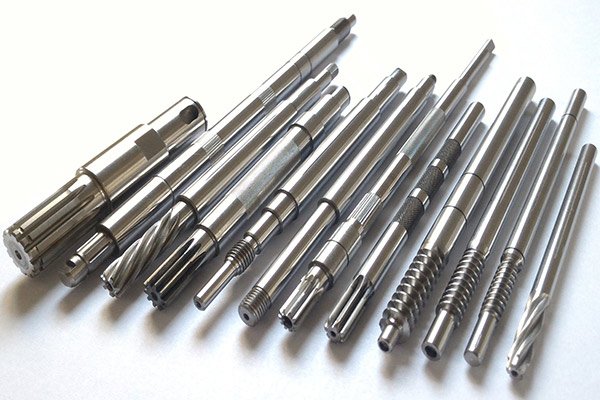
As device complexity increases, success depends on connecting design intent to a capable, traceable, and scalable production system. ODM solution providers make that connection more direct. They give medical OEMs and Tier 1 suppliers a path to reduce coordination burden while strengthening manufacturability, quality visibility, and continuity of supply.
5. Call to Action
Medical-device teams evaluating a new component program, supplier-transition project, cost-reduction initiative, or production-scale challenge should engage manufacturing engineering early. Dixin Technology can help assess design-for-manufacturing opportunities, process selection, tolerance strategy, material considerations, inspection planning, and supply-chain requirements for precision medical components.
Visit the IndustryApex CNC homepage to review manufacturing capabilities, or contact Dixin Technology to discuss your medical-device manufacturing and ODM requirements.