- Shaft
- Molds&Tools
- Hydraulics And Pump
- Hair transplant needle
- Hydraulics And Pump
- Precision CNC Shaft Machining Manufacturer for High Performance Applications
- Energy Industry CNC Machining Parts Supplier
- Aerospace CNC Machining Parts Manufacturer
- Aerospace CNC Machining Parts Manufacturer
- Automotive & EV CNC Machining Parts Supplier for OEM and Tier 1
- Medical CNC Machining Parts Supplier for Precision Medical Devices

Custom Worm Wheel and Worm Gear Manufacturing Techniques for Global OEM Supply Chains

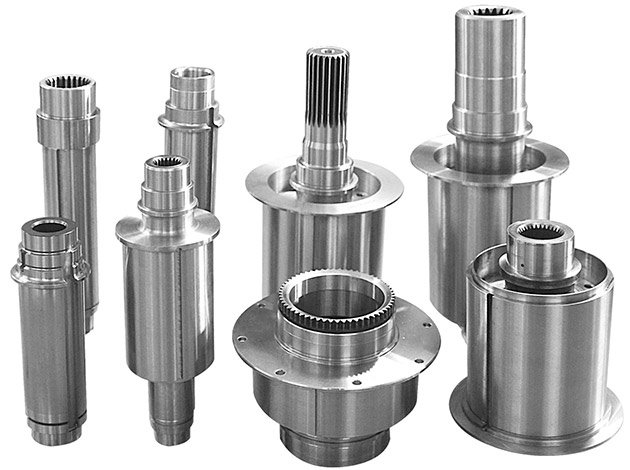
Custom Worm Wheel and Worm Gear Manufacturing Techniques for Global OEM Supply Chains
Worm gearsets remain a critical motion-control solution where high reduction ratios, compact packaging, controlled output speed, and potential back-drive resistance are required. For global OEMs and Tier 1 suppliers, however, sourcing a worm wheel and worm is not simply a matter of ordering a gear to a drawing. Performance depends on the interaction of geometry, material pairing, machining accuracy, heat treatment, lubrication, inspection, and assembly conditions. Dixin Technology, operating through IndustryApex CNC, supports custom precision-component programs by connecting engineering requirements with controlled manufacturing and supply-chain execution.
Executive Summary
A custom worm gear transmission converts rotary motion between nonparallel shafts, most commonly at 90 degrees. The worm resembles a threaded screw, while the mating wheel contains specially generated teeth that conform to the worm profile. This contact pattern creates the transmission’s defining strengths and constraints: high single-stage reduction, smooth motion, and substantial sliding friction. It also makes design and manufacturing discipline essential.
Successful worm wheel and worm gear production starts with an application-level definition of torque, duty cycle, reduction ratio, allowable backlash, efficiency, environmental exposure, lubrication method, noise target, life expectation, and safety requirements. These factors guide choices in lead angle, number of starts, wheel tooth count, center distance, pressure angle, material combination, surface finish, and heat-treatment route. A nominally correct gear can still fail prematurely if its contact pattern is poorly controlled, its bronze wheel material is mismatched to the worm hardness, or its inspection approach overlooks pitch and runout variation.
For OEM procurement teams, the practical objective is a qualified production system rather than an isolated part price. The supplier must translate drawings and functional intent into repeatable process controls, traceable material flow, realistic lead times, documented inspection, and scalable capacity. Dixin Technology combines precision manufacturing with ODM and supply-chain coordination for programs requiring custom gears, shafts, housings, related transmission parts, and assembled subcomponents.
Technical Deep Dive
Geometry and Design Inputs
Worm gear geometry is governed by the worm’s axial pitch, module or diametral pitch, number of starts, lead angle, pressure angle, hand, wheel tooth count, and nominal center distance. The reduction ratio equals the wheel tooth count divided by the number of worm starts. A single-start worm produces high reduction in a compact envelope, while multi-start worms provide higher output speed and can improve efficiency by increasing lead angle. The tradeoff is reduced self-locking tendency and, in some cases, tighter sensitivity to alignment and load.
Engineers should specify the governing standard and reference geometry early. AGMA, ISO, DIN, and customer-specific conventions may use different terminology, datum schemes, tolerance expectations, and inspection methods. The production drawing should unambiguously define the worm hand, gear blank dimensions, bore and keyway features, allowable total indicated runout, tooth quality requirements, finish requirements, heat-treatment condition, and inspection criteria. For high-value programs, a master worm or approved mating sample helps establish the intended contact pattern before serial production begins.
Material Pairing and Heat Treatment
Material selection is a tribological decision. The worm is commonly machined from alloy steel, carburized or induction hardened where the operating condition demands high wear resistance, then precision ground. The wheel often uses a bronze alloy because bronze provides conformability, anti-galling behavior, and compatibility against hardened steel under lubricated sliding contact. Aluminum bronze, tin bronze, phosphor bronze, and specialty copper alloys each offer different strength, thermal, corrosion, and bearing-performance characteristics.
The best wheel material is not automatically the strongest bronze. High-load systems may require greater strength, but excessive hardness or an unsuitable alloy can compromise running behavior against the worm. Conversely, a soft wheel may wear rapidly under elevated temperature or contaminated lubrication. The correct selection must account for torque, speed, shock loading, lubrication chemistry, temperature range, corrosion exposure, and expected service interval. Material certificates, heat numbers, and controlled heat-treatment records are particularly important for safety-critical and regulated supply chains.
Manufacturing the Worm
Worm manufacturing usually begins with a turned steel blank that establishes concentric journal diameters, mounting features, and datum surfaces. CNC thread milling, whirling, precision turning, or dedicated worm milling generates the helical tooth form, depending on volume, geometry, and accuracy needs. For demanding transmission applications, hardening is followed by precision grinding to restore profile accuracy, lead consistency, surface finish, and concentricity relative to bearing journals.
Grinding is not merely a finishing operation. It determines the contact-generating surface that will govern friction, wear, and load distribution. Errors in lead, profile, or helix can concentrate load at one end of the wheel face. Controlled dressing, thermal management, wheel selection, in-process gauging, and final measurement are therefore central to repeatability. EDM may also be valuable for specialized forms, difficult materials, fixtures, and closely constrained design features.
Manufacturing the Worm Wheel
Worm wheels may be produced as solid bronze blanks or as bronze rims joined to steel or cast-iron hubs for larger assemblies. Blank preparation must control bore location, face width, hub geometry, and radial runout before tooth generation. The teeth are typically cut by hobbing with a tool that matches the intended worm geometry. This generating process creates the enveloping tooth profile needed for broad, stable contact with the mating worm.
For custom parts, hobbing setup must account for the actual worm lead, pressure angle, center distance, and wheel material behavior. Subsequent operations may include boring, broaching keyways, milling fastening features, grinding datum faces, deburring tooth edges, and balancing. Fine finishing or lapping with the mating worm can improve contact distribution, reduce noise, and establish a controlled running pattern, especially where backlash and acoustic performance are tightly specified.
Inspection, Contact Pattern, and Assembly Validation
Reliable verification combines dimensional inspection with functional assessment. Coordinate measuring machines, gear measuring systems, optical equipment, profile instruments, and runout checks can validate key features. Typical controls include tooth thickness, pitch variation, lead and profile accuracy, bore-to-gear concentricity, face runout, journal runout, surface roughness, hardness, and visual tooth condition. A dimensional report alone is insufficient if the assembled pair has poor contact.
Contact-pattern testing applies marking compound to the worm or wheel and rotates the gearset under representative alignment. The resulting pattern reveals whether contact is centered across the tooth face or biased toward an edge. Assembly testing should also assess backlash, breakaway torque, no-load running torque, noise, vibration, temperature rise, and efficiency where relevant. Since worm drives generate heat through sliding action, lubrication specification and housing heat dissipation must be treated as part of the complete engineering system.
The ODM & Supply Chain Advantage

Dixin Technology’s core identity is that of a supply-chain integrator and ODM solution provider. This matters when an OEM needs more than a standalone worm wheel. A gearbox or actuator platform may require the hardened worm, bronze wheel, splined shaft, bearing seats, housing, covers, seals, mounting brackets, fasteners, and inspection documentation to arrive as a coordinated production package. Managing these interfaces through separate suppliers can introduce tolerance stack-up, incompatible revisions, fragmented accountability, and avoidable logistics risk.
With over 30 years of experience, Dixin Technology supports a fully controlled precision manufacturing system backed by ERP-based planning and traceability. ERP coordination helps align material availability, routing, outside-process requirements, inspection status, delivery commitments, and revision control. For global OEM and Tier 1 programs, this structured approach provides visibility from quotation and technical review through first article approval, serial production, packaging, and shipment.
The manufacturing capability set includes 3-axis to 5-axis CNC machining, EDM, precision grinding, and industrial ceramics. These capabilities support the full ecosystem surrounding a worm gear drive. CNC machining produces complex hubs, transmission housings, mounting interfaces, shafts, and structural parts. Precision grinding supports hardened worm flanks, bearing journals, close-tolerance bores, and datum surfaces. EDM enables difficult features and material conditions that are impractical with conventional cutting. Industrial ceramic expertise can also support wear-resistant, electrically insulating, corrosion-resistant, or high-temperature components used in specialized motion and fluid-handling equipment.
ODM engagement should begin with design-for-manufacturing review. The review evaluates achievable tolerances, datum logic, material availability, heat-treatment distortion, tool access, inspection strategy, joining methods for rim-and-hub designs, and batch-size economics. It also identifies opportunities to reduce risk, such as establishing functional gages, defining approved mating components, selecting standardized materials, or revising nonfunctional cosmetic requirements that inflate cost without improving gear performance.
Supply-chain resilience is equally important. A qualified supplier should provide controlled alternatives where appropriate, maintain clear approval paths for material or process changes, protect revision integrity, and document the inspection plan before production release. Dixin Technology can coordinate multi-process components while preserving accountability for critical-to-function dimensions. That integration is especially useful for OEMs moving from prototype builds to low-volume industrial production and then to forecast-driven serial supply.
Industry Applications
Custom worm gearsets are used across industrial automation, valve actuation, lifting systems, packaging machinery, robotics, test equipment, construction equipment, energy systems, and transportation assemblies. Their high reduction ratio makes them effective where a compact motor must drive a slow, torque-intensive load. In construction and automation equipment, a worm drive may position booms, conveyors, adjustment mechanisms, or guarded machine axes. In packaging lines, it can provide synchronized low-speed motion and repeatable adjustment.
Fluid-control equipment is another important application. Worm gears can operate valve actuators, pump-positioning mechanisms, and process-control assemblies where controlled torque and stable holding behavior are valuable. Programs involving pump housings, valve bodies, or associated drive components can be coordinated with Dixin Technology’s hydraulic pump parts manufacturing capabilities. The key engineering requirement is to validate torque under realistic pressure, temperature, seal drag, and cycle conditions rather than relying only on nominal mechanical calculations.
Aerospace applications may use precision worm mechanisms in non-flight-critical ground equipment, test fixtures, satellite-support equipment, positioning systems, and carefully qualified aircraft assemblies. Such work demands rigorous material control, traceability, dimensional repeatability, and documentation. For related complex parts, review the company’s aerospace CNC machining services. Aerospace customers should define applicable quality clauses, approved special-process requirements, foreign-object controls, and records-retention expectations during supplier qualification.
Medical and laboratory equipment also use small, quiet worm drives in diagnostic devices, imaging platforms, surgical-support equipment, sample handling, and precision positioning mechanisms. In these applications, surface finish, cleanability, corrosion resistance, biocompatibility where applicable, and low particulate generation may take priority alongside accuracy. Dixin Technology’s ISO-certified CNC machining for medical components provides relevant support for related precision parts and documented manufacturing needs.
Call to Action
For custom worm wheel and worm gear programs, involve manufacturing engineering before finalizing the production drawing. Provide the reduction ratio, torque-speed profile, operating environment, target life, material preferences, lubrication conditions, mating-component requirements, forecast volume, and required quality documentation. Dixin Technology can review the design, recommend a manufacturing route, coordinate associated precision components, and build a supply plan aligned with OEM and Tier 1 expectations.
Contact Dixin Technology through IndustryApex CNC to discuss a custom worm gear, worm wheel, gearbox component, or integrated ODM manufacturing requirement.