- Shaft
- Molds&Tools
- Hydraulics And Pump
- Hair transplant needle
- Hydraulics And Pump
- Precision CNC Shaft Machining Manufacturer for High Performance Applications
- Energy Industry CNC Machining Parts Supplier
- Aerospace CNC Machining Parts Manufacturer
- Aerospace CNC Machining Parts Manufacturer
- Automotive & EV CNC Machining Parts Supplier for OEM and Tier 1
- Medical CNC Machining Parts Supplier for Precision Medical Devices

2026 Trends in 5-Axis CNC Machining for Aerospace Components: Engineering and Supply Chain Outlook

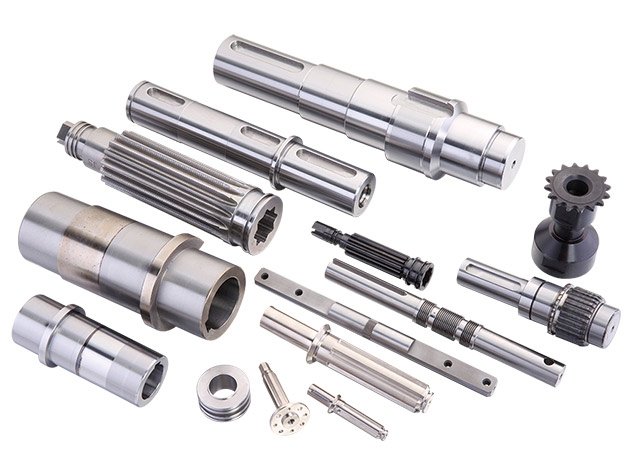
2026 Trends in 5-Axis CNC Machining for Aerospace Components
Aerospace manufacturing in 2026 is being shaped by higher production rates, tighter certification expectations, lightweighting requirements, and persistent pressure to reduce total program risk. For global OEMs and Tier 1 suppliers, 5-axis CNC machining is no longer simply a capability for complex geometries. It is a strategic manufacturing platform for producing flight-critical structural parts, engine hardware, actuator components, hydraulic interfaces, and precision assemblies with controlled quality and repeatable lead times.
1. Executive Summary
The aerospace sector is entering 2026 with a dual mandate: scale output while improving process control. Commercial aviation backlogs, defense modernization programs, space-system development, and advanced air mobility initiatives are all increasing demand for machined components made from titanium, aluminum, stainless steel, nickel alloys, and engineering-grade specialty materials. At the same time, customers expect suppliers to document traceability, manage material availability, stabilize quality across batches, and respond to engineering changes without disrupting delivery schedules.
Five-axis CNC machining is central to this shift because it enables multi-face machining in fewer setups, supports complex contours and deep cavities, improves access to difficult features, and can reduce accumulated datum error. The result is a more efficient route for manufacturing aerospace components such as brackets, housings, manifolds, frames, impellers, structural fittings, landing-gear-related parts, and titanium aircraft hardware.
However, machine capability alone does not determine program success. Aerospace procurement teams increasingly evaluate the entire production system: engineering support, process planning, material control, inspection capacity, scheduling discipline, digital records, packaging, and supplier communication. This is why an integrated manufacturing partner matters. Dixin Technology, operating through IndustryApex CNC, combines precision manufacturing with ODM and supply-chain coordination to help customers source demanding components through a controlled, scalable production process.
In 2026, the most competitive machining suppliers will be those that connect advanced 5-axis production with practical supply-chain management. They will reduce setup-related variation, use data to improve process consistency, develop robust machining strategies for difficult materials, and provide OEMs with a reliable path from prototype validation to serial production.
2. Technical Deep Dive
Five-Axis Machining Moves from Specialized Capability to Production Standard
The strongest trend for 2026 is the wider use of simultaneous and indexed 5-axis machining for production aerospace work. Traditional 3-axis machining remains appropriate for straightforward prismatic features, but complex aerospace parts often require repeated repositioning, dedicated fixtures, and multiple machine operations. Every additional setup introduces handling time, increases the opportunity for clamping distortion, and can create variation between critical features.
With 5-axis machining, manufacturers can present multiple surfaces to the cutting tool while maintaining a common coordinate strategy. This is especially valuable for compound angles, contoured surfaces, blended radii, closely spaced features, and holes that must be machined normal to curved or inclined faces. In production, fewer setups can improve feature-to-feature positional relationships, shorten cycle flow, and simplify in-process inspection planning.
Titanium Machining Requires More Than Higher Spindle Speed
Titanium remains a priority material for aircraft structures, engine-adjacent components, and corrosion-resistant assemblies because of its high strength-to-weight ratio and fatigue performance. Yet titanium machining continues to challenge production teams. Its low thermal conductivity concentrates heat near the cutting edge, its elastic behavior can contribute to deflection, and its tendency to work-harden raises the importance of stable cutting parameters and tool engagement.
In 2026, capable suppliers will use toolpaths designed around constant engagement, controlled radial chip thinning, effective coolant delivery, and reliable workholding. Dynamic 5-axis tool orientation can help maintain favorable contact conditions, extend tool life, and improve surface consistency on difficult geometries. Process engineers must still balance metal-removal rate against part stability, especially on thin-wall titanium structures where chatter, deformation, and residual stress can compromise dimensional performance.
Digital Process Control Becomes a Commercial Requirement
Modern aerospace machining programs increasingly rely on digital workflows that link CAD models, CAM programming, tool management, machine data, inspection records, and enterprise planning. This integration improves visibility into work order status and enables process teams to compare actual cycle times, tool wear patterns, scrap causes, and inspection outcomes against the approved manufacturing route.
For buyers, the business value is straightforward: better data supports more predictable delivery and faster root-cause analysis. A supplier that can identify a developing tooling issue before it affects a batch protects both quality and schedule. Digital records also strengthen traceability by connecting material lots, operations, inspection data, and shipment documentation.
Automation Focuses on Repeatability, Not Just Labor Reduction
Automation in aerospace CNC machining is expanding through pallet systems, robotic tending, in-machine probing, automated tool monitoring, and coordinated inspection workflows. The objective is not merely to reduce direct labor. It is to preserve process consistency during longer unmanned or lightly attended production windows. For repeat aerospace programs, palletized 5-axis cells can reduce setup disruption and create more stable throughput across qualified part families.
In-machine probing is particularly important for verifying part position, detecting fixture-related issues, and measuring selected critical features before a component leaves the machine. It does not replace final inspection where required, but it can identify deviations earlier, reduce rework risk, and support closed-loop manufacturing decisions.
3. The ODM & Supply Chain Advantage
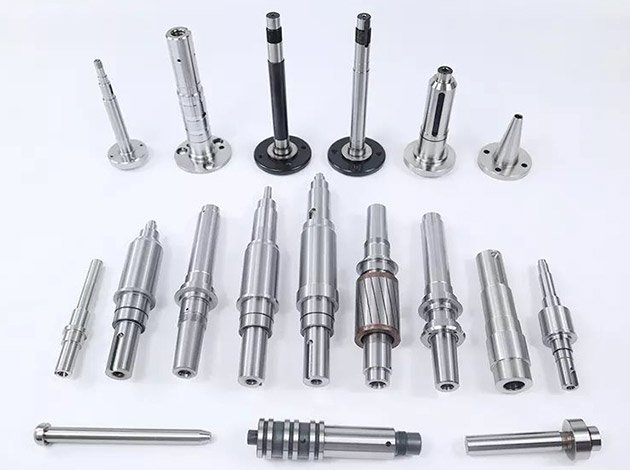
For aerospace OEMs and Tier 1 suppliers, sourcing complexity frequently extends beyond a single machined part. A component may require controlled raw material procurement, 5-axis milling, EDM for detailed internal features, precision grinding for tight functional surfaces, specialized ceramic elements, finishing coordination, inspection, and export-ready packaging. Managing these activities through disconnected suppliers creates avoidable schedule and communication risk.
Dixin Technology is positioned as a supply-chain integrator and ODM solution provider for customers that need a coordinated response to complex manufacturing requirements. Rather than treating machining as an isolated transaction, the company can support product realization through technical review, manufacturability assessment, process selection, controlled production, and delivery coordination. This model is especially relevant when customers are consolidating their approved supplier base or moving from prototype quantities into repeat production.
A Fully Controlled Precision Manufacturing System
With more than 30 years of precision manufacturing experience, Dixin Technology operates a controlled production system supported by ERP-based planning. ERP discipline gives purchasing, production, engineering, and quality teams a shared operational view of material status, work orders, capacity, delivery priorities, and traceable records. For international aerospace supply chains, that visibility supports clearer communication and more reliable execution against agreed milestones.
The manufacturing capability spans 3-5 axis CNC machining, EDM, precision grinding, and industrial ceramics. This breadth is important because aerospace parts commonly combine general machined geometry with highly precise details, hardened areas, fine finishes, or specialized wear-resistant elements. Selecting the correct process at the correct stage can reduce lead time and protect critical dimensions. EDM may be appropriate for intricate profiles or difficult internal geometries, while grinding can provide the finish and tolerance control required for precision mating surfaces. Industrial ceramics can support specialized thermal, electrical, or wear-performance needs within broader engineered assemblies.
Design-for-Manufacturing Support Reduces Program Risk
An ODM-oriented partner can add value before the first production run. Early design-for-manufacturing review helps identify features that may create avoidable cost, extended cycle time, weak workholding conditions, or inspection difficulty. Engineers can evaluate stock allowance, datum selection, wall thickness, corner radii, access for cutters, thread specification, tolerancing strategy, and the interaction between machining and downstream processes.
This work does not mean compromising aerospace design intent. It means translating design requirements into a robust production route. For a global OEM or Tier 1 supplier, the outcome can be fewer late-stage manufacturing changes, more accurate quotations, clearer inspection requirements, and a more dependable ramp from prototype to production.
Supply-chain resilience also depends on material planning. Titanium, aerospace aluminum, nickel alloys, and specialty steels can face lead-time volatility. A coordinated supplier should align material purchasing with forecast demand, qualification requirements, batch traceability, and machining capacity. When engineering changes occur, the same system should provide a practical view of inventory exposure, work-in-progress status, and the fastest technically sound recovery route.
4. Industry Applications

Aircraft Structural Components
Five-axis machining is highly effective for structural components that combine pockets, ribs, angled interfaces, thin walls, and complex external profiles. Examples include brackets, fittings, frames, mounts, support structures, and aircraft assembly hardware. The machining strategy must protect dimensional stability while minimizing unnecessary material removal and setup changes. Explore Dixin Technology’s aerospace CNC machining and titanium aircraft parts capabilities for components requiring advanced multi-axis precision.
Engine, Turbomachinery, and Flow-Control Hardware
Aerospace propulsion and fluid systems depend on accurately machined parts that manage force, heat, pressure, and flow. Complex housings, impellers, blades, manifolds, and valve-related components benefit from multi-axis access and controlled surface finishing. Similar manufacturing principles apply across high-performance industrial systems, including hydraulic pump parts, where internal passages, sealing interfaces, and tightly controlled geometric relationships directly affect functional performance.
Defense, Space, and Advanced Mobility Programs
Defense and space programs frequently require lower-volume, high-complexity production with demanding documentation and strict configuration control. Five-axis CNC machining supports rapid adaptation to revised models, specialized material choices, and intricate component architectures. Advanced air mobility programs similarly require suppliers that can combine engineering responsiveness with repeatable quality as designs transition from development into scalable production.
Cross-Industry Precision Manufacturing
The process controls required for aerospace have relevance in other regulated and high-performance sectors. Medical-device components, for example, often require precision machining of titanium and corrosion-resistant alloys, fine surface control, and traceable quality processes. Dixin Technology’s ISO-certified CNC machining for medical components demonstrates how the same focus on material knowledge, precision operations, and controlled production can serve demanding technical applications.
5. Call to Action
As aerospace production requirements evolve in 2026, the best sourcing decision is not based solely on machine count or unit price. It is based on whether a supplier can control the complete path from engineering review and material planning to multi-axis machining, inspection, documentation, and dependable shipment.
Dixin Technology and IndustryApex CNC provide global OEMs and Tier 1 suppliers with a practical combination of 3-5 axis CNC machining, EDM, precision grinding, industrial ceramics, ERP-supported planning, and more than 30 years of manufacturing experience. For a review of an aerospace component, an RFQ, or a supply-chain consolidation opportunity, contact Dixin Technology to discuss your technical and production requirements.