- Shaft
- Molds&Tools
- Hydraulics And Pump
- Hair transplant needle
- Hydraulics And Pump
- Precision CNC Shaft Machining Manufacturer for High Performance Applications
- Energy Industry CNC Machining Parts Supplier
- Aerospace CNC Machining Parts Manufacturer
- Aerospace CNC Machining Parts Manufacturer
- Automotive & EV CNC Machining Parts Supplier for OEM and Tier 1
- Medical CNC Machining Parts Supplier for Precision Medical Devices
Industrial Ceramics Machining: Zirconia and Alumina Applications for Global OEM Supply Chains

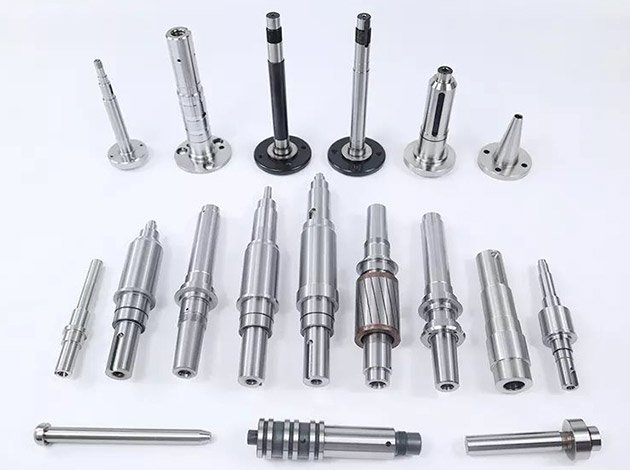
Industrial Ceramics Machining: Zirconia and Alumina Applications for Global OEM Supply Chains
Industrial ceramics are increasingly important in systems that must operate under severe wear, heat, corrosion, electrical, or dimensional stability requirements. Among the most widely specified materials, zirconia and alumina offer distinct performance profiles for demanding components used by semiconductor, medical, aerospace, fluid control, chemical processing, and advanced equipment manufacturers. However, converting these materials into reliable production parts requires more than conventional CNC programming. It demands disciplined process engineering, material control, tooling expertise, inspection capability, and supply-chain coordination.
1. Executive Summary
Zirconia and alumina ceramics help engineers extend service life and improve system reliability where metals may deform, corrode, contaminate, or wear too quickly. Alumina is valued for its hardness, electrical insulation, chemical resistance, and cost efficiency. Zirconia is selected when fracture toughness, strength, low friction, and resistance to thermal shock are more important. Both materials can support precision applications, but both are also unforgiving during machining and finishing.
For OEMs and Tier 1 suppliers, the manufacturing challenge is not simply producing a ceramic shape. The supplier must manage the complete route from material grade and blank preparation through green machining, sintering, diamond grinding, surface finishing, dimensional inspection, cleaning, packaging, and delivery. Small variations in shrinkage, porosity, edge integrity, or surface roughness can affect fit, leakage, electrical performance, or component life.
A capable industrial ceramics machining partner therefore functions as both a manufacturing specialist and a supply-chain integrator. Dixin Technology, operating through IndustryApex CNC, combines more than 30 years of precision manufacturing experience with ERP-managed production control, 3-5 axis CNC machining, EDM, precision grinding, and industrial ceramics capability. This structure allows global customers to consolidate technical communication, process ownership, quality documentation, and production coordination with one accountable partner.
For organizations evaluating a new ceramic component, the most important purchasing criteria include material traceability, proven machining methods, realistic tolerances, inspection planning, change control, and the supplier’s ability to scale from prototype quantities to repeat production. These factors reduce technical risk while improving schedule stability and total cost of ownership.
2. Technical Deep Dive
Industrial ceramic machining begins with a clear understanding of the material state. Ceramic components may be shaped in a green or partially sintered condition, then fully sintered and finished to final dimensions. Green machining is generally more productive because the material is easier to cut, but the part must account for predictable sintering shrinkage. Finished machining provides higher dimensional control, although it requires diamond tooling, slower material removal, careful coolant management, and stronger attention to surface damage.
Alumina: hardness, insulation, and chemical stability
Alumina, or aluminum oxide, is commonly specified in several purity levels. Higher-purity grades generally provide improved electrical insulation, chemical resistance, and high-temperature behavior, while lower-purity grades may offer better machinability and cost efficiency. Alumina is hard and wear resistant, making it suitable for guides, nozzles, insulators, bushings, wear plates, fixtures, and components exposed to abrasive media.
Its electrical insulation performance is especially useful in semiconductor equipment, high-voltage assemblies, vacuum systems, and sensor structures. Alumina also resists many chemical environments, but the final design must consider the specific process fluid, temperature, concentration, and exposure duration. A material that performs well in a dry high-temperature environment may require a different grade or finish in a wet chemical process.
Zirconia: toughness and precision contact surfaces
Zirconia offers higher fracture toughness than many traditional technical ceramics. Stabilized zirconia grades, including yttria-stabilized zirconia, can provide strong resistance to cracking and excellent wear behavior. These properties make zirconia attractive for precision bushings, plungers, seals, valve components, guides, medical instruments, tooling inserts, and applications involving repeated contact or sliding motion.
Zirconia is also recognized for low thermal conductivity and a relatively low coefficient of friction when properly finished and paired with a compatible mating material. Its performance depends strongly on grade selection, grain structure, stabilizer content, surface condition, and operating environment. Engineers should define not only the nominal material name but also the required grade, density, hardness, toughness, thermal behavior, and applicable material certification.
Machining and finishing considerations
Traditional cutting tools are not suitable for most fully sintered ceramic operations. Diamond grinding wheels and diamond-coated tools are normally required, with process parameters selected to minimize chipping, cracking, thermal damage, and subsurface defects. Sharp edges and thin walls require particular care because stress concentration can create failure points during machining, cleaning, assembly, or service.
Dimensional tolerances should be assigned according to function. Excessively tight tolerances can increase grinding time and scrap risk without improving assembly performance. Conversely, insufficient control of flatness, concentricity, cylindricity, or surface roughness can cause leakage, vibration, friction, or premature wear. A robust drawing should identify datum structure, critical-to-function features, edge-break requirements, allowable chips, inspection points, and any restrictions on surface damage.
Manufacturers also need to control contamination. Ceramic parts used in semiconductor, medical, optical, vacuum, or chemical applications may require dedicated cleaning, controlled handling, particle limits, special packaging, and documented traceability. Dimensional inspection may combine coordinate measurement, optical measurement, roundness testing, profilometry, microscopes, and functional gauges. For critical parts, the inspection plan should be agreed before production begins so that measurement methods are aligned with customer requirements.
Design for manufacturability is equally important. Uniform wall thickness, generous internal radii, accessible grinding surfaces, reduced unsupported features, and realistic tolerances improve yield. Where a ceramic part interfaces with metal, thermal expansion differences must be considered during design and assembly. Press fits, brazed joints, adhesives, and mechanical retention methods each impose different stress conditions. Early collaboration between the design team and machining supplier can prevent expensive redesign after tooling or qualification has started.
3. The ODM & Supply Chain Advantage
Industrial ceramics projects often involve more suppliers than the purchasing team initially expects. The ceramic blank, machining operation, grinding process, cleaning provider, inspection laboratory, packaging supplier, and logistics channel may each introduce delay or variation. A supply-chain integrator and ODM solution provider can simplify this structure by coordinating the complete manufacturing route and maintaining one technical ownership model.
Dixin Technology’s core identity is built around supply chain integration and ODM support for global OEM and Tier 1 customers. This means the engagement can begin with a drawing review, performance requirement, sample, or application problem rather than a fully finalized production package. The engineering team can evaluate material selection, tolerances, machining sequence, quality risks, and production economics before recommending a manufacturing route.
The manufacturing edge comes from a fully controlled precision manufacturing system supported by ERP and more than 30 years of experience. ERP-based control helps connect purchasing, work orders, process routing, inventory, inspection records, delivery planning, and production status. For customers managing international programs, this visibility supports better forecasting and reduces the risk created by fragmented communication.
The technical platform includes 3-5 axis CNC machining, EDM, precision grinding, and industrial ceramics processing. These capabilities are valuable because ceramic components are frequently part of a broader assembly containing metal, carbide, hardened steel, or complex structural features. A supplier that understands multiple precision processes can make more balanced decisions about material combinations, datum transfer, secondary operations, and assembly interfaces.
ODM involvement can also improve the product itself. During design review, the supplier may identify a tolerance that can be relaxed, a feature that can be made more accessible, a surface finish that is unnecessarily restrictive, or a material grade that provides equivalent performance at lower cost. The objective is not to change the customer’s functional requirements. It is to translate those requirements into a repeatable, inspectable, and commercially sustainable production method.
Supply continuity requires more than a qualified first article. It requires controlled sources, documented material specifications, backup planning, stable process parameters, revision management, and clear nonconformance procedures. For high-value equipment, the supplier should also support lot traceability, certificates of conformity, inspection reports, and agreed packaging standards. These controls are particularly important when the component is difficult to replace or when a line stoppage would carry a high economic cost.
Customers developing flight hardware can review related aerospace CNC machining and aircraft structural component capabilities. Medical equipment manufacturers may also benefit from the company’s experience with ISO-certified medical components and high-precision device parts. These adjacent capabilities demonstrate how ceramic machining can be integrated into broader precision manufacturing programs.

4. Industry Applications
Semiconductor and electronics equipment
Semiconductor equipment requires materials that tolerate thermal cycling, vacuum conditions, aggressive chemicals, and strict contamination limits. Alumina insulation components, ceramic guides, wafer-handling parts, rings, spacers, and fixtures can support stable electrical and mechanical performance. Zirconia may be selected for wear-sensitive moving interfaces where greater toughness is needed. Surface cleanliness, edge quality, and traceability are often as important as dimensional accuracy.
Medical and laboratory equipment
Zirconia is widely considered for wear-resistant, corrosion-resistant, and biocompatible components in medical and laboratory equipment. Potential applications include instrument elements, pump components, precision guides, cutting or positioning parts, and fluid-contact components, subject to the applicable regulatory and material requirements. Alumina can provide electrical insulation and chemical stability in diagnostic equipment, analytical systems, and laboratory fixtures. Suppliers must align machining, cleaning, packaging, and documentation with the customer’s validation process.
Fluid control, pumps, and valves
Ceramic plungers, sleeves, seats, nozzles, valve elements, and wear rings can improve performance in abrasive, corrosive, or high-purity fluids. Zirconia’s toughness is useful where repeated reciprocation or impact is present. Alumina is attractive where hardness, chemical stability, and electrical insulation dominate. Engineers should evaluate pressure, temperature, particle loading, lubrication, mating materials, and expected duty cycle before selecting the ceramic grade and finish. Dixin Technology also supports related hydraulic pump parts and fluid-control manufacturing requirements.
Aerospace and energy systems
Aerospace and energy equipment can use technical ceramics for electrical isolation, thermal barriers, wear interfaces, sensor supports, and specialized high-temperature components. Weight, thermal expansion, vibration, and reliability requirements must be assessed together. Ceramic parts may be integrated into metallic assemblies through controlled mechanical or joining methods, making dimensional stability and surface condition critical during qualification.
Chemical processing and industrial automation
In chemical processing, alumina and zirconia can provide useful resistance to corrosion and abrasive wear. Automation equipment may use ceramic guides, bushings, end-effectors, and positioning components where low friction and long service life reduce maintenance. The design must still account for impact sensitivity, mounting stress, thermal gradients, and the possibility of foreign-particle generation. Selecting the right ceramic is an application decision, not simply a hardness comparison.
Across these sectors, the commercial value of ceramic machining is measured by more than the unit price. A reliable supplier helps reduce replacement frequency, equipment downtime, contamination events, inspection disputes, and qualification delays. This is why material engineering, production control, and logistics planning should be evaluated as one system.
5. Call to Action
Industrial ceramics can solve demanding wear, insulation, corrosion, and thermal stability problems, but performance depends on the complete manufacturing process. Zirconia and alumina should be selected according to the operating environment, loading conditions, mating materials, cleanliness requirements, and expected service life. Machining strategy, grinding control, inspection, and supply continuity then determine whether the design performs consistently in production.
Dixin Technology, through IndustryApex CNC, helps global OEMs and Tier 1 suppliers move ceramic components from concept to repeatable supply. Share your drawing, sample, material specification, or application requirement through the contact page for a technical and manufacturing review. You can also explore the company’s precision CNC manufacturing solutions to assess how industrial ceramics can be combined with metal, carbide, grinding, EDM, and multi-axis machining capabilities.