- Shaft
- Molds&Tools
- Hydraulics And Pump
- Hair transplant needle
- Hydraulics And Pump
- Precision CNC Shaft Machining Manufacturer for High Performance Applications
- Energy Industry CNC Machining Parts Supplier
- Aerospace CNC Machining Parts Manufacturer
- Aerospace CNC Machining Parts Manufacturer
- Automotive & EV CNC Machining Parts Supplier for OEM and Tier 1
- Medical CNC Machining Parts Supplier for Precision Medical Devices

Industrial Ceramics Machining: Zirconia and Alumina Applications for OEM Supply Chains

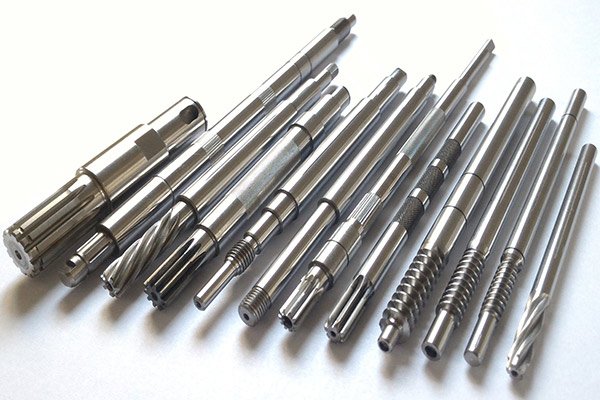
Industrial Ceramics Machining: Zirconia and Alumina Applications for OEM Supply Chains
Industrial ceramics are increasingly important in equipment that must operate under high temperature, electrical, chemical, or abrasive conditions. Zirconia and alumina are two of the most widely specified engineering ceramics, but converting their material advantages into reliable production parts requires more than selecting a ceramic grade and programming a CNC machine. It requires controlled processes, disciplined dimensional inspection, application knowledge, and a supply-chain partner capable of supporting design decisions from prototype through production.
For global OEMs and Tier 1 suppliers, Dixin Technology, operating through IndustryApex CNC, provides an integrated path for industrial ceramics machining alongside precision metal component manufacturing. This article examines the technical behavior of zirconia and alumina, the machining challenges involved, and the supply-chain considerations that influence total cost, delivery reliability, and field performance.
1. Executive Summary
Zirconia and alumina serve different engineering priorities. Alumina is valued for its hardness, electrical insulation, wear resistance, thermal stability, and relatively favorable material cost. Zirconia offers higher fracture toughness, strong resistance to crack propagation, low thermal conductivity, and excellent chemical stability. These characteristics make alumina suitable for insulating, wear-resistant, and high-temperature components, while zirconia is often selected for precision guides, seals, medical components, tooling elements, and parts exposed to mechanical shock or repeated contact.
The main manufacturing challenge is that advanced ceramics are hard and brittle. Conventional cutting methods can generate microcracks, chipping, edge breakout, subsurface damage, and dimensional variation. Finished performance may therefore depend on grinding strategy, tooling condition, fixturing, coolant management, edge preparation, and inspection methodology as much as on the nominal material specification.
A reliable manufacturing program begins with design-for-manufacturing review. Engineers should define functional surfaces, allowable edge conditions, flatness, concentricity, surface finish, hole geometry, and inspection datums before production tooling is finalized. They should also evaluate whether a feature can be formed, ground, or machined after sintering, because the selected process route affects lead time, cost, and achievable tolerances.
For international supply chains, an integrated ODM and manufacturing partner can reduce engineering handoffs. The partner can coordinate material sourcing, process planning, CNC machining, precision grinding, inspection, documentation, packaging, and production scheduling through a controlled system. This reduces the risk that a technically correct component becomes a commercial problem because of inconsistent batches, unclear revisions, or fragmented supplier responsibility.
2. Technical Deep Dive
Zirconia: toughness and precision contact performance
Zirconia is a family of ceramic materials whose properties vary according to composition and stabilization system. Yttria-stabilized zirconia is commonly specified when high strength, fracture toughness, and dimensional integrity are required. Compared with many other ceramics, zirconia can tolerate greater mechanical stress and impact before failure. It also provides low thermal conductivity and good resistance to many aggressive chemical environments.
These properties support applications such as precision sleeves, valve components, pump elements, nozzles, wear inserts, medical components, and insulating parts. Zirconia is also used where a smooth, hard, corrosion-resistant surface must maintain contact geometry over long service intervals. In medical and laboratory equipment, its biocompatibility and resistance to corrosion can be important, subject to the applicable grade, processing route, and regulatory requirements.
Machining zirconia requires careful control of material condition. Green machining before final sintering may offer productivity benefits because the material is easier to cut, but shrinkage during sintering must be characterized and compensated. Fully sintered zirconia provides stable final properties but generally requires diamond tooling and controlled grinding or abrasive machining. Aggressive stock removal, thermal shock, or poor fixturing can create damage that is not immediately visible but later develops into failure under cyclic loading.
Alumina: electrical insulation and wear resistance
Alumina, or aluminum oxide, is available in several purity levels and formulations. Higher-purity alumina generally offers stronger electrical insulation, improved chemical resistance, and better high-temperature performance, while lower-purity grades may provide a more economical solution for less demanding environments. Alumina is hard, stable, and resistant to abrasion, making it useful for bushings, electrical insulators, wear plates, spacers, ceramic tubes, seals, and process equipment components.
Alumina’s hardness is a manufacturing advantage in service but a challenge during machining. Diamond grinding and abrasive finishing are frequently required for tight-tolerance features. Thin walls, sharp internal corners, deep holes, and interrupted surfaces require particular attention because they can concentrate stress and increase the likelihood of chipping. A robust drawing should distinguish between critical functional edges and nonfunctional edges that may accept a controlled chamfer or edge break.
Design and process considerations
Successful industrial ceramics machining begins with realistic geometry. Designers should avoid unnecessarily sharp internal corners, abrupt wall-thickness changes, and unsupported slender features. Where possible, generous radii, consistent sections, and accessible grinding surfaces improve yield. Holes should be designed with adequate diameter-to-depth ratios, and the location of tight-tolerance features should be related to stable inspection datums.
Dimensional tolerances should reflect the application rather than defaulting to metal machining standards. A narrow tolerance may be achievable, but it can increase grinding time, inspection effort, scrap risk, and unit cost. The most effective specification identifies which dimensions control assembly, sealing, flow, electrical isolation, or wear life. Less critical dimensions can use broader limits, allowing the supplier to focus process capability where it creates measurable value.
Surface finish is equally application-specific. A low roughness value may be necessary for a seal, sliding interface, or contamination-sensitive process, but excessive finishing can add cost without improving performance. Suppliers should confirm the measurement method, cutoff, inspection direction, and whether the requirement applies before or after coating, assembly, or cleaning.
Inspection may include dimensional measurement, optical inspection, surface roughness analysis, roundness, flatness, concentricity, and visual examination for chips or cracks. For critical components, the quality plan may also include lot traceability, material certificates, process records, and additional non-destructive or microscopic inspection. The inspection method must be compatible with ceramic hardness and geometry so that measurement itself does not damage the part.
Material handling and packaging deserve the same attention as machining. Ceramic parts can be damaged by point loading, uncontrolled contact, vibration, or inadequate separation during shipment. Protective packaging should support the part without applying concentrated stress to thin sections or finished edges. Clear labeling, batch identification, revision control, and inspection records help customers maintain traceability from incoming inspection to final assembly.
3. The ODM & Supply Chain Advantage
Dixin Technology’s core identity is that of a supply chain integrator and ODM solution provider. This positioning matters when an industrial ceramic component is part of a larger assembly rather than an isolated purchase. OEM engineering teams may need assistance with material selection, geometry optimization, process validation, packaging, and production scaling. A partner that can coordinate these activities reduces the number of interfaces that must be managed by the customer.
The manufacturing edge is a fully controlled precision manufacturing system supported by ERP and more than 30 years of experience. ERP-based control helps connect quotations, drawings, bills of materials, production orders, inventory, inspection records, and shipment status. For customers managing multiple revisions or recurring releases, this visibility supports more predictable replenishment and improves control over approved materials and process documentation.
Dixin Technology combines 3-5 axis CNC machining, EDM, precision grinding, and industrial ceramics capabilities. This broader technical base is valuable because many assemblies combine ceramic and metal parts. A supplier that understands only one material family may optimize an individual component while overlooking interfaces, tolerances, assembly sequence, or total system performance. Coordinated production can help align ceramic inserts with machined housings, shafts, sleeves, fixtures, or fluid-control components.
ODM collaboration is most effective when it begins early. During design review, the manufacturing team can assess ceramic grade, green or sintered machining route, shrinkage allowances, datum strategy, tooling access, edge treatment, and inspection requirements. For prototypes, the goal may be to confirm fit and operating performance quickly. For production, the focus expands to repeatability, lot control, yield, packaging, and cost per qualified part.
Global OEM and Tier 1 suppliers also need a dependable change-management process. A drawing revision, material substitution, altered surface finish, or packaging change can affect qualification status. Controlled document release and approval records help prevent obsolete specifications from entering production. They also make it easier to investigate deviations and communicate corrective actions across engineering, purchasing, and quality teams.
Supply-chain resilience is not achieved through inventory alone. It also depends on qualified process routes, backup sources for critical inputs, clear acceptance criteria, and early identification of long-lead tooling or material constraints. A manufacturing partner should be able to distinguish between a true capacity limitation and a planning issue, then provide practical options such as lot scheduling, process sequencing, safety stock, or design adjustment.
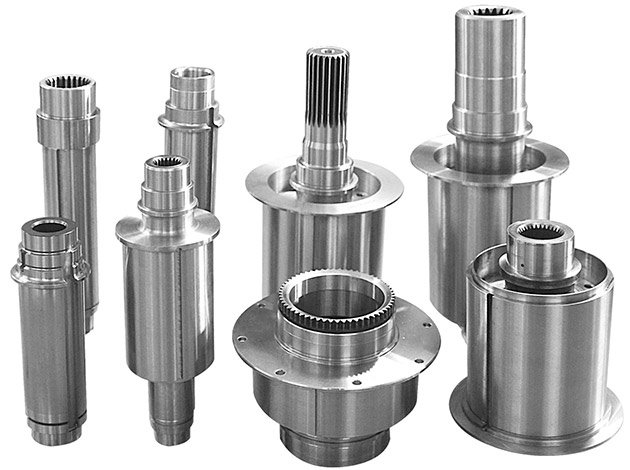
For customers purchasing complete component families, Dixin Technology can extend the same manufacturing discipline beyond ceramics. Related precision machining programs may include aerospace parts, medical parts, and hydraulic and pump components. A unified supplier relationship can simplify supplier qualification, purchasing administration, quality communication, and production forecasting.
4. Industry Applications
Semiconductor and electronic processing equipment
Alumina insulators, ceramic tubes, wafer-handling components, wear guides, and electrical isolation parts are used in environments where contamination control, thermal stability, and dielectric performance are essential. Zirconia can be selected for wear-prone precision components or parts requiring greater toughness. In these applications, surface cleanliness, particle control, edge integrity, and packaging are often as important as dimensional accuracy.
Medical and laboratory equipment
Zirconia may be used for wear-resistant, corrosion-resistant, or biocompatible components, while alumina can support insulating, wear, and high-temperature functions. Medical applications demand strict control of material identity, process records, cleaning, packaging, and inspection. The appropriate quality system depends on the component’s intended use and regulatory classification, so technical requirements should be established before production begins.
Fluid control, pumps, and chemical processing
Ceramic sleeves, plungers, valve seats, nozzles, seals, and wear rings can provide long service life in abrasive, corrosive, or chemically active media. Zirconia’s toughness can benefit components exposed to contact loads and pressure cycling. Alumina is attractive when hardness, insulation, and chemical stability are the primary requirements. The final choice should consider media chemistry, temperature, pressure, mating materials, lubrication, and the consequences of leakage or particulate generation.
Aerospace and energy systems
Industrial ceramics can support thermal barriers, electrical isolation, sensor protection, wear interfaces, and specialized tooling in aerospace and energy equipment. These parts may be small, but their quality requirements can be demanding because they operate in high-temperature, vibration, or high-reliability environments. Engineering teams should define qualification requirements, inspection records, and traceability expectations at the quotation stage.
Automation, tooling, and general industrial machinery
Ceramic guides, locating elements, wear pads, bushings, and insulating fixtures can reduce maintenance in automated production lines. Their value is greatest where frequent replacement, abrasive contact, electrical interference, or elevated temperature limits the performance of metal alternatives. Correctly designed ceramic components can improve uptime, but the assembly must protect them from impact and unintended side loading.
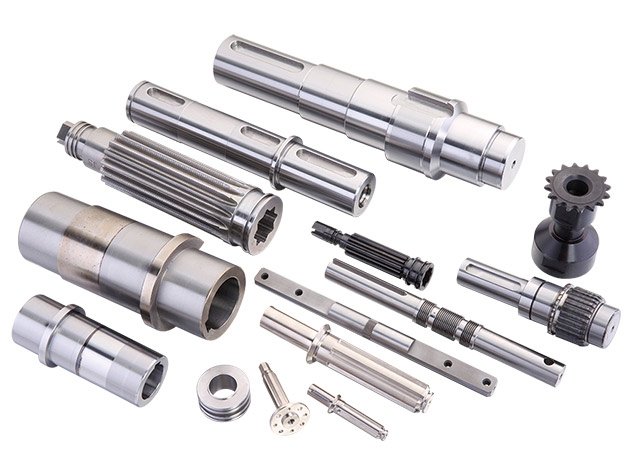
Across these industries, the most important sourcing question is not simply whether a supplier can machine zirconia or alumina. It is whether the supplier can demonstrate repeatable process control for the specific geometry, grade, tolerance, surface condition, and service environment. A production-ready supplier should be prepared to review drawings, clarify critical-to-function requirements, provide a manufacturing plan, and establish inspection evidence appropriate to the application.
5. Call to Action
Industrial ceramics machining can deliver meaningful performance advantages when material selection, geometry, process planning, and supply-chain control are treated as one engineering decision. Zirconia is often the stronger choice for tough, precision-contact applications, while alumina remains a dependable solution for insulation, wear resistance, chemical stability, and high-temperature service. The correct decision depends on the complete operating environment and the required lifecycle performance.
Dixin Technology supports global OEM and Tier 1 sourcing programs with industrial ceramics machining, 3-5 axis CNC machining, EDM, precision grinding, ERP-controlled production, and ODM engineering support. Share your drawings, material requirements, annual volume, tolerance expectations, and application conditions with the team through Contact Us. A technical review can identify the appropriate ceramic grade, manufacturing route, inspection plan, and supply arrangement for your next component program.