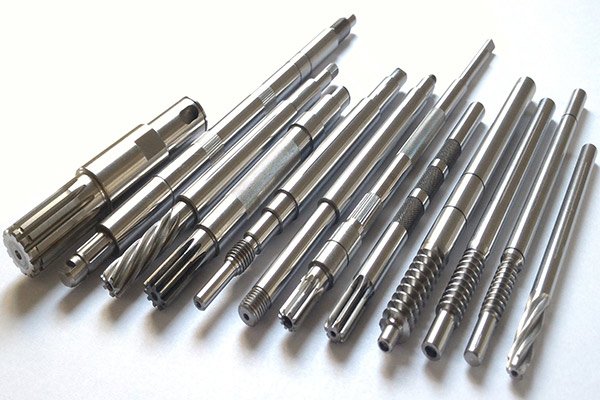
- Shaft
- Molds&Tools
- Hydraulics And Pump
- Hair transplant needle
- Hydraulics And Pump
- Precision CNC Shaft Machining Manufacturer for High Performance Applications
- Energy Industry CNC Machining Parts Supplier
- Aerospace CNC Machining Parts Manufacturer
- Aerospace CNC Machining Parts Manufacturer
- Automotive & EV CNC Machining Parts Supplier for OEM and Tier 1
- Medical CNC Machining Parts Supplier for Precision Medical Devices
Sourcing Aerospace CNC Parts: What Tier 1 Suppliers Look For in Precision Manufacturing Partners

Executive Summary
For aerospace Tier 1 suppliers, sourcing CNC machined parts is no longer a simple exercise in comparing unit price, lead time, and machining capacity. The procurement decision now sits at the intersection of engineering assurance, regulatory discipline, supply chain resilience, and long-term manufacturing scalability. A supplier may be able to machine a titanium bracket or an aluminum structural component, but Tier 1 aerospace buyers need evidence that the supplier can repeatedly hold tight tolerances, protect traceability, manage documentation, control process variation, and respond to changing program schedules without creating risk downstream.
This is especially important as aircraft platforms become lighter, more fuel efficient, and more dependent on complex structural assemblies. Aerospace CNC parts often involve thin walls, deep pockets, high-strength alloys, difficult datum structures, and demanding surface finish requirements. Parts may move through 3-axis and 5-axis machining, EDM, grinding, special inspection, surface treatment coordination, and final documentation before release. Every step must be controlled because a minor nonconformance can delay assembly, trigger costly rework, or affect airworthiness requirements.
Tier 1 suppliers therefore evaluate manufacturing partners through a broader lens. They look for companies that understand aerospace drawings, GD&T, material behavior, first article inspection expectations, production part approval discipline, and engineering change management. They also prefer suppliers that can support early design-for-manufacturability conversations, stabilize production after prototype validation, and maintain communication across engineering, quality, purchasing, and logistics teams.
Dixin Technology, operating through IndustryApex CNC, supports this environment as a precision manufacturing and ODM-oriented supply chain partner for global OEM and Tier 1 customers. Through IndustryApex CNC precision manufacturing services, the company focuses on controlled CNC machining, complex component production, and supply chain coordination for sectors where quality consistency and documentation matter. In aerospace sourcing, this combination of manufacturing depth and program support can help Tier 1 buyers reduce supplier fragmentation and improve execution confidence.
Technical Deep Dive
Aerospace CNC sourcing begins with the drawing. Tier 1 suppliers need partners that can interpret not only dimensions but also the functional intent behind datum structures, tolerance zones, surface requirements, and material callouts. Aerospace components often include positional tolerances, profile tolerances, flatness requirements, concentricity controls, and true position features that influence how fixtures, machining sequences, and inspection plans must be designed. A supplier that treats the drawing as a machining instruction only may miss the engineering logic behind the component.
Material capability is one of the first technical filters. Aerospace programs commonly use titanium alloys, high-strength aluminum, stainless steel, nickel alloys, and specialty materials selected for strength-to-weight ratio, fatigue resistance, corrosion behavior, and thermal performance. Titanium aircraft components, for example, require stable toolpath strategy, controlled cutting parameters, sharp tooling, heat management, and rigid workholding. Poor control can cause tool wear, work hardening, distortion, burr formation, or surface integrity problems. Aluminum structural parts present different challenges, including thin-wall vibration, large material removal ratios, residual stress movement, and cosmetic or anodizing-sensitive surfaces.
5-axis CNC machining is often a critical capability because aerospace geometries rarely align conveniently with simple prismatic machining. Multi-face features, compound angles, sculpted pockets, lightweighting structures, and complex mounting interfaces benefit from 5-axis access and reduced refixturing. Fewer setups can improve datum integrity, reduce stack-up error, and shorten cycle time. However, Tier 1 buyers still need proof that the supplier can validate the process, control tool length offsets, maintain machine calibration, and inspect features that are difficult to access using conventional methods.
Inspection capability is equally important. Tier 1 suppliers typically expect robust quality planning before production begins. This may include process flow diagrams, control plans, inspection plans, gauge strategies, material traceability, certificate management, and first article inspection packages. Coordinate measuring machines, height gauges, surface roughness testers, thread gauges, plug gauges, optical measurement systems, and custom fixtures may all be required depending on the part. The key is not only having inspection equipment but also building an inspection strategy that reflects the drawing’s risk points.
Process stability is another major evaluation area. Aerospace production is rarely forgiving when suppliers rely on operator memory or informal shop-floor adjustments. A qualified supplier should control routing, tooling, fixture design, revision status, in-process inspection, machine maintenance, and nonconformance handling. ERP-supported manufacturing control helps connect order requirements with material procurement, production scheduling, work-in-process tracking, inspection checkpoints, and delivery commitments. This gives Tier 1 buyers better visibility into schedule risk and improves the supplier’s ability to respond to changes.
Documentation discipline can determine whether a technically acceptable part is usable. Aerospace buyers may require material certificates, heat lot traceability, dimensional reports, inspection records, special process certificates, coating documentation, serialization records, and packaging verification. Missing or inconsistent paperwork can hold up incoming inspection even if the physical component meets specification. Tier 1 suppliers therefore prefer manufacturing partners that treat documentation as part of the product, not as an afterthought.
Engineering communication is also a differentiator. During quotation, a strong supplier will identify tolerance risk, tooling access concerns, burr-sensitive edges, unclear notes, coating allowance issues, datum conflicts, and cost drivers. During production, the same supplier should communicate early when drawings change, material lead times shift, or yield data indicates a process issue. This engineering transparency is a major reason Tier 1 buyers value suppliers with aerospace experience instead of relying only on general-purpose machining capacity. For buyers sourcing aerospace CNC machining for titanium aircraft parts and structural components, technical maturity is central to reducing risk.
The ODM & Supply Chain Advantage
The strongest aerospace sourcing relationships are built around more than machining. Tier 1 suppliers increasingly need partners that can function as supply chain integrators and ODM solution providers, especially when programs involve complex assemblies, multiple materials, recurring design changes, and strict delivery windows. A supplier that can coordinate engineering input, manufacturing execution, inspection, secondary processes, and logistics offers more value than a shop that only accepts drawings and ships parts.
Dixin Technology’s core identity fits this requirement: a supply chain integrator and ODM solution provider focused on precision components for demanding industrial sectors. This approach matters because Tier 1 buyers often face pressure from both directions. OEM customers demand reliable delivery, cost improvement, and technical compliance, while internal teams must manage supplier quality, purchasing workload, inventory, and program risk. By consolidating manufacturing control and supply chain coordination, an ODM-oriented partner can reduce friction across the sourcing cycle.
The manufacturing edge comes from a fully controlled precision manufacturing system supported by ERP and more than 30 years of accumulated experience. In aerospace supply chains, this kind of operational foundation helps turn engineering requirements into repeatable production. ERP control supports scheduling, lot tracking, material planning, work order management, and delivery visibility. Long manufacturing experience contributes to practical judgment: how to fixture a distortion-prone part, how to sequence roughing and finishing, how to protect critical surfaces, when to recommend tolerance adjustment, and how to plan inspection without slowing production unnecessarily.
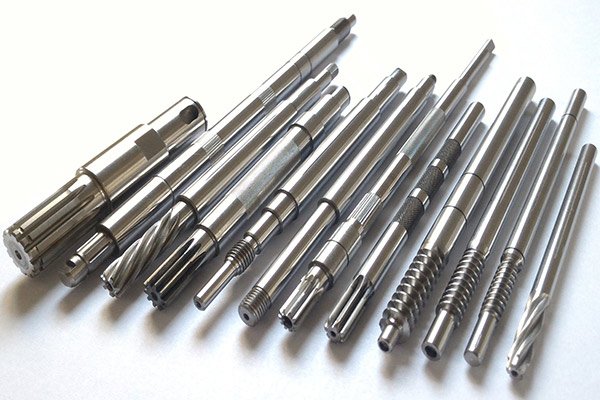
Dixin Technology’s technical capabilities also align with the needs of global OEM and Tier 1 suppliers. The company supports 3-axis to 5-axis CNC machining for complex metal components, EDM for difficult features and hardened materials, precision grinding for tight dimensional and surface requirements, and industrial ceramics for applications where wear resistance, insulation, chemical stability, or thermal behavior are important. This breadth is useful when aerospace sourcing overlaps with tooling, fixtures, specialized components, or adjacent high-reliability industries.
ODM support can begin before the drawing is frozen. Early supplier involvement allows engineering teams to evaluate manufacturability, cost drivers, material availability, tolerance strategy, and inspection feasibility. For example, a component may be technically machinable but expensive due to excessive datum changes, deep tool reach, unnecessary surface finish callouts, or tolerance requirements that exceed functional need. A qualified ODM partner can propose practical improvements while respecting the design intent and compliance constraints of the aerospace program.
Supply chain integration also helps with secondary processes. Aerospace CNC parts frequently require heat treatment, anodizing, passivation, plating, painting, shot peening, non-destructive testing, cleaning, marking, and controlled packaging. These steps can create risk if they are poorly coordinated. A supplier that understands upstream and downstream process requirements can plan machining allowances, protect threaded and sealing surfaces, manage masking needs, and preserve traceability through outside processing. This reduces the chance that a nearly finished part fails late in the production flow.
For Tier 1 buyers, the advantage is not only technical capability but also accountability. When a supplier can manage more of the component lifecycle, purchasing teams spend less time coordinating multiple vendors, quality teams gain clearer records, and engineering teams have a single technical counterpart for manufacturability discussions. This is why global OEM and Tier 1 suppliers often look for partners with a controlled system, cross-process capability, and the discipline to support long-term production programs.
Industry Applications
Aerospace is the primary focus when discussing Tier 1 sourcing expectations, but the same manufacturing principles apply across several high-specification industries. The common thread is controlled precision: components must perform reliably, fit correctly, and arrive with documentation that supports customer acceptance. Aerospace programs may have unique compliance requirements, but the sourcing logic overlaps with medical devices, hydraulic systems, pumps, energy equipment, optics, and high-performance industrial machinery.
In aircraft structures, CNC machined parts may include brackets, ribs, frames, hinge components, actuator housings, seat track parts, mounting blocks, sensor housings, and lightweight structural elements. These parts often combine tight tolerances with weight reduction features. The challenge is to remove material efficiently while keeping dimensional stability and surface integrity. A supplier must understand how machining stress, clamping pressure, toolpath strategy, and finishing operations affect final geometry.
In propulsion-adjacent and fluid control systems, machined components may include housings, valve bodies, spools, sleeves, manifolds, fittings, and pump components. These parts require precise sealing surfaces, controlled bore geometry, smooth flow paths, and reliable material performance. Dixin Technology’s experience with hydraulic pump parts and fluid control components is relevant because many inspection and process control principles transfer directly to aerospace hydraulic and actuation systems.

Medical manufacturing provides another useful comparison. Medical components such as titanium implants, surgical instruments, and high-precision device parts demand biocompatible materials, clean machining practices, surface quality, and strict dimensional control. While regulatory frameworks differ from aerospace, both sectors require documentation discipline and reliable process repeatability. Buyers evaluating suppliers for aerospace parts may find additional confidence in manufacturers that also support ISO-certified CNC machining for medical components, because it indicates familiarity with high-accountability production environments.
Industrial ceramics and precision grinding also expand the application range. Aerospace and adjacent high-reliability sectors may require ceramic components for insulation, wear resistance, sensor systems, or specialized fixtures. Grinding can be essential when tolerances, cylindricity, flatness, or surface finish exceed the practical limits of milling or turning alone. EDM can support sharp internal features, hard materials, small slots, and profiles that are difficult to machine conventionally. A supplier with these capabilities can solve more problems internally and reduce the complexity of sourcing specialized features from separate vendors.
Across all these applications, Tier 1 suppliers look for evidence that the manufacturing partner understands the operating environment of the part. A bracket is not just a bracket if it carries load in an aircraft assembly. A valve sleeve is not just a turned component if leakage, wear, and response time are critical. A housing is not just a milled block if it must align sensors, protect electronics, and survive vibration. Aerospace sourcing rewards suppliers that ask the right engineering questions and build processes around function, not just geometry.
Call to Action
For Tier 1 suppliers, the right aerospace CNC machining partner should bring technical depth, controlled production, documentation discipline, and supply chain responsibility into one operating model. Unit price still matters, but it must be evaluated alongside first-pass yield, engineering responsiveness, traceability, inspection reliability, and the supplier’s ability to scale from prototype to recurring production.
Dixin Technology, through IndustryApex CNC, supports global OEM and Tier 1 customers with precision CNC machining, 3-axis and 5-axis manufacturing, EDM, precision grinding, industrial ceramic components, and ODM-oriented supply chain integration. With more than 30 years of manufacturing experience and an ERP-supported production system, the company is positioned to help buyers reduce sourcing complexity while maintaining the control required for aerospace and other high-reliability industries.
If your team is evaluating suppliers for aerospace structural components, titanium aircraft parts, actuator components, hydraulic assemblies, or precision machined systems, connect with Dixin Technology to review drawings, production requirements, and supply chain expectations. Start a technical sourcing discussion through the IndustryApex CNC contact page and explore how a controlled precision manufacturing partner can support your next aerospace program.