
- Shaft
- Molds&Tools
- Hydraulics And Pump
- Hair transplant needle
- Hydraulics And Pump
- Precision CNC Shaft Machining Manufacturer for High Performance Applications
- Energy Industry CNC Machining Parts Supplier
- Aerospace Structural Components for OEM Programs
- Aerospace Structural Components for OEM Programs
- Automotive & EV CNC Machining Parts Supplier for OEM and Tier 1
- Medical Device CNC Machining Services
Hydraulic Pump Parts: Ensuring Reliability Through Precision Grinding

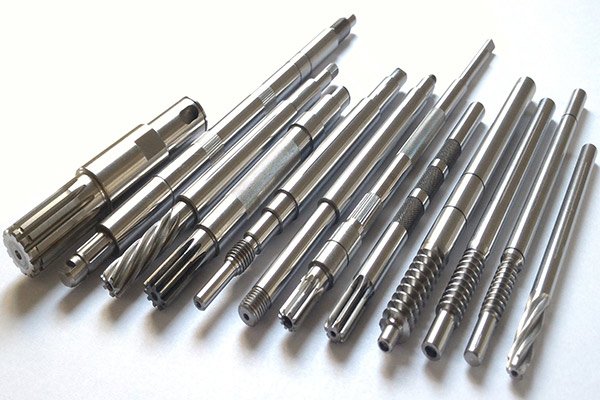
Hydraulic Pump Parts: Ensuring Reliability Through Precision Grinding
Hydraulic systems convert mechanical power into controlled fluid movement, but their performance depends on the dimensional accuracy and surface integrity of relatively small components. Pump shafts, sleeves, pistons, valve elements, bearing surfaces, and wear plates must operate under high pressure, cyclic loading, contamination risk, and demanding temperature conditions. For global OEMs and Tier 1 suppliers, precision grinding is therefore more than a finishing operation: it is a reliability-control strategy.
1. Executive Summary
Hydraulic pump parts are exposed to sliding contact, pressure pulsation, fluid shear, and continuously changing loads. Small deviations in roundness, cylindricity, concentricity, or surface roughness can increase internal leakage, reduce volumetric efficiency, accelerate wear, and create premature field failures. Precision grinding addresses these risks by producing consistent geometry and controlled surface characteristics that conventional turning alone may not reliably achieve.
For procurement and engineering teams, the value of a ground hydraulic component is measured across the complete supply chain. Stable processes reduce assembly variation, minimize inspection disputes, improve pump efficiency, and support predictable service life. However, grinding quality depends on more than machine capability. Material selection, heat treatment, grinding parameters, coolant control, metrology, cleaning, packaging, and traceability must function as one integrated system.
IndustryApex Technology, operating through IndustryApex CNC, supports hydraulic component programs with a controlled precision manufacturing system, ERP-based production management, and more than 30 years of manufacturing experience. Its capabilities include 3-5 axis CNC machining, EDM, precision grinding, and industrial ceramics. This combination enables a single manufacturing partner to manage complex part families, secondary operations, quality documentation, and supply continuity for demanding OEM applications. Explore the dedicated hydraulic pump parts manufacturing resource for additional information.
2. Technical Deep Dive
Precision grinding is commonly used after turning, milling, heat treatment, or coating to bring critical hydraulic pump features within tight dimensional and geometric tolerances. Depending on the design, cylindrical grinding may be applied to shafts, journals, plungers, and sleeves, while internal grinding is used for bores and precision sliding interfaces. Surface grinding can support flat wear plates, thrust surfaces, and sealing faces. Centerless grinding is also valuable for high-volume cylindrical parts when stable, repeatable production is required.
The first engineering consideration is material behavior. Hydraulic pump components may be manufactured from alloy steels, stainless steels, tool steels, bronze, ductile iron, or engineered ceramics. Hardened steels provide wear resistance and load capacity, but heat treatment can introduce distortion that must be anticipated in the grinding allowance. Stainless alloys may generate different grinding forces and heat characteristics, while bronze and other nonferrous materials require tooling and wheel selections that prevent loading. Ceramic components offer excellent hardness and chemical resistance but demand specialized process control because they are brittle and sensitive to edge damage.
Geometry is equally important. A shaft can meet its diameter specification while still causing a pump to fail if it has excessive taper, barrel shape, lobing, runout, or poor coaxiality between journals. For sleeves and valve-related components, roundness and straightness influence leakage and hydraulic response. For pistons and plungers, controlled cylindricity helps maintain the intended fluid film and reduces localized contact. Grinding programs should therefore define not only nominal dimensions but also datum strategy, functional tolerances, edge-break requirements, and the relationship between all critical surfaces.
Surface finish must be selected according to function rather than pursued as an isolated number. A surface that is too rough can damage mating components, retain abrasive particles, and increase friction. A surface that is excessively smooth or has an unsuitable lay may reduce fluid retention or affect lubrication behavior. Engineers should evaluate roughness parameters, waviness, grinding direction, and the compatibility of the finished surface with the hydraulic fluid, seal material, and mating component. In high-performance applications, surface integrity—including residual stress, burn risk, microcracking, and metallurgical alteration—can be as important as measured Ra.
Grinding burn is a critical failure mode. Excessive heat generated at the contact zone can alter the hardened layer, reduce fatigue strength, or create tensile residual stresses. It may not be visible during routine visual inspection, yet it can lead to cracking, accelerated wear, or dimensional instability in service. Reliable suppliers manage wheel selection, dressing frequency, infeed, traverse speed, spark-out, coolant delivery, and workholding to control thermal load. Where required, inspection may include hardness verification, etch testing, magnetic particle inspection, or other suitable non-destructive methods.
Metrology must reflect the part’s functional requirements. High-resolution air gauging, roundness measurement, cylindricity analysis, profilometry, coordinate measurement, and dedicated custom gauges can be combined to verify critical characteristics. In-process measurement is especially useful for controlling drift before an entire batch is affected. Statistical process control can then identify trends in diameter, taper, or roughness, enabling corrective action before nonconforming parts reach final assembly.
Cleanliness and preservation also influence hydraulic reliability. Grinding residue, abrasive particles, chips, and residual coolant can contaminate a pump and damage valves or seals. A robust process includes deburring, washing, drying, visual inspection, and protective packaging appropriate to the material and shipping route. Parts with precision sliding surfaces should be individually protected against impact, corrosion, and contact with unclean packaging materials.
Engineering takeaway: precision grinding should be specified as a controlled functional process, not simply as a final dimensional operation. The best results come from connecting design tolerances, material condition, grinding parameters, inspection methods, and cleanliness controls from the beginning of the program.
3. The ODM & Supply Chain Advantage
Hydraulic pump manufacturers increasingly need suppliers that can contribute to design-for-manufacturing decisions while also delivering stable production at global scale. A component supplier that only performs one operation may leave OEMs responsible for coordinating raw materials, heat treatment, machining, grinding, coatings, inspection, packaging, and corrective actions across multiple vendors. This fragmented model increases lead-time risk and makes root-cause analysis more difficult.
IndustryApex Technology’s core identity is that of a supply chain integrator and ODM solution provider. For global OEMs and Tier 1 suppliers, this means the supplier can participate earlier in the product lifecycle, review drawings and specifications, recommend manufacturable tolerances, and coordinate the processes needed to deliver a finished component or subassembly. ODM support is particularly valuable when a hydraulic design is being adapted for a new pressure range, fluid type, machine platform, or regional production requirement.
The company’s manufacturing edge is a fully controlled precision manufacturing system supported by ERP and backed by over 30 years of experience. ERP-based control helps connect quotation data, production planning, material records, routing, inspection status, inventory, and shipment information. This visibility supports better forecast response and gives purchasing teams a clearer basis for managing blanket orders, safety stock, engineering changes, and supplier performance.
Its technical capabilities span 3-5 axis CNC machining, EDM, precision grinding, and industrial ceramics. This range is important because hydraulic assemblies frequently combine turned and milled geometries with hardened wear surfaces, precision bores, narrow clearances, and specialized materials. EDM can address complex or hardened features, multi-axis machining can reduce setups and improve positional relationships, and precision grinding can establish the final functional geometry. Industrial ceramics provide an additional solution where wear, corrosion, electrical insulation, or extreme operating conditions exceed the performance of conventional metals.
Process integration also improves accountability. When machining and grinding are planned as a connected route, the supplier can control datums, grinding allowances, clamping references, and inspection handoffs more effectively. Engineering teams can receive consolidated documentation instead of reconciling records from several subcontractors. This helps shorten qualification cycles and makes corrective actions more precise when a dimensional or performance issue occurs.
Supply chain resilience is another advantage. A qualified ODM partner can help identify alternate materials, optimize batch sizes, establish repeatable packaging, and plan capacity around demand changes. For hydraulic pump programs, where service parts may be required for many years, lifecycle support and revision control are as important as initial piece price. A partner that understands both production economics and functional performance can help reduce total cost of ownership.
IndustryApex Technology also applies experience gained across other precision sectors. Its work with demanding aerospace components reinforces disciplined process control and traceability, while its production of medical components reflects the importance of cleanliness, documentation, and repeatability. These transferable practices are useful when hydraulic customers require audited systems, special process records, or strict change management.

For supplier selection, OEM teams should evaluate more than equipment lists. Key questions include: Can the supplier control the complete process route? Are grinding and inspection data traceable to the lot? Can it support design changes without losing revision discipline? Does it have capacity planning and ERP visibility? Can it manage prototype, low-volume, and serial-production requirements? The answers reveal whether a vendor is an operation provider or a long-term manufacturing partner.
4. Industry Applications
Precision-ground hydraulic pump parts are used across mobile equipment, industrial machinery, energy systems, agricultural equipment, material handling, transportation, and specialized automation. In excavators, loaders, cranes, and concrete equipment, pumps must withstand shock loads, contamination, vibration, and long duty cycles. Ground shafts, pistons, sleeves, and wear plates help maintain efficiency as operating conditions change.
Agricultural machinery presents a different combination of requirements. Seasonal use, outdoor exposure, variable maintenance practices, and contamination from dust or moisture place emphasis on corrosion resistance, wear control, and dependable replacement-part availability. Stable grinding processes help manufacturers maintain consistent interchangeability across production batches and service inventories.
Industrial hydraulic power units and manufacturing automation systems often require precise flow control and repeatable motion. Small leakage changes can affect actuator speed, positioning accuracy, energy consumption, and machine productivity. Precision-ground pump and valve-related components support predictable clearances and help maintain performance over extended operating hours.
Energy, marine, and process equipment may expose hydraulic components to high pressure, aggressive fluids, temperature variation, or limited service access. In these settings, surface integrity and material compatibility are central to reliability engineering. Where conventional alloys are insufficient, engineered coatings, stainless materials, or industrial ceramics can be evaluated as part of an integrated ODM solution.
Replacement parts and aftermarket programs also benefit from precision manufacturing. OEMs need components that match legacy drawings, preserve original functional relationships, and remain available despite lower or irregular demand. A supplier with strong records management can reproduce approved specifications, manage engineering revisions, and provide consistent packaging and documentation across the product lifecycle.
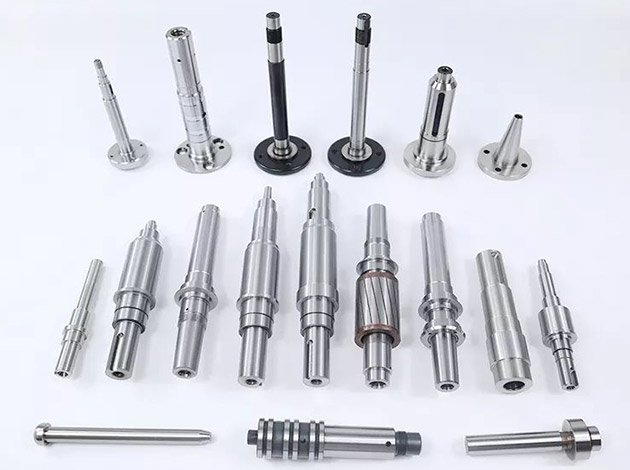
Across all applications, the purchasing decision should consider total system impact. A slightly lower unit price is not economical if it creates leakage, assembly rework, premature warranty claims, or unplanned downtime. Conversely, a well-controlled ground component can improve pump efficiency, reduce service frequency, and protect the reputation of the equipment manufacturer.
5. Call to Action
Reliable hydraulic pump parts begin with a manufacturing strategy that connects precision grinding, material control, metrology, cleanliness, and supply chain management. Whether you are developing a new pump, localizing production, qualifying a second source, or improving an existing component, IndustryApex Technology can help translate performance requirements into a controlled manufacturing route.
Share your drawings, material requirements, annual volumes, tolerance concerns, and inspection expectations with the IndustryApex CNC team. The engineers can review manufacturability, identify opportunities for process integration, and recommend an ODM or production approach suited to your program. Visit the IndustryApex CNC home page to explore broader precision manufacturing capabilities, or contact the team to discuss your hydraulic pump parts requirement.