
- Shaft
- Molds&Tools
- Hydraulics And Pump
- Hair transplant needle
- Hydraulics And Pump
- Precision CNC Shaft Machining Manufacturer for High Performance Applications
- Energy Industry CNC Machining Parts Supplier
- Aerospace Structural Components for OEM Programs
- Aerospace Structural Components for OEM Programs
- Automotive & EV CNC Machining Parts Supplier for OEM and Tier 1
- Medical Device CNC Machining Services
Custom Gear Manufacturing: From Prototyping to Mass Production

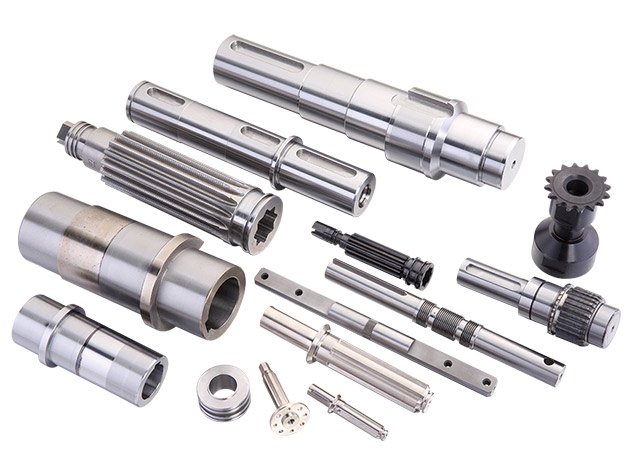
Custom Gear Manufacturing: From Prototyping to Mass Production
Custom gears are critical transmission components in systems where standard catalog parts cannot meet the required torque, speed, noise, load, dimensional, or environmental performance. For global OEMs and Tier 1 suppliers, successful gear manufacturing depends on more than accurate tooth profiles. It requires a controlled process that connects engineering validation, material selection, machining, heat treatment, inspection, production planning, and supply chain execution.
1. Executive Summary
Custom gear manufacturing is a staged engineering and production discipline that begins with application requirements and ends with repeatable, traceable delivery at the required production volume. The transition from prototype to mass production is often where the greatest technical and commercial risks emerge. A gear that performs adequately in a prototype assembly may require significant redesign, process refinement, or inspection upgrades before it can be manufactured economically and consistently at scale.
A robust supplier evaluates the complete operating environment, including transmitted torque, rotational speed, duty cycle, backlash, lubrication, temperature, shock loading, corrosion exposure, noise limits, and expected service life. These factors determine the appropriate gear geometry, material, hardness profile, surface finish, manufacturing method, and quality controls.
IndustryApex Technology, operating through the IndustryApex CNC platform, supports OEM and Tier 1 customers with custom precision components from early-stage development through serial production. Its manufacturing approach combines engineering review, a fully controlled precision manufacturing system, ERP-supported production management, and more than 30 years of manufacturing experience. The result is a coordinated path from prototype gear design to stable, scalable supply.
For organizations evaluating a custom gear manufacturing partner, the essential criteria are technical competence, process control, inspection capability, capacity planning, communication, and the ability to manage the entire supply chain. These factors reduce redesign cycles, improve launch readiness, and help protect production continuity.
2. Technical Deep Dive
Gear production begins with the functional requirements of the assembly rather than with a machine setup. Engineers must understand whether the component is a spur gear, helical gear, bevel gear, worm gear, planetary gear, spline-related component, or another specialized transmission element. Each type introduces different requirements for tooth geometry, contact patterns, axial forces, alignment, and inspection.
Design and engineering review
The design review typically covers module or diametral pitch, pressure angle, helix angle, number of teeth, pitch diameter, addendum and dedendum, face width, bore geometry, keyways, splines, chamfers, runout, and datum strategy. For high-load applications, the design must also consider tooth root stress, contact stress, bending fatigue, pitting, scuffing, and wear.
Prototype development provides an opportunity to identify design-for-manufacturing issues before they become expensive production constraints. Examples include insufficient tool clearance, difficult internal features, thin sections that may distort during heat treatment, inadequate datum references, and tolerances that exceed the functional needs of the assembly. A capable supplier can recommend adjustments that preserve performance while improving manufacturability and cost control.
Digital models, drawings, material specifications, and quality requirements should be reviewed together. Critical-to-function characteristics must be identified early so that the production process and inspection plan are designed around them. This is especially important when gears interface with shafts, bearings, housings, hydraulic systems, or precision actuators.
Material and heat treatment selection
Material selection depends on the required strength, hardness, toughness, corrosion resistance, operating temperature, and manufacturing route. Common gear materials include alloy steels, stainless steels, tool steels, bronze, brass, aluminum alloys, and specialized engineering materials. The decision should account for the complete operating system, not only the gear itself.
Heat treatment may include carburizing, carbonitriding, induction hardening, through hardening, nitriding, tempering, or stress relieving. Surface hardening can produce a wear-resistant tooth layer while preserving a tougher core. However, heat treatment introduces the possibility of distortion, dimensional growth, residual stress, and hardness variation. Prototype parts should therefore be tested and measured in a way that reflects the final production process.
Machining and finishing processes
Depending on the gear design and production volume, manufacturing may involve turning, milling, hobbing, shaping, broaching, grinding, EDM, and specialized finishing operations. Multi-axis CNC machining is valuable for custom parts with complex geometries, integrated features, low-to-medium production volumes, or frequent engineering revisions. Precision grinding becomes increasingly important when the application requires tight tooth profile, lead, concentricity, or surface finish control.
EDM can support difficult internal profiles, hardened materials, narrow slots, and geometries that are difficult to produce with conventional cutting tools. It is particularly useful during development and for specialized components where flexibility is more important than cycle time. The chosen process must balance geometry, tolerance, volume, tooling investment, and long-term repeatability.
Inspection should be integrated into the manufacturing route. Dimensional inspection may include coordinate measuring machines, gear measurement systems, optical equipment, surface roughness testing, hardness testing, and runout measurement. For critical applications, inspection records should be linked to material certificates, process parameters, heat treatment results, and batch identification.
From prototype approval to production release
A prototype is not simply a smaller production order. It is a controlled learning stage in which the supplier and customer validate design intent, manufacturing assumptions, assembly fit, and performance. Prototype reviews should document deviations, corrective actions, inspection findings, and lessons that will influence the production control plan.
Before mass production begins, the supplier should establish approved work instructions, tooling specifications, fixture designs, inspection methods, sampling requirements, packaging standards, and change-control procedures. Process capability studies can help determine whether critical dimensions are stable enough for the intended production volume. This transition discipline prevents prototype knowledge from being lost when responsibility moves to the production team.
3. The ODM & Supply Chain Advantage
For global OEMs and Tier 1 suppliers, the most efficient gear manufacturing relationship often extends beyond contract machining. A supply chain integrator and ODM solution provider can coordinate design interpretation, process engineering, component manufacturing, inspection, documentation, and delivery through a single operational structure.
IndustryApex Technology’s core identity is built around this integrated role. Instead of treating gear production as an isolated operation, the company connects engineering requirements with the resources needed to deliver a complete, repeatable solution. This model is valuable when a customer needs support with design optimization, material selection, prototype iteration, production ramp-up, or multi-component assemblies.
The manufacturing edge comes from a fully controlled precision manufacturing system supported by ERP and backed by over 30 years of experience. ERP-based planning improves visibility across materials, work orders, capacity, inspection status, purchasing, and delivery commitments. For customers managing global programs, this visibility helps reduce uncertainty during new product introduction and recurring production.
IndustryApex Technology’s technical capabilities include 3-axis to 5-axis CNC machining, EDM, precision grinding, and industrial ceramics. These capabilities allow the manufacturing route to be matched to the part’s geometry and functional requirements. A complex gear-related assembly may require multiple processes, and centralized coordination reduces the risk of inconsistent specifications, fragmented quality records, or delays between suppliers.
The ODM approach also supports design-for-manufacturing feedback. Engineers can evaluate whether tolerances are functionally necessary, whether a material is available at the required volume, whether heat treatment will create distortion risk, and whether inspection requirements are practical for the intended production schedule. Such early decisions have a direct impact on unit cost, lead time, quality, and launch stability.
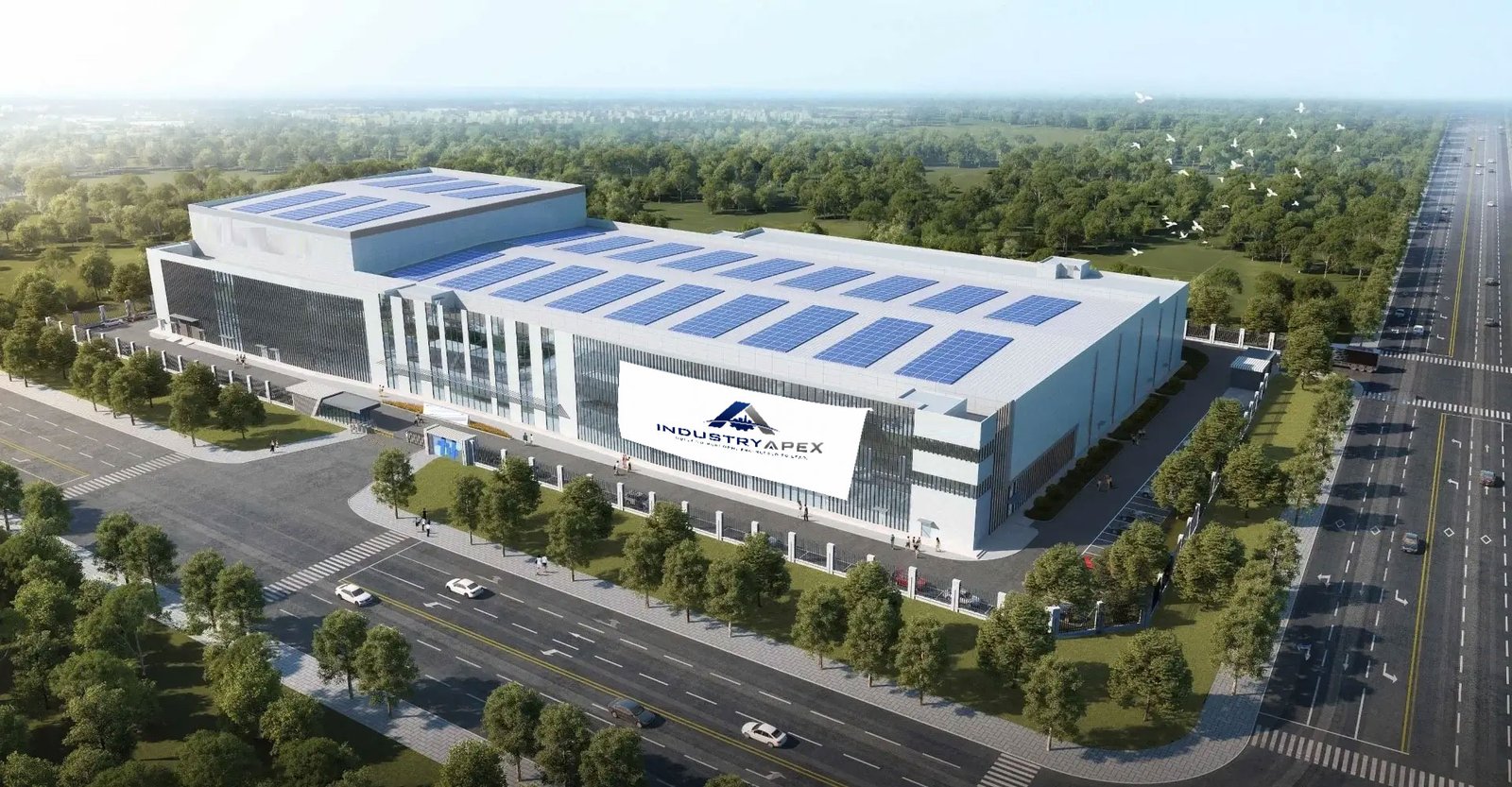
Supply chain resilience is another important advantage. A reliable partner should be able to plan raw material procurement, manage qualified process routes, maintain traceability, and communicate the effect of engineering or demand changes. For mass production, the objective is not merely to produce parts quickly. It is to maintain consistent performance while controlling total cost, inventory exposure, quality risk, and delivery reliability.
This integrated model is particularly relevant to OEMs and Tier 1 suppliers in demanding sectors. IndustryApex Technology also supports specialized precision manufacturing requirements for aerospace CNC machining and aircraft components, medical components and precision device parts, and hydraulic pump parts. These sectors share many of the same expectations for documentation, process control, traceability, and repeatability.
4. Industry Applications
Custom gears are used across industries where controlled motion, torque transmission, positioning, or speed reduction is essential. The required manufacturing strategy changes according to the operating environment and the consequences of failure.
Automotive and mobility systems
Automotive transmission components demand high fatigue strength, controlled noise, accurate tooth contact, and stable performance over extended duty cycles. Electric vehicle reduction systems may introduce additional requirements for low noise, high rotational speed, compact packaging, and specialized surface finishing. Prototype-to-production control is essential because small variations in gear geometry can affect vibration, efficiency, and acoustic performance.
Industrial automation and robotics
Robotic joints, servo systems, conveyors, packaging equipment, and factory automation systems depend on gears with precise positioning, low backlash, and repeatable movement. These applications may require lightweight designs, compact gearboxes, or customized interfaces that are not available from standard components. Multi-axis CNC machining and precision grinding can support these specialized requirements.
Aerospace and defense
Aerospace gear systems require strict material control, documented processes, and reliable inspection. Weight reduction, high strength-to-weight ratio, temperature stability, and long service life are common priorities. Components may also require complex geometries, difficult-to-machine alloys, and extensive traceability. Supplier qualification and configuration control are central to production readiness.
Medical equipment
Medical devices and laboratory equipment use precision gears in positioning mechanisms, pumps, imaging systems, surgical tools, and automated instruments. These components may require corrosion-resistant materials, clean manufacturing practices, small feature sizes, and highly controlled dimensional performance. The supplier must understand both mechanical function and the documentation expectations associated with regulated products.
Hydraulics, pumps, and fluid control
Hydraulic systems use gears and related precision components in pumps, motors, valves, and flow-control assemblies. Surface finish, concentricity, clearance, and leakage control can directly affect volumetric efficiency and operating life. Material and heat treatment decisions must account for pressure, contamination, lubrication, and continuous cycling.
Energy and heavy equipment
Wind power equipment, energy systems, construction machinery, agricultural machinery, and industrial drives often subject gears to high torque, shock loads, vibration, and difficult environmental conditions. Robust material selection, controlled hardening, accurate inspection, and dependable production capacity are required to reduce field failures and maintenance costs.
Across these applications, the strongest production outcomes come from early supplier involvement. When the manufacturer participates during design review, prototype validation, and process planning, potential issues can be resolved before they affect tooling, qualification, or delivery schedules.
5. Call to Action
Moving from a custom gear prototype to stable mass production requires an engineering partner that understands both the part and the supply chain surrounding it. IndustryApex Technology combines ODM support, precision manufacturing, ERP-based production control, and more than three decades of experience to help global OEMs and Tier 1 suppliers develop and scale demanding gear and transmission components.
Share your gear drawings, 3D models, material requirements, annual volumes, inspection standards, and application conditions for an initial manufacturing review. The team can assess design manufacturability, recommend a suitable process route, identify critical quality characteristics, and develop a practical path from prototype production to repeatable serial supply.
Visit the IndustryApex CNC home page to review precision manufacturing capabilities, or contact IndustryApex Technology to discuss your custom gear manufacturing requirements.