
- Shaft
- Molds&Tools
- Hydraulics And Pump
- Hair transplant needle
- Hydraulics And Pump
- Precision CNC Shaft Machining Manufacturer for High Performance Applications
- Energy Industry CNC Machining Parts Supplier
- Aerospace Structural Components for OEM Programs
- Aerospace Structural Components for OEM Programs
- Automotive & EV CNC Machining Parts Supplier for OEM and Tier 1
- Medical Device CNC Machining Services
How ODM Solution Providers Are Transforming Medical Device Manufacturing

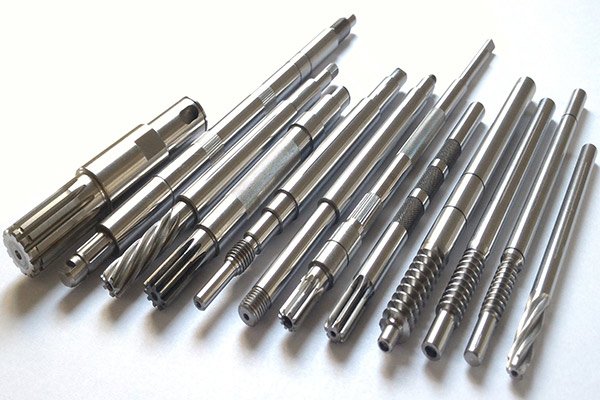
Medical device manufacturing is entering a new operating era. OEMs and Tier 1 suppliers are under simultaneous pressure to shorten development cycles, control costs, improve traceability, and maintain consistent quality across increasingly complex product portfolios. In this environment, the traditional model of managing separate design, machining, finishing, inspection, and logistics suppliers is becoming less efficient.
ODM solution providers are changing that model by combining engineering support, precision manufacturing, supply chain coordination, and production scalability under one integrated framework. For medical device companies, this approach can reduce handoff risks while creating a more responsive path from concept development to repeatable production.
1. Executive Summary
An original design manufacturer, or ODM, does more than produce components according to a finished drawing. A capable ODM partner contributes manufacturing knowledge during product development, helps optimize designs for machining and assembly, coordinates qualified processes, and supports the customer through prototype, validation, and serial production phases.
This role is especially valuable in medical device manufacturing, where components often combine tight tolerances, difficult-to-machine materials, complex geometries, small production volumes, and strict documentation requirements. Surgical instruments, implant-related components, diagnostic equipment parts, fluid-control assemblies, and high-precision device housings all require a manufacturing system that is both technically capable and operationally disciplined.
For global OEMs and Tier 1 suppliers, the value of an ODM solution provider is not limited to machining capacity. The greater advantage comes from integrated decision-making. Engineering, procurement, production planning, quality control, and delivery management can be aligned through one accountable partner. IndustryApex Technology, operating through IndustryApex CNC, positions itself as a supply chain integrator and ODM solution provider for demanding precision components and assemblies.
The result is a more resilient supply chain: fewer supplier interfaces, improved communication, better process visibility, and a clearer route to continuous improvement.
2. Technical Deep Dive
Medical device components frequently demand a combination of precision, material expertise, and process stability. A part may require micron-level dimensional control in one area, a smooth surface finish in another, and carefully managed geometric relationships between multiple functional features. These requirements become more challenging when the component is made from titanium, stainless steel, cobalt-chrome alloys, engineering plastics, or advanced ceramics.
Modern ODM manufacturing begins with design-for-manufacturing analysis. Engineers review the part geometry, datum structure, tolerance stack-up, material condition, tool access, workholding strategy, and inspection method before production begins. This early review can identify avoidable risks, such as unnecessary tight tolerances, deep unsupported features, difficult internal corners, or surfaces that are costly to measure consistently.
For complex medical parts, 3- to 5-axis CNC machining enables multiple features to be produced with fewer setups. Reducing the number of setups can improve positional accuracy and reduce the risk of cumulative alignment errors. Five-axis machining is particularly useful for contoured surfaces, angled features, and components that require tool access from several directions.
Electrical discharge machining provides another important capability. EDM can produce narrow slots, intricate profiles, and features in electrically conductive hard materials where conventional cutting may be inefficient or unsuitable. When combined with CNC machining, EDM can expand the range of medical component geometries that an ODM provider can manufacture without transferring work to multiple external suppliers.
Precision grinding supports applications that require highly controlled dimensions, flatness, roundness, or surface quality. Grinding may be used for small shafts, guide components, surgical instrument elements, and other parts where the functional interface depends on stable geometry and low variation. Industrial ceramics add another dimension to the manufacturing portfolio, supporting applications where wear resistance, electrical insulation, thermal stability, or chemical resistance is required.
Material and process selection must also account for the end-use environment. Components used in a sterilization cycle may face repeated exposure to heat, moisture, and cleaning chemicals. Parts used in fluid systems may need reliable sealing surfaces and corrosion resistance. Components that contact tissue or support an implantable system require careful attention to material suitability, surface condition, burr removal, and traceability. The ODM provider must therefore understand not only how to make a part, but also how the part functions within the larger device.
Digital production control is equally important. An ERP-enabled manufacturing system can connect quoting, purchasing, production scheduling, inventory, quality records, and shipment status. This creates a more complete view of order progress and helps identify potential disruptions before they affect the customer. In a regulated sector, structured records also support repeatability and customer audits.
Inspection planning should be developed alongside process planning rather than added at the end. Depending on the component, this may include coordinate measuring machine inspection, optical measurement, surface roughness verification, hardness testing, thread gauges, functional gauges, or material certification review. The appropriate inspection method should reflect the critical characteristics of the part and the risks associated with its application.
For medical device developers evaluating a specialized manufacturing partner, IndustryApex CNC provides a dedicated resource for medical parts and precision device components. The objective is to connect technical manufacturing expertise with the documentation, consistency, and communication expected by global OEM programs.
3. The ODM & Supply Chain Advantage
The central advantage of an ODM solution provider is integration. Instead of treating engineering, manufacturing, and procurement as separate activities, the ODM model connects them into a coordinated production system. This is particularly valuable when a medical device program involves frequent design revisions, multiple materials, short lead times, or a mix of prototype and production quantities.
One accountable manufacturing partner
In a fragmented supply chain, a customer may need to coordinate a machine shop, an EDM specialist, a grinding supplier, a ceramic manufacturer, a surface-treatment vendor, an inspection laboratory, and a logistics provider. Each handoff introduces opportunities for miscommunication, schedule delays, or inconsistent interpretation of technical requirements. A supply chain integrator can manage these interfaces more systematically and provide a single point of technical and commercial accountability.
Engineering support from prototype to production
An ODM provider can contribute value before a purchase order is issued. Design feedback may address manufacturability, material availability, tolerance rationalization, process sequencing, and inspection access. During prototyping, the same partner can help identify production risks and recommend changes before tooling, fixtures, or process documentation become difficult to revise.
This continuity is important for medical device companies because a component that is easy to prototype may not be economical or stable at higher volumes. Conversely, a design optimized only for high-volume production may be unnecessarily expensive during early clinical or validation stages. An ODM partner can help balance technical performance, development speed, and total lifecycle cost.
Controlled precision manufacturing
IndustryApex Technology brings more than 30 years of manufacturing experience to a fully controlled precision manufacturing system supported by ERP-based management. Its capabilities include 3- to 5-axis CNC machining, EDM, precision grinding, and industrial ceramics. This combination allows the company to support a broad range of component requirements while maintaining stronger process coordination than a single-capability supplier.
For global OEMs and Tier 1 suppliers, manufacturing depth is important because supply chain performance depends on more than machine availability. It also depends on production planning, technical communication, material control, inspection discipline, packaging, and delivery execution. A controlled system helps align these activities around the customer’s quality and schedule requirements.
Better supply chain resilience
Medical device manufacturers increasingly assess suppliers according to resilience as well as price. Resilience includes the ability to respond to material shortages, engineering changes, demand fluctuations, quality investigations, and urgent replenishment requirements. A capable ODM provider can improve resilience by maintaining supplier relationships, understanding alternate process routes, and using production data to support more accurate planning.
Supply chain integration also improves communication during nonconformance resolution. When the supplier understands the design intent and the manufacturing history, root-cause analysis can be faster and corrective actions can be more practical. The customer benefits from fewer disconnected investigations and a clearer record of what changed, why it changed, and how the change was verified.
The same integrated model can be applied beyond medical devices. IndustryApex Technology also supports industries requiring complex, high-performance components, including aerospace CNC machining and titanium aircraft parts, as well as hydraulic pump and fluid-control components. Experience across these sectors can strengthen an ODM provider’s understanding of difficult materials, tight tolerances, and reliability-focused production.

4. Industry Applications
ODM solution providers are transforming several areas of medical device manufacturing by helping companies move from isolated component sourcing toward integrated product realization.
Surgical instruments
Surgical instruments often combine ergonomic requirements with demanding mechanical performance. Cutting edges, gripping surfaces, hinges, shafts, and locking features must operate smoothly and consistently. CNC machining, EDM, grinding, and controlled finishing can be coordinated to produce complex instrument components while supporting repeatable inspection and assembly.
Orthopedic and implant-related components
Titanium and other biocompatible materials are widely used in orthopedic and implant-related applications because of their strength-to-weight ratio and corrosion resistance. These materials can be challenging to machine, particularly when the component has thin walls, contoured surfaces, or strict surface requirements. An experienced ODM provider can help optimize toolpaths, workholding, cutting parameters, deburring, and inspection strategies for stable production.
Diagnostic and laboratory equipment
Diagnostic instruments and laboratory systems frequently use precision housings, brackets, fluid paths, optical mounts, actuator components, and custom fixtures. These parts may not be implanted, but their accuracy can directly influence equipment alignment, repeatability, and service life. A coordinated supplier can manage both visible cosmetic requirements and hidden functional tolerances.
Fluid-management systems
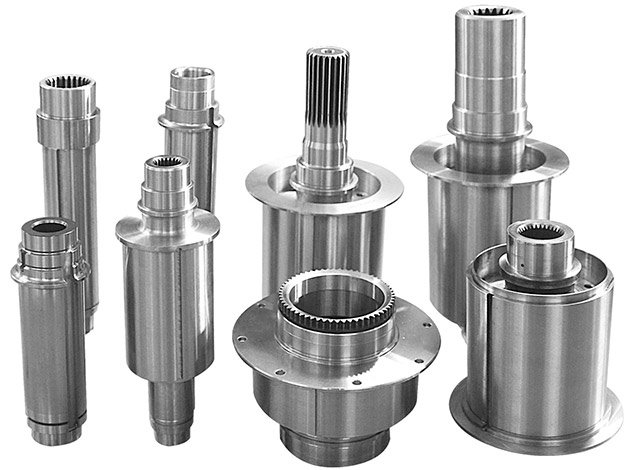
Pumps, valves, manifolds, and metering assemblies used in medical equipment require reliable sealing, controlled internal passages, and compatible materials. Small variations in spool, sleeve, bore, or mating surfaces can affect flow performance. Precision machining and inspection must therefore be planned around functional testing and assembly requirements, not only individual part dimensions.
Medical automation and disposable-device tooling
Automation equipment used for medical assembly and packaging depends on wear-resistant guides, nests, grippers, alignment components, and mold-related parts. Industrial ceramics and carbide solutions may be appropriate where high wear resistance, dimensional stability, or contamination control is important. ODM support can help equipment builders coordinate these specialized components within a larger automation program.
Across these applications, the most effective partner is one that can adapt its role to the customer’s maturity level. A startup may need design feedback and prototype support, while an established OEM may require capacity planning, repeat orders, documentation, and global delivery coordination. The underlying need is the same: a manufacturing system that supports product quality and business continuity together.
5. Call to Action
Medical device companies do not need to choose between engineering flexibility and supply chain control. The right ODM solution provider can combine both by connecting design-for-manufacturing expertise, advanced machining, specialized processes, ERP-supported planning, and disciplined quality management.
When evaluating a partner, ask whether it can support the complete product lifecycle, from technical review and prototype production to validation support, repeat manufacturing, inspection, packaging, and delivery. Also consider whether the supplier has the process breadth to manage difficult materials and complex geometries without excessive outsourcing.
IndustryApex Technology and IndustryApex CNC support global OEMs and Tier 1 suppliers seeking a more integrated approach to precision component manufacturing. Explore the company’s precision manufacturing capabilities, review its medical component solutions, and contact the engineering team to discuss drawings, materials, tolerances, production volumes, and supply chain objectives.
In a medical device market defined by complexity and accountability, an integrated ODM partner can become more than a component supplier. It can become a manufacturing extension of the OEM’s engineering, operations, and quality teams.