
- Shaft
- Molds&Tools
- Hydraulics And Pump
- Hair transplant needle
- Hydraulics And Pump
- Precision CNC Shaft Machining Manufacturer for High Performance Applications
- Energy Industry CNC Machining Parts Supplier
- Aerospace Structural Components for OEM Programs
- Aerospace Structural Components for OEM Programs
- Automotive & EV CNC Machining Parts Supplier for OEM and Tier 1
- Medical Device CNC Machining Services
Optimizing Supply Chains with Low MOQ Micro-Batch Production

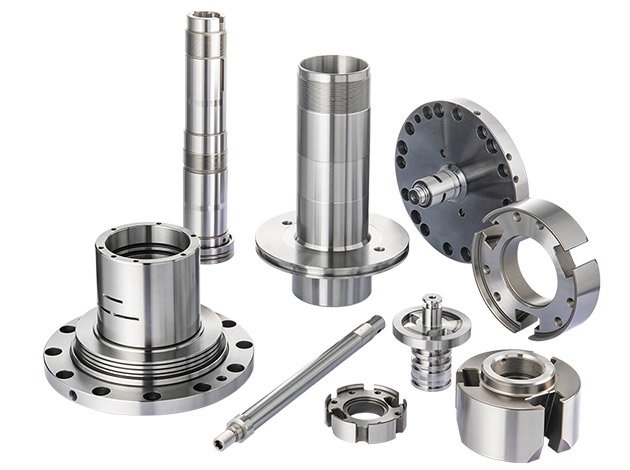
Optimizing Supply Chains with Low MOQ Micro-Batch Production
For global OEMs and Tier 1 suppliers, supply chain performance is increasingly determined by flexibility, not simply by unit price. Demand volatility, shorter product life cycles, tighter qualification requirements, and persistent material constraints have made conventional high-volume purchasing strategies less effective for many precision components. Low minimum order quantity (MOQ) micro-batch production provides a practical way to reduce inventory exposure while maintaining engineering control, traceability, and production continuity.
IndustryApex Technology, operating through IndustryApex CNC, supports this model with an integrated precision manufacturing and ODM capability. By combining engineering collaboration, controlled production processes, and supply chain coordination, a qualified supplier can help manufacturers move from prototype validation to repeatable small-series production without forcing premature volume commitments.
1. Executive Summary
Low MOQ micro-batch production is a manufacturing strategy in which precision components are produced in commercially useful but deliberately limited quantities. The approach is particularly valuable when demand is uncertain, product designs are still evolving, or the cost of excess inventory is high. Instead of placing a large blanket order to obtain a lower nominal unit price, purchasing teams can release smaller, scheduled batches aligned with actual consumption.
The economic benefit is broader than reduced stockholding. Smaller batches can lower working capital requirements, reduce the risk of obsolete components, support faster engineering changes, and reveal process issues before they affect a large production run. They also provide a more controlled path for new supplier qualification and design-for-manufacturing optimization.
However, low MOQ production only improves supply chain performance when the manufacturing system is capable of maintaining consistency at low volumes. Effective execution requires stable process parameters, documented inspection plans, reliable material sourcing, responsive programming, and disciplined communication between the supplier and the customer. Setup cost, tooling strategy, quality requirements, and replenishment timing must be evaluated as one connected system.
For OEM and Tier 1 procurement teams, the central question is therefore not whether a supplier can machine a small quantity. It is whether the supplier can make small quantities repeatedly, to the same specification, with transparent lead times and a scalable path to higher production volumes.
2. Technical Deep Dive
Micro-batch production begins with a clear definition of the production objective. A batch may support prototype verification, pilot production, field testing, service parts, regional demand, or a controlled launch before full commercialization. Each purpose affects the required material certification, inspection scope, process documentation, and delivery schedule.
From a manufacturing perspective, the first challenge is setup efficiency. CNC machining involves programming, workholding, tool selection, probing, first-article inspection, and machine qualification. In a traditional high-volume model, these fixed activities are distributed across thousands of parts. In a low MOQ model, they represent a larger portion of the total cost. A capable supplier reduces this effect through standardized fixtures, reusable process templates, modular tooling, offline programming, and accurate production data.
Part design also strongly influences micro-batch economics. Features such as deep cavities, thin walls, tight positional tolerances, difficult-to-machine materials, and complex surface requirements may require additional operations or specialized inspection. Early design review can identify opportunities to simplify setups, consolidate datums, improve tool access, or select a material and finish that meet functional requirements with lower process risk.
Process capability must be considered separately from nominal machine accuracy. A machine may be capable of holding a very tight tolerance under controlled conditions, but repeatability depends on material stability, tool wear, thermal variation, fixturing, measurement technique, and operator discipline. For low MOQ programs, the supplier should define critical characteristics and establish a proportionate control plan. This can include first-piece verification, in-process probing, statistical checks on key dimensions, and final inspection using calibrated equipment.
Batch sizing should be connected to the customer’s consumption pattern rather than selected only by purchase price. A useful planning model compares annual demand, supplier lead time, manufacturing cycle time, safety stock, minimum release quantity, and the cost of holding inventory. If a component is expensive, design-sensitive, or exposed to frequent engineering change, smaller and more frequent releases may be financially preferable even when the unit price is modestly higher.
Material planning is equally important. A low MOQ for finished components does not always mean a low MOQ for raw material. Titanium, nickel alloys, engineering ceramics, carbide, and specialty steels may have supplier minimums, certification requirements, or long replenishment cycles. A manufacturing partner with coordinated purchasing can reserve material strategically, maintain traceability, and schedule multiple customer releases against an approved material lot where appropriate.
Inspection and documentation should be matched to risk. Aerospace and medical parts may require comprehensive material certificates, first-article documentation, special process records, and traceability through every production stage. Industrial components may require dimensional reports, hardness verification, surface finish measurements, or pressure testing. Defining these requirements before quotation prevents unexpected cost and avoids delays after production is complete.
Digital production control further improves visibility. ERP-linked work orders can connect quotations, revisions, material purchases, routing instructions, inspection results, and shipment records. This creates a more reliable basis for delivery forecasts than informal status updates. It also supports repeat orders because approved programs can be retrieved with their established process data rather than recreated from scratch.
Micro-batch production is therefore not simply a smaller version of mass production. It is a disciplined operating model that combines agile scheduling with industrial process control.
3. The ODM & Supply Chain Advantage
The strongest low MOQ programs are supported by a supplier that contributes engineering value, not only machine capacity. IndustryApex Technology’s core identity is that of a supply chain integrator and ODM solution provider. This position allows the supplier to coordinate product development, process planning, sourcing, manufacturing, inspection, and delivery within a connected operating framework.
For an OEM or Tier 1 supplier, this reduces the number of handoffs required to bring a component into production. A drawing can be reviewed by manufacturing engineers, a material route can be confirmed with purchasing, and inspection requirements can be translated into a production plan before the order is released. The result is a more complete understanding of cost, lead time, risk, and scalability.
IndustryApex Technology’s manufacturing edge is built on a fully controlled precision manufacturing system supported by ERP and more than 30 years of experience. ERP control is especially valuable in micro-batch production because each release must remain connected to the correct drawing revision, approved material, routing, inspection plan, and delivery commitment. It also enables repeatable scheduling across multiple small orders rather than treating each order as an isolated transaction.
The company’s technology capabilities include 3-axis, 4-axis, and 5-axis CNC machining, EDM, precision grinding, and industrial ceramics. This range is useful for supply chains that contain multiple part families or require different process technologies. Complex structural parts may benefit from simultaneous or indexed 5-axis machining. Fine features and difficult profiles may require EDM. Tight fits and surface requirements may call for precision grinding, while demanding thermal, electrical, or wear conditions may make industrial ceramics the appropriate material platform.
An integrated process portfolio can reduce external subcontracting and improve accountability. When several operations are controlled within one manufacturing system, engineering changes are easier to communicate, inspection data is more consistent, and schedule risks associated with third-party transfers are reduced. This is particularly important for small batches, where an additional supplier handoff can represent a significant share of total lead time.
ODM support also creates a path from low MOQ to production scale. During early batches, the supplier can capture cycle time, tool life, yield, inspection trends, and assembly feedback. These data points help establish a more accurate production model for later releases. The customer gains evidence for design decisions and sourcing decisions before committing to major volume.
For global OEM and Tier 1 customers, supply chain integration also means stronger communication across regions. Clear documentation, revision control, packaging specifications, and shipment planning allow engineering and procurement teams to manage production with fewer assumptions. The supplier becomes an extension of the customer’s manufacturing organization while preserving the customer’s control over specifications and approvals.
4. Industry Applications
Low MOQ micro-batch production is applicable wherever component demand is variable, qualification is demanding, or the cost of excess inventory is high.
Aerospace and Defense
Aerospace programs often involve long qualification cycles, limited fleet quantities, derivative designs, and strict traceability. Micro-batches allow manufacturers to support development aircraft, test articles, replacement requirements, and low-rate initial production without building unnecessary stock. Precision titanium and aluminum structural components benefit from controlled 5-axis machining, documented inspection, and revision-managed production. IndustryApex CNC provides specialized aerospace CNC machining for titanium aircraft parts and structural components.
Medical Equipment and Surgical Devices
Medical manufacturers frequently manage multiple device variants, customized configurations, and extensive validation requirements. Low MOQ production supports pilot builds, clinical evaluation, replacement instruments, and controlled market introduction. The supplier must maintain material traceability, dimensional consistency, surface quality, and reliable documentation. IndustryApex Technology supports this market through ISO-certified CNC machining for medical components, titanium implants, surgical instruments, and high-precision device parts.
Hydraulics and Fluid Control
Hydraulic systems require dependable sealing surfaces, concentric bores, controlled clearances, and consistent finishes. Demand can vary across construction equipment, industrial automation, agricultural machinery, and service markets. Micro-batch releases help distributors and OEMs maintain service availability without overstocking every valve, spool, sleeve, pump, or manifold configuration. Specialized information is available through the company’s hydraulic pump parts manufacturing resource.
Automation, Energy, and Industrial Machinery
Automation equipment and energy systems commonly use engineered components in small quantities, especially during equipment launches, line modifications, and maintenance programs. Low MOQ manufacturing can support replacement shafts, precision housings, gears, impellers, wear components, ceramic parts, and custom tooling while keeping the supply chain responsive to site-specific requirements.
Automotive and Transportation
Vehicle development, motorsport, specialty vehicles, and aftermarket programs may require small production runs before demand is fully known. Micro-batch machining provides a practical bridge between prototype parts and repeatable production. It also helps engineering teams validate assembly, performance, and serviceability before finalizing tooling or committing to large inventories.
5. Call to Action
Low MOQ micro-batch production can improve supply chain resilience when it is managed as a complete manufacturing program. The best results come from aligning product design, batch sizing, material strategy, inspection requirements, ERP visibility, and replenishment planning from the beginning.
IndustryApex Technology helps global OEMs and Tier 1 suppliers evaluate these factors through an integrated ODM and precision manufacturing approach. With more than 30 years of experience and capabilities covering 3-5 axis CNC machining, EDM, precision grinding, and industrial ceramics, the team can support early-stage development as well as controlled production releases.
To discuss drawings, material requirements, target quantities, tolerances, inspection documentation, or a phased supply plan, contact IndustryApex CNC. You can also review the company’s broader precision manufacturing capabilities at the IndustryApex CNC home page.
A well-structured micro-batch program gives procurement teams a way to reduce inventory risk without sacrificing manufacturing discipline. It turns uncertain demand into a measurable release strategy and creates a controlled route from engineering validation to dependable supply.