
- Shaft
- Molds&Tools
- Hydraulics And Pump
- Hair transplant needle
- Hydraulics And Pump
- Precision CNC Shaft Machining Manufacturer for High Performance Applications
- Energy Industry CNC Machining Parts Supplier
- Aerospace Structural Components for OEM Programs
- Aerospace Structural Components for OEM Programs
- Automotive & EV CNC Machining Parts Supplier for OEM and Tier 1
- Medical Device CNC Machining Services
2026 Trends in 5-Axis CNC Machining for Aerospace Components: Technology, Quality, and Supply Chain Strategy

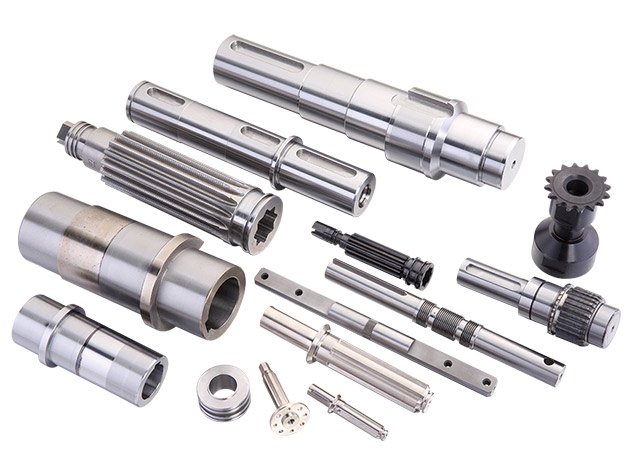
2026 Trends in 5-Axis CNC Machining for Aerospace Components
Aerospace manufacturers are entering 2026 with a sharper focus on production resilience, traceability, lightweight performance, and total cost of ownership. In this environment, 5-axis CNC machining is becoming more than a method for producing complex geometries. It is a strategic manufacturing capability that connects engineering validation, quality assurance, material control, and global supply chain performance.
1. Executive Summary
The aerospace sector continues to demand components that combine low weight, high strength, tight dimensional tolerances, and repeatable performance across long service lives. Titanium structural parts, aluminum housings, nickel-alloy engine components, actuation parts, brackets, manifolds, and complex aerodynamic structures frequently require multiple orientations and difficult-to-access features. Conventional 3-axis machining can produce many of these parts, but it often requires additional setups, custom fixtures, manual re-alignment, and increased inspection effort.
In 2026, the strongest trend in precision CNC component manufacturing is the integration of 5-axis machining with digital process control. Simultaneous motion, collision avoidance, advanced CAM, in-process probing, tool-life monitoring, and data-rich inspection are converging into a more controlled production environment. The objective is not simply faster cutting. It is a stable process capable of delivering consistent quality for prototype, low-volume, and repeat aerospace programs.
Several developments will shape purchasing and engineering decisions. First, aerospace OEMs and Tier 1 suppliers are placing greater value on documented process capability and full material-to-part traceability. Second, manufacturers are using automation and predictive analytics to improve machine utilization while reducing variation. Third, supply chain teams are consolidating complex part requirements with manufacturing partners that can manage engineering changes, secondary processes, inspection, and delivery under one coordinated system.
For buyers, the practical lesson is clear: evaluating a 5-axis supplier in 2026 requires more than reviewing machine specifications. The supplier must demonstrate control of the complete manufacturing workflow, including design for manufacturability, material certification, fixture strategy, cutting parameters, inspection records, packaging, and responsiveness to program changes.
2. Technical Deep Dive
Five-axis CNC machining controls three linear axes and two rotary axes, allowing the cutting tool or workpiece to approach a feature from multiple directions. This capability reduces the need to reposition a part manually and enables the production of compound surfaces, deep cavities, angled bores, undercuts, and thin-wall structures with improved positional consistency.
For aerospace components, the primary technical advantage is setup reduction. Every additional setup introduces opportunities for datum transfer error, fixture distortion, operator variation, and cumulative tolerance deviation. A well-planned 5-axis process can complete more features in a single controlled orientation, preserving the relationship between critical datums and reducing non-value-added handling.
Another important 2026 trend is the wider use of model-based manufacturing. Instead of relying only on two-dimensional drawings, engineering teams are increasingly using 3D product definition, digital work instructions, and connected inspection data. The digital model can define nominal geometry, tolerances, surface requirements, and inspection characteristics. When linked to CAM and coordinate measuring equipment, it creates a more continuous information chain from design release to final acceptance.
Advanced CAM strategies are also changing how difficult aerospace materials are machined. Titanium alloys require careful management of heat, cutting speed, chip evacuation, and tool engagement. Excessive heat can shorten tool life, affect surface integrity, and increase the risk of dimensional drift. High-speed adaptive toolpaths, constant tool engagement, optimized coolant delivery, and stable workholding help maintain predictable cutting conditions.
Nickel-based superalloys present a different challenge. Their high-temperature strength and work-hardening behavior demand rigid machines, appropriate tooling, and conservative but efficient cutting strategies. In 2026, aerospace machining suppliers are expected to use more process-specific libraries for difficult materials rather than relying on generic parameters. This approach supports faster process development and helps standardize results across repeat orders.
Thin-wall aluminum and titanium structures require an equally disciplined approach. Excessive cutting force can cause deflection, vibration, or distortion after release from the fixture. Five-axis tool orientation can improve access and reduce tool stick-out, while staged roughing, semi-finishing, and finishing operations allow the manufacturer to control residual stress and preserve wall geometry. Vacuum workholding, custom fixtures, and probing routines may be used where the component design requires additional support.
In-process measurement is becoming a normal part of high-value aerospace production. Touch probes can verify work offsets, detect stock conditions, and measure selected features before the part leaves the machine. This allows operators to identify process drift earlier and reduce the number of completed parts requiring rework. For critical components, in-process data can be combined with post-process inspection using coordinate measuring machines, optical systems, or scanning equipment.
Automation will also expand, although its form will vary by production volume. Pallet systems, robotic loading, automated tool management, and unattended machining can improve utilization for repeat parts. For lower-volume aerospace programs, flexible automation may focus on preset tooling, digital job travelers, and rapid setup verification instead of a fully automated cell. The best solution depends on batch size, part family similarity, material, inspection requirements, and delivery schedule.
Sustainability is another operational consideration. Aerospace manufacturers are examining material utilization, coolant consumption, energy usage, and scrap rates. Five-axis machining can reduce setups and improve material efficiency, but the result depends on process planning. Better nesting, near-net-shape blanks, optimized roughing, tool-life control, and recycling of metal chips can reduce the total environmental and financial burden of machining.
Cybersecurity and manufacturing data governance are increasingly relevant as machines, inspection systems, ERP platforms, and customer portals become connected. Aerospace suppliers must protect controlled technical data, manage user permissions, maintain revision discipline, and ensure that inspection records correspond to the correct part revision. Digital connectivity creates significant productivity benefits only when data integrity and access control are built into the process.
Ultimately, the 2026 technical benchmark is process stability. A supplier that can produce one complex part successfully has demonstrated capability. A supplier that can repeatedly produce the part across multiple lots, operators, machines, and delivery cycles has demonstrated manufacturing control. Aerospace purchasing teams should therefore request evidence of repeatability, inspection planning, nonconformance management, and change control alongside equipment lists.
3. The ODM & Supply Chain Advantage
The growing complexity of aerospace programs is increasing demand for partners that combine manufacturing with engineering and supply chain coordination. IndustryApex Technology, operating through IndustryApex CNC, serves as a supply chain integrator and ODM solution provider for global OEMs and Tier 1 suppliers. This positioning is important because aerospace component procurement rarely involves machining alone. It may also require material sourcing, design refinement, tooling, surface treatment, heat treatment, inspection, documentation, packaging, and international delivery.
As a supply chain integrator, the manufacturing partner helps coordinate these activities around the customer’s technical and commercial requirements. The benefit is a clearer chain of responsibility. Rather than managing separate vendors for machining, grinding, specialty materials, and inspection, an OEM can work with one accountable partner that manages the approved process network and consolidates communication.
IndustryApex Technology’s manufacturing edge is based on a fully controlled precision manufacturing system supported by ERP and more than 30 years of experience. ERP integration helps connect purchasing, production planning, inventory, work orders, quality documentation, and shipment status. For aerospace customers, this supports better visibility into lead time, material status, capacity, and order changes. It also improves the ability to maintain revision control and preserve traceability throughout production.
The company’s technology capabilities include 3-axis to 5-axis CNC machining, EDM, precision grinding, and industrial ceramics. This combination allows the manufacturing process to be matched to the part rather than forcing every geometry into one method. EDM can support intricate features and difficult materials. Precision grinding can achieve controlled dimensions and surface finishes after machining. Industrial ceramics can address specialized wear, insulation, temperature, or chemical-resistance requirements in related assemblies and applications.
An ODM relationship adds value earlier in the product lifecycle. Engineers can review the design for tool access, datum selection, wall thickness, corner radii, hole strategy, material condition, and inspection access before production begins. These reviews can identify features that are technically possible but unnecessarily expensive or difficult to control. Design feedback is especially valuable for aerospace prototypes and new product introductions, where a small geometry change may improve yield, shorten cycle time, or reduce the need for custom tooling.
Supplier selection should also consider how the partner handles engineering changes. Aerospace programs commonly evolve through qualification, testing, customer feedback, and production improvement. A responsive ODM partner can evaluate a revised model, identify affected tooling and inspection requirements, update the process plan, and maintain a documented transition between revisions. This reduces the risk of mixed revisions or obsolete inventory.
For global OEM and Tier 1 customers, communication discipline is as important as machining quality. A capable partner should provide clear quotation assumptions, realistic capacity information, technical questions, milestone updates, and prompt escalation of risks. The goal is to create a dependable operating rhythm across different time zones and organizational teams.

In 2026, the supply chain advantage will increasingly come from integration. Customers will favor manufacturing partners that can combine high-precision production with engineering support, quality systems, ERP visibility, and coordinated sourcing. This model can reduce administrative overhead, improve schedule predictability, and give engineering teams a stronger feedback loop between design intent and production reality.
4. Industry Applications
Five-axis CNC machining has broad application across aerospace platforms. In aircraft structures, it is used for brackets, ribs, spars, fittings, frames, seat-track components, and other weight-sensitive parts with intersecting features or contoured surfaces. These components often require precise relationships between mounting holes, pockets, steps, and angled faces. Fewer setups can help maintain those relationships while reducing fixture complexity.
In engine and propulsion systems, 5-axis machining supports housings, ducts, cases, mounts, and other components made from aluminum, titanium, stainless steel, or nickel alloys. These parts may include curved passages, blended surfaces, deep cavities, and strict surface requirements. Process control is critical because dimensional error can affect fit, airflow, heat management, or service life.
Flight-control and actuation systems also benefit from high-precision multi-axis manufacturing. Components such as actuator bodies, clevises, linkages, valve blocks, and control-system housings may combine close-tolerance bores with complex external profiles. Where fluid management is involved, related hydraulic pump and fluid-control parts require careful attention to sealing surfaces, concentricity, and surface finish.
Unmanned aerial vehicles and next-generation aircraft are increasing demand for lightweight, compact, and rapidly iterated components. These programs may use smaller production batches and more frequent design updates, making flexible 5-axis equipment and ODM engineering support particularly valuable. The ability to move from prototype feedback to production-ready machining without changing suppliers can shorten development cycles.
Aerospace manufacturing practices also overlap with other high-reliability industries. The same process disciplines used for titanium aircraft parts can support medical components and titanium precision parts, where traceability, surface quality, material control, and repeatability are equally important. Cross-industry experience can strengthen a supplier’s approach to validation, documentation, and risk management.
For manufacturers evaluating a new aerospace machining source, the most relevant questions include: Can the supplier machine the required material and geometry? Can it maintain the required tolerances over repeat batches? Does it control special processes and subcontractors? Can it provide complete inspection and material records? Can its ERP and quality systems support engineering changes and delivery visibility? Does it have the capacity and technical depth to support the program after prototype approval?
5. Call to Action
The 2026 aerospace machining market will reward suppliers that connect advanced equipment with disciplined process management. Five-axis CNC capability is a foundation, but the complete value proposition includes engineering collaboration, material traceability, inspection strategy, ERP visibility, controlled secondary processes, and dependable global supply chain execution.
IndustryApex Technology and IndustryApex CNC support global OEM and Tier 1 customers with 3-axis to 5-axis CNC machining, EDM, precision grinding, industrial ceramics, and ODM-oriented manufacturing coordination. Whether you are developing a new aircraft structural component, improving an existing titanium part, or qualifying an alternative supply source, early technical collaboration can expose cost, quality, and lead-time improvements before production begins.
Review the company’s aerospace CNC machining and titanium aircraft parts capabilities, then contact the engineering and supply chain team with your drawings, 3D models, material requirements, annual volumes, tolerance targets, and delivery expectations. A structured review can determine the appropriate machining strategy, inspection plan, and production route for your aerospace program.