- Shaft
- Molds&Tools
- Hydraulics And Pump
- Hair transplant needle
- Hydraulics And Pump
- Precision CNC Shaft Machining Manufacturer for High Performance Applications
- Energy Industry CNC Machining Parts Supplier
- Aerospace CNC Machining Parts Manufacturer
- Aerospace CNC Machining Parts Manufacturer
- Automotive & EV CNC Machining Parts Supplier for OEM and Tier 1
- Medical CNC Machining Parts Supplier for Precision Medical Devices

2026 Trends in 5-Axis CNC Machining for Aerospace Components: Engineering and Supply Chain Analysis

2026 Trends in 5-Axis CNC Machining for Aerospace Components
IndustryApex Technology, operating as IndustryApex CNC, analyzes how aerospace OEMs and Tier 1 suppliers can reduce risk, improve precision, and strengthen supply continuity through advanced 5-axis CNC machining and ODM manufacturing strategies.
1. Executive Summary
The aerospace manufacturing landscape in 2026 is being shaped by three converging pressures: higher aircraft production rates, tighter component performance requirements, and a global supply chain that demands both resilience and technical transparency. For buyers sourcing structural aircraft components, titanium brackets, engine-adjacent parts, actuator housings, landing gear interfaces, and complex aluminum assemblies, 5-axis CNC machining is no longer a premium option. It is becoming a baseline capability for competitive aerospace production.
Compared with conventional 3-axis machining, 5-axis CNC enables the production of highly contoured aerospace parts in fewer setups, with better datum control, reduced cumulative error, and improved surface integrity. This is particularly important for parts made from titanium alloys, nickel-based superalloys, high-strength aluminum, and stainless steels, where tool access, heat management, and dimensional stability directly influence quality and cost.
In 2026, aerospace procurement teams are looking beyond simple machining capacity. They are evaluating suppliers based on process engineering maturity, digital production control, material traceability, inspection capability, and the ability to support design-for-manufacturability early in the product lifecycle. This is where IndustryApex Technology, through IndustryApex CNC, positions itself as more than a parts manufacturer. We operate as a supply chain integrator and ODM solution provider for global OEM and Tier 1 customers requiring precision CNC components across aerospace, medical, hydraulic, pump, and industrial sectors.
The most important 2026 trend is not simply more machines. It is the integration of engineering, machining, inspection, logistics, and supplier governance into one controlled manufacturing ecosystem. Companies that can combine 3-5 axis CNC machining, EDM, precision grinding, industrial ceramics, and ERP-driven production management will be better equipped to serve aerospace programs where quality escapes, schedule delays, and uncontrolled process variation are unacceptable.
2. Technical Deep Dive
5-axis CNC machining is transforming aerospace component production because it solves several engineering constraints at once. Aerospace parts frequently include thin walls, deep pockets, compound angles, blended radii, lightweight lattice-like structures, and datum schemes that require extremely consistent positional accuracy. A 5-axis machining center can orient the tool relative to the workpiece, allowing shorter cutting tools, reduced vibration, and more stable material removal. This improves both cycle efficiency and part quality.
One major 2026 trend is the increased use of high-speed machining strategies for aluminum aerospace structural components. For aircraft frames, ribs, bulkhead details, avionics housings, and lightweight brackets, manufacturers are moving toward optimized roughing, trochoidal milling, adaptive toolpaths, and rest-machining strategies. These methods reduce tool load variation and help maintain repeatability across production batches. As aircraft production ramps up, the ability to machine aluminum efficiently while maintaining dimensional stability becomes a decisive advantage.
For titanium aerospace parts, the technical challenge is different. Titanium has low thermal conductivity and strong work-hardening characteristics, which means heat accumulates at the cutting edge. In 2026, successful titanium machining increasingly depends on toolpath intelligence, high-pressure coolant, rigid workholding, advanced coated carbide tooling, and tightly controlled cutting parameters. Aerospace buyers sourcing titanium aircraft parts should evaluate whether a supplier understands not only nominal tolerance achievement, but also burr control, residual stress, tool wear progression, and surface finish consistency.
Nickel-based superalloys and heat-resistant materials continue to be used in demanding aerospace environments. Although not every aerospace supplier can process these materials efficiently, 5-axis CNC machining allows improved tool approach angles and controlled engagement, which are critical for reducing tool deflection and extending tool life. When combined with EDM and precision grinding, manufacturers can produce features that may be difficult or inefficient to finish through milling alone.
Another 2026 development is the wider adoption of in-process probing and digital inspection feedback. Aerospace parts often require tight true position, profile, flatness, perpendicularity, and concentricity controls. By using probing routines between machining operations, a manufacturer can verify datums, detect workholding shifts, compensate for thermal variation, and reduce scrap before final inspection. This is especially valuable for high-value materials and complex components where rework is expensive.
Surface integrity is also becoming more important. Aerospace customers are paying close attention to burrs, recast layers, tool marks, micro-cracks, and contamination risks. A supplier must be able to define deburring standards, edge-break requirements, finishing workflows, and inspection methods clearly. The machining process must support both functional performance and downstream operations such as anodizing, passivation, coating, assembly, or non-destructive testing.
For engineering teams evaluating suppliers, the key technical question is not whether a factory owns 5-axis machines. The question is whether it can build a repeatable process around complex aerospace geometry. This includes fixture design, CAM simulation, tool life management, inspection planning, documentation, and corrective action systems. IndustryApex Technology supports complex aerospace CNC machining and 5-axis aircraft structural components with a process-driven manufacturing approach that connects engineering intent with production execution.
3. The ODM & Supply Chain Advantage
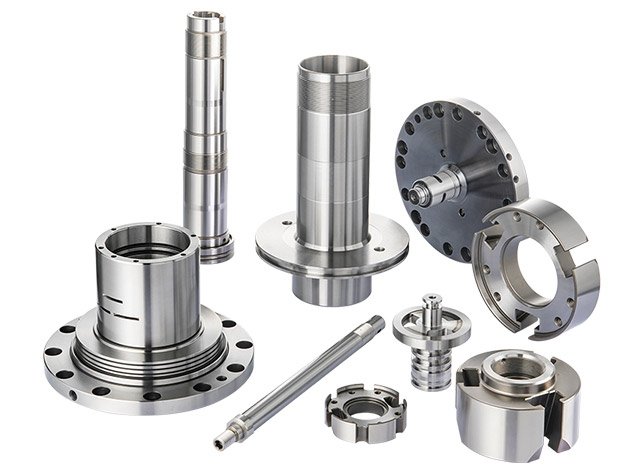
In aerospace supply chains, machining excellence alone is not enough. OEMs and Tier 1 suppliers need partners who can manage design interpretation, prototype development, manufacturability review, process validation, production scaling, and delivery coordination. This is why the ODM model is gaining momentum in 2026. A mature ODM partner does not simply quote a drawing. It helps convert performance requirements into a manufacturable, inspectable, and scalable component solution.
IndustryApex Technology’s core identity is that of a supply chain integrator and ODM solution provider. For global OEM and Tier 1 customers, this means we combine engineering support, precision manufacturing, supplier coordination, and production management into one accountable structure. Instead of forcing buyers to coordinate multiple vendors for machining, EDM, grinding, special materials, ceramic elements, or sub-component sourcing, we provide a more integrated route from design input to finished precision parts.
Our manufacturing edge is based on a fully controlled precision manufacturing system supported by ERP and more than 30 years of accumulated manufacturing experience. ERP-driven control is essential in aerospace because component traceability, job routing, inspection records, capacity planning, and schedule visibility must be managed systematically. When production complexity increases, spreadsheet-based control becomes a risk. ERP integration helps ensure that purchasing, material flow, machining operations, quality checkpoints, and shipping commitments are aligned.
IndustryApex Technology’s technical capabilities include 3-5 axis CNC machining, EDM, precision grinding, and industrial ceramics. This combination is valuable for aerospace programs where a single part family may include milled structural elements, precision-ground interfaces, EDM features, and wear-resistant or insulating ceramic components. The ability to apply multiple processes under one engineering framework helps reduce communication loss, improve tolerance stack-up management, and shorten development cycles.
For aerospace buyers, the ODM and supply chain advantage also reduces sourcing risk. When a machining supplier can participate early in design-for-manufacturability discussions, it can identify difficult-to-machine features, unnecessary tolerance costs, tooling access problems, risky wall thicknesses, and inspection ambiguities before production begins. Early involvement can reduce recurring cost and prevent launch delays. This is especially relevant for new aircraft platforms, UAV systems, satellite components, eVTOL structures, and upgraded aerospace assemblies.
Another advantage is cross-industry learning. Aerospace manufacturing benefits from process disciplines developed in other precision industries. For example, the traceability and clean processing mindset used for medical CNC components, titanium implants, and surgical instruments can strengthen control of burrs, surface finish, and contamination-sensitive parts. Likewise, fluid sealing and precision-fit knowledge from hydraulic pump parts and fluid control components can support aerospace actuators, valve bodies, pump housings, and motion-control systems.
In 2026, procurement teams increasingly prefer suppliers who can support both engineering depth and commercial stability. They need confidence that a supplier can manage prototype iterations, low-volume high-mix production, and eventual scaling without losing process discipline. As IndustryApex CNC, IndustryApex Technology works with global customers that require a balance of technical precision, practical manufacturability, and supply chain reliability.
4. Industry Applications
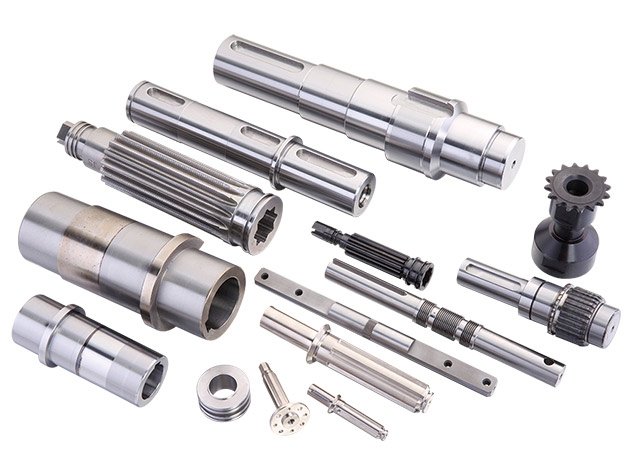
The most visible application of 5-axis CNC machining in aerospace is structural component manufacturing. Aircraft structural parts must combine strength, weight reduction, and dimensional accuracy. Typical components include brackets, ribs, hinge fittings, seat track components, bulkhead details, frame sections, and complex mounting interfaces. Many of these parts require pocketing, contouring, and multi-angle features that are more efficiently produced through 5-axis strategies.
Titanium aerospace components represent another high-value application area. Titanium is widely used where strength-to-weight ratio, corrosion resistance, and temperature performance are critical. Common applications include engine-adjacent brackets, landing gear-related parts, fastener interfaces, structural fittings, and high-load connection elements. Because titanium is costly and difficult to machine, aerospace customers benefit from suppliers that can minimize scrap, stabilize tool life, and maintain repeatability through disciplined process engineering.
5-axis CNC machining is also important for aerospace fluid control and motion systems. Valve bodies, actuator housings, pump components, manifolds, and hydraulic interfaces often include angled ports, intersecting bores, precision sealing surfaces, and complex internal passages. Machining these features in fewer setups improves positional accuracy and reduces the risk of leakage-related nonconformance. When EDM and grinding are available, the supplier can support additional features requiring sharp internal geometries or high-precision sliding fits.
Engine and propulsion-related components also benefit from multi-axis capability. Although some rotating and hot-section parts require specialized manufacturing routes, 5-axis machining plays an important role in producing housings, mounts, covers, brackets, impeller-like geometries, test fixtures, and auxiliary system parts. For these applications, machining strategy must consider vibration, balance requirements, surface finish, and material behavior under thermal or mechanical stress.
Space, UAV, and eVTOL programs are accelerating demand for agile precision machining. These sectors often operate with shorter development cycles and more frequent design iterations than traditional aerospace programs. They require suppliers who can move quickly from prototype to pilot production while preserving documentation, inspection rigor, and traceability. 5-axis CNC machining supports this environment by enabling complex geometry without excessive custom fixturing or multiple machine transfers.
Defense aerospace and mission-critical systems add another layer of requirements. Components may need robust documentation, stable repeatability, controlled subcontracting, and strict configuration management. A capable ODM machining partner can help manage technical revisions, material sourcing, special process coordination, and delivery planning, reducing administrative burden on the customer while maintaining production control.
Across all these applications, the central trend is convergence. Aerospace components are becoming lighter, more integrated, and more geometrically complex. Supply chains are expected to become faster, more transparent, and more accountable. This combination favors manufacturers that can provide advanced CNC capability, multi-process precision manufacturing, and structured supply chain management under one roof.
5. Call to Action
As aerospace programs prepare for 2026 production challenges, supplier selection should focus on more than machine count or unit price. The strongest partners will demonstrate process engineering capability, 5-axis machining expertise, inspection maturity, traceability, ERP-based production control, and the ability to support ODM collaboration from early design through serial delivery.
IndustryApex Technology, through IndustryApex CNC, supports global OEM and Tier 1 suppliers with precision manufacturing solutions for aerospace structural parts, titanium components, hydraulic and fluid control systems, medical-grade precision parts, and other high-performance industrial applications. With over 30 years of manufacturing experience and capabilities spanning 3-5 axis CNC, EDM, precision grinding, and industrial ceramics, we help customers reduce sourcing complexity while improving quality and delivery confidence.
If your team is developing aerospace components that require complex geometry, tight tolerance control, titanium machining, lightweight structures, or integrated supply chain support, our engineering team is ready to review your requirements. Visit Contact Us to start a technical discussion with IndustryApex Technology and explore how IndustryApex CNC can support your 2026 aerospace manufacturing roadmap.