- Shaft
- Molds&Tools
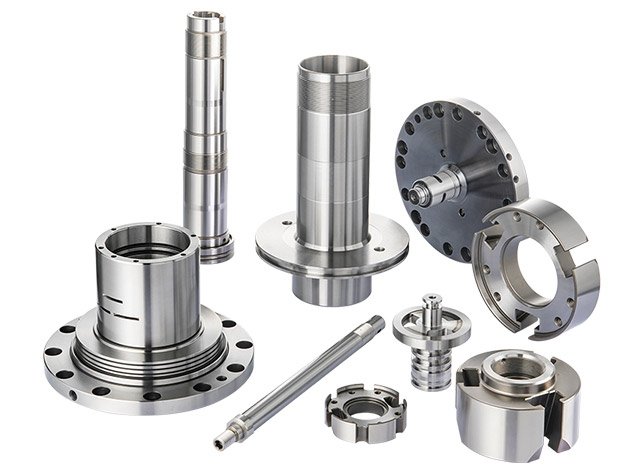
- Hydraulics And Pump
- Hair transplant needle
- Hydraulics And Pump
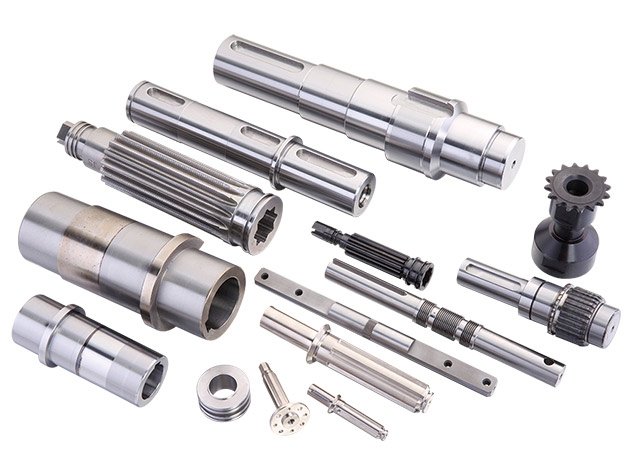
- Precision CNC Shaft Machining Manufacturer for High Performance Applications
- Energy Industry CNC Machining Parts Supplier
- Aerospace CNC Machining Parts Manufacturer
- Aerospace CNC Machining Parts Manufacturer
- Automotive & EV CNC Machining Parts Supplier for OEM and Tier 1
- Medical CNC Machining Parts Supplier for Precision Medical Devices

Large-Scale Machining: Gantry Milling and Crankshaft Grinding for OEM Precision Manufacturing

Executive Summary
Large-scale machining operations—particularly gantry milling and crankshaft grinding—represent some of the most demanding disciplines in modern precision manufacturing. These processes require extraordinary dimensional control across workpieces that can span several meters in length, tolerances measured in single-digit microns, and surface finishes that directly influence the fatigue life and performance of critical rotating assemblies. For global OEMs and Tier 1 suppliers operating in power generation, marine propulsion, heavy transport, and industrial machinery sectors, the ability to source large-format machined components from a qualified, vertically integrated partner is a decisive supply chain advantage.
This analysis examines the technical foundations of gantry milling and crankshaft grinding, explores the process engineering challenges unique to oversized workpieces, and outlines how an ODM-focused supply chain integrator like IndustryApex Technology (IndustryApex CNC) delivers measurable value to procurement teams managing complex, high-specification component programs.
Technical Deep Dive: Gantry Milling and Crankshaft Grinding Fundamentals
Gantry Milling: Precision at Scale
Gantry milling machines—also referred to as bridge-type or portal milling centers—are engineered specifically for machining large, heavy workpieces that exceed the envelope of conventional vertical or horizontal machining centers. The defining characteristic is a fixed-bed architecture with a traversing crossrail (bridge) that carries the spindle assembly across the X and Y axes, while the Z-axis provides vertical depth control. This configuration delivers exceptional rigidity-to-footprint ratios, enabling heavy material removal on cast iron frames, steel weldments, and large aluminum structural components.
Key process parameters in gantry milling include spindle power (typically 30–100 kW for roughing operations), axis travel (commonly 3–20 meters in X-axis), positional accuracy (±5 µm over full travel with laser-compensated linear scales), and thermal stability management through coolant-controlled structural members. Modern 5-axis gantry mills add simultaneous A/B-axis head rotation, enabling complex contour machining of turbine housings, press beds, and aerospace structural components in a single setup—eliminating cumulative repositioning errors.
Crankshaft Grinding: Achieving Sub-Micron Geometry on Rotating Assemblies
Crankshaft grinding is a specialized cylindrical grinding operation performed on eccentric journals and main bearing surfaces of crankshafts used in internal combustion engines, compressors, and large reciprocating machinery. The process demands simultaneous control of diameter tolerance (typically ±2.5 µm), roundness (≤3 µm), cylindricity, surface finish (Ra 0.2–0.4 µm), and angular indexing accuracy between throws.
CNC crankshaft grinders employ orbital (chase-the-pin) or plunge grinding strategies. In orbital grinding, the workpiece rotates about its main axis while the grinding wheel follows the eccentric path of each pin journal via synchronized CNC interpolation. This approach eliminates the need for eccentric chucking fixtures and reduces setup time by 40–60% compared to legacy methods. CBN (cubic boron nitride) grinding wheels have largely replaced conventional aluminum oxide abrasives in high-production environments, offering 10–50x longer wheel life, reduced thermal damage risk, and consistent geometry across production lots.
Critical supporting technologies include in-process gauging (contact or laser-based diameter measurement during grinding), automatic wheel balancing systems, and hydrostatic spindle bearings that eliminate metal-to-metal contact in the wheelhead—ensuring vibration-free operation essential for achieving sub-micron surface integrity.
Process Integration Challenges
The intersection of gantry milling and crankshaft grinding within a single manufacturing program—such as producing large engine blocks and their corresponding crankshafts—introduces significant process planning complexity. Datum transfer between milling and grinding operations must be managed through precision fixture design and coordinate measurement machine (CMM) verification at each stage. Thermal growth compensation, particularly on large gantry structures operating over 8+ hour cycles, requires real-time feedback from embedded temperature sensors and adaptive CNC compensation algorithms.
The ODM & Supply Chain Advantage
For OEM procurement teams evaluating suppliers for large-scale machined components, the decision extends far beyond machine capability. The critical differentiator is whether a supplier operates as a true supply chain integrator—managing process engineering, quality systems, logistics, and program-level coordination as a unified service rather than isolated transactions.
IndustryApex Technology: Integrated Precision Manufacturing
IndustryApex Technology (IndustryApex CNC) operates as an ODM solution provider with over 30 years of precision manufacturing experience, serving global OEM and Tier 1 suppliers across demanding industrial sectors. The company’s manufacturing edge lies in a fully controlled precision manufacturing system—from raw material qualification through final inspection—managed through integrated ERP systems that provide real-time production visibility and traceability.
Technical capabilities span 3-axis through 5-axis CNC machining, EDM (electrical discharge machining), precision grinding, and industrial ceramics processing. This breadth enables IndustryApex to consolidate multi-process component programs under a single quality management system, eliminating the coordination overhead and quality risk inherent in multi-vendor supply chains. For large-scale machining programs involving gantry-milled structural components or precision-ground crankshafts, this integration translates directly to reduced lead times, consistent lot-to-lot quality, and simplified supplier management.
ERP-Driven Program Management
Large-format machining programs typically involve long cycle times, expensive raw materials, and tight delivery windows aligned to OEM assembly schedules. IndustryApex’s ERP infrastructure provides automated capacity planning, material requirement scheduling, and milestone-based progress reporting—giving procurement teams the supply chain visibility needed to manage just-in-time delivery commitments without carrying excessive safety stock. This is particularly valuable for components serving hydraulic pump and valve assemblies where dimensional precision and delivery reliability are equally critical.
Quality System Architecture
Large-scale machined components demand inspection strategies proportional to their complexity. IndustryApex deploys large-volume CMM verification, surface roughness profiling, material certification traceability, and statistical process control (SPC) across all critical dimensions. For crankshaft grinding operations specifically, roundness and cylindricity are verified using dedicated form measurement instruments with sub-micron resolution, ensuring every journal meets the geometric tolerances required for bearing fit and hydrodynamic lubrication performance.
Industry Applications
Power Generation and Marine Propulsion
Large diesel and gas engines used in power generation, marine propulsion, and locomotive applications require crankshafts ranging from 1 to 12 meters in length, with pin journal diameters up to 400 mm. Gantry milling produces the corresponding engine blocks, bedplates, and structural housings. These components operate under extreme cyclic loading, making grinding-induced surface integrity and residual stress profiles critical to fatigue life.
Heavy Industrial Machinery
Press frames, rolling mill housings, and large machine tool structures are produced through gantry milling operations. Flatness tolerances of 10–20 µm over surfaces exceeding 3 meters are common requirements. The ability to machine these components in a single setup on a large gantry mill eliminates the geometric errors introduced by workpiece repositioning.
Aerospace and Defense Structures
Large aluminum and titanium structural components for aerospace applications increasingly require 5-axis gantry milling to achieve complex pocket geometries and thin-wall features in a single setup. Material removal rates exceeding 80% of billet weight demand optimized toolpath strategies and high spindle power to maintain economic cycle times.
Medical and Precision Equipment
While large-scale machining is most associated with heavy industry, precision grinding technologies developed for crankshaft applications transfer directly to medical device manufacturing—where eccentric shaft geometries, cam profiles, and precision spindle components demand identical process control disciplines at smaller scales.
Automotive Drivetrain
High-volume automotive crankshaft production relies on the same orbital grinding principles applied at larger scales, with cycle time optimization and automated loading systems enabling production rates aligned to automotive assembly line takt times. Tier 1 drivetrain suppliers benefit from partnering with grinding specialists who understand both the process science and the production engineering required for sustained volume delivery.
Partner with IndustryApex Technology for Large-Scale Machining Programs
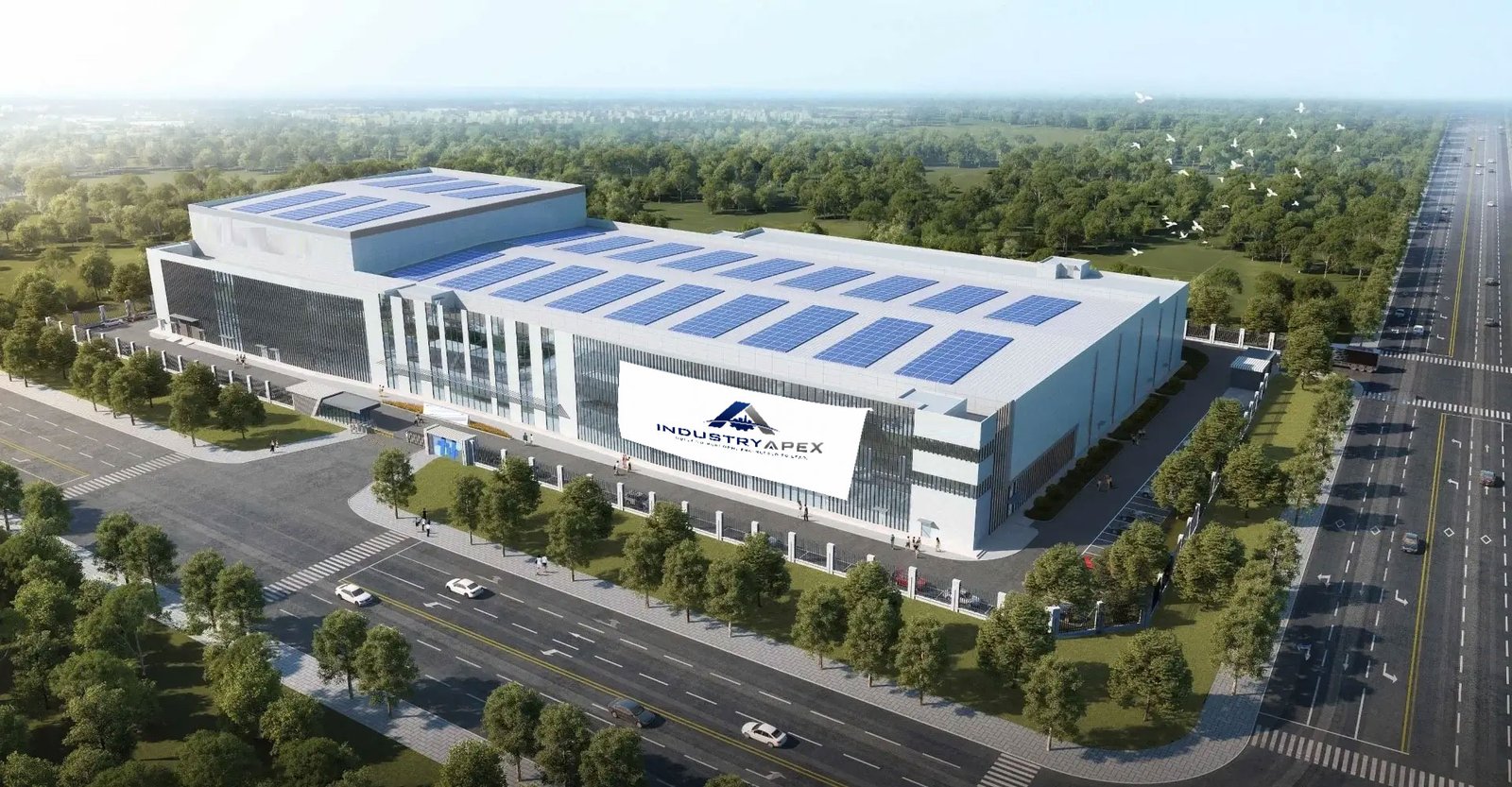
Whether your program requires gantry-milled structural components measured in meters or crankshafts ground to sub-micron precision, IndustryApex Technology delivers the process capability, quality infrastructure, and supply chain integration that global OEMs demand. With over 30 years of manufacturing expertise, fully integrated ERP-driven program management, and technical capabilities spanning 3-5 axis CNC, EDM, precision grinding, and industrial ceramics, we are positioned to support your most demanding large-format machining requirements.
Contact our engineering team to discuss your large-scale machining specifications, request a manufacturing feasibility review, or schedule a virtual facility tour. Let us demonstrate how an integrated ODM approach reduces total cost of ownership while improving quality outcomes across your critical component programs.