- Shaft
- Molds&Tools
- Hydraulics And Pump
- Hair transplant needle
- Hydraulics And Pump
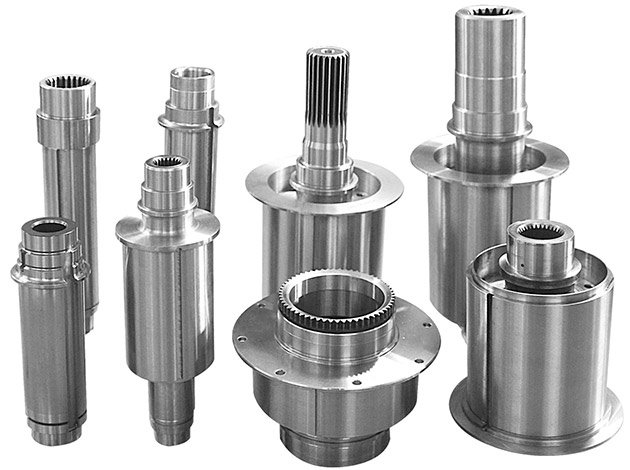
- Precision CNC Shaft Machining Manufacturer for High Performance Applications
- Energy Industry CNC Machining Parts Supplier
- Aerospace CNC Machining Parts Manufacturer
- Aerospace CNC Machining Parts Manufacturer
- Automotive & EV CNC Machining Parts Supplier for OEM and Tier 1
- Medical CNC Machining Parts Supplier for Precision Medical Devices
The Role of Supply Chain Integrators in Agile Manufacturing: How ODM Partners Drive OEM Competitiveness

Executive Summary
In an era defined by compressed product lifecycles, geopolitical supply disruptions, and escalating quality requirements, the traditional model of fragmented supplier management is failing global OEMs. Supply chain integrators—partners who consolidate design-for-manufacturability expertise, multi-process production capability, and logistics coordination under a single operational umbrella—have emerged as the critical enabler of agile manufacturing strategies.
This analysis examines how vertically integrated ODM solution providers reduce lead times by 30–50%, eliminate inter-supplier quality variance, and provide the process flexibility that Tier 1 manufacturers require to respond to volatile demand signals. We explore the technical infrastructure, ERP-driven workflow orchestration, and multi-axis machining capabilities that distinguish true supply chain integrators from conventional job shops, with particular attention to applications in aerospace CNC machining, medical device components, and hydraulic pump systems.
Technical Deep Dive: The Architecture of Integrated Manufacturing
From Linear Supply Chains to Networked Production Cells
Traditional manufacturing supply chains operate linearly: design houses release drawings, procurement teams source individual processes from separate vendors, and quality teams attempt to reconcile dimensional tolerances across disconnected production environments. This model introduces cumulative tolerance stack-up, communication latency, and logistical complexity that directly contradicts agile manufacturing principles.
Supply chain integrators restructure this paradigm by housing complementary processes—CNC milling, turning, EDM, precision grinding, and surface treatment—within a unified production system governed by a single ERP backbone. When a 5-axis aerospace bracket requires tight-tolerance milling followed by wire EDM for internal channels and precision grinding for sealing surfaces, the integrator executes all operations under one quality management system, one coordinate measurement protocol, and one production schedule.
ERP-Driven Workflow Orchestration
The technical foundation of supply chain integration is not merely co-located equipment—it is the digital thread connecting order intake, process planning, machine scheduling, in-process inspection, and shipment coordination. Modern ERP systems configured for high-mix, low-volume precision manufacturing enable real-time capacity visibility, automated routing optimization, and predictive lead-time calculation that traditional multi-vendor approaches cannot replicate.
When an OEM customer submits an engineering change order, the integrator’s system simultaneously recalculates machining cycle times, updates fixture requirements, adjusts material procurement schedules, and regenerates inspection plans. This closed-loop responsiveness is the operational definition of agility in precision manufacturing contexts.
Multi-Process Technical Capabilities
True integration demands breadth and depth of process capability. The minimum technical portfolio for a credible supply chain integrator serving demanding OEM sectors includes:
- 3-axis to 5-axis CNC machining — enabling complex geometry production from simple prismatic parts to sculptured aerospace surfaces
- Wire and sinker EDM — for hardened materials and geometries impossible to achieve with conventional cutting tools
- Precision cylindrical and surface grinding — achieving sub-micron surface finishes and tight geometric tolerances
- Industrial ceramics processing — serving semiconductor, medical, and extreme-environment applications
- Integrated metrology — CMM verification, optical measurement, and surface roughness analysis within the production flow
This process breadth eliminates the inter-vendor logistics, quality reconciliation, and communication overhead that typically consumes 20–35% of total project lead time in fragmented supply chains.
The ODM & Supply Chain Advantage: IndustryApex Technology’s Integrated Model
Core Identity: Beyond Contract Manufacturing
IndustryApex Technology (IndustryApex CNC) operates as a supply chain integrator and ODM solution provider—a distinction that carries significant operational implications for OEM procurement teams. Unlike conventional contract manufacturers who execute drawings without contributing engineering value, IndustryApex’s model encompasses design-for-manufacturability consultation, process development, prototype iteration, and volume production within a fully controlled precision manufacturing system.
Three Decades of Process Mastery
With over 30 years of accumulated manufacturing experience, IndustryApex Technology has developed institutional knowledge across material behaviors, tooling strategies, and process parameter optimization that cannot be replicated by newer market entrants. This experience base translates directly into first-pass yield rates, reduced development iterations, and reliable cycle time estimates that OEM program managers depend upon for production planning.
Manufacturing Edge: Vertical Integration Under ERP Control
IndustryApex’s competitive differentiation centers on its fully controlled precision manufacturing system integrating 3-5 axis CNC machining centers, EDM capabilities, precision grinding equipment, and industrial ceramics processing—all orchestrated through enterprise resource planning infrastructure. This vertical integration delivers measurable advantages to global OEM and Tier 1 suppliers:
- Single-source accountability — one purchase order, one quality system, one point of contact for multi-process components
- Compressed lead times — elimination of inter-vendor transport, re-fixturing, and queue time between operations
- Consistent quality — unified measurement standards and traceability from raw material through finished component
- Engineering agility — rapid response to design changes without multi-vendor coordination overhead
- IP protection — complete process containment within a single facility reduces exposure risk
Serving Global OEM and Tier 1 Requirements
IndustryApex Technology’s target customer base—global OEMs and Tier 1 suppliers in aerospace, medical, semiconductor, and industrial equipment sectors—demands supply partners who can meet stringent qualification requirements while maintaining the flexibility to accommodate engineering changes, volume fluctuations, and new product introduction timelines. The integrated ODM model directly addresses these requirements by consolidating technical capability, quality infrastructure, and program management expertise within a single partnership framework.
Industry Applications: Where Integration Creates Maximum Value
Aerospace Structural and Engine Components
Aerospace manufacturing exemplifies the value proposition of supply chain integration. Titanium aircraft structural components and engine parts frequently require 5-axis CNC machining for complex contours, EDM for cooling channels or weight-reduction features, and precision grinding for critical interface surfaces. When these processes reside under one roof with unified process control, the aerospace OEM gains traceability continuity, reduced paperwork burden, and elimination of the inter-supplier dimensional disputes that plague multi-vendor approaches.
Medical Device and Implant Manufacturing
The medical device sector demands ISO-certified production environments, complete material traceability, and validation protocols that multiply in complexity with each additional supplier in the chain. Supply chain integrators who can produce titanium implants, surgical instruments, and high-precision device parts within a single validated system dramatically reduce the regulatory compliance burden for medical OEMs while accelerating time-to-market for new device platforms.
Hydraulic and Fluid Power Systems
Hydraulic pump components require the intersection of tight bore tolerances, superior surface finishes, and material hardness specifications that demand multiple sequential processes. Valve spools, sleeves, gear housings, and end caps each present unique machining challenges that benefit from integrated process planning where grinding, honing, and CNC turning operations are optimized as a system rather than isolated processes.
Semiconductor and Industrial Equipment
Advanced industrial ceramics processing—alumina, zirconia, silicon carbide, and silicon nitride components—serves semiconductor equipment manufacturers and extreme-environment applications where metallic materials cannot perform. The ability to combine ceramic machining expertise with conventional metallic precision manufacturing under one operational framework positions the integrator as a single-source solution for complex assembly subcontracts.
Partner with a Proven Supply Chain Integrator
For global OEMs and Tier 1 suppliers seeking to consolidate their precision component supply chain, reduce lead times, and gain engineering agility without sacrificing quality or traceability, IndustryApex Technology offers a proven integrated manufacturing partnership built on three decades of process expertise.
Whether your requirements span 5-axis aerospace components, ISO-certified medical parts, hydraulic system components, or industrial ceramics, our engineering team is prepared to evaluate your current supply chain architecture and propose consolidation strategies that deliver measurable improvements in cost, quality, and responsiveness.
Contact IndustryApex Technology today to schedule a supply chain assessment and discover how integrated ODM manufacturing can transform your procurement strategy from a cost center into a competitive advantage.