- Shaft
- Molds&Tools
- Hydraulics And Pump
- Hair transplant needle
- Hydraulics And Pump
- Precision CNC Shaft Machining Manufacturer for High Performance Applications
- Energy Industry CNC Machining Parts Supplier
- Aerospace CNC Machining Parts Manufacturer
- Aerospace CNC Machining Parts Manufacturer
- Automotive & EV CNC Machining Parts Supplier for OEM and Tier 1
- Medical CNC Machining Parts Supplier for Precision Medical Devices
The Role of Supply Chain Integrators in Agile Manufacturing: How ODM Partners Are Redefining OEM Competitiveness

Executive Summary
In today’s hyper-competitive industrial landscape, the ability to compress lead times, absorb demand volatility, and maintain dimensional tolerances across complex component families is no longer a differentiator — it is a baseline requirement. For global OEMs and Tier 1 suppliers, the traditional model of managing fragmented vendor networks is collapsing under the weight of its own inefficiency. Supply chain integrators — vertically coordinated manufacturing partners capable of delivering end-to-end ODM solutions — are emerging as the structural backbone of agile manufacturing strategies.
This analysis examines how supply chain integrators create measurable operational advantages, the technical capabilities that separate genuine integration from simple subcontracting, and why precision-focused manufacturers like IndustryApex CNC are positioned at the center of this industrial shift.
Technical Deep Dive: What Agile Manufacturing Actually Demands
Agile manufacturing is frequently mischaracterized as simply “fast manufacturing.” In engineering terms, agility is the capacity to reconfigure production systems — tooling, fixturing, process sequencing, and quality inspection protocols — in response to design changes or volume fluctuations without incurring prohibitive retooling costs or schedule penalties.
For precision-machined components, this creates a specific set of technical demands:
- Multi-axis machining flexibility: Components with complex geometries — turbine housings, hydraulic manifolds, orthopedic implant profiles — require simultaneous 5-axis CNC interpolation. A supply chain partner limited to 3-axis capability forces design compromises or secondary operations that destroy schedule efficiency.
- Process breadth under one roof: Agile response collapses when a single component requires coordination across five separate vendors for turning, grinding, EDM, surface treatment, and inspection. True integration means these processes are orchestrated within a single controlled manufacturing system.
- ERP-driven production visibility: Real-time capacity allocation, material traceability, and quality data capture are not administrative luxuries — they are the nervous system of agile response. Without ERP integration, a supplier cannot provide credible delivery commitments or support engineering change orders without schedule disruption.
- Material and process certification depth: Aerospace-grade titanium alloys, medical-grade stainless, and hydraulic system components each carry distinct certification requirements. A supply chain integrator must maintain active process qualifications across these material families, not treat them as one-off projects.
The technical gap between a component vendor and a supply chain integrator is not incremental — it is architectural. Vendors optimize individual operations. Integrators optimize the entire value stream from raw material to certified, ready-to-assemble component.
The ODM & Supply Chain Advantage: Engineering Partnership Over Transactional Sourcing
The ODM model — Original Design Manufacturer — extends the integrator’s role upstream into the product development cycle. Rather than receiving a finalized drawing and quoting to print, an ODM partner engages at the design-for-manufacturability (DFM) stage, identifying tolerance stack-up risks, material substitution opportunities, and process consolidation strategies before tooling is cut.
For OEMs managing complex product portfolios, this upstream engagement delivers compounding returns:
Controlled Manufacturing System Architecture
A fully controlled precision manufacturing system — where CNC machining, EDM, precision grinding, and industrial ceramics production are managed under unified quality governance — eliminates the inter-vendor variation that plagues distributed supply chains. Every process parameter, every inspection record, and every material certificate exists within a single traceability chain. This is not a marginal quality improvement; it is the difference between a supply chain that can support AS9100 or ISO 13485 audits and one that cannot.
With over 30 years of precision manufacturing experience, IndustryApex Technology’s IndustryApex CNC platform has built this controlled system architecture specifically to serve global OEM and Tier 1 supplier requirements — organizations that cannot afford the schedule risk of discovering a process nonconformance three tiers deep in their supply chain.
Technology Capability Stack
The breadth of process capability directly determines the complexity of components an integrator can absorb. The IndustryApex CNC capability stack — 3-axis through 5-axis CNC machining, wire and sinker EDM, precision cylindrical and surface grinding, and industrial ceramic component manufacturing — covers the full spectrum of precision component families demanded by advanced industrial sectors:
- 5-axis CNC: Structural aerospace components, complex hydraulic bodies, multi-feature medical device housings
- EDM: Hardened tool steel mold components, intricate internal geometries inaccessible to cutting tools
- Precision Grinding: Bearing seats, valve spools, and shaft journals requiring sub-micron surface finish and tight cylindricity
- Industrial Ceramics: High-wear, chemically resistant components for semiconductor, medical, and fluid control applications
ERP-Enabled Supply Chain Transparency
ERP integration transforms a manufacturing partner from a black box into a transparent node in the OEM’s supply chain. Capacity visibility, real-time order status, and automated quality record generation allow procurement and engineering teams to make informed decisions rather than managing by exception. For OEMs operating lean inventory models, this transparency is not optional — it is the operational foundation that makes lean possible.
Industry Applications: Where Supply Chain Integration Delivers Maximum Value
The value proposition of supply chain integration is not uniform across industries. It concentrates in sectors where component complexity, certification requirements, and schedule pressure intersect most acutely.
Aerospace Structural and Engine Components
Aerospace manufacturing represents the most demanding convergence of these pressures. Titanium structural components for airframes and engine assemblies require 5-axis machining of difficult-to-cut alloys, strict material traceability to raw material heat lot, and first-article inspection documentation that satisfies AS9100 Rev D requirements. Fragmented supply chains cannot reliably deliver this combination. IndustryApex CNC’s aerospace machining capabilities address this directly, providing 5-axis titanium machining with full certification support for aircraft structural components and precision engine parts.
Medical Device and Implant Manufacturing
Medical component manufacturing adds biocompatibility validation and FDA/ISO 13485 quality system requirements to an already demanding precision machining challenge. Orthopedic implants, surgical instrument components, and precision device housings require surface finish control, dimensional repeatability, and material certification that only a fully controlled manufacturing system can consistently deliver. ISO-certified CNC machining for medical components at IndustryApex CNC provides the quality infrastructure that medical OEMs require without the overhead of managing multiple specialized vendors.
Hydraulic Systems and Fluid Control
Hydraulic pump and valve components operate under conditions where dimensional nonconformance translates directly into system failure — leakage, pressure loss, or catastrophic component fracture. Valve spools, pump housings, and manifold bodies require tight bore tolerances, precise surface finish on sealing surfaces, and material integrity that withstands cyclic hydraulic loading. Precision hydraulic pump parts manufactured within an integrated quality system eliminate the tolerance accumulation risk that distributed sourcing introduces.
Industrial Automation and Energy
As industrial automation density increases and energy infrastructure modernizes, the demand for precision-machined components in servo systems, gearboxes, and power generation equipment is accelerating. Supply chain integrators with broad process capability can support the component diversity these sectors require — from precision shafts and gear blanks to ceramic insulator components and hardened tooling — within a single sourcing relationship.
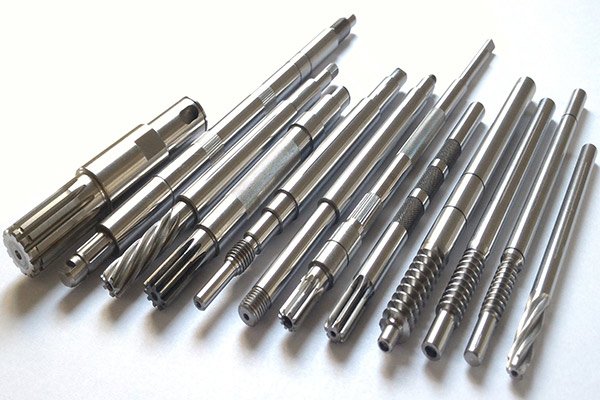
Across all these sectors, the common thread is clear: supply chain integration reduces the coordination burden on OEM engineering and procurement teams while simultaneously improving quality consistency, certification traceability, and schedule reliability. These are not soft benefits — they translate directly into reduced cost of quality, lower inventory carrying costs, and faster time-to-market for new product introductions.
Partner with a Supply Chain Integrator Built for Global OEM Requirements
The transition from fragmented vendor management to integrated supply chain partnership is a strategic decision with measurable operational consequences. For OEMs and Tier 1 suppliers evaluating their precision component sourcing strategy, the relevant questions are not simply about price per part — they are about total cost of supply chain ownership, certification risk exposure, and the engineering bandwidth consumed by managing complexity that a capable integrator should absorb.
IndustryApex Technology’s IndustryApex CNC platform combines over 30 years of precision manufacturing experience, a fully controlled multi-process manufacturing system, ERP-driven production transparency, and deep application expertise across aerospace, medical, hydraulic, and industrial sectors. We engage as an ODM partner from the design stage, not simply as a vendor executing to print.
If your organization is evaluating supply chain consolidation, qualifying a new precision component source, or developing a complex component family that requires integrated manufacturing expertise, we invite a direct technical conversation. Contact our engineering team to discuss your specific requirements and explore how supply chain integration can reduce your operational risk while improving component quality and delivery performance.