- Shaft
- Molds&Tools
- Hydraulics And Pump
- Hair transplant needle
- Hydraulics And Pump
- Precision CNC Shaft Machining Manufacturer for High Performance Applications
- Energy Industry CNC Machining Parts Supplier
- Aerospace CNC Machining Parts Manufacturer
- Aerospace CNC Machining Parts Manufacturer
- Automotive & EV CNC Machining Parts Supplier for OEM and Tier 1
- Medical CNC Machining Parts Supplier for Precision Medical Devices

Cold Heading Tooling vs. CNC Machining: Which Manufacturing Process Delivers Better ROI for High-Volume Fastener Production?

Executive Summary
Selecting between cold heading tooling and CNC machining represents one of the most critical manufacturing decisions for OEMs and Tier 1 suppliers producing fasteners, connectors, and precision metal components. While cold heading excels in high-volume production of standardized parts with material efficiency rates exceeding 95%, CNC machining offers unmatched geometric flexibility and rapid prototyping capabilities for complex geometries. This technical analysis examines production economics, material utilization, lead times, and quality considerations across both processes, providing supply chain managers and engineering teams with quantitative frameworks for process selection. For global manufacturers requiring integrated ODM solutions, understanding these trade-offs directly impacts total cost of ownership, inventory management, and time-to-market performance.
At IndustryApex Technology’s IndustryApex CNC division, we’ve engineered over 30 years of precision manufacturing expertise into a fully controlled supply chain system that bridges both cold heading partnerships and advanced 3-5 axis CNC capabilities. Our ERP-integrated production environment enables clients to optimize process selection based on real-time cost modeling, quality requirements, and delivery schedules across automotive, aerospace, hydraulic, and industrial automation sectors.
Technical Deep Dive: Process Mechanics and Engineering Constraints
Cold Heading Fundamentals
Cold heading, also termed cold forming or upset forging, plastically deforms metal wire or rod stock at room temperature through progressive die sequences. The process applies compressive forces exceeding the material’s yield strength—typically 150,000 to 300,000 psi for carbon steel alloys—redistributing material volume without removing chips. Multi-station headers can execute up to seven forming operations sequentially, producing complex geometries like hex heads, threads, and undercuts at cycle rates of 200-400 parts per minute.
Key engineering advantages include:
- Material efficiency: Scrap rates below 5% compared to 40-70% for machining operations
- Grain flow integrity: Continuous fiber structure enhances tensile strength by 10-20% versus machined equivalents
- Production velocity: Cycle times of 0.15-0.30 seconds per part enable millions of units monthly
- Surface finish: As-formed Ra values of 32-63 microinches eliminate secondary operations
However, cold heading imposes strict design constraints. Part geometry must accommodate progressive material flow without folding or lapping defects. Length-to-diameter ratios typically cannot exceed 6:1 without intermediate annealing. Tooling development requires 8-12 weeks and $15,000-$50,000 investment, making economic breakeven points typically exceed 50,000 units.
CNC Machining Capabilities
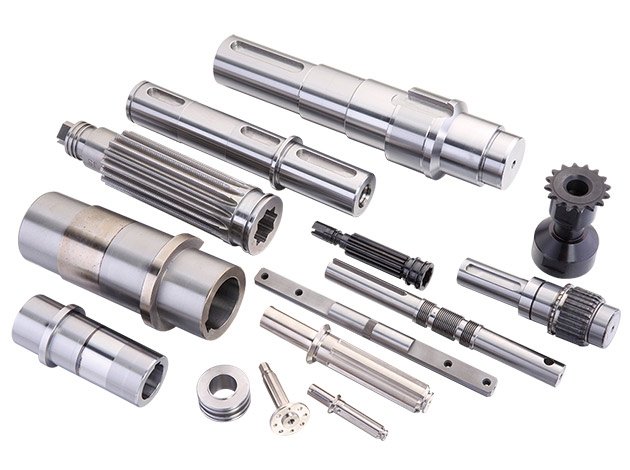
CNC machining removes material through controlled cutting tool paths, offering geometric freedom unattainable in forming processes. Modern 5-axis machining centers achieve positional accuracies of ±0.0002″ with surface finishes to 8 Ra microinches. The subtractive process accommodates complex features—internal cavities, undercuts, asymmetric profiles, and tight tolerance relationships—in single setups.
Strategic advantages include:
- Design flexibility: No geometric restrictions beyond tool access requirements
- Rapid iteration: CAM programming changes implement in hours versus weeks for tooling modifications
- Material versatility: Processes exotic alloys (Inconel, titanium, hardened steels) impractical for cold forming
- Low-volume economics: No tooling amortization makes quantities below 1,000 units cost-effective
CNC machining trade-offs center on material waste and cycle time. Removing 60-80% of stock as chips increases raw material costs and generates disposal expenses. Cycle times of 2-15 minutes per part limit production capacity, though multi-spindle configurations and automation mitigate throughput constraints. For applications requiring aerospace-grade titanium components or ISO 13485 certified medical device parts, CNC machining remains the only viable process.
Comparative Cost Analysis
Total manufacturing cost comprises tooling amortization, material utilization, labor content, cycle time, and quality assurance. Cold heading demonstrates superior unit economics above 50,000-100,000 annual volumes for geometrically compatible parts. A typical M8 hex bolt costs $0.08-$0.12 cold headed versus $0.45-$0.75 CNC machined at 100,000 unit volumes. However, the $35,000 tooling investment requires 350,000-450,000 units to achieve cost parity with machining’s zero tooling overhead.
CNC machining dominates low-volume and prototype scenarios. Producing 500 custom fasteners costs $8-$15 per unit machined versus $70+ per unit when amortizing cold heading tooling. The crossover point varies by part complexity, material, and tolerance requirements, typically occurring between 10,000-75,000 annual units.
The ODM & Supply Chain Advantage: Integrated Manufacturing Intelligence
Modern supply chain optimization requires manufacturing partners who function as strategic ODM integrators rather than transactional job shops. IndustryApex Technology’s core value proposition centers on controlled precision manufacturing systems that eliminate traditional supplier fragmentation. Our ERP-integrated production environment provides real-time visibility into capacity planning, quality metrics, and delivery performance across cold heading partnerships and internal CNC operations.
Vertical Integration Benefits
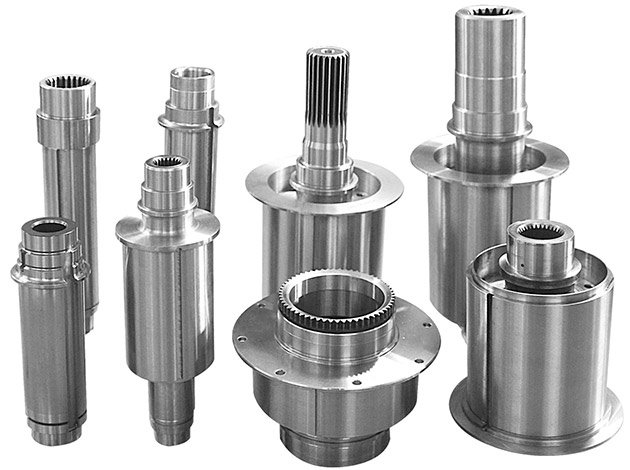
Our 30+ years of manufacturing experience has built comprehensive in-house capabilities spanning:
- 3-5 axis CNC machining: Simultaneous processing of complex geometries with ±0.0002″ repeatability
- EDM (Electrical Discharge Machining): Micro-hole drilling and hardened tool steel processing for mold components
- Precision grinding: Cylindrical, surface, and profile grinding to 0.0001″ tolerances
- Industrial ceramics: Advanced ceramic machining for high-temperature and wear-resistant applications
- Cold heading partnerships: Qualified supplier network for high-volume fastener production with integrated quality systems
This vertical integration enables hybrid manufacturing strategies. We frequently cold head primary geometries for material efficiency, then CNC machine secondary features requiring tight tolerances or complex profiles. A hydraulic pump shaft might be cold headed for the main body diameter, then precision ground for bearing journals and CNC machined for spline profiles—optimizing cost and performance across the complete part geometry.
Supply Chain Risk Mitigation
Global OEMs face increasing pressure to derisk supply chains through qualified alternate sources and geographic diversification. Our ODM model provides:
- Process redundancy: Dual-source capability between cold heading and CNC machining protects against single-process disruptions
- Inventory optimization: ERP integration enables vendor-managed inventory and kanban replenishment, reducing working capital requirements by 25-40%
- Quality traceability: Full material certifications, first article inspection reports, and SPC data for aerospace and medical applications
- Engineering support: DFM analysis, tolerance optimization, and material substitution recommendations reduce total cost of ownership
For Tier 1 suppliers managing complex BOMs across multiple product lines, consolidating fastener and precision component sourcing through a single ODM partner reduces administrative overhead, improves quality consistency, and accelerates new product introduction cycles.
Industry Applications: Process Selection by Sector
Automotive and Heavy Equipment
High-volume fastener applications—engine bolts, suspension components, transmission hardware—overwhelmingly favor cold heading for production quantities exceeding 100,000 units annually. Material savings alone justify tooling investment, while enhanced grain flow improves fatigue resistance in cyclically loaded applications. However, specialty fasteners with complex drive geometries, asymmetric heads, or exotic materials increasingly require CNC machining. Titanium wheel bolts for performance vehicles and stainless steel exhaust fasteners with integrated sealing features exemplify CNC-appropriate automotive applications.
Aerospace and Defense
Aerospace fastener specifications (NAS, MS, AN series) demand traceability, material certifications, and often exotic alloys like A286, Inconel 718, or titanium 6Al-4V. While some high-volume commercial aircraft fasteners utilize cold heading with extensive qualification testing, most aerospace applications require CNC machining for material control and geometric precision. Our aerospace CNC machining capabilities include full AS9100 compliance, NADCAP certifications, and material test report documentation meeting stringent aerospace quality requirements.
Hydraulics and Fluid Power
Hydraulic system components present unique manufacturing challenges combining high-volume production with precision tolerance requirements. Valve bodies, pump housings, and manifold blocks typically require CNC machining for complex internal passages and tight port-to-port relationships. However, connecting hardware, adapter fittings, and standard port plugs benefit from cold heading’s material efficiency and production velocity. Our integrated approach machines critical hydraulic components while sourcing cold headed fasteners and fittings through qualified partners, delivering complete assemblies with coordinated quality documentation.
Medical Device Manufacturing
Medical applications demand ISO 13485 certification, biocompatible materials, and often single-unit traceability. Cold heading finds limited application except for high-volume stainless steel fasteners in non-implantable devices. Most medical components require CNC machining for geometric complexity, material control, and documentation requirements. Our ISO-certified medical machining division processes titanium implant components, surgical instrument parts, and device housings with full material traceability and validation documentation.
Industrial Automation and Robotics
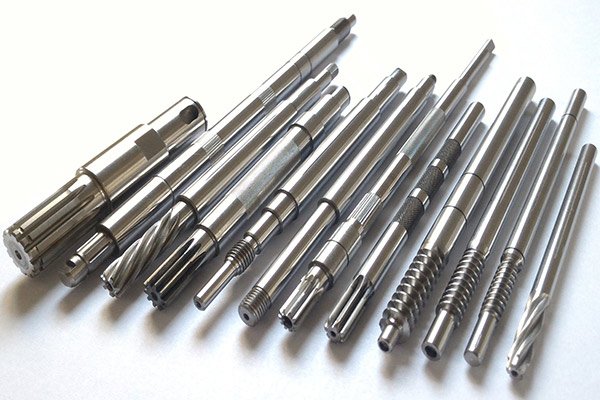
Automation equipment combines high-volume standard fasteners with low-volume custom mechanical components. Structural fasteners, mounting hardware, and cable connectors benefit from cold heading economics. Precision shafts, custom brackets, sensor housings, and motion control components require CNC machining flexibility. Our ODM approach optimizes this mixed-volume scenario, providing cost-effective fastener sourcing alongside custom machined components through unified project management and quality systems.
Decision Framework: Selecting the Optimal Process
Engineering teams should evaluate process selection using these quantitative criteria:
Choose Cold Heading When:
- Annual volumes exceed 50,000-100,000 units with stable demand forecasts
- Part geometry accommodates progressive forming (L/D ratios below 6:1, no severe undercuts)
- Material specifications include carbon steel, alloy steel, stainless 300 series, aluminum, or brass
- Tensile strength and fatigue resistance are critical performance requirements
- Material cost represents significant portion of total part cost
- Production lead times allow 8-12 weeks for tooling development
Choose CNC Machining When:
- Annual volumes below 10,000 units or demand uncertainty exists
- Complex geometries require internal features, asymmetric profiles, or tight tolerance relationships
- Material specifications include exotic alloys, hardened steels, titanium, or ceramics
- Rapid prototyping or design iteration is required
- Secondary operations (threading, precision grinding, heat treatment) would negate cold heading advantages
- Part consolidation opportunities exist to reduce assembly operations
Hybrid Approaches:
Many applications benefit from combined processes. Cold head primary geometries for material efficiency, then CNC machine secondary features requiring precision or complexity. This hybrid strategy optimizes total manufacturing cost while meeting all functional requirements.
Partner with Precision Manufacturing Experts
Selecting between cold heading and CNC machining requires deep manufacturing knowledge, cost modeling expertise, and supply chain integration capabilities. IndustryApex Technology’s IndustryApex CNC division brings 30+ years of precision manufacturing experience to every project, helping global OEMs and Tier 1 suppliers optimize process selection, reduce total cost of ownership, and accelerate time-to-market.
Our fully integrated manufacturing system combines advanced CNC capabilities with qualified cold heading partnerships, ERP-driven production control, and comprehensive quality management. Whether you’re developing next-generation aerospace components, scaling medical device production, or optimizing automotive fastener sourcing, our engineering team provides the technical expertise and manufacturing capacity to deliver results.
Ready to optimize your component manufacturing strategy? Contact our engineering team today for a complimentary manufacturing analysis. We’ll evaluate your part specifications, volume requirements, and quality standards to recommend the optimal process selection and provide detailed cost modeling. Visit our capabilities overview to explore our complete precision manufacturing solutions.
Let’s engineer better manufacturing outcomes together.