- Shaft
- Molds&Tools
- Hydraulics And Pump
- Hair transplant needle
- Hydraulics And Pump
- Precision CNC Shaft Machining Manufacturer for High Performance Applications
- Energy Industry CNC Machining Parts Supplier
- Aerospace CNC Machining Parts Manufacturer
- Aerospace CNC Machining Parts Manufacturer
- Automotive & EV CNC Machining Parts Supplier for OEM and Tier 1
- Medical CNC Machining Parts Supplier for Precision Medical Devices

Integrating 3D Printing with CNC Machining for Faster, More Reliable Rapid Prototyping

Executive Summary
Rapid prototyping has moved beyond the simple question of whether a part should be 3D printed or CNC machined. For global OEMs and Tier 1 suppliers, the stronger engineering strategy is integration: using additive manufacturing to accelerate geometry validation, then applying CNC machining, EDM, precision grinding, and controlled finishing to achieve functional surfaces, tolerances, and production-relevant performance. This hybrid approach reduces design risk, compresses development cycles, and creates a clearer path from prototype to qualified production.
At IndustryApex Technology, IndustryApex CNC, we see this shift every day across aerospace, medical devices, hydraulics, automation equipment, energy systems, and precision industrial components. Customers no longer want a prototype that merely looks correct. They need a prototype that can be measured, tested, assembled, stressed, sterilized, pressurized, or thermally cycled in ways that reflect the real operating environment. Additive manufacturing provides speed and design freedom; traditional CNC provides dimensional discipline, material confidence, and repeatable process control.
The business case is equally important. A well-designed hybrid prototyping workflow can shorten engineering feedback loops, reduce expensive rework, improve supplier communication, and support earlier decisions about manufacturability. Instead of waiting until late-stage production planning to discover tolerance conflicts, tooling limitations, clamping issues, surface finish constraints, or material behavior problems, engineering and sourcing teams can identify these factors during the prototype phase. The result is faster development without sacrificing the rigor needed for regulated or mission-critical industries.
This article explains how 3D printing and CNC machining work together, where each process adds value, how supply chain integration changes the economics of prototyping, and why an ODM-oriented manufacturing partner can help OEMs move from concept to production with fewer surprises.
Technical Deep Dive
3D printing, also called additive manufacturing, builds parts layer by layer from polymers, resins, metals, or composite materials. Its strongest advantage is geometric freedom. Internal channels, lightweight lattices, organic contours, quick-fit housings, and early ergonomic models can be produced quickly without dedicated tooling. For early design validation, this is powerful. Engineering teams can inspect form, check assembly space, review cable routing, evaluate handling, and compare multiple design concepts in days rather than weeks.
However, additive manufacturing has limitations that matter when a prototype must behave like a production part. Printed surfaces may show layer lines, anisotropic strength, variable density, internal porosity, thermal distortion, or support-removal artifacts. Hole roundness, sealing surfaces, bearing seats, thread quality, and flatness may not meet functional requirements directly from the printer. In metal additive processes, residual stress and post-processing requirements can be significant. This is where CNC machining becomes essential.
CNC machining removes material from a solid billet, casting, forging, extrusion, or printed preform. It delivers tight tolerances, controlled surface finishes, accurate datums, reliable hole positions, and predictable material properties. In rapid prototyping, CNC can be used in two primary ways. First, it can produce the full prototype directly from production-intent material. Second, it can finish critical features on a 3D printed near-net-shape blank. The second path is often the most efficient for complex components because it combines additive shape freedom with subtractive accuracy.
A practical hybrid workflow begins with design intent. Engineers should identify which features are functional and which are non-critical. Functional features usually include sealing faces, mounting datums, bores, threads, bearing pockets, gear interfaces, optical seats, fluid ports, and alignment surfaces. These areas should be reserved for CNC finishing whenever tight tolerance, repeatability, or surface integrity is required. Non-critical geometry, such as weight-reduction pockets, ergonomic contours, low-load covers, or flow-development shapes, may remain as printed surfaces if the application allows.
Material selection is another technical decision point. Polymer printing can be useful for visual models, fixtures, and assembly checks, while CNC machining from aluminum, stainless steel, titanium, brass, engineering plastics, or ceramics may be required for functional testing. Metal additive manufacturing is valuable when geometry cannot be machined easily from solid stock, but printed metals still require careful post-processing. Heat treatment, stress relief, HIP, machining allowances, and inspection planning must be considered from the beginning.
Datum strategy is often underestimated. If a printed preform will later be CNC machined, the part must include enough stock allowance and stable reference features for fixturing. Engineers should define machining datums, support-removal zones, clamping surfaces, and inspection references before printing. Without this planning, a promising printed part may become difficult to locate accurately on a machining center. Hybrid prototyping is not simply printing first and machining later; it is a coordinated process plan.
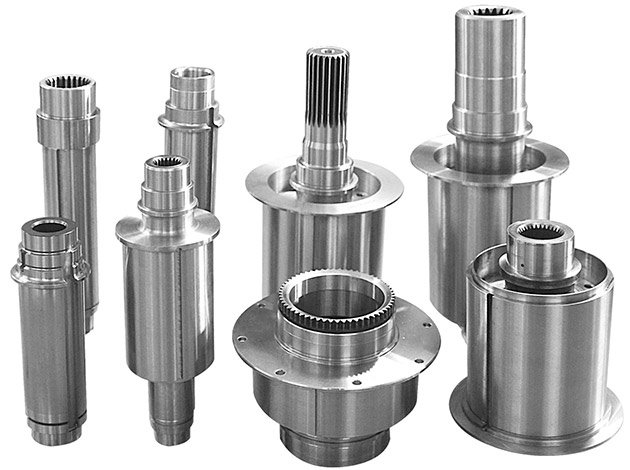
For complex prototypes, 3-axis CNC may be sufficient for planar faces and standard holes, while 4-axis or 5-axis machining can reduce setups and improve positional accuracy across angled surfaces. EDM can create fine internal profiles or hard-material features that are difficult to mill. Precision grinding can improve flatness, roundness, and surface finish on shafts, sleeves, ceramic parts, and wear components. Industrial ceramics add another dimension for high-temperature, chemical, insulating, or wear-resistant applications, though they require specialized grinding and process knowledge.
Inspection closes the technical loop. Coordinate measuring machines, optical inspection, surface roughness measurement, thread gauges, pressure testing, and material certification help determine whether the prototype is merely visually acceptable or truly function-ready. The best rapid prototyping programs treat inspection data as engineering feedback, not just a quality gate. When measurement results are reviewed early, the design can be adjusted for cost, repeatability, and production stability.
The ODM & Supply Chain Advantage
Hybrid prototyping becomes significantly more valuable when it is connected to an integrated supply chain. A prototype made by one supplier, modified by another, inspected by a third, and then reinterpreted by a production vendor can create delays, data gaps, and responsibility conflicts. For OEMs and Tier 1 suppliers under schedule pressure, fragmentation is expensive. A supply chain integrator and ODM solution provider can reduce that friction by coordinating design review, material sourcing, machining, finishing, inspection, and production planning under one controlled system.
IndustryApex Technology operates as more than a machining vendor. As IndustryApex CNC, our role is to help customers connect engineering intent with manufacturable execution. With over 30 years of precision manufacturing experience and a fully controlled manufacturing system supported by ERP management, we help customers move from rapid prototype to pilot run and scalable production with better visibility. ERP control supports scheduling, material traceability, process routing, order management, and production coordination, which are critical when programs include multiple part numbers, design revisions, and supplier deadlines.
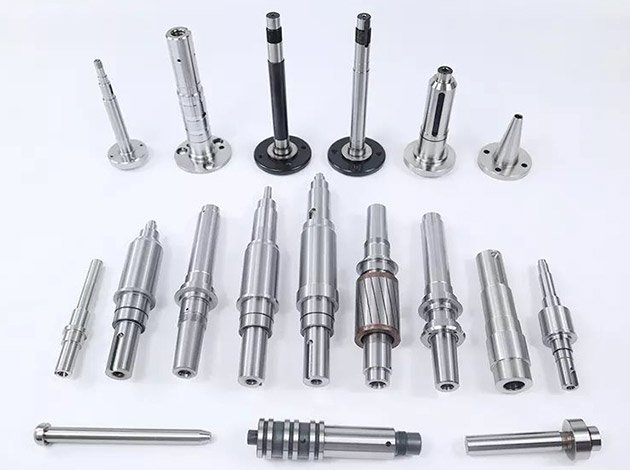
Our manufacturing edge includes 3-axis to 5-axis CNC machining, EDM, precision grinding, industrial ceramics processing, and experience with complex metal and non-metal components. This capability mix is important because hybrid prototyping rarely fits into one process category. A prototype housing may require 5-axis machining after additive preforming. A valve component may need tight cylindrical grinding after milling. A ceramic insulator may require specialized grinding rather than conventional cutting. A titanium medical prototype may require controlled machining, finishing, and documentation before customer testing.
For global OEMs, the ODM advantage also includes early manufacturability support. When we review a prototype design, we are not only asking whether one sample can be made. We are asking whether the part can be manufactured consistently at the next stage. Can the tolerance be held repeatedly? Is the material commercially stable? Does the feature require a costly special tool? Can inspection access be maintained? Will the design create burrs in a critical location? Can a fixture be reused for pilot production? These questions protect the customer from late-stage redesign.
Supply chain integration also improves purchasing decisions. In a traditional development path, sourcing teams may compare prototype quotes without understanding hidden downstream costs. A lower prototype price may become expensive if it requires redesign, secondary rework, special inspection, or a new supplier for production. A technically informed ODM partner helps evaluate total development cost, including lead time, risk, qualification effort, and production transfer. This is especially important for industries where parts must meet strict performance or regulatory expectations.
For customers managing international programs, communication discipline matters. Clear drawings, revision control, material specifications, tolerance priorities, and inspection reporting reduce ambiguity. An integrated partner can help translate engineering requirements into process steps that manufacturing teams can execute reliably. This is where experience becomes practical: not as a slogan, but as fewer misunderstandings, better process planning, and more predictable delivery.
Industry Applications
The strongest use cases for integrating 3D printing with CNC machining appear in industries where geometry, speed, and precision all matter. Aerospace is a clear example. Lightweight brackets, ducting concepts, structural fittings, sensor housings, and titanium components may benefit from additive concept development followed by CNC finishing of datums, fastener holes, and mating surfaces. For programs involving aircraft structural components or titanium parts, precision and documentation are not optional. IndustryApex Technology supports customers requiring aerospace CNC machining and 5-axis aerospace parts where repeatability and careful process control are essential.
Medical device development also benefits from this integrated approach. Surgical instruments, trial components, implant prototypes, diagnostic equipment parts, and fluid-contact components often require rapid iteration before final validation. 3D printing can help evaluate ergonomics, anatomical fit, or assembly geometry, while CNC machining provides accurate threads, polished surfaces, titanium features, and production-relevant tolerances. For regulated applications, prototype quality must support meaningful testing. Our experience with ISO certified CNC machining for medical components helps customers bridge early development and controlled manufacturing expectations.

Hydraulics and pump systems are another practical application area. Printed flow prototypes can help engineers visualize and test channel concepts, but final functional prototypes often require machined sealing lands, spool bores, threaded ports, precision sleeves, and wear-resistant surfaces. Pressure, leakage, surface finish, and concentricity requirements demand subtractive accuracy. For fluid power customers, IndustryApex Technology manufactures hydraulic pump parts and related components where controlled machining and inspection directly influence system reliability.
Automation equipment and industrial machinery programs use hybrid prototyping to improve fixtures, grippers, end-effectors, sensor mounts, gear housings, and motion components. Additive manufacturing can rapidly produce lightweight or complex forms, while CNC machining creates accurate mounting interfaces and repeatable alignment. This is valuable for machine builders and Tier 1 suppliers who need to test mechanical concepts without waiting for full tooling packages.
Precision optics, semiconductor equipment, and energy systems also benefit from mixed-process development. Optical mounts may require lightweight printed structures with machined reference faces. Semiconductor tooling may require stable materials, clean geometry, and tight flatness. Energy components may require corrosion resistance, thermal performance, or high-pressure capability. In these cases, a hybrid approach lets engineering teams explore advanced geometry while preserving the precision needed for functional validation.
One of the most important lessons across industries is that hybrid prototyping should be planned according to test purpose. A visual prototype, assembly prototype, performance prototype, and qualification prototype do not need the same process route. The more demanding the test, the more the prototype should resemble production material, tolerance, and surface condition. Using the right level of fidelity at each stage helps control cost without compromising decision quality.
Call to Action
Integrating 3D printing with traditional CNC machining is not a trend; it is a practical engineering response to faster product cycles and higher performance expectations. Additive manufacturing gives teams speed and design freedom. CNC machining, EDM, precision grinding, and controlled inspection bring the accuracy, material confidence, and repeatability needed for real-world validation. When these capabilities are managed by an experienced ODM and supply chain partner, rapid prototyping becomes more than a fast sample service. It becomes a disciplined bridge from concept to production.
IndustryApex Technology helps global OEMs and Tier 1 suppliers develop prototypes that are easier to test, easier to source, and easier to scale. Whether your project involves aerospace titanium parts, medical components, hydraulic systems, industrial ceramics, precision shafts, structural components, or complex multi-process assemblies, our team can support early manufacturability review and controlled production planning.
To discuss a rapid prototyping or CNC production project, contact IndustryApex Technology. Share your drawings, material requirements, target tolerance, expected testing conditions, and production goals, and our engineering team will help identify the most efficient route from prototype to reliable manufacturing.