- Shaft
- Molds&Tools
- Hydraulics And Pump
- Hair transplant needle
- Hydraulics And Pump
- Precision CNC Shaft Machining Manufacturer for High Performance Applications
- Energy Industry CNC Machining Parts Supplier
- Aerospace CNC Machining Parts Manufacturer
- Aerospace CNC Machining Parts Manufacturer
- Automotive & EV CNC Machining Parts Supplier for OEM and Tier 1
- Medical CNC Machining Parts Supplier for Precision Medical Devices

How ERP Systems Ensure Quality Control in CNC Mass Production

Executive Summary
In CNC mass production, quality control is no longer a final inspection activity. For global OEMs and Tier 1 suppliers, it must be embedded into every production decision: material purchasing, process planning, machine scheduling, tool life management, in-process inspection, nonconformance handling, shipment documentation, and long-term traceability. This is where ERP systems become a strategic manufacturing infrastructure rather than a back-office accounting tool.
An ERP system connects engineering, procurement, production, quality, inventory, and logistics into one controlled data environment. When implemented correctly, it gives manufacturers the ability to convert customer specifications into controlled work orders, monitor each manufacturing step, prevent the use of incorrect materials or outdated drawings, and capture quality records that support audits, corrective actions, and continuous improvement. In high-volume CNC production, that integration directly affects scrap rate, delivery stability, and customer confidence.
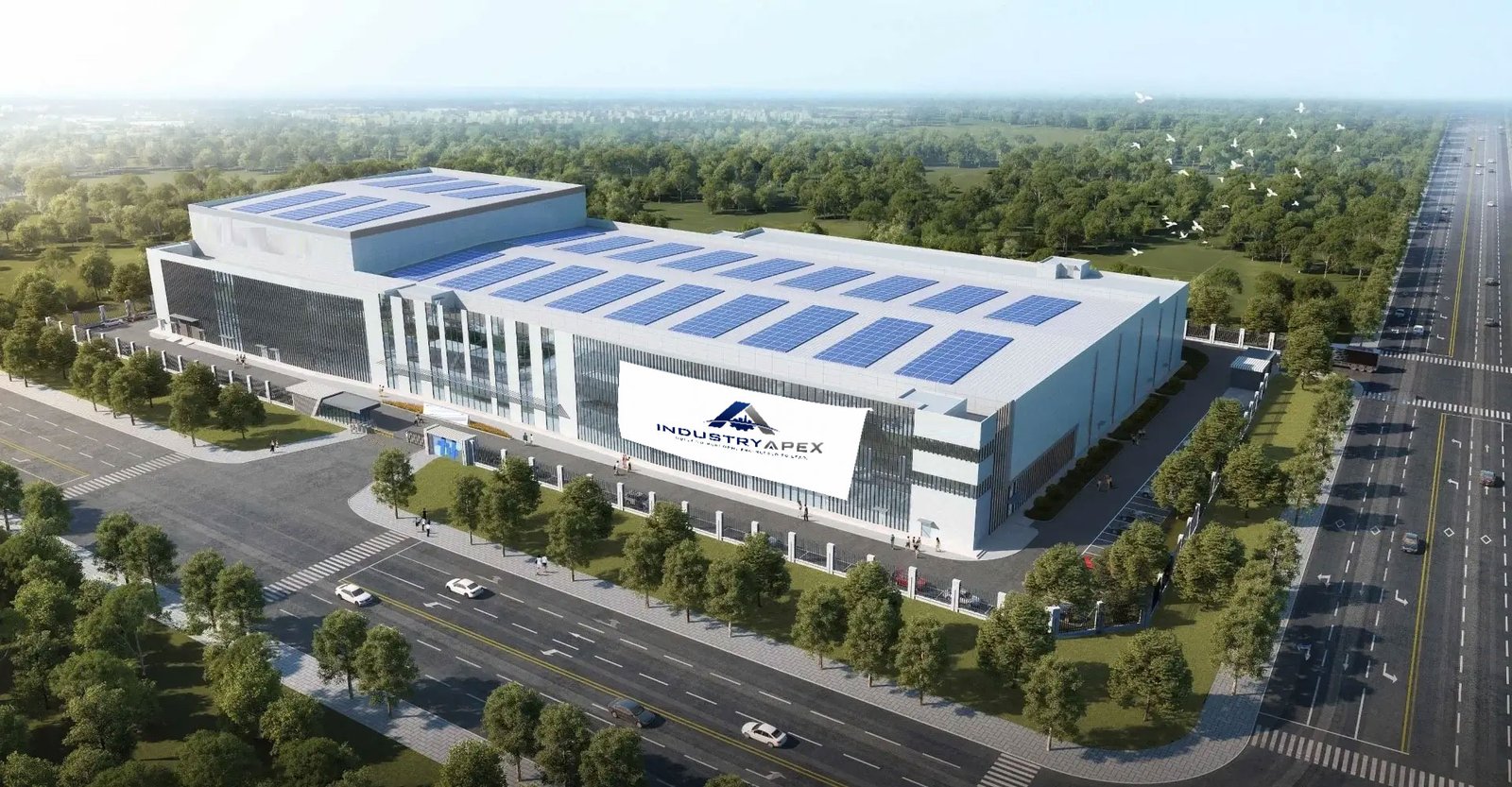
At IndustryApex Technology, operating as IndustryApex CNC, ERP-enabled manufacturing control is part of a broader precision production system. For over 30 years, we have supported demanding industrial customers with CNC machining, EDM, precision grinding, industrial ceramics, and 3-5 axis machining capabilities. Our role is not only to machine parts, but to integrate the supply chain, engineering requirements, process discipline, and quality documentation needed for scalable production.
This article explains how ERP systems ensure quality control in CNC mass production, why ERP is especially important for complex engineered components, and how the right manufacturing partner can use ERP data to reduce supply chain risk for global buyers.
Technical Deep Dive
CNC mass production depends on repeatability. A qualified first article is only meaningful if the production system can reproduce the same result across hundreds, thousands, or millions of parts. ERP systems support this requirement by creating a digital control framework around the entire manufacturing route.
The quality process typically begins before material reaches the factory floor. In an ERP-controlled environment, approved supplier lists, material specifications, purchase orders, heat numbers, certificates of conformity, and incoming inspection requirements are all connected. If a customer specifies 7075 aluminum, 316L stainless steel, titanium alloy, tool steel, engineering plastic, or industrial ceramic material, the ERP system helps ensure that purchasing, warehouse receiving, and production all reference the same approved specification. This reduces the risk of wrong-material production, one of the most costly errors in CNC manufacturing.
Once material is received, ERP links inventory batches to production orders. This batch traceability is essential for industries such as aerospace, medical devices, hydraulics, semiconductor equipment, and industrial automation. If a dimensional issue or material concern is discovered later, the manufacturer can identify exactly which batch, machine route, inspection record, and shipment were involved. Without ERP traceability, teams often rely on spreadsheets, paper travelers, and manual memory, which can become unreliable under production pressure.
ERP also controls the relationship between engineering data and manufacturing execution. A CNC part may involve CAD drawings, 3D models, revision histories, process sheets, inspection plans, tooling lists, fixture instructions, surface treatment requirements, and packaging standards. When these documents are managed outside an integrated system, operators may accidentally use obsolete drawings or incomplete process instructions. ERP reduces this risk by linking the active revision to the work order and routing. For parts with tight tolerances, complex geometry, or critical surfaces, this digital discipline is as important as machine accuracy.
During production, ERP systems help standardize process routing. A typical precision component may move through rough CNC milling, turning, heat treatment, semi-finishing, EDM, grinding, deburring, surface treatment, final inspection, cleaning, and packaging. Each step may have defined parameters, required checks, and acceptance criteria. ERP gives production planners and quality engineers a shared view of where the part is, what step is next, and what quality gate must be completed before release.
For mass production, one of the most valuable ERP functions is in-process quality control. Instead of waiting until final inspection, quality checkpoints can be embedded after critical operations. For example, a bore diameter may be checked after rough machining to confirm stock allowance before grinding. A flatness requirement may be verified before surface treatment. A thread, spline, valve spool diameter, or sealing surface may be inspected before the part advances to assembly or finishing. ERP records these checkpoints and prevents uncontrolled movement when inspection is incomplete or failed.
Tool management is another major quality factor. CNC accuracy depends not only on the machine tool but also on cutter wear, tool offset control, clamping stability, coolant condition, and process consistency. ERP can connect production quantities with tool life rules and maintenance schedules. When a cutting tool has reached a defined usage threshold, the system can prompt replacement or review. This reduces gradual drift, which is a common source of dimensional variation in long production runs.
ERP systems also improve nonconformance management. When a defect is found, the issue can be recorded against the work order, part number, operation, operator, machine, tool, material batch, and inspection result. Quality engineers can classify the nonconformance, decide whether to scrap, rework, sort, or request concession, and initiate corrective action. Over time, this data becomes a powerful improvement resource. Instead of debating isolated defects, teams can identify patterns: recurring burr issues after a specific operation, dimensional drift on a certain machine, supplier-related material variation, or packaging damage linked to a particular shipment method.
For customers, the most visible result is documentation. ERP-controlled production can generate inspection reports, material traceability, process records, shipment data, and quality history more efficiently. This is especially valuable when customers require PPAP-style documentation, first article inspection, serial number traceability, certificate packages, or audit support. The manufacturer’s ability to retrieve accurate records quickly is often as important as the records themselves.
The ODM & Supply Chain Advantage
ERP quality control becomes even more powerful when the supplier is not only a machining vendor, but also a supply chain integrator and ODM solution provider. In this role, the manufacturer supports customers from part development through production scaling, supplier coordination, quality validation, and delivery management. For global OEMs and Tier 1 suppliers, this reduces the burden of managing multiple specialized vendors across machining, grinding, EDM, ceramics, finishing, inspection, and logistics.
IndustryApex Technology’s manufacturing edge comes from a fully controlled precision manufacturing system supported by ERP and more than 30 years of experience. This matters because mass production quality is built through alignment. Engineering intent must align with manufacturing process design. Procurement must align with material and supplier requirements. Production scheduling must align with capacity and delivery commitments. Inspection must align with the drawing’s critical-to-quality features. ERP provides the digital structure that keeps these decisions connected.
As an ODM solution provider, we frequently support components that require more than standard CNC machining. Our capabilities include 3-5 axis CNC machining, EDM, precision grinding, and industrial ceramics. This combination allows us to build process routes around the actual performance requirements of the part. A complex structural component may need 5-axis machining for geometric accuracy. A wear-resistant component may require carbide, ceramic, or precision-ground surfaces. A pump or valve component may require micron-level fits, surface finish control, and consistent roundness. ERP helps coordinate these multi-process requirements so quality is managed across the full production route, not only at one machine.
The supply chain advantage is also important for cost control. In CNC mass production, quality problems often create hidden costs beyond scrap: urgent rework, expedited freight, production line stoppages, customer sorting, supplier meetings, and delayed launches. ERP reduces these risks by making production status and quality status visible earlier. When a material delay, capacity conflict, tool issue, or inspection failure appears, the system gives managers the information needed to respond before the problem reaches the customer.
For international buyers, ERP-supported transparency also improves communication. Customers need reliable answers to practical questions: Has the material arrived? Which revision is being produced? Is first article inspection complete? How many parts passed? Which operation is currently running? Are there open quality issues? When will the order ship? An integrated ERP environment allows account managers, engineers, planners, and quality teams to work from the same data instead of sending fragmented updates from different spreadsheets.
This is especially valuable for customers outsourcing high-mix or high-precision components. A buyer may be sourcing aerospace brackets, medical device parts, hydraulic valve spools, optical equipment components, ceramic insulators, transmission shafts, impellers, or precision mold parts at the same time. Each product family may have different tolerances, materials, documentation requirements, and risk profiles. ERP allows the supplier to manage this complexity systematically.
Industry Applications
ERP-based quality control applies across many industries, but its value becomes most visible when parts are complex, regulated, safety-related, or difficult to replace in the field.
In aerospace manufacturing, traceability and process control are fundamental. Components may require titanium, aluminum, stainless steel, or high-strength alloys, with strict dimensional tolerances and documented inspection. ERP helps manage material certificates, revision control, first article inspection, and process routing for aerospace CNC machining and aircraft structural components. For these applications, quality control is not only about meeting a drawing; it is about proving that every part was produced under controlled conditions.
In medical manufacturing, quality requirements focus on biocompatible materials, clean surfaces, precision features, and stable documentation. Titanium implants, surgical instruments, and device components may require strict dimensional verification and careful handling. ERP helps ensure that ISO-certified CNC machining for medical components remains traceable from material receipt through final inspection and packaging. When production records are structured correctly, audits and customer quality reviews become more efficient.
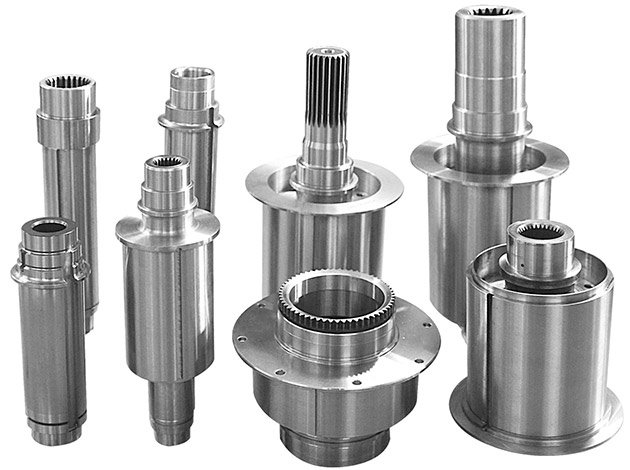
In hydraulic and pump applications, dimensional consistency directly affects sealing, pressure stability, flow control, noise, and service life. Valve spools, sleeves, pistons, pump shafts, housings, and precision bores require accurate geometry and surface finish. ERP supports control of process sequences such as turning, grinding, honing, deburring, cleaning, and final measurement. For hydraulic pump parts, even small process variation can influence leakage or wear performance, so integrated production and inspection records are essential.
In semiconductor equipment and optics-related applications, ERP supports high-precision, low-contamination, and complex geometry requirements. Components may involve aluminum, stainless steel, ceramics, sapphire, carbide, or engineered plastics. Process control must address not only size, but also flatness, surface finish, cleanliness, and stability under operating conditions. ERP helps coordinate machining, grinding, inspection, and cleaning requirements so that each batch follows the approved route.
In automotive, energy, industrial machinery, and automation systems, ERP helps suppliers scale production while controlling cost and variation. High-volume shafts, gears, housings, brackets, tooling components, and motion-control parts depend on stable cycle times and predictable inspection results. ERP data allows teams to measure yield, identify bottlenecks, compare machines, and improve the production plan over time.
The common thread across these industries is risk reduction. A strong ERP system does not replace experienced engineers, skilled machinists, or advanced inspection equipment. Instead, it connects them. It ensures that their decisions, measurements, and actions become part of a controlled manufacturing record. In mass production, that connected record is what turns technical capability into repeatable customer value.
Call to Action
For OEMs and Tier 1 suppliers, selecting a CNC manufacturing partner should involve more than comparing machine lists and unit prices. The real question is whether the supplier can control quality across the full production lifecycle: engineering review, material sourcing, process planning, machining, secondary operations, inspection, documentation, and delivery.
IndustryApex Technology, through IndustryApex CNC, combines ERP-supported manufacturing control with deep precision machining experience. Our capabilities in 3-5 axis CNC machining, EDM, precision grinding, and industrial ceramics allow us to support demanding components from prototype validation to mass production. As a supply chain integrator and ODM solution provider, we help customers reduce sourcing complexity while improving quality visibility.
If your team is developing high-precision CNC parts, scaling production, or looking for a more controlled supply chain partner, contact IndustryApex Technology to discuss your drawings, material requirements, tolerance targets, annual volume, and documentation needs. A stronger ERP-driven manufacturing system can help turn complex CNC production into a stable, auditable, and globally competitive supply chain advantage.