- Shaft
- Molds&Tools
- Hydraulics And Pump
- Hair transplant needle
- Hydraulics And Pump
- Precision CNC Shaft Machining Manufacturer for High Performance Applications
- Energy Industry CNC Machining Parts Supplier
- Aerospace CNC Machining Parts Manufacturer
- Aerospace CNC Machining Parts Manufacturer
- Automotive & EV CNC Machining Parts Supplier for OEM and Tier 1
- Medical CNC Machining Parts Supplier for Precision Medical Devices

The Future of Robotics Components: Micron-Level Precision in 2026

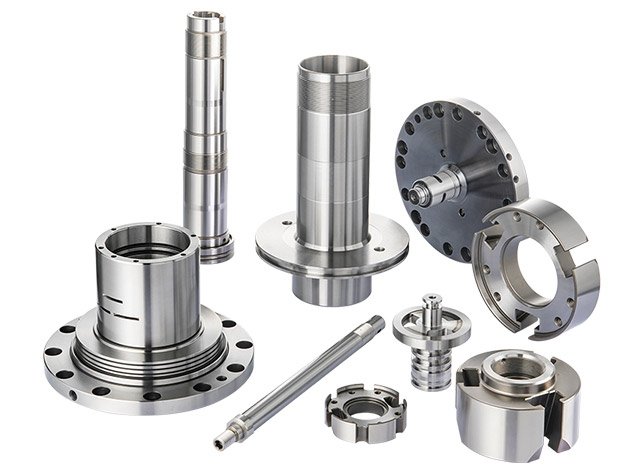
The Future of Robotics Components: Micron-Level Precision in 2026
As robotics moves from programmed automation into adaptive, sensor-rich, AI-assisted production, the tolerance stack inside every actuator, joint, end effector, pump, gearbox, and structural module is becoming a strategic supply chain issue. In 2026, micron-level precision is no longer reserved for laboratory motion stages or aerospace assemblies. It is becoming a baseline expectation for global OEMs and Tier 1 suppliers building collaborative robots, humanoid platforms, surgical robots, autonomous inspection systems, warehouse automation, and high-speed industrial handling equipment.
Executive Summary
The robotics industry is entering a period where mechanical precision directly determines software performance. Motion control algorithms can compensate for predictable error, but they cannot fully overcome inconsistent bearing seats, thermal drift, poor concentricity, unstable gear geometry, variable surface finish, or weak material traceability. As robots become lighter, faster, safer, and more compact, component quality must shift from conventional machining accuracy to controlled manufacturing at the micron level.
For procurement and engineering leaders, the key challenge is not simply finding a supplier that can machine a tight feature on a drawing. The real requirement is a manufacturing partner that can repeatedly control geometry, material behavior, process documentation, inspection data, and delivery reliability across production batches. This is where IndustryApex Technology, operating through the IndustryApex CNC platform at IndustryApex CNC, positions itself as a precision manufacturing and ODM partner for high-value robotics programs.
In 2026, robotics component sourcing will be shaped by five forces: demand for compact high-torque motion systems, the rise of precision ceramic and hardened alloy components, tighter integration between mechanical and electronic modules, stronger expectations for supplier transparency, and risk reduction across global supply chains. Components that once appeared secondary, including shaft sleeves, valve spools, miniature housings, pump elements, splines, precision pins, ceramic guides, and structural brackets, now influence system accuracy, noise, heat generation, service life, and safety certification.
The winning suppliers will combine 3-axis to 5-axis CNC machining, EDM, precision grinding, ceramic processing, metrology discipline, ERP-controlled production, and engineering support. Robotics OEMs will increasingly prefer supply chain integrators that can support manufacturability, material selection, prototyping, process stability, and scalable production under one controlled system.
Technical Deep Dive
Micron-level precision in robotics is not a marketing phrase. It is an engineering requirement driven by the interaction of motion, load, friction, heat, and feedback control. A robotic joint may include a motor rotor, harmonic reducer, cross-roller bearing, encoder ring, brake element, housing, shaft, and fastening structure. If each component carries only a small deviation, the complete assembly may show backlash, vibration, positioning error, or accelerated wear. In high-duty applications, these errors grow under thermal cycling and dynamic load.
The first critical dimension is geometric accuracy. Robotic motion systems often require concentricity, cylindricity, flatness, perpendicularity, and true position control beyond what general CNC suppliers can consistently maintain. A shaft for a compact actuator, for example, may need bearing journals, spline sections, retaining grooves, and threaded features to remain coaxial after heat treatment and grinding. A gear or transmission component may require precise tooth form, pitch accuracy, and surface finish to reduce vibration and acoustic noise. A valve spool inside a hydraulic or pneumatic robot subsystem may require extremely controlled roundness and surface integrity to maintain pressure response and leakage performance.
The second dimension is surface engineering. In precision robotics, surface finish is not cosmetic. It affects lubrication film stability, sealing performance, particle generation, wear life, and sensor repeatability. Ground surfaces, lapped ceramic features, EDM profiles, and polished sealing diameters all carry different functional implications. A rougher-than-specified surface on a sliding part may increase friction and heat. A surface that is visually acceptable but directionally inconsistent may generate unpredictable running-in behavior. In semiconductor handling robots, medical robots, and optical inspection systems, particle control and low-wear surfaces become especially important.
The third dimension is material behavior. Robotics components increasingly use a wider material mix: stainless steels, alloy steels, titanium, aluminum, engineering plastics, tungsten carbide, industrial ceramics, and specialty alloys. Each material responds differently to machining stress, heat treatment, grinding, EDM, and finishing. Titanium offers high strength-to-weight advantages for lightweight robot structures, but it requires disciplined cutting strategy and thermal control. Ceramics offer insulation, wear resistance, and dimensional stability, but they demand specialized grinding and handling. Hardened steels can provide durability in transmission and bearing-related parts, but distortion control becomes a major factor.
The fourth dimension is process capability. A prototype part produced once at impressive accuracy does not guarantee production capability. Robotics OEMs need evidence that a supplier can maintain Cpk, inspection repeatability, controlled tooling life, calibrated measurement systems, and traceable production records. This is why ERP-managed production, documented routing, inspection planning, and cross-process expertise matter. In a mature manufacturing system, precision is not achieved at final inspection; it is built into the process through fixture strategy, toolpath planning, machining sequence, controlled grinding allowance, thermal stabilization, and operator discipline.
Finally, there is a growing connection between mechanical precision and digital control. As robots integrate AI-based path planning, force feedback, vision systems, and real-time monitoring, the mechanical platform must provide predictable behavior. High-precision components reduce the burden on calibration routines and make robot performance more stable over the product life cycle. In 2026, the most competitive robotics platforms will be those where mechanical engineering and software intelligence reinforce each other rather than compensate for each other.
The ODM & Supply Chain Advantage
For global OEM and Tier 1 robotics suppliers, supplier selection is shifting from unit price comparison to total engineering and supply chain value. A robot platform may need dozens or hundreds of custom mechanical components, each with different materials, tolerances, finishing requirements, inspection methods, and lead-time pressures. Managing this through fragmented vendors increases communication cost, quality variation, and schedule risk. The more advanced approach is to work with a supply chain integrator and ODM solution provider that can coordinate development, manufacturing, inspection, and delivery inside a controlled system.
IndustryApex Technology serves this role by combining more than 30 years of manufacturing experience with a fully controlled precision manufacturing system supported by ERP. This structure matters because robotics programs rarely move in a straight line. Early-stage prototypes may reveal tolerance conflicts, material substitution needs, assembly issues, or cost challenges. A capable ODM partner can support design for manufacturability, recommend process routes, identify tolerance risks, and help convert a prototype concept into repeatable production.
The manufacturing edge comes from process breadth. IndustryApex Technology supports 3-axis to 5-axis CNC machining, EDM, precision grinding, and industrial ceramics manufacturing. These capabilities allow complex robotics parts to be produced with the right process sequence rather than forcing every geometry through one machining method. A lightweight 5-axis housing may need multi-face positional accuracy and thin-wall stability. A small hardened insert may require EDM followed by precision grinding. A ceramic guide or insulating component may require specialized grinding to maintain edge integrity. A pump or fluid control component may need matched surfaces and careful roundness control similar to the expertise used in hydraulic pump parts.
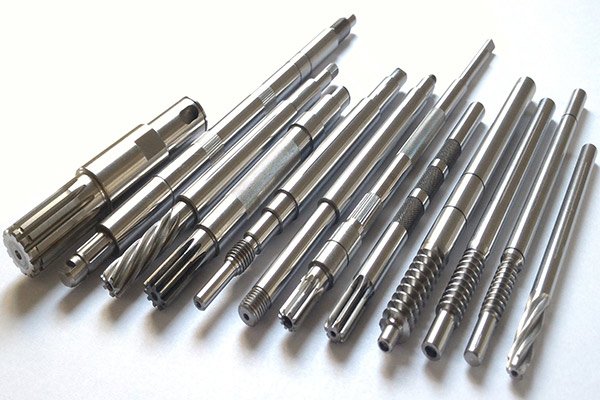
The ODM advantage is especially valuable when robotics components cross industry boundaries. Modern robots borrow requirements from aerospace, medical devices, semiconductor equipment, automotive automation, and precision fluid control. Aerospace-style lightweight structures and titanium components require process discipline similar to advanced aerospace CNC machining. Surgical and rehabilitation robots may need biocompatible materials, smooth surfaces, and documentation expectations aligned with ISO-certified CNC machining for medical components. Industrial robots with hydraulic, pneumatic, or lubrication subsystems demand sealing and flow-control precision. A broad manufacturing base helps engineering teams avoid preventable sourcing silos.
Supply chain resilience is another major factor for 2026. Robotics companies face volatile demand, model refresh cycles, geopolitical uncertainty, and increasing pressure to shorten development schedules. A supplier with ERP visibility, controlled routing, stable subcontractor management, and in-house precision capability can reduce the risk of late discovery problems. Instead of treating quality as a final gate, the supplier becomes part of the program architecture.
For purchasing teams, this changes the supplier scorecard. The strongest partner is not necessarily the shop with the lowest quotation on one drawing. It is the partner that can support revision control, pilot builds, inspection reports, batch consistency, cost-down engineering, and long-term production continuity. In robotics, where a small component failure can stop an entire automated cell, reliability has commercial value far beyond the component price.
Industry Applications
Robotics is not one market. It is a convergence of multiple industries, each with different precision priorities. In industrial automation, high-speed pick-and-place systems require lightweight arms, rigid frames, precision transmission components, and repeatable mounting interfaces. Even small deviations can affect cycle time, positioning accuracy, and maintenance intervals. Components such as splined shafts, bearing housings, gear sleeves, couplings, and structural plates must be engineered for both accuracy and endurance.
In collaborative robots, compact joint modules are central to product competitiveness. Cobots must be safe around people, which means smooth torque response, low vibration, reliable braking, and accurate force sensing. Precision-machined housings, shafts, encoder supports, and reducer interfaces help maintain stable motion while keeping the package compact. As cobots move into welding, polishing, packaging, inspection, and assembly, they will need stronger components without sacrificing sensitivity.
In humanoid robots and mobile manipulation platforms, weight reduction and energy efficiency are major constraints. Titanium, aluminum, high-strength steel, and ceramic components may all appear in different parts of the system. Micron-level manufacturing becomes important for compact actuators, miniature geartrains, sensor mounts, cooling systems, and joint structures. These platforms amplify the importance of supplier coordination because mechanical, electrical, and software teams must iterate quickly.

Medical robotics places a different emphasis on cleanliness, traceability, and surface condition. Surgical tools, drive elements, positioning systems, and diagnostic automation components may need stainless steel, titanium, ceramic, or specialized polymer parts with strict dimensional and finishing requirements. The manufacturing mindset is closer to regulated precision than general industrial machining. Suppliers serving this market must understand that consistency, documentation, and risk control are as important as the first article result.
Semiconductor and optical robotics demand another level of stability. Wafer handling robots, lens inspection systems, precision stages, and clean automation modules require low particle generation, dimensional stability, and careful material selection. Ceramic components, precision-ground surfaces, vacuum-compatible materials, and non-contaminating finishes can all become necessary. Here, micron-level control is essential because the robot often operates as part of a larger precision ecosystem.
Agricultural, construction, logistics, and heavy-duty service robots face harsher environments. Their precision requirements may be balanced against shock load, dirt, vibration, temperature, and duty cycle. Hydraulic valve components, pump elements, transmission parts, and reinforced structural components must survive real-world loading while maintaining function. For these applications, manufacturing quality determines not only accuracy but uptime and field service cost.
Across all these applications, the common thread is that robotics components are becoming more specialized. Standard catalog parts cannot solve every packaging, payload, stiffness, cleanliness, or life-cycle requirement. Custom precision manufacturing gives OEMs the freedom to design robots around performance rather than compromise around available hardware.
Call to Action
The future of robotics in 2026 will be decided by the companies that can connect intelligent control with mechanically stable, production-ready hardware. Micron-level precision is not only a machining achievement; it is a supply chain capability. It requires engineering communication, process control, metrology, material knowledge, and the ability to scale from prototype to repeatable production.
IndustryApex Technology helps global OEM and Tier 1 suppliers develop high-precision robotics components through a controlled manufacturing system that includes 3-axis to 5-axis CNC machining, EDM, precision grinding, industrial ceramics, ERP-managed production, and ODM support. Whether your project involves actuator components, structural parts, fluid control elements, shafts, sleeves, ceramic guides, titanium housings, or high-precision transmission parts, the right manufacturing partner can reduce risk before it reaches the assembly line.
To discuss your robotics component requirements, engineering drawings, prototype schedule, or supply chain strategy, contact the IndustryApex Technology team through IndustryApex CNC Contact Us. The robotics market is moving quickly, and the manufacturers that secure precision-capable supply partners now will be better prepared for the performance demands of 2026 and beyond.