- Shaft
- Molds&Tools
- Hydraulics And Pump
- Hair transplant needle
- Hydraulics And Pump
- Precision CNC Shaft Machining Manufacturer for High Performance Applications
- Energy Industry CNC Machining Parts Supplier
- Aerospace CNC Machining Parts Manufacturer
- Aerospace CNC Machining Parts Manufacturer
- Automotive & EV CNC Machining Parts Supplier for OEM and Tier 1
- Medical CNC Machining Parts Supplier for Precision Medical Devices

Custom Gear Manufacturing: Engineering Prototypes, Validating Performance, and Scaling to Mass Production

Executive Summary
Custom gear manufacturing is no longer a narrow machining service. For global OEMs and Tier 1 suppliers, it has become a strategic engineering and supply chain discipline that connects product design, material selection, process control, inspection strategy, and production scalability. Whether the application is an aerospace actuator, a medical device drive module, a hydraulic pump, a robotics transmission, or an industrial gearbox, the gear is often a small component carrying a large portion of the system risk.
A gear program typically begins with a performance requirement rather than a finished drawing: torque density, backlash, noise, wear life, operating temperature, lubrication condition, corrosion exposure, assembly envelope, and target cost. The manufacturing partner must translate those requirements into practical decisions about gear geometry, material, heat treatment, blank preparation, tooth cutting, grinding, surface finishing, metrology, and production flow. A weak decision in the prototype stage can quietly become a major cost driver when the program reaches volume production.
At IndustryApex Technology, operating through IndustryApex CNC, we view custom gear manufacturing as an integrated lifecycle process. The goal is not simply to make a gear that matches a drawing. The goal is to help customers move from concept and low-volume validation to stable, repeatable, and cost-controlled mass production. With more than 30 years of precision manufacturing experience, controlled production systems, ERP-supported order management, and capabilities across 3-5 axis CNC machining, EDM, precision grinding, and industrial ceramics, IndustryApex Technology supports demanding programs where dimensional stability, traceability, and supply continuity matter.
This article examines the engineering and supply chain logic behind custom gear manufacturing, with a focus on how prototypes are developed, how manufacturability is validated, and how production systems are prepared for scale. It is written for sourcing managers, mechanical engineers, product development teams, and manufacturing leaders who need a reliable path from the first sample to recurring production.
Technical Deep Dive
The starting point for any custom gear project is the functional requirement. A spur gear in a packaging machine, a worm gear in a compact reducer, a splined gear shaft in an actuator, and a precision gear used in aerospace motion control may all appear similar at a distance, but they place very different demands on the manufacturing process. The engineer must define the gear type, module or diametral pitch, pressure angle, helix angle, face width, bore condition, keyway or spline interface, tooth flank finish, and tolerance class. Just as important, the team must understand how the gear will be assembled and loaded in the final mechanism.
Material choice is one of the first major technical decisions. Carbon steels and alloy steels are widely used where strength and fatigue resistance are required. Stainless steels may be selected for corrosion resistance, cleanability, or specific regulatory environments. Bronze and brass can be useful for worm gear pairs or lower-friction applications. Engineering plastics may be appropriate for low-noise, lightweight, or lubrication-sensitive systems. In high-temperature, abrasive, electrical insulation, or chemically aggressive environments, industrial ceramic materials may become relevant. Each material changes the manufacturing plan, including cutting speeds, blank distortion risk, heat treatment response, grinding allowance, and inspection method.
For high-load gears, heat treatment is often central to performance. Carburizing, nitriding, induction hardening, through hardening, and other processes can improve wear resistance and fatigue strength, but they also introduce distortion. A prototype that ignores distortion control can pass early fit checks and still fail at scale when cumulative variation appears across batches. A robust manufacturing plan accounts for stock allowance, pre-heat-treatment machining, post-heat-treatment grinding, and final inspection. The aim is to control both the tooth geometry and the functional interfaces such as bores, shoulders, journals, splines, and mounting faces.
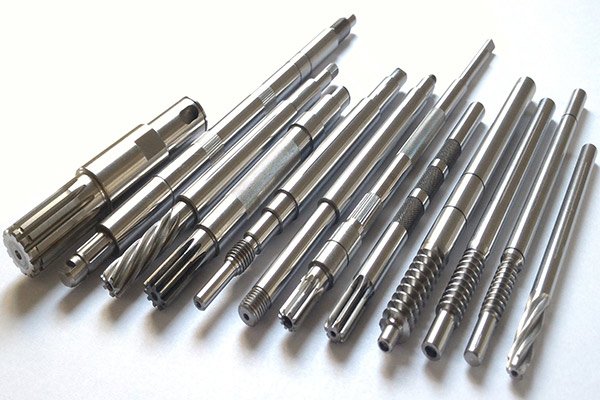
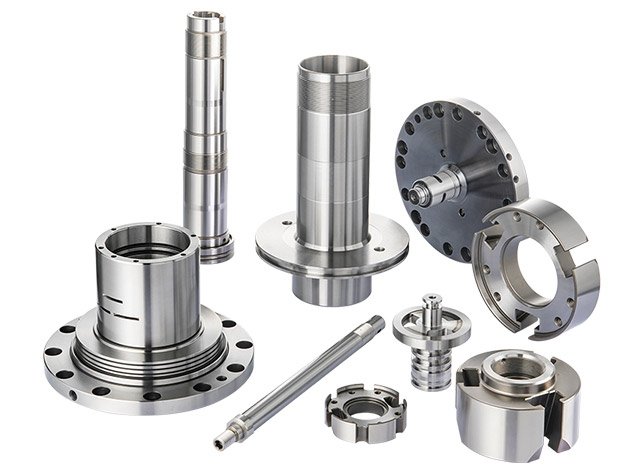
Gear tooth generation may involve hobbing, shaping, milling, broaching, wire EDM, or grinding depending on geometry and volume. For prototypes and complex custom profiles, 3-axis and 5-axis CNC machining can shorten lead time because special tooling may not be required for every iteration. EDM can support tight internal features, difficult materials, or profiles that are challenging to produce with conventional cutting tools. Precision grinding becomes critical when tooth flank accuracy, runout, surface finish, and noise behavior are tightly specified. In many projects, the final gear is not only a toothed wheel but a multi-feature precision component that includes shafts, grooves, threads, bearing seats, lubrication features, and assembly datums.
Backlash, runout, concentricity, profile error, lead error, pitch deviation, surface roughness, and hardness all influence final system performance. Noise, vibration, and harshness issues are frequently traced to small variations in tooth form or assembly alignment. In high-precision applications, inspection cannot be treated as a final sorting step. It must be built into the manufacturing route. First-article inspection, in-process measurement, coordinate measuring machine verification, gear measuring center reports, surface roughness testing, hardness testing, and material certificates may all be needed depending on the application and customer requirements.
Prototyping should therefore answer more than one question. It should confirm whether the design works, whether the selected process can hold the required tolerances, whether the material behaves predictably, and whether the cost model is realistic for future production. A good prototype program documents tool paths, cutting conditions, inspection results, nonconformities, rework causes, and operator feedback. This information becomes the foundation for process optimization before mass production begins.
The ODM & Supply Chain Advantage
Many buyers approach gear manufacturing as a quotation exercise: send a drawing, receive a unit price, compare suppliers, and place an order. That approach can work for simple commodity parts, but it is risky for custom gear programs where engineering decisions, supplier coordination, and production stability are tightly linked. A more resilient approach is to work with a manufacturing partner that can act as both a supply chain integrator and an ODM solution provider.
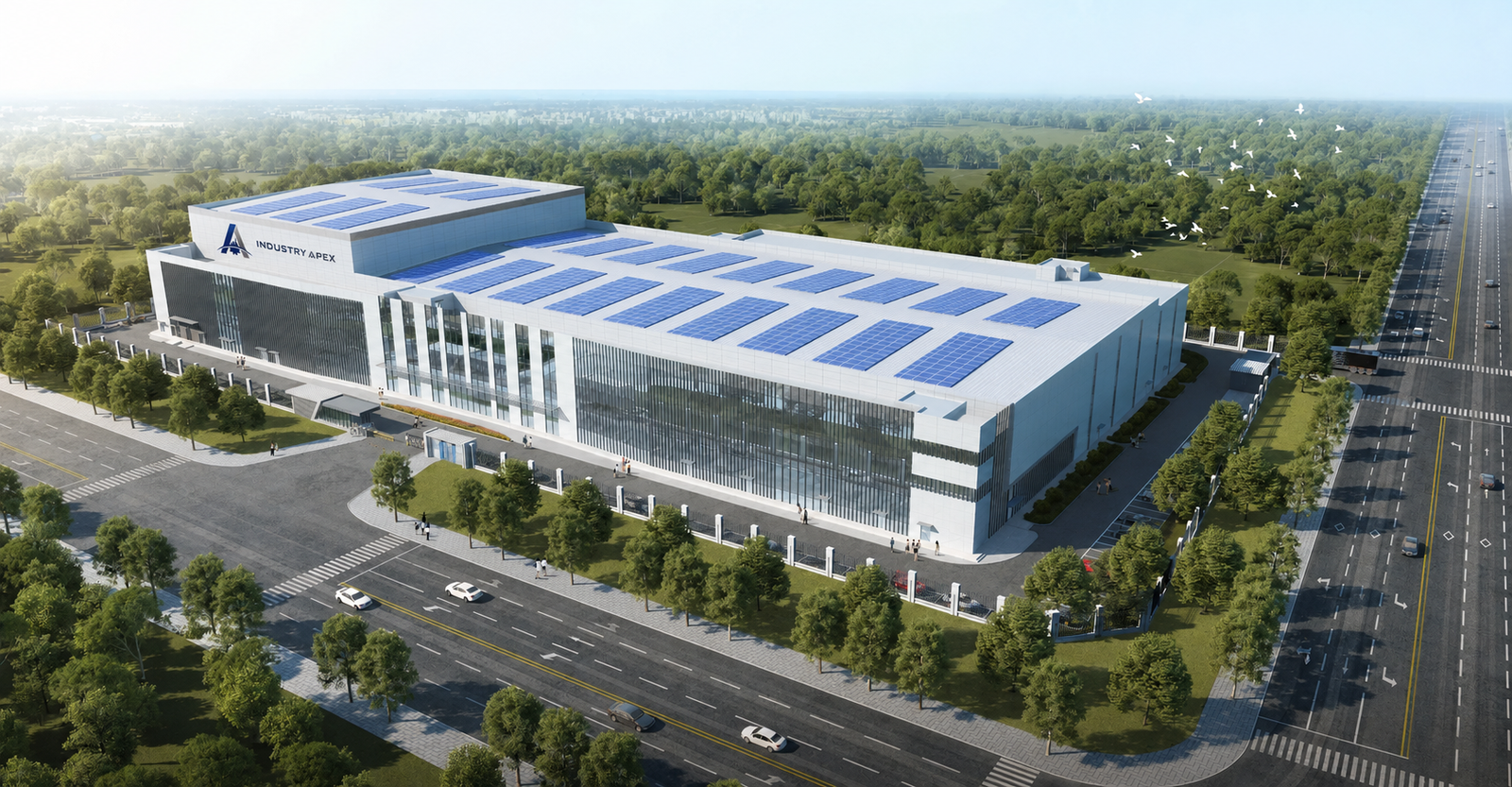
IndustryApex Technology’s core identity is built around that model. We support customers not only with machining capacity, but with manufacturing planning, design-for-manufacturing feedback, process selection, sourcing coordination, inspection strategy, and production continuity. For global OEM and Tier 1 suppliers, this is especially valuable when a gear component is part of a larger assembly or when the final program must meet strict delivery, documentation, and quality requirements.
The transition from prototype to mass production is where many gear programs become difficult. A prototype may be made by an expert machinist using extra time, manual adjustment, and special attention. Mass production requires something different: repeatable routing, controlled workholding, stable tooling, trained operators, ERP visibility, inspection frequency planning, lot traceability, and reliable upstream material supply. Without this structure, quality becomes dependent on individual effort rather than system capability.
IndustryApex Technology’s manufacturing edge comes from a fully controlled precision manufacturing system supported by ERP and more than 30 years of industry experience. ERP control is not just administrative convenience. It helps align purchasing, production scheduling, material batches, process status, inspection records, and delivery commitments. For customers managing multi-region supply chains, that visibility reduces uncertainty and improves planning confidence.
Our technical capabilities include 3-5 axis CNC machining, EDM, precision grinding, and industrial ceramics. This breadth matters because custom gear manufacturing frequently involves more than tooth cutting alone. A gear shaft may need precision journals and splines. A pump gear may need tight side-face grinding and controlled surface finish. A compact actuator gear may require difficult internal features. A specialized mechanism may require ceramic wear components or electrically insulating elements. Having these capabilities within a coordinated manufacturing system reduces handoff friction and improves accountability.
As an ODM solution provider, IndustryApex Technology can also help customers refine the component before it reaches production lock. This may include recommending a more machinable material, adjusting a tolerance that is expensive but not functionally necessary, changing a feature to improve workholding, modifying heat treatment allowance, or improving inspection datum strategy. These changes are not cosmetic. They can reduce scrap, shorten lead time, stabilize quality, and improve total landed cost.
Supply chain integration also becomes critical when secondary processes are involved. Gear manufacturing may require certified raw material, heat treatment, coating, black oxide, passivation, plating, deburring, laser marking, cleaning, packaging, and export documentation. A single weak link can delay the entire program. By coordinating these requirements through an experienced manufacturing partner, buyers gain a more controlled path from engineering release to recurring delivery.
Industry Applications
Custom gears are used across industries, but the performance priorities vary widely. In aerospace systems, gears may be used in actuators, control mechanisms, seat systems, fuel systems, landing gear equipment, and structural motion assemblies. These applications often require lightweight design, high reliability, tight documentation, and advanced materials. IndustryApex Technology supports precision manufacturing for aerospace CNC machining and aircraft structural components, where process discipline and repeatability are essential.
Medical and life science equipment may require miniature gears, stainless steel drive parts, titanium components, surgical instrument mechanisms, diagnostic device parts, or cleanable motion systems. The manufacturing focus often includes burr control, surface finish, biocompatible material considerations, tight dimensional tolerances, and consistent documentation. For customers developing healthcare systems, IndustryApex Technology provides ISO-certified CNC machining for medical components, including high-precision device parts and surgical instrument components.
Hydraulic pumps and fluid power systems place different demands on gears. Pump gears must manage pressure, lubrication, wear, leakage control, and dimensional consistency across side faces, tooth profiles, bores, and shafts. Small deviations can affect volumetric efficiency, noise, and service life. IndustryApex Technology’s experience with hydraulic pump parts is relevant for customers who need gears and related components that operate reliably in demanding fluid control environments.
Automotive and mobility programs require a balance of engineering performance and scalable cost. Gears may be found in drivetrain systems, steering components, electric vehicle auxiliary systems, seat adjusters, braking modules, and automated mechanisms. The challenge is not only to meet the tolerance requirement, but to do so at a repeatable production cost. Tool life, cycle time, inspection automation, and process capability become central purchasing factors.
Industrial automation, robotics, and machinery builders often require custom gear sets for compact transmissions, indexing systems, servo-driven modules, and high-duty-cycle mechanisms. Here, backlash control, torque transmission, wear behavior, and maintenance expectations are key. In some cases, low-volume production is ongoing rather than temporary, so the supplier must be flexible enough to support batches without forcing customers into tooling or inventory commitments that do not match demand.
Energy, packaging, agricultural machinery, construction equipment, and semiconductor equipment also use custom gears and transmission components. In these markets, the gear may be exposed to dust, vibration, shock loads, cleaning chemicals, thermal cycling, or continuous operation. A strong manufacturing partner helps customers match process choices to real operating conditions rather than relying only on nominal CAD geometry.
Call to Action
Custom gear manufacturing succeeds when engineering, production, quality, and supply chain planning move together. The most successful programs do not wait until mass production to discover manufacturability issues. They use the prototype phase to validate geometry, materials, tolerances, heat treatment behavior, inspection methods, and production economics.
IndustryApex Technology helps global OEM and Tier 1 suppliers turn custom gear concepts into controlled production programs. Through IndustryApex CNC, we combine precision machining, EDM, grinding, industrial ceramics, ERP-supported manufacturing control, and more than three decades of practical engineering experience. Whether you need prototype gears for design validation, a production-ready gear shaft, hydraulic pump gears, aerospace motion components, or precision transmission parts for industrial equipment, our team can help evaluate the manufacturing route and build a stable supply solution.
To discuss drawings, samples, tolerance targets, materials, or production requirements, contact IndustryApex Technology. Our engineering and supply chain team can review your application and help define the right path from prototype to mass production.