- Shaft
- Molds&Tools
- Hydraulics And Pump
- Hair transplant needle
- Hydraulics And Pump
- Precision CNC Shaft Machining Manufacturer for High Performance Applications
- Energy Industry CNC Machining Parts Supplier
- Aerospace CNC Machining Parts Manufacturer
- Aerospace CNC Machining Parts Manufacturer
- Automotive & EV CNC Machining Parts Supplier for OEM and Tier 1
- Medical CNC Machining Parts Supplier for Precision Medical Devices

Custom Gear Manufacturing: From Prototyping to Mass Production | IndustryApex Technology

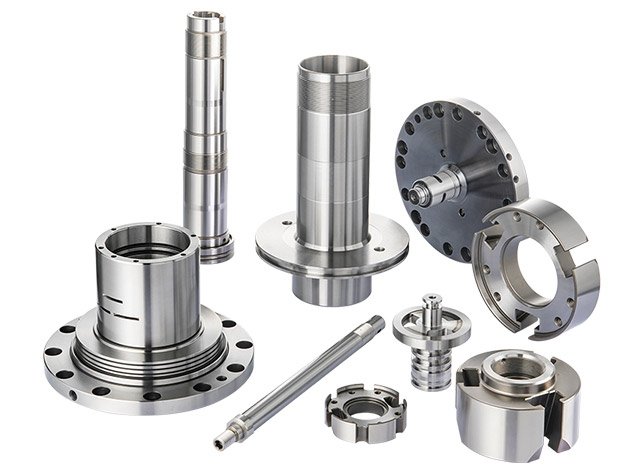
Custom Gear Manufacturing: From Prototyping to Mass Production
1. Executive Summary
Custom gear manufacturing sits at the intersection of metallurgical science, geometric precision, and supply chain discipline. For global OEMs and Tier 1 suppliers, the journey from a single prototype gear to a stabilized mass production line is rarely linear. It involves iterative design validation, tolerance stack-up analysis, heat treatment optimization, and a manufacturing partner capable of scaling without compromising quality. At IndustryApex Technology (IndustryApex CNC), we have spent more than three decades refining this end-to-end pathway, transforming engineering drawings into production-ready transmission components that meet AGMA, DIN, and ISO classification standards.
This analysis examines the technical and operational realities of custom gear production, focusing on the methodologies that compress prototype-to-production cycles, the supply chain architectures that protect program timelines, and the application domains where micron-level gear accuracy determines product viability. Whether the target is a helical gear for an industrial gearbox, a precision worm gear for a positioning system, or a spline shaft for a high-torque drivetrain, the underlying engineering principles remain consistent: control the process, and the part follows.
2. Technical Deep Dive
The technical foundation of custom gear manufacturing begins long before the first chip is cut. Design for Manufacturability (DFM) review establishes whether the proposed tooth geometry, module, pressure angle, and helix angle can be produced economically at the required AGMA quality grade. For high-precision applications, gears commonly target AGMA Q10 to Q12, equivalent to DIN 6 to DIN 4, requiring profile and lead deviations measured in single-digit microns.
The prototyping phase typically follows one of three pathways. Soft machining via 5-axis CNC hobbing or milling produces a functional prototype within days, suitable for fitment validation and load simulation. Wire EDM is selected when internal splines, non-standard tooth forms, or hardened blank prototyping is required, leveraging its ability to cut post-heat-treatment without distortion. For ultra-precision prototypes intended to validate final mass production tolerances, profile grinding on CNC gear grinders such as Reishauer or Gleason platforms delivers surface finishes below Ra 0.4 µm and tooth-to-tooth pitch errors under 3 microns.
Material selection drives both performance and process planning. 20CrMnTi and 18CrNiMo7-6 dominate carburized gear applications, achieving surface hardness of 58-62 HRC with a tough core for impact resistance. 42CrMo4 is preferred for induction-hardened gears, while stainless variants like 17-4PH and 440C serve corrosive or medical-grade applications. Industrial ceramic gears and tungsten carbide-coated tooth flanks are increasingly specified for semiconductor and high-cleanliness environments where lubrication is restricted.
Heat treatment introduces the most significant variable in dimensional stability. Distortion compensation strategies, including pre-machining oversize allowances and fixtured quenching, must be modeled during the prototype stage to avoid costly rework during production. Post-heat-treatment finishing, typically gear grinding or honing, restores the geometric tolerances disrupted by thermal processing. Without disciplined process control here, the leap from prototype to mass production fails repeatedly.
Inspection closes the technical loop. CNC gear inspection systems such as the Klingelnberg P-series or Gleason 300GMS verify involute profile, lead, pitch, and runout against the master design. Coordinate measuring machines validate critical dimensions on shaft journals, bores, and mounting features. Full inspection reports accompany every prototype lot, allowing the engineering team to correlate measured deviation with simulated NVH and load-bearing performance before authorizing production tooling.
3. The ODM & Supply Chain Advantage
Custom gear programs fail more often in the supply chain than in the machine tool. A prototype that performs flawlessly in the lab can stall during production scaling when raw material lead times stretch, heat treatment subcontractors miss windows, or quality drifts between lot batches. This is where the distinction between a contract machine shop and a true ODM partner becomes economically significant.
IndustryApex Technology operates as a supply chain integrator and ODM solution provider, not as a single-process vendor. Our identity is built on owning the full manufacturing chain rather than coordinating it across third parties. This vertical integration is anchored by an ERP-driven production system that ties forecasting, raw material procurement, in-process quality data, and shipment scheduling into a single data backbone. For a Tier 1 buyer managing a multi-region program, this means traceability from steel mill heat number to final gear serial number, with documented PPAP-ready evidence at every step.
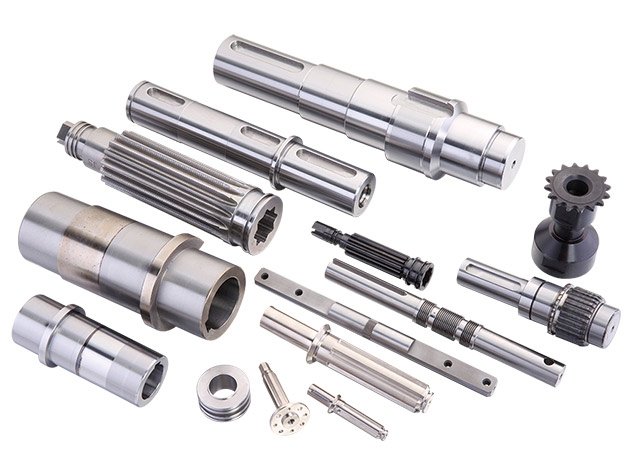
Our manufacturing edge derives from over 30 years of cumulative process experience and a fully controlled precision manufacturing system. Technology capabilities span 3-axis, 4-axis, and 5-axis CNC machining centers, sinker and wire EDM, cylindrical and profile grinding, gear hobbing and grinding, and dedicated cells for industrial ceramics and tungsten carbide components. This breadth allows us to absorb the entire bill of process for a complex gearbox, from blank turning through tooth generation, heat treatment, finish grinding, and final assembly-ready inspection, without handing the part across organizational boundaries.
The ODM advantage manifests most clearly during the transition from prototype to mass production. When a global OEM commits to a 50,000-unit annual program after validating 20 prototype gears, the cost curve depends entirely on how quickly tooling, fixturing, and inspection routines can be standardized. Our engineering team co-develops production fixtures during the prototype phase, so the same datum scheme that validated the prototype carries forward into the SPC-controlled production line. This eliminates the requalification loop that typically adds 8 to 12 weeks in disjointed supply chains.
Risk management is equally structural. Dual-source raw material qualification, in-house heat treatment capacity, and redundant CNC capacity across multiple cells protect program timelines against single-point failures. For aerospace and medical customers, where supply continuity is contractually enforced, this redundancy is a procurement requirement rather than a marketing claim.
4. Industry Applications
Custom gears engineered through this disciplined process serve a wide spectrum of industries, each imposing distinct technical priorities.
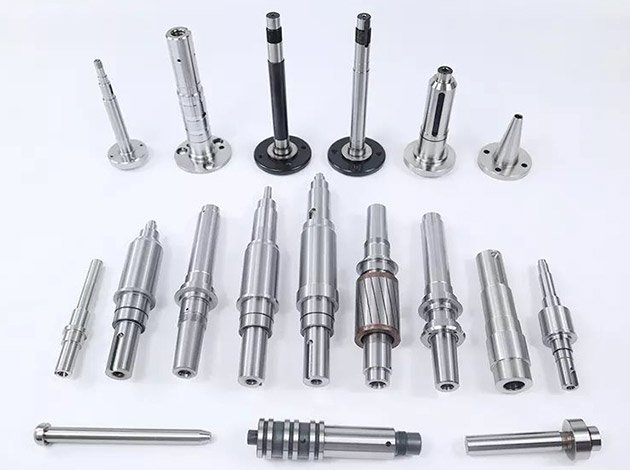
In aerospace applications, gears within actuation systems, auxiliary power units, and rotorcraft transmissions demand AGMA Q12 or higher, often combined with shot peening for fatigue resistance and magnetic particle inspection for crack detection. Material certifications under AS9100 traceability are non-negotiable, and our 5-axis machining capability allows complex bevel and spiral bevel geometries to be produced from titanium and high-nickel alloys without compromising surface integrity.
The medical device sector presents a different challenge profile. Miniature gears in surgical robotics, infusion pumps, and dental handpieces require modules below 0.5 and tooth counts that push the limits of conventional hobbing. Stainless and biocompatible material grades, ISO 13485 traceability, and cleanroom-compatible passivation all enter the process plan. Here, the prototype-to-production transition is often gated by sterilization validation rather than mechanical performance alone.
For hydraulic pumps and fluid power systems, gear pumps and motors rely on tightly matched gear pairs with backlash controlled to within microns to prevent internal leakage and maintain volumetric efficiency. Surface finish on the tooth flanks and end faces directly determines pump efficiency and wear life, making post-grinding lapping a standard operation. Our integrated grinding and lapping cells produce matched gear sets serialized as functional pairs.
Industrial automation, robotics, and construction machinery round out the major application domains. Planetary gear sets for robotic joints, worm gears for slewing drives, and helical gear trains for heavy equipment transmissions all benefit from the same process discipline, scaled to the specific torque, life, and noise requirements of each program. Across all these sectors, the common thread is a customer base of global OEMs and Tier 1 suppliers who require predictable quality, documented process control, and the engineering responsiveness that only a vertically integrated manufacturer can deliver.
5. Call to Action
Custom gear programs reward partners who treat prototyping as the first step of mass production rather than a separate exercise. If your engineering team is evaluating a new transmission component, scaling an existing gear program across regions, or seeking a vertically integrated ODM partner capable of taking a concept from drawing to serialized production, IndustryApex Technology is positioned to support the full lifecycle.
Engage our application engineering team to review your gear specifications, conduct a DFM analysis, and receive a manufacturing roadmap aligned with your program milestones. Contact us to begin a technical discussion, or explore our broader capability portfolio at cnccomponents.industryapex.com. Precision is engineered. Reliability is integrated. Both are delivered.