- Shaft
- Molds&Tools
- Hydraulics And Pump
- Hair transplant needle
- Hydraulics And Pump
- Precision CNC Shaft Machining Manufacturer for High Performance Applications
- Energy Industry CNC Machining Parts Supplier
- Aerospace CNC Machining Parts Manufacturer
- Aerospace CNC Machining Parts Manufacturer
- Automotive & EV CNC Machining Parts Supplier for OEM and Tier 1
- Medical CNC Machining Parts Supplier for Precision Medical Devices

Precision CNC Machining for EV Motor Housings: Tight Tolerances Explained


Executive Summary
Electric vehicle motor housings are no longer simple protective shells. In modern e-axles, traction motors, hybrid drive units, and integrated powertrain modules, the housing is a precision structural component that controls bearing alignment, rotor-stator concentricity, thermal transfer, sealing integrity, noise behavior, and final assembly yield. For OEMs and Tier 1 suppliers, the tolerance strategy behind an EV motor housing can influence motor efficiency, warranty exposure, production ramp stability, and total cost of ownership.
Precision CNC machining is essential because cast, forged, or extruded aluminum blanks cannot consistently deliver the geometric accuracy required at critical interfaces. Bearing bores, stator seats, coolant ports, gasket surfaces, dowel holes, encoder locations, and inverter mounting faces often require controlled machining after heat treatment or stress relief. Even when the nominal material removal is small, the engineering consequences are significant. A few microns of bore misalignment can increase vibration. A small flatness deviation can compromise sealing. An uncontrolled datum scheme can create cumulative assembly error across the drive unit.
At IndustryApex Technology, operating as IndustryApex CNC, we approach EV motor housings as a system-level manufacturing challenge rather than a standalone machining job. The right outcome depends on early design-for-manufacturing review, stable fixturing, process-capable CNC equipment, controlled inspection, production data feedback, and supply chain discipline. This article explains the tolerances that matter most, how precision machining controls them, and why global OEM and Tier 1 buyers increasingly evaluate suppliers not only on part price, but also on engineering maturity, capacity resilience, and ODM support.
Technical Deep Dive
EV motor housings usually combine lightweight aluminum architecture with complex functional zones. Common materials include die-cast aluminum alloys, low-pressure cast aluminum, billet aluminum for prototypes, and occasionally specialized alloys where strength, thermal conductivity, or corrosion performance is prioritized. The housing must hold the stator securely, position the rotor through bearing supports, interface with a gearbox or reducer, manage heat through coolant channels, and maintain sealing against dust, moisture, oil, or coolant.
The first tolerance priority is concentricity between the stator bore and bearing bores. The air gap between rotor and stator is a critical performance zone. If housing machining creates excessive runout, the air gap becomes uneven. That can reduce motor efficiency, increase electromagnetic noise, accelerate bearing wear, and create vibration that travels through the vehicle body. Depending on design, key features may need positional accuracy, roundness, and cylindricity controlled in the micron range, particularly around bearing seats and pilot diameters.
The second priority is flatness and parallelism across mating surfaces. EV motor housings often connect to end covers, gear housings, inverter modules, sealing plates, or cooling jackets. These surfaces must compress gaskets evenly and maintain alignment under bolt load. If flatness is unstable, the assembly may pass initial inspection but fail during pressure testing or thermal cycling. Precision face milling, controlled toolpath strategy, and proper clamping are necessary to avoid distortion during machining.
The third priority is thermal management geometry. Many motor housings include cooling channels, water jacket interfaces, O-ring grooves, pipe ports, and threaded sensor locations. Coolant passage accuracy affects pressure drop, flow distribution, and leak resistance. Burrs or machining marks inside fluid paths can create contamination risk. In high-volume supply programs, deburring and cleaning are not secondary operations; they are part of the functional performance plan.
The fourth priority is datum control. A housing may have dozens of machined features, but only a few should define the manufacturing and inspection datum structure. If the datum scheme is poorly selected, different suppliers, fixtures, or inspection programs may measure the same part differently. That creates disputes, hidden variation, and assembly problems. A robust CNC process starts by confirming the functional datum relationship between bearing centers, stator location, mounting faces, and assembly pins.
For EV motor housings, 3-axis machining can be suitable for straightforward faces and bores, but 4-axis and 5-axis CNC processes reduce re-clamping, improve feature-to-feature accuracy, and shorten total cycle time on complex geometries. Multi-axis machining is especially valuable when housings include angled ports, side mounting bosses, integrated brackets, or compound surfaces. Reducing setups helps preserve datums because every re-clamp introduces potential variation.
Tooling selection also matters. Aluminum machining requires sharp cutting edges, stable chip evacuation, correct coolant delivery, and attention to built-up edge. Boring tools must be selected not only for diameter accuracy but also for repeatability over tool life. For sealing grooves and precision counterbores, tool wear monitoring becomes critical. In production environments, uncontrolled tool wear can slowly push dimensions toward control limits before operators notice visible defects.
Inspection should combine in-process and final verification. Coordinate measuring machines are used for datum-related geometry, bore position, flatness, and profile tolerances. Air gauges or bore gauges can provide rapid production checks for bearing seats. Surface roughness testers verify sealing and bearing interface requirements. Leak testing may be needed when housings include coolant cavities. Statistical process control helps identify drift before parts move out of tolerance.
Another important issue is machining distortion. Thin-wall aluminum housings can deform during clamping, cutting, and thermal change. If a supplier machines a distorted part and then releases the clamp, the component may spring back out of specification. Experienced manufacturers use fixture support, balanced material removal, stress-relief planning, and controlled cutting parameters to keep the part stable. This is one reason EV housing projects should not be awarded solely on machining capacity; process engineering capability is equally important.
The ODM & Supply Chain Advantage
EV programs place unusual pressure on procurement teams. Volumes may ramp quickly, engineering changes may continue after launch, and cost-down expectations are aggressive. A supplier that only quotes drawings may struggle when the project moves from prototype to pilot run and then to serial production. IndustryApex Technology’s advantage is our role as both a supply chain integrator and ODM solution provider for precision components.
As an ODM partner, we support customers before the drawing is frozen. Our engineering team can review tolerance stacks, machining accessibility, datum strategies, material options, surface treatment requirements, and inspection plans. For motor housings, early feedback can prevent expensive design choices such as unreachable ports, over-tightened nonfunctional tolerances, weak clamping zones, or inspection datums that do not reflect assembly reality. The objective is not to reduce quality, but to apply precision where it creates measurable performance value.
IndustryApex Technology operates a fully controlled precision manufacturing system supported by ERP management and more than 30 years of manufacturing experience. ERP discipline is important in EV supply chains because part traceability, revision control, material status, outside process coordination, and delivery timing must remain synchronized. When engineering changes occur, uncontrolled documentation can create mixed inventory, delayed builds, and avoidable quality risk. A structured manufacturing system helps ensure that procurement, production, quality, and logistics work from the same data.
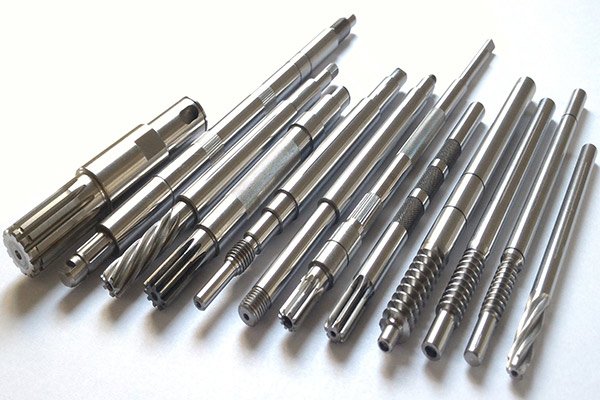
Our technical capabilities include 3-axis to 5-axis CNC machining, EDM, precision grinding, and industrial ceramics. While EV motor housings are typically aluminum CNC components, a mature supplier base benefits from broader process knowledge. EDM supports complex conductive features and tooling-related needs. Precision grinding supports tight flatness, parallelism, and high-accuracy mating parts. Industrial ceramics expertise is valuable for customers developing high-temperature, electrically insulating, or wear-resistant components used in adjacent electrification systems.
For global OEM and Tier 1 suppliers, supply chain integration is increasingly valuable. A motor housing may require casting, machining, heat treatment, surface finishing, cleaning, assembly inserts, leak testing, packaging, and international logistics. Managing every step through separate vendors increases communication load and quality risk. A capable integrator coordinates upstream and downstream resources while maintaining accountability for the finished component.
Supplier selection should therefore evaluate more than machine lists. Buyers should ask whether the supplier can support APQP-style planning, provide capability data, manage critical-to-quality characteristics, react quickly to engineering changes, and maintain stable delivery performance. They should also review how the supplier controls subcontracted processes such as anodizing, impregnation, coating, or special cleaning. The strongest partners make the supply chain more predictable, not merely cheaper.
This approach mirrors the precision discipline required in other demanding sectors. For example, the tolerance mindset used in aerospace CNC machining emphasizes traceability, stable processes, and structural reliability. The documentation rigor found in medical component machining reinforces process validation and inspection discipline. EV motor housing supply chains benefit from the same engineering culture, adapted to automotive cost, volume, and speed requirements.
Industry Applications
Precision CNC machined EV motor housings are used across passenger vehicles, commercial EV platforms, electric buses, hybrid powertrains, e-axles, off-highway electrification systems, and high-performance motorsports applications. Each sector has different priorities. Passenger vehicles emphasize cost, noise performance, and scalable production. Commercial vehicles emphasize durability, service life, and thermal robustness. Performance EV platforms may push higher rotational speeds and tighter dynamic requirements.
In passenger EVs, motor housings contribute to NVH performance. Even when electrical design is optimized, poor housing geometry can amplify mechanical vibration. Bore misalignment, uneven mounting surfaces, and inconsistent wall thickness can affect how sound travels through the assembly. Precision machining reduces these risks by holding critical features in stable relationship to one another.
In heavy-duty and commercial electrification, motor housings often face higher thermal loads and longer duty cycles. Cooling channel accuracy and sealing reliability become especially important. A leak failure can damage electronics, reduce vehicle uptime, and create expensive warranty claims. Here, CNC machining must be paired with leak testing, cleanliness control, and robust surface finishing.

In integrated e-axle systems, the motor housing may interface directly with reduction gears, differential housings, bearings, and electronic modules. This creates a tolerance chain that extends beyond the motor itself. Gear noise, shaft alignment, and oil sealing can all be influenced by housing accuracy. IndustryApex Technology’s broader experience with hydraulic and pump precision parts is relevant because fluid sealing, bore accuracy, and rotating component alignment are similarly critical in those systems.
Prototype and low-volume programs require a different supply strategy. Billet-machined motor housings are often used before casting tools are finalized. These parts allow engineering teams to validate geometry, cooling concepts, assembly sequence, and test bench performance. Once the design stabilizes, the process may transition to cast blanks with finish machining. An experienced CNC partner can support both phases and help avoid a painful gap between prototype success and production manufacturability.
Surface treatments are another application-specific consideration. Depending on the operating environment, housings may require anodizing, passivation-compatible cleaning, conversion coating, impregnation, or corrosion-resistant finishing. Surface treatment can change dimensions, affect sealing surfaces, or introduce masking requirements. It should be considered during process planning, not added as an afterthought.
Packaging and logistics also affect quality. Large aluminum housings can be damaged by poor handling, moisture exposure, or uncontrolled stacking. Precision surfaces, threads, and sealing faces need protection during transport. For international supply programs, packaging design should be treated as part of the engineering deliverable, especially when parts move through multiple warehouses or assembly plants.
Call to Action
Precision CNC machining for EV motor housings is about controlling the relationships that make an electric powertrain efficient, quiet, sealed, and durable. Tight tolerances are not simply numbers on a drawing; they are manufacturing commitments that must be supported by machines, fixtures, tooling, inspection, data systems, and supply chain control. The suppliers that succeed in EV programs are those that can combine engineering insight with repeatable execution.
IndustryApex Technology helps global OEM and Tier 1 customers develop and manufacture high-precision CNC components for demanding automotive, energy, aerospace, medical, hydraulic, and industrial applications. Through IndustryApex CNC, we provide engineering review, precision machining, process integration, and supply chain coordination for projects where dimensional accuracy and delivery reliability both matter.
If your team is developing an EV motor housing, e-axle component, thermal management assembly, or other precision-machined powertrain part, we invite you to discuss your technical requirements with our engineering team. Share your drawings, tolerance concerns, material targets, expected volumes, and validation schedule. We can help evaluate manufacturability, identify risk areas, and build a practical production path from prototype to serial supply.
To start a project review, visit our contact page and connect with IndustryApex Technology. The earlier we engage, the more value we can create in tolerance optimization, machining strategy, cost control, and supply chain stability.