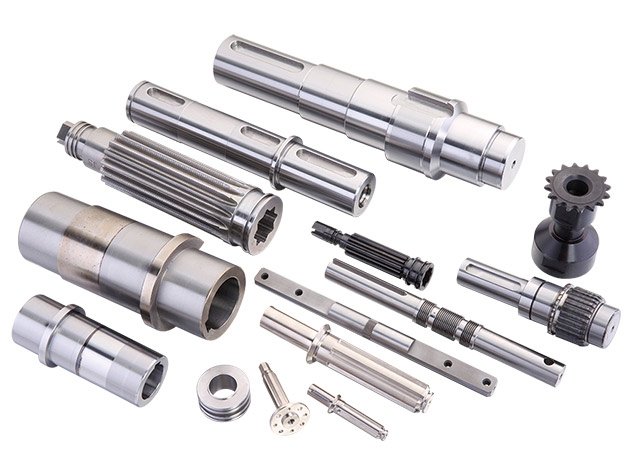
- Shaft
- Molds&Tools
- Hydraulics And Pump
- Hair transplant needle
- Hydraulics And Pump
- Precision CNC Shaft Machining Manufacturer for High Performance Applications
- Energy Industry CNC Machining Parts Supplier
- Aerospace CNC Machining Parts Manufacturer
- Aerospace CNC Machining Parts Manufacturer
- Automotive & EV CNC Machining Parts Supplier for OEM and Tier 1
- Medical CNC Machining Parts Supplier for Precision Medical Devices

Advanced EDM and Wire Cutting for Hard and Brittle Materials: Engineering Precision at the Limits of Machinability

Executive Summary
The machining of hard and brittle materials — tungsten carbide, advanced ceramics, polycrystalline diamond (PCD), silicon carbide, and technical sapphire — defines the performance frontier of modern precision manufacturing. As component tolerances tighten and material selection gravitates toward extreme-hardness alloys and ceramics for their superior wear resistance, thermal stability, and electrical properties, conventional subtractive machining reaches its physical limits. Tool life collapses, surface integrity deteriorates, and dimensional repeatability becomes unachievable at production scale.
Electrical Discharge Machining (EDM) — particularly Wire EDM (WEDM) and die-sink EDM — eliminates this constraint by severing the relationship between workpiece hardness and process capability. For global OEM procurement teams and Tier 1 supply chain directors sourcing precision-critical components, understanding the engineering mechanics and supply chain architecture behind advanced EDM unlocks access to geometries and material specifications that were previously impractical at production volumes. At IndustryApex CNC, powered by IndustryApex Technology, this capability is not a specialty service — it is a core pillar of our precision manufacturing platform.
Technical Deep Dive: How EDM Machines What Conventional Tools Cannot
The Physics of Electrical Discharge Erosion
EDM removes material by generating rapid, controlled electrical discharges between the electrode (or wire) and the conductive workpiece, submerged in a dielectric fluid. Each discharge creates a plasma channel reaching temperatures between 8,000°C and 12,000°C — exceeding the melting and vaporization point of any known engineering material. Crucially, the process exerts zero mechanical cutting force on the workpiece. For brittle materials such as alumina ceramics, zirconia, and reaction-bonded silicon carbide, this is transformative: the subsurface micro-cracking, chipping, and edge delamination that plague grinding and milling operations are eliminated at the process level.
Wire EDM vs. Die-Sink EDM for Hard Materials
Wire EDM uses a continuously fed brass or coated wire — typically 0.1 to 0.3 mm diameter — to cut intricate 2D profiles and tapered forms through electrically conductive workpieces. It is the method of choice for producing carbide punch-and-die sets, ceramic-bonded tooling seats, and sapphire optical mounts where profile accuracy must be maintained within ±2 μm. Die-sink EDM uses a shaped electrode to erode cavities and 3D geometries, making it indispensable for precision recesses in PCD inserts, mold cores in hardened tool steel, and complex internal features in aerospace superalloy components.
For hard and brittle materials specifically, three process parameters are critical:
- Discharge energy: Lower pulse energy settings, typically finishing regimes below 5 μJ, reduce the heat-affected zone (HAZ) in brittle ceramics and prevent micro-crack propagation beneath the machined surface.
- Dielectric fluid management: Deionized water provides superior flushing efficiency for carbide and ceramic debris, maintaining stable gap conditions and preventing recast material re-deposition that degrades dimensional accuracy.
- Wire tension and feed rate: Precise tension control — up to 2,500 g on modern multi-axis machines — prevents wire deflection, which is the primary source of taper error in deep cuts through dense materials like tungsten carbide, with a density of 14.5 to 15.0 g/cm³.
Surface Integrity and Post-Process Verification
The recast layer — a resolidified material zone 2 to 20 μm thick formed during EDM thermal cycling — requires post-process management in fatigue-critical applications. For aerospace actuator components and medical implant interfaces, secondary lapping or precision surface grinding removes this layer and brings surface roughness to Ra ≤ 0.2 μm. Integrated CMM verification to sub-micron tolerances ensures that every hard-material EDM component ships with full dimensional traceability and process documentation compatible with AS9100 and ISO 13485 quality systems.
The ODM and Supply Chain Advantage: Why Vertical Integration Matters for Hard-Material Sourcing
For OEM procurement engineers and supply chain directors, the challenge with hard and brittle material components is not merely technical — it is organizational. Most contract manufacturers treat EDM as a subcontracted or standalone process, disconnected from upstream material qualification and downstream inspection. This fragmentation introduces lead time variability, tolerance stack-up from inter-facility transfers, and quality gaps that are unacceptable for Tier 1 automotive, aerospace, or medical supply chains.
IndustryApex Technology’s Integrated Manufacturing Architecture
IndustryApex Technology — operating globally as IndustryApex CNC — functions as a supply chain integrator and ODM solution provider, not a job shop. Over 30 years of precision manufacturing experience has produced a fully ERP-controlled production ecosystem where EDM, 3-to-5-axis CNC machining, precision grinding, and industrial ceramics processing operate as a unified, traceable workflow under a single quality management system. This architecture delivers three measurable supply chain advantages for global OEMs and Tier 1 suppliers.
- Single-source accountability: From raw material incoming inspection to final CMM report, every operation occurs within one controlled quality system. ISO-certified process documentation eliminates the quality ambiguity inherent in multi-vendor supply chains and simplifies supplier qualification audits.
- Lead time compression: ERP-driven scheduling coordinates EDM burn cycles, grinding sequences, and inspection queues in parallel where component geometry allows — compressing overall lead times by 20 to 35 percent versus sequential outsourced workflows that accumulate inter-facility transit and re-inspection delays.
- ODM co-engineering capability: For OEMs developing next-generation components in carbide, ceramic, or PCD, IndustryApex Technology’s engineering team engages at the design-for-manufacturability (DFM) stage — optimizing electrode geometry, wire path strategies, and material selection before first article production begins, avoiding costly design iterations during program launch.
This integrated model is especially valuable for global Tier 1 suppliers managing dual-source qualification programs, where process consistency across production lots is a contractual requirement rather than an aspiration. Our industrial ceramics processing capability extends this advantage into fully sintered ceramic component manufacturing, creating a single-source solution from green body to finished, inspection-certified ceramic part.
Industry Applications: Where Advanced EDM for Hard Materials Creates the Most Supply Chain Value
Aerospace: Structural Components and Engine Hard-Facing Features
The aerospace sector demands hard-material EDM for titanium alloy structural components, nickel superalloy turbine features, and carbide wear-insert seats in hydraulic actuators and flight control mechanisms. Wire EDM enables the precise slot and aperture geometries in hardened aerospace-grade alloys that 5-axis milling cannot achieve without tool deflection at depth. Our dedicated aerospace CNC machining platform combines 5-axis milling with EDM finishing to deliver structural components meeting AS9100 dimensional and traceability requirements at production volumes.
Medical Devices: Surgical Instruments and Ceramic Implant Interfaces
Medical-grade ceramics — zirconia femoral heads, alumina acetabular inserts, and sapphire optical windows for surgical imaging systems — require EDM when their geometry includes precision bores, slots, or mating surfaces that grinding alone cannot produce. For metallic implant components in titanium and cobalt-chrome alloys, die-sink EDM produces the micro-textured surfaces and precision cavity forms that promote osseointegration and mechanical interlock. Our ISO-certified medical component manufacturing line integrates EDM with biocompatibility-compliant finishing and full lot traceability.
Fluid Control and Hydraulics: Valve Spools and High-Pressure Pump Components
Hydraulic pump and valve spool components in tungsten carbide and hardened stainless alloys operate under continuous high-pressure wear conditions that only extreme-hardness materials can endure. Wire EDM produces the metering slots, orifice profiles, and lapping-finish bores in these components with geometric precision — roundness within 0.5 μm, cylindricity within 1 μm — that directly determines system efficiency and leakage performance. Our precision hydraulic pump parts manufacturing capabilities are built around this level of dimensional discipline.
Semiconductor and Optics: Ceramic Fixtures and Precision Sapphire Components
Semiconductor wafer handling equipment depends on alumina and silicon carbide ceramic components for dimensional stability, chemical inertness, and particle-free performance in cleanroom environments. Ultrasonic-assisted EDM for non-conductive ceramics — using auxiliary electrode bridge techniques — enables precision mounting slots, alignment features, and vacuum port geometries that define equipment throughput and wafer handling accuracy. The same engineering principles apply to sapphire and ruby components used in high-precision optical systems, fluid metering jets, and watch-grade bearing surfaces.
Mold and Die: Carbide Tooling and Hardened Steel Cores
Cold heading dies, carbide punch sets, and hardened mold cores in the 62 to 68 HRC range represent the highest-volume application for Wire EDM in industrial manufacturing. The ability to produce profiles with ±1 μm repeatability in through-hardened tool steel — without the post-machining distortion that heat treatment introduces to conventionally milled forms — makes EDM the standard process for precision die manufacturing at production scale. This directly supports OEM supply chains for automotive fasteners, cold-forged structural components, and stamped electronic enclosures where die geometry determines part quality.
Partner with IndustryApex Technology for Hard-Material EDM and ODM Solutions
For OEM engineering teams and supply chain directors managing precision components in tungsten carbide, advanced ceramics, hardened tool steels, or nickel superalloys, the manufacturing partner you select determines whether your program achieves its quality, cost, and lead-time targets — or perpetually chases them. IndustryApex Technology’s 30-year precision manufacturing platform, ERP-controlled production workflow, and integrated EDM-to-grinding-to-inspection process capability are engineered specifically for this challenge at global production scale.
Whether you are qualifying a new hard-material component for an aerospace structural assembly, scaling a medical ceramic implant interface from prototype to production, or rationalizing a fragmented carbide tooling supply chain into a single-source ODM relationship, our engineering team is ready to engage at the technical level your program requires — from DFM review through first article qualification to sustained series production.
Contact our engineering team today to submit component drawings, request a DFM review, or discuss EDM process feasibility for your next critical hard-material application. NDA-protected quoting and first-article lead time commitments are available for qualified OEM and Tier 1 supply chain programs.