- Shaft
- Molds&Tools
- Hydraulics And Pump
- Hair transplant needle
- Hydraulics And Pump
- Precision CNC Shaft Machining Manufacturer for High Performance Applications
- Energy Industry CNC Machining Parts Supplier
- Aerospace CNC Machining Parts Manufacturer
- Aerospace CNC Machining Parts Manufacturer
- Automotive & EV CNC Machining Parts Supplier for OEM and Tier 1
- Medical CNC Machining Parts Supplier for Precision Medical Devices
Precision Ruby and Sapphire Component Machining for Next-Generation Fluid Control Systems


Precision Ruby and Sapphire Component Machining for Next-Generation Fluid Control Systems
1. Executive Summary
In the demanding world of high-pressure fluid control, where microliter dosing accuracy and resistance to chemically aggressive media are non-negotiable, synthetic ruby and sapphire have emerged as the gold-standard materials for valve seats, pistons, orifices, nozzles, and metering plungers. With a Mohs hardness of 9, a compressive strength exceeding 2,000 MPa, and near-universal chemical inertness, single-crystal corundum components routinely outlast hardened steel counterparts by a factor of 50 to 100 in abrasive or corrosive service. Yet these same properties make ruby and sapphire among the most difficult engineering materials to machine to micron-level tolerances.
At IndustryApex Technology (IndustryApex CNC), we have spent more than three decades industrializing the diamond grinding, ultrasonic machining, lapping, and optical polishing processes required to deliver corundum components that meet the geometric, dimensional, and surface-finish specifications of leading fluid control OEMs. This article examines the technical drivers behind the shift to ceramic-grade gemstone components in fluid systems, the ODM supply chain model that allows global OEMs and Tier 1 suppliers to scale production without capital investment, and the cross-industry applications where ruby and sapphire are now mission-critical.
2. Technical Deep Dive: Why Corundum Wins in Fluid Control
Synthetic ruby (Cr-doped Al₂O₃) and synthetic sapphire (pure Al₂O₃) are functionally identical in mechanical and tribological behavior; the chromium dopant in ruby simply provides the characteristic red color used historically to distinguish wear-critical components from surrounding stainless or PEEK housings. From an engineering standpoint, both materials offer a Young’s modulus near 345 GPa, thermal conductivity around 35 W/m·K, and a coefficient of thermal expansion of roughly 5.3 × 10⁻⁶/K, allowing predictable behavior across cryogenic and elevated-temperature service envelopes spanning −269°C to over 1,800°C.
For fluid control, three technical attributes drive material selection. First, the surface hardness virtually eliminates erosive wear from particulate-laden fluids, slurries, and high-velocity gas streams, which is why ruby orifices dominate water-jet cutting heads and high-performance liquid chromatography (HPLC) injection valves. Second, the chemical inertness of Al₂O₃ against strong acids, bases, organic solvents, and reactive process gases (HF being the notable exception) makes corundum the default choice for analytical instruments, semiconductor wet-etch metering, and pharmaceutical filling equipment. Third, the ability to lap and polish single-crystal sapphire to surface roughness values below Ra 5 nm produces self-sealing, lapped-pair geometries that obviate elastomeric seals entirely.
The machining challenge is significant. Conventional carbide tooling fails immediately on corundum, so IndustryApex’s process chain combines resin- and metal-bonded diamond grinding for rough-to-finish geometry generation, rotary ultrasonic machining (RUM) for blind holes and complex internal features, electrical discharge machining (EDM) for the metallic mating components, and a final lapping and polishing sequence to achieve flatness specifications of λ/10 or better and parallelism within 1 μm. Dimensional control on critical bores routinely holds H4 tolerances, with sphericity on ball-and-seat valve elements held below 0.25 μm.
Equally important is metrology. Every production lot is verified using interferometric flatness measurement, white-light profilometry, and CMM inspection traceable to NIST or DAkkS standards, with full PPAP-level documentation available for automotive, aerospace, and medical device customers.
3. The ODM and Supply Chain Advantage
IndustryApex Technology operates as a supply chain integrator and full ODM solution provider, a model deliberately structured to remove the capital, qualification, and lead-time burdens that would otherwise prevent OEMs from adopting advanced ceramic and gemstone components at scale. Our core identity is not that of a job shop reacting to drawings; we are a co-development partner that takes a customer’s functional specification and delivers a manufacturable, qualified, and serially produced component family.
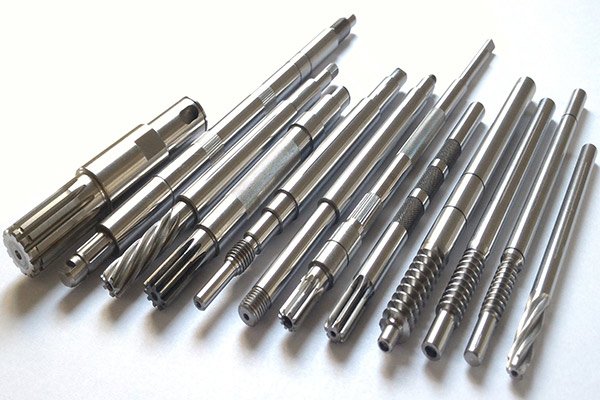
The manufacturing backbone is a fully controlled precision manufacturing system underpinned by an enterprise ERP platform that links demand forecasting, raw boule procurement, work-in-process tracking, and outbound logistics into a single closed-loop system. Over 30 years of operating experience in precision components has yielded a process library covering more than 40 corundum geometries, 200-plus tungsten carbide tooling families, and a qualified supplier network for raw single-crystal boules grown by Czochralski, Kyropoulos, and EFG methods. This vertical depth allows us to absorb raw-material price volatility, shorten typical sapphire component lead times from 16 weeks to 6 to 8 weeks, and offer multi-source redundancy that satisfies the business continuity requirements of global Tier 1 customers.
Our technology stack is intentionally broad. In-house capabilities include 3-axis and 5-axis CNC machining for housings, manifolds, and metallic mating parts; sinker and wire EDM for hardened-steel and tungsten carbide tooling; precision cylindrical, surface, and profile grinding; and a dedicated industrial ceramics cell handling alumina, zirconia, silicon carbide, ruby, and sapphire. By keeping ceramic and metallic processing under one roof, we eliminate the inter-company tolerance stack-ups that typically plague hybrid assemblies, and we can deliver pre-assembled, leak-tested cartridges rather than loose components.
The audience this model serves is specific: global OEMs and Tier 1 suppliers in fluid power, medical devices, semiconductor capital equipment, aerospace, and analytical instrumentation. These customers require ISO 9001, IATF 16949, or ISO 13485 alignment depending on sector, full material traceability from boule to finished part, and the engineering bandwidth to support DFM reviews, FMEA participation, and continuous cost-down programs over multi-year program lifecycles. IndustryApex’s ODM structure is built around exactly this engagement profile.
4. Industry Applications
The application landscape for ruby and sapphire fluid control components has expanded rapidly over the last decade, driven by miniaturization, higher operating pressures, and tightening contamination requirements across multiple sectors.
In hydraulic pump and high-pressure fluid systems, ruby ball-and-seat assemblies are now standard in metering pumps operating above 400 bar, and sapphire pistons paired with lapped sapphire cylinders deliver leak-free, lubricant-free dosing in chemical injection skids for oil and gas applications. The hardness differential between corundum and any entrained particulate effectively eliminates the seat erosion that limits stainless steel valve life in produced-water service.
In medical and pharmaceutical fluid handling, sapphire syringe pistons and ruby check valves dominate insulin pumps, drug infusion systems, and high-throughput laboratory automation. The biocompatibility of pure alumina, combined with its ability to be steam-sterilized indefinitely without dimensional change, makes it the preferred wetted-path material for next-generation single-use bioprocessing manifolds where polymer leaching is a concern.
In aerospace fuel and hydraulic systems, sapphire windows for fuel-flow optical sensors, ruby pivot jewels in mechanical flow meters, and corundum nozzles in auxiliary power unit fuel atomizers are flight-qualified components on multiple commercial and defense platforms. The combination of thermal stability and dimensional retention under vibration is unmatched by metallic alternatives.
Adjacent applications include semiconductor wet-process metering valves, where chemical compatibility with TMAH, SC1, and SC2 chemistries is essential; analytical instrumentation, where HPLC and mass spectrometry inlets rely on ruby orifices for repeatable sample injection; and waterjet cutting, where sapphire and ruby orifices ranging from 0.1 mm to 0.5 mm diameter define the productivity envelope of modern abrasive cutting systems.
5. Partner with IndustryApex Technology
Specifying ruby or sapphire is the easy part. Industrializing them, qualifying them, and sustaining serial production at globally competitive cost requires a manufacturing partner with the process depth, metrology infrastructure, and supply chain discipline to treat gemstone components as production hardware rather than laboratory curiosities. IndustryApex Technology has built that capability over three decades, and we deploy it daily for OEMs and Tier 1 customers across four continents.
Whether you are evaluating a material change on an existing valve platform, designing a new metering architecture from a clean sheet, or seeking a qualified second source for an existing corundum component, our engineering team is ready to engage. Contact us to initiate a DFM review, request material samples, or schedule a virtual audit of our precision ceramics manufacturing cell. The next generation of fluid control performance is built on corundum, and IndustryApex Technology is built to deliver it.