- Shaft
- Molds&Tools
- Hydraulics And Pump
- Hair transplant needle
- Hydraulics And Pump
- Precision CNC Shaft Machining Manufacturer for High Performance Applications
- Energy Industry CNC Machining Parts Supplier
- Aerospace CNC Machining Parts Manufacturer
- Aerospace CNC Machining Parts Manufacturer
- Automotive & EV CNC Machining Parts Supplier for OEM and Tier 1
- Medical CNC Machining Parts Supplier for Precision Medical Devices

Large-Scale Machining Excellence: Gantry Milling and Crankshaft Grinding for Heavy Industry OEMs

Large-Scale Machining Excellence: Gantry Milling and Crankshaft Grinding for Heavy Industry OEMs
1. Executive Summary
The global heavy machinery, marine propulsion, and power generation sectors are facing unprecedented demand for components that combine massive scale with sub-micron precision. Crankshafts for large bore diesel engines, gantry-milled mold bases for stamping presses, and oversized structural housings for wind turbines all share a common manufacturing challenge: they cannot be produced on standard machine tools. They require gantry-type milling centers with multi-meter travels, cylindrical grinders capable of supporting workpieces weighing several tons, and a metrology infrastructure that guarantees dimensional integrity across the entire envelope.
At IndustryApex Technology (IndustryApex CNC), large-scale machining is not an auxiliary capability — it is a core pillar of our ODM service offering. Drawing on more than three decades of precision manufacturing experience, our facility integrates gantry milling, crankshaft grinding, deep-hole drilling, and final inspection within a single ERP-controlled workflow. This article examines the technical fundamentals of gantry milling and crankshaft grinding, the supply-chain advantages of working with a vertically integrated ODM partner, and the industries that benefit most from these capabilities. For global OEMs and Tier 1 suppliers, the message is straightforward: scale and precision are no longer mutually exclusive when the right manufacturing system stands behind them.
2. Technical Deep Dive
Gantry Milling: Engineering Stiffness at Scale
Gantry-type machining centers — sometimes called bridge-type or portal milling machines — are designed around a fundamentally different kinematic principle than vertical machining centers. Instead of moving the workpiece on a table beneath a stationary spindle, the gantry frame travels over a fixed bed, allowing workpieces of 5, 10, or even 20 metric tons to remain stationary during cutting. This architecture solves the dominant problem in large-part machining: dynamic deflection. When a 12-ton mold base is repositioned mid-cycle, even small accelerations introduce thermal and inertial errors that compound across long tool paths.
Modern gantry mills used at IndustryApex combine box-in-box construction, hydrostatic guideways, and dual-drive ball screws or linear motors to deliver positioning repeatability of ±0.005 mm across travels exceeding 6,000 mm in X, 3,000 mm in Y, and 1,500 mm in Z. The five-axis configuration — typically a fork-type or A/C swivel head — enables single-setup machining of complex contoured surfaces, eliminating the cumulative tolerance stack that plagues multi-fixture workflows. For high-stiffness operations, ram-type rigid heads transmit up to 100 kW of spindle power, allowing aggressive roughing of forged steel blanks at material removal rates above 1,500 cm³/min.
Thermal compensation is critical at this scale. Spindle thermal growth, ambient drift, and frictional heating in the linear axes are continuously measured and corrected through closed-loop algorithms tied to embedded sensors. Without this layer of control, achieving flatness specifications of 0.02 mm across a 4-meter sealing surface would be impossible.
Crankshaft Grinding: Precision Where Engines Live or Die
Crankshafts are the highest-duty rotating components in any reciprocating engine. The transition from forging or casting blank to finished crankshaft involves turning, induction hardening, deep-hole drilling, and finally cylindrical grinding of the main and pin journals. Grinding is the operation that defines fatigue life. A poorly ground journal with surface roughness above Ra 0.4 µm or roundness deviation greater than 3 µm will reduce bearing service life by 40% or more in heavy-duty applications.
For large crankshafts — those measuring 1.5 to 6 meters and weighing 500 kg to 5 tons — the grinding strategy must address three simultaneous challenges. First, the workpiece deflects under its own weight, requiring follow rests and steady supports calibrated dynamically as material is removed. Second, pin journals are eccentric to the rotational axis, demanding CNC chasing grinders that move the wheel in synchrony with the rotating workpiece. Third, fillet radii at the journal-to-cheek transition are stress concentrators; they must be ground to a continuous, blended profile with no abrupt geometric changes.
IndustryApex employs CBN (cubic boron nitride) grinding wheels operating at peripheral speeds of 80–120 m/s, paired with high-pressure coolant delivery to manage the heat-affected zone and prevent grinding burn. Final inspection includes roundness measurement on dedicated form testers, surface finish verification by stylus profilometry, and magnetic particle inspection to confirm subsurface integrity. The result is a crankshaft that meets ISO 1101 geometric tolerances and the residual stress profile demanded by Tier 1 engine builders.
3. The ODM & Supply Chain Advantage
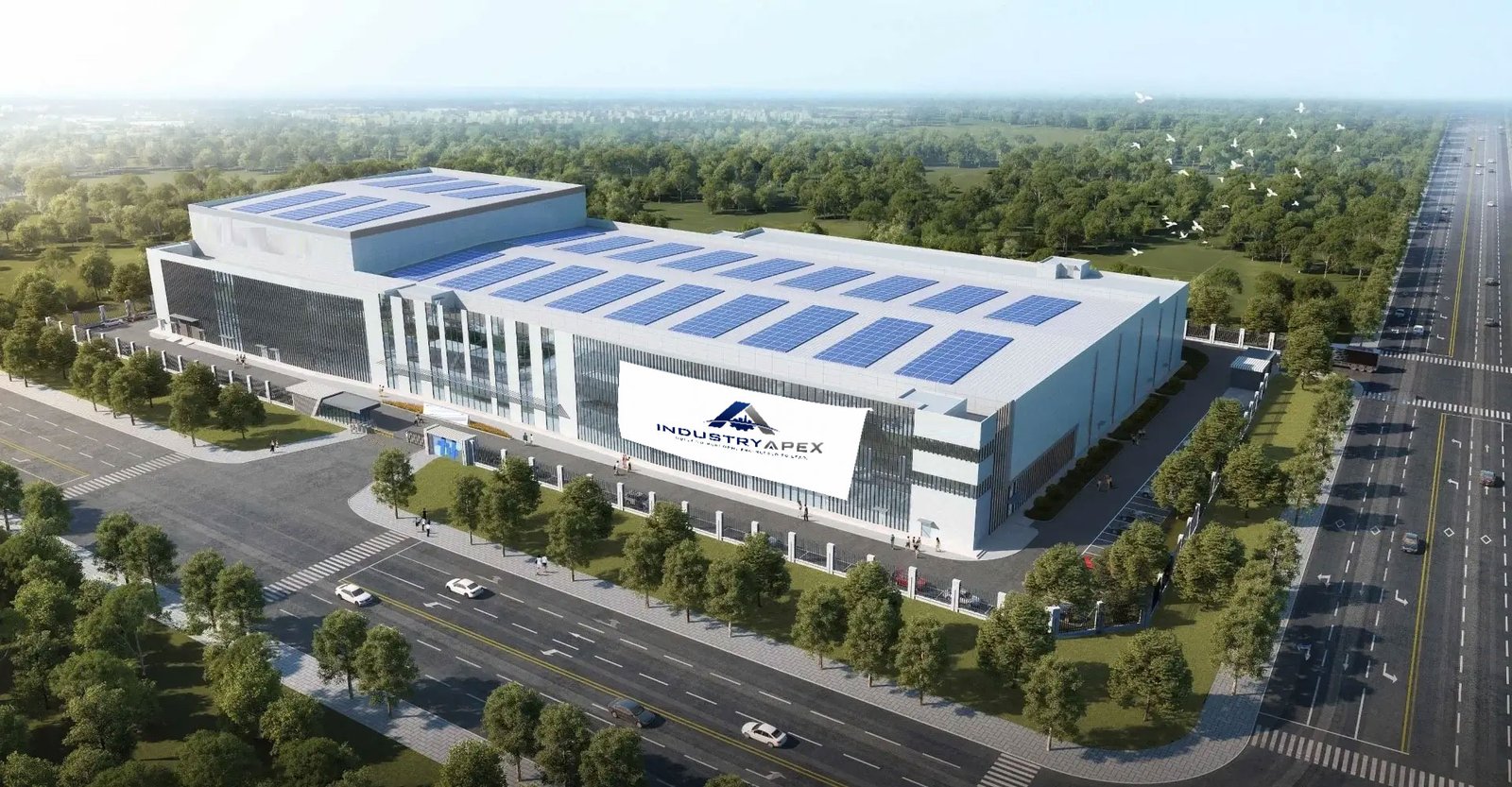
Large-scale precision machining is not a commodity service. The capital intensity of gantry mills and crankshaft grinders, combined with the engineering knowledge required to apply them correctly, means that the supplier’s organizational capability matters as much as the equipment list. IndustryApex Technology positions itself as a supply-chain integrator and ODM solution provider, not a contract job shop. The distinction is meaningful for OEM and Tier 1 customers who need more than a quoted part — they need a partner who can absorb design responsibility, manage the upstream raw-material chain, and guarantee delivery against multi-year programs.
Our manufacturing system is fully controlled and ERP-integrated. From the moment a forging blank enters incoming inspection, it is tracked through every operation: rough turning, stress-relief, gantry milling, deep-hole drilling, induction hardening, journal grinding, balancing, and final dimensional verification. Every step is timestamped, every measurement is logged, and every deviation is flagged for engineering review. This traceability is non-negotiable for customers serving regulated industries — and increasingly, it is expected even in unregulated heavy-machinery markets.
The technology stack supporting this system spans the full spectrum of subtractive manufacturing: 3-axis, 4-axis, and 5-axis CNC machining; sinker and wire EDM for hardened-steel features; precision cylindrical, surface, and profile grinding; and dedicated industrial ceramics processing for components requiring extreme wear resistance or thermal stability. Few suppliers can offer all of these capabilities under one roof, and even fewer can integrate them into a single project plan with shared engineering oversight. With more than 30 years of accumulated process knowledge, IndustryApex’s engineering team translates customer drawings into optimized manufacturing routes — selecting the right combination of operations to minimize cost without compromising the functional requirements that matter to the end product.
4. Industry Applications
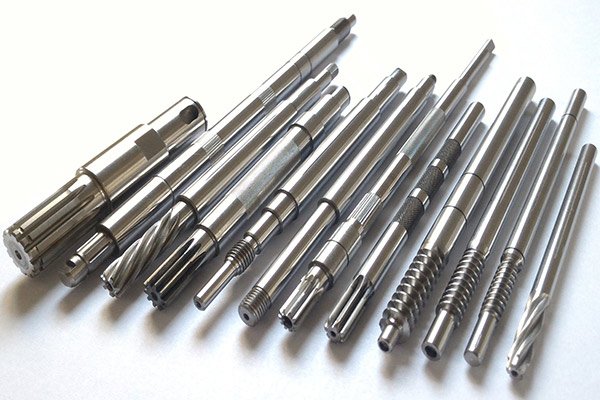
The customers benefiting from gantry milling and crankshaft grinding span a wide cross-section of industrial sectors, each with its own technical priorities.
Marine and stationary diesel engines: Crankshafts for medium-speed marine engines, locomotive prime movers, and stationary power generators are the canonical application. Journal diameters of 200–400 mm, overall lengths of 3–6 meters, and ISO 6336 fatigue requirements demand the full grinding capability described above.
Aerospace structural components: Large titanium and aluminum airframe sections — wing spars, bulkheads, engine mounts — are machined on gantry mills with five-axis heads. The combination of stiffness, accuracy, and chip-evacuation capacity makes gantry platforms the only viable solution for monolithic aerospace parts. IndustryApex supports this segment through dedicated aerospace CNC machining services for titanium aircraft parts.
Hydraulics and high-pressure pumps: Large pump bodies, manifold blocks, and valve housings require both gantry milling for external geometry and precision boring for internal flow passages. Bore concentricity and surface finish directly govern volumetric efficiency. Our portfolio includes specialized hydraulic pump parts manufactured to OEM specifications.
Mold and die manufacturing: Stamping press bolsters, plastic injection mold bases, and forging die holders are produced on gantry platforms. Flatness, parallelism, and surface finish translate directly into die life and part quality.
Medical equipment frames and surgical robotics structures: Although most medical components are small, the structural frames of imaging systems and robotic platforms benefit from gantry-milled monolithic construction. IndustryApex’s ISO-certified medical machining capability bridges the precision and traceability gap between heavy industry and life sciences.
Wind energy and power generation: Main shafts, gearbox housings, and generator frames for wind turbines routinely exceed 5 meters and demand the rigidity that only gantry-class equipment can provide.
5. Call to Action
If your organization is evaluating suppliers for large-scale gantry-milled structures, precision-ground crankshafts, or any program that requires the integration of multiple high-precision processes, IndustryApex Technology is positioned to support you from concept through serial production. Our ODM model is designed for OEMs and Tier 1 suppliers who want to consolidate vendors, reduce engineering overhead, and gain a manufacturing partner with the equipment, the process knowledge, and the ERP discipline to deliver on multi-year commitments.
To request a technical capability review, submit a drawing package for quotation, or schedule a virtual facility tour, please contact our engineering team. We respond to qualified inquiries within one business day and welcome the opportunity to discuss how three decades of large-scale machining experience can be applied to your most demanding components.