- Shaft
- Molds&Tools
- Hydraulics And Pump
- Hair transplant needle
- Hydraulics And Pump
- Precision CNC Shaft Machining Manufacturer for High Performance Applications
- Energy Industry CNC Machining Parts Supplier
- Aerospace CNC Machining Parts Manufacturer
- Aerospace CNC Machining Parts Manufacturer
- Automotive & EV CNC Machining Parts Supplier for OEM and Tier 1
- Medical CNC Machining Parts Supplier for Precision Medical Devices
Supply Chain Integrators in Agile Manufacturing: How ODM Precision Partners Accelerate OEM Competitive Advantage

Executive Summary
In today’s hyper-competitive industrial landscape, the gap between product concept and production-ready components is closing — but only for manufacturers who have cracked the supply chain integration code. Agile manufacturing is no longer a philosophy reserved for software development; it is now the operational backbone of leading OEMs, Tier 1 suppliers, and global procurement teams. At the center of this transformation stands the supply chain integrator: a category of manufacturer capable of bridging engineering precision, production flexibility, and logistics intelligence within a single, accountable partner relationship.
This analysis examines how supply chain integrators are redefining competitive manufacturing, with a specific focus on how companies like IndustryApex Technology — operating under the IndustryApex CNC brand — deliver measurable value to global OEMs through vertically integrated, ODM-capable precision manufacturing systems. We assess the technical architecture, procurement advantages, and cross-industry applications that make supply chain integration a strategic imperative rather than a cost-optimization exercise.
Technical Deep Dive: Engineering Precision into the Agile Supply Chain
Agile manufacturing’s core promise is straightforward: reduce time-to-market, respond rapidly to demand volatility, and maintain part quality across compressed production cycles. Delivering on this promise, however, is a formidable engineering challenge — particularly for components requiring tight tolerances, exotic materials, or multi-process manufacturing sequences.
Traditional supply chains rely on fragmented networks of specialized vendors: one supplier for raw material, another for rough machining, a third for finishing, and a fourth for dimensional inspection. Each handoff introduces latency, quality variance, and communication overhead. For OEMs operating on just-in-time schedules or managing complex regulatory documentation, this fragmentation represents a critical operational risk that compounds at scale.
Supply chain integrators resolve this fragmentation by consolidating critical manufacturing capabilities under one operational roof. At the technical level, this means deploying multi-axis CNC machining centers, precision grinding systems, electrical discharge machining (EDM), and specialized material handling — all governed by unified quality management systems and enterprise resource planning (ERP) platforms that provide real-time production visibility across every job in the facility.
The value of multi-process integration becomes especially apparent in complex component geometries. A hydraulic valve spool, for instance, may require CNC turning for the outer diameter, internal grinding for bore tolerances below two microns, EDM for internal features inaccessible to conventional tooling, and specialized surface finishing for chemical resistance. A fragmented supply chain might route this component through four vendors over three to five weeks. A true integrator delivers it in a single controlled production flow, with full dimensional traceability at every manufacturing stage.
ERP integration serves as the operational amplifier behind this technical consolidation. When material procurement, machine scheduling, quality hold points, and shipment coordination are managed within a single digital system, engineering change orders can be absorbed and replanned within hours rather than days. For OEM procurement teams managing multi-part assemblies across tight launch schedules, this responsiveness translates directly into faster new product introduction (NPI) cycles and measurably reduced carrying costs.
Five-axis simultaneous CNC machining capability deserves particular attention in the context of agile manufacturing. Five-axis machining eliminates the need for multiple setups when producing complex geometries — aerospace structural components, medical implant profiles, and energy sector impellers all benefit from single-setup production. Each additional setup introduces fixture repositioning variance; eliminating setups eliminates that variance entirely. For high-mix, low-volume programs — a defining characteristic of modern OEM procurement strategies — 5-axis capability transitions from a competitive differentiator to a functional necessity.
The ODM and Supply Chain Advantage
The ODM model represents the highest expression of supply chain integration. Unlike a contract manufacturer who executes a customer’s finalized drawings, an ODM partner participates in the engineering development process itself — contributing design-for-manufacturability (DFM) insights, material selection guidance, and tolerance stack-up analysis before a single chip is cut. This upstream engineering involvement is where the most significant cost and lead-time savings are generated, and where strategic supplier relationships are fundamentally differentiated from transactional ones.
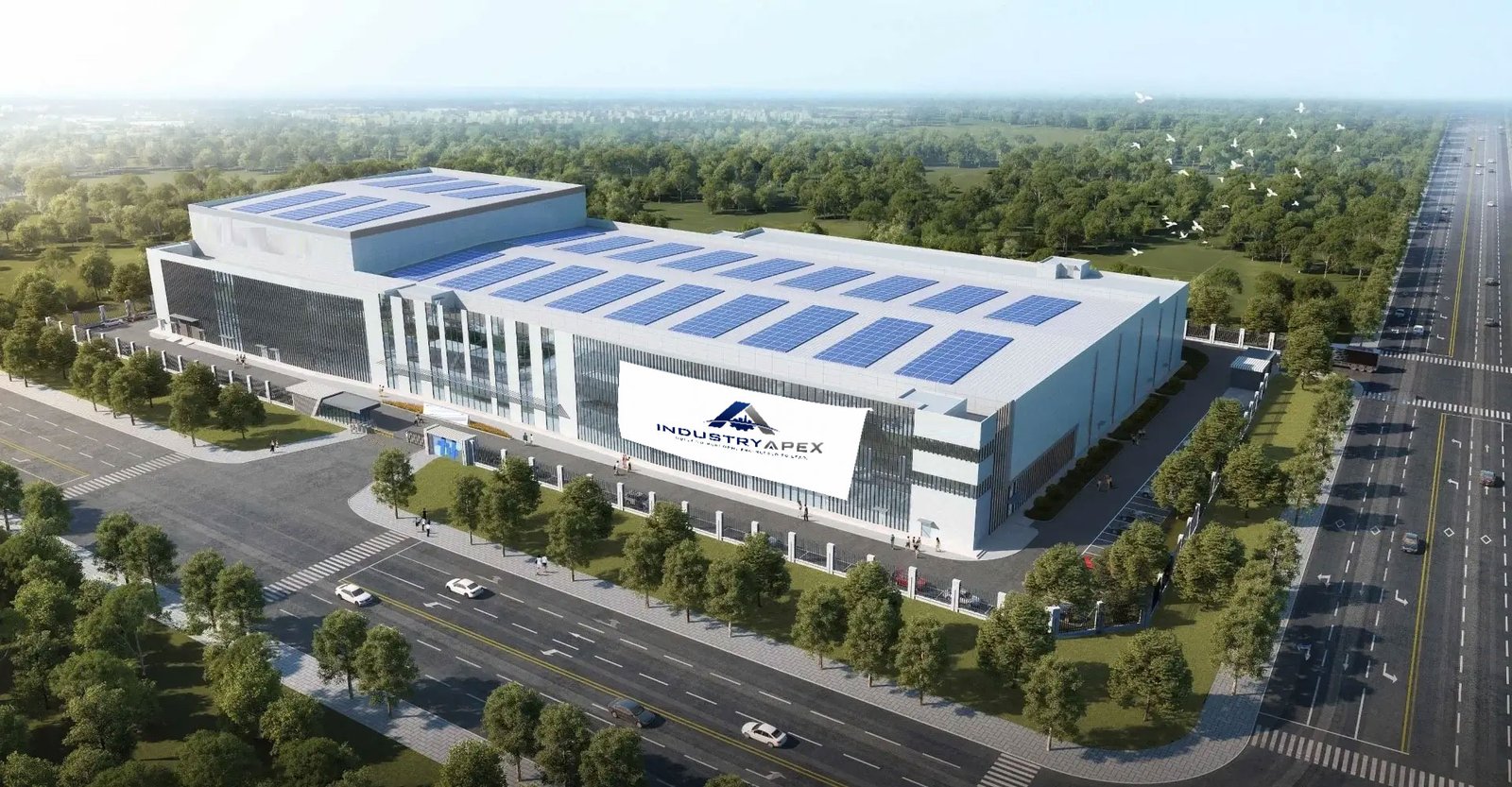
IndustryApex Technology, operating as IndustryApex CNC, exemplifies this ODM integrator model. With over 30 years of precision manufacturing experience, the company has constructed a fully controlled production ecosystem encompassing 3-axis and 5-axis CNC machining centers, EDM systems, precision grinding equipment, and industrial ceramics production — all operating under a unified ERP system designed for high-mix, multi-tolerance component programs. This operational architecture enables IndustryApex CNC to function as a single point of accountability for complex, multi-material, multi-process component programs from prototype through production volume.
For global OEMs and Tier 1 suppliers, this single-partner accountability model resolves a pervasive procurement challenge: the management burden of multi-vendor quality systems. When a component fails at final assembly, identifying root cause across a fragmented supplier network is time-consuming, expensive, and rarely conclusive. With an integrated ODM partner, every process step is documented within a traceable quality management framework, making corrective action faster, more targeted, and far less disruptive to production schedules.
Industrial ceramics capability adds a further dimension rarely available from conventional precision machining houses. For applications in semiconductor processing, medical devices, optics, and fluid control systems, ceramic components must meet dimensional tolerances comparable to metallic parts while exhibiting chemical inertness, thermal stability, and specific electrical properties. The ability to source both metallic and ceramic precision components from a single, quality-certified supplier simplifies approved vendor list (AVL) management and consolidates the qualification burden — a significant advantage for companies operating in regulated industries where supplier qualification carries substantial administrative cost.
The 30-year manufacturing experience base also carries compounding value that is often underestimated in procurement decisions. Deep institutional knowledge of material behavior, tooling wear curves, fixture design principles, and process-specific failure modes directly reduces first-article failure rates and shortens qualification timelines. For OEMs entering new product programs with aggressive launch deadlines, partnering with an experienced ODM integrator converts engineering risk into managed execution.
Industry Applications: Where Integration Delivers Competitive Results
The supply chain integrator model delivers measurable performance advantages across a diverse range of industrial verticals. Four high-value application domains illustrate how precision integration directly impacts OEM competitive outcomes.
Aerospace Structural Components
Aerospace programs demand the most rigorous combination of material performance, dimensional precision, and documentation integrity. Titanium alloy machining for aircraft structural components requires specialized tooling strategies, controlled cutting parameters, and post-machining validation protocols aligned with AS9100 quality frameworks. IndustryApex CNC’s aerospace CNC machining capabilities include 5-axis titanium machining for airframe structural elements and precision aircraft parts, with full traceability documentation compatible with prime contractor program requirements.
Medical Device and Implant Manufacturing
The medical device sector places supply chain integrators under the dual pressure of regulatory compliance and accelerating product development cycles. Implantable components require biocompatible material certifications, surface finish specifications measured in sub-micron Ra values, and dimensional repeatability that holds consistent across production lots of varying volume. IndustryApex CNC’s ISO-certified medical CNC machining services cover titanium implants, surgical instruments, and high-precision device components — all produced under quality systems designed to support FDA and CE regulatory pathways.
Hydraulic Systems and Fluid Control
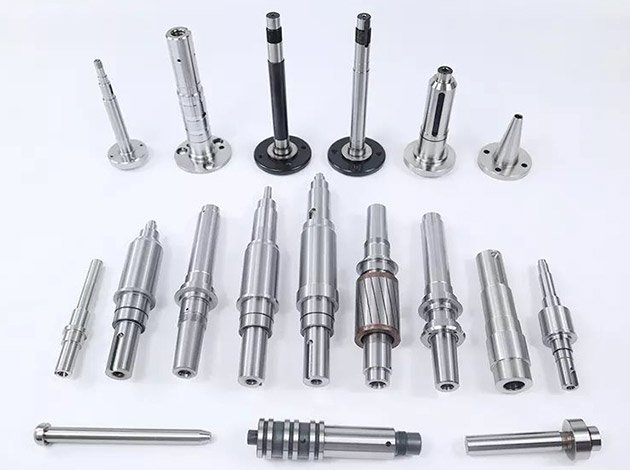
Hydraulic and fluid control components represent a precision machining domain where fit, form, and function are inseparable. Valve spools, pump housings, and manifold blocks require bore tolerances in the single-digit micron range, surface finishes that prevent hydraulic fluid contamination, and material selections that resist pressure fatigue and chemical degradation. IndustryApex CNC’s hydraulic pump parts manufacturing capabilities address this demanding specification environment, providing fluid control OEMs with a fully qualified, integrated source for critical pressure-containing components with documented process repeatability.
Industrial Automation and Energy
Across industrial automation, power generation, and energy extraction, OEMs face continuous pressure to reduce component lead times without compromising the performance margins engineered into their systems. Supply chain integrators capable of handling complex geometries in hard materials — tool steels, carbide alloys, superalloys — are increasingly positioned as strategic partners rather than transactional vendors. The ability to execute from prototype through production volume within a single quality-managed facility compresses NPI timelines and dramatically reduces the qualification overhead associated with introducing new suppliers at scale.
Partner with a Proven Supply Chain Integrator
The competitive dynamics of modern industrial manufacturing consistently reward OEMs and Tier 1 suppliers who execute faster, tighter, and with greater supply chain resilience than their peers. Supply chain integration is not a procurement convenience — it is a strategic capability that directly influences speed-to-market, quality outcomes, and total cost of ownership across the full component lifecycle.
IndustryApex CNC, powered by IndustryApex Technology’s three decades of precision manufacturing expertise, is positioned to serve as your full-spectrum ODM and supply chain integration partner. From design-for-manufacturability consultation through production and on-time delivery, our ERP-governed, multi-technology manufacturing system ensures your most demanding component programs are executed with the precision, traceability, and responsiveness your customers require.
To discuss your current component programs, request capability documentation, or initiate an RFQ, contact the IndustryApex CNC engineering team today. Agile manufacturing starts with the right supply chain partner.