- Shaft
- Molds&Tools
- Hydraulics And Pump
- Hair transplant needle
- Hydraulics And Pump
- Precision CNC Shaft Machining Manufacturer for High Performance Applications
- Energy Industry CNC Machining Parts Supplier
- Aerospace CNC Machining Parts Manufacturer
- Aerospace CNC Machining Parts Manufacturer
- Automotive & EV CNC Machining Parts Supplier for OEM and Tier 1
- Medical CNC Machining Parts Supplier for Precision Medical Devices
Advanced EDM and Wire Cutting for Hard and Brittle Materials: Precision Machining Solutions for OEM Supply Chains

Executive Summary
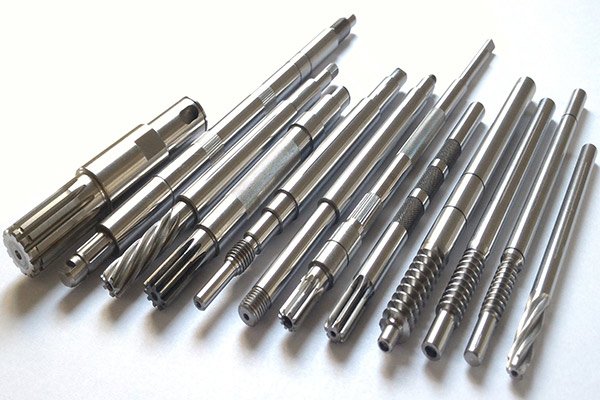
Hard and brittle materials—tungsten carbide, advanced ceramics, polycrystalline diamond (PCD), and hardened tool steels—present some of the most demanding challenges in precision manufacturing. Conventional subtractive machining methods struggle with these substrates due to excessive tool wear, micro-cracking, and dimensional instability. Electrical Discharge Machining (EDM) and wire cutting technologies have emerged as the definitive solution for processing these materials at tolerances below ±0.005 mm while preserving material integrity.
For global OEMs and Tier 1 suppliers sourcing critical components in aerospace, medical devices, and hydraulic systems, the ability to reliably machine hard and brittle materials at scale represents a significant competitive advantage. This analysis examines the technical foundations of EDM and wire cutting processes, their application to difficult-to-machine substrates, and how integrated ODM supply chain solutions reduce lead times and total cost of ownership for precision components.
Technical Deep Dive: EDM and Wire Cutting for Hard Materials
The Physics of Non-Contact Material Removal
EDM operates on the principle of controlled electrical discharges between an electrode and the workpiece, separated by a dielectric fluid. Because material removal occurs through thermal erosion rather than mechanical force, the process is indifferent to workpiece hardness. This fundamental characteristic makes EDM uniquely suited to materials that would destroy conventional cutting tools within seconds of contact.
Wire EDM (WEDM) extends this principle by using a continuously fed thin wire—typically brass or molybdenum between 0.1 mm and 0.3 mm diameter—as the electrode. The wire traces a programmed path through the workpiece, enabling complex 2D and tapered 3D geometries with surface finishes achievable down to Ra 0.1 μm on finishing passes.
Critical Process Parameters for Hard and Brittle Substrates
Machining tungsten carbide (hardness 89-93 HRA) and engineering ceramics (hardness exceeding 1500 HV) demands precise control of discharge energy to prevent thermal shock and subsurface microcracking. Key parameters include:
- Pulse-on time (Ton): Reduced to 0.5-2 μs for brittle materials to minimize heat-affected zones
- Pulse-off time (Toff): Extended intervals allow adequate dielectric flushing and thermal recovery
- Peak current: Controlled below 10A for finishing operations on carbide to prevent cobalt depletion at grain boundaries
- Wire tension: Optimized to 12-18N for carbide cutting to prevent wire deflection while avoiding workpiece stress
- Dielectric pressure: Precisely calibrated flushing prevents debris re-deposition on ceramic surfaces
Material-Specific Processing Strategies
Tungsten Carbide: The cobalt binder phase in cemented carbide is preferentially attacked during EDM, creating a recast layer that must be managed through multi-pass strategies. Roughing passes remove bulk material, while successive skim cuts at progressively reduced power eliminate the affected layer, restoring surface integrity to within 2-3 μm of the virgin material.
Advanced Ceramics (Al₂O₃, ZrO₂, Si₃N₄): Electrically conductive ceramics and ceramic composites can be directly processed via EDM. Non-conductive ceramics require assistive electrode techniques or conductive coating methods. Wire cutting of zirconia components for medical applications achieves the geometric complexity impossible through grinding alone.
PCD and CBN: Polycrystalline diamond and cubic boron nitride tool blanks rely almost exclusively on wire EDM for profile shaping. The process selectively erodes the metallic binder while maintaining diamond grain integrity, producing cutting edges with controlled micro-geometry.
Achievable Tolerances and Surface Quality
Modern multi-axis wire EDM machines equipped with automatic wire threading and anti-electrolysis power supplies deliver:
- Positional accuracy: ±0.002 mm
- Surface roughness: Ra 0.1-0.4 μm (finishing passes)
- Corner radii: down to 0.05 mm with fine wire
- Taper cutting: up to ±30° with independent UV axis control
- Aspect ratios: exceeding 100:1 for slot and profile features
The ODM and Supply Chain Advantage
Why Integrated Manufacturing Matters for Hard Material Components
Sourcing EDM-processed components from fragmented supply chains introduces compounding risks: inconsistent process parameters between vendors, quality escapes at handoff points, and extended lead times from multi-facility routing. For OEMs requiring carbide wear components, ceramic insulators, or hardened die sections, a vertically integrated manufacturing partner eliminates these failure modes.
IndustryApex Technology (IndustryApex CNC) operates as a supply chain integrator and ODM solution provider with over 30 years of precision manufacturing experience. The company’s fully controlled manufacturing system encompasses the complete process chain for hard and brittle materials—from raw material qualification through EDM processing, precision grinding, and final inspection—under a single ERP-managed production environment.
Manufacturing Capabilities Aligned to Hard Material Processing
The integration of EDM and wire cutting within a broader capability set creates synergies that standalone EDM shops cannot replicate:
- 3-5 Axis CNC Machining: Pre-machining of component features before hardening, reducing EDM cycle time by up to 40%
- Sinker EDM: Complex cavity geometries in carbide die components and mold inserts
- Wire EDM: Profile cutting of hardened punches, carbide wear plates, and ceramic structural elements
- Precision Grinding: Post-EDM surface finishing to achieve final dimensional specifications and eliminate recast layers
- Industrial Ceramics Processing: Dedicated capabilities for alumina, zirconia, and silicon nitride component manufacturing
ERP-Driven Quality and Traceability
For Tier 1 suppliers serving regulated industries, material traceability from billet to finished component is non-negotiable. IndustryApex Technology’s ERP system maintains full process genealogy—including EDM machine parameters, wire lot numbers, dielectric condition, and inspection data—ensuring every component delivered carries complete manufacturing documentation suitable for aerospace AS9100 and medical ISO 13485 audit requirements.
Cost and Lead Time Optimization
Consolidating the process chain under one roof delivers measurable supply chain benefits:
- Lead time reduction of 30-50% versus multi-vendor routing
- Elimination of inter-facility transport damage risk for brittle materials
- Single-source accountability for dimensional conformance
- Prototype-to-production scaling without re-qualification
- Blanket order flexibility with kanban delivery scheduling
Industry Applications
Aerospace: Turbine and Structural Components
EDM wire cutting produces complex cooling hole geometries in nickel superalloy turbine blades and intricate profiles in hardened landing gear bushings. Tungsten carbide tooling inserts for aerospace fastener manufacturing depend on wire EDM for their precise cutting geometries. IndustryApex Technology’s aerospace machining capabilities integrate EDM processing within complete component manufacturing programs for global aircraft OEMs.
Medical Devices: Implants and Surgical Instruments
Ceramic femoral heads, zirconia dental abutments, and hardened surgical tool components require the geometric freedom and surface quality that only EDM can deliver on these substrates. Wire-cut profiles on cobalt-chrome orthopedic components achieve the complex articulating surfaces specified by medical device designers without introducing residual stress or microstructural damage.
Hydraulic and Fluid Power Systems
Tungsten carbide valve seats, hardened spool profiles, and wear-resistant pump components processed via EDM deliver the tight geometric tolerances essential for leak-free hydraulic system performance. Precision hydraulic pump components benefit from wire EDM’s ability to cut complex metering edge geometries in materials exceeding 65 HRC without burr formation.
Tooling and Die Manufacturing
Carbide progressive die sections, PCD-tipped cutting tools, and hardened punch profiles represent the highest-volume application of wire EDM in industrial manufacturing. Multi-cavity die sets with insert tolerances below ±0.003 mm are routine production work for properly equipped facilities.
Semiconductor and Electronics
Tungsten carbide and ceramic components for wafer handling, die bonding, and lead frame tooling require contamination-free EDM processing with controlled surface chemistry. The non-contact nature of EDM eliminates mechanical stress that could introduce subsurface defects in these precision substrates.
Partner with IndustryApex Technology for Hard Material Precision Components
Whether your application demands tungsten carbide wear components, ceramic structural elements, or hardened tool steel profiles machined to micron-level precision, IndustryApex Technology delivers complete ODM manufacturing solutions backed by three decades of process expertise. Our integrated EDM, wire cutting, CNC machining, and precision grinding capabilities eliminate supply chain complexity while ensuring the quality and traceability that global OEMs require.
Request a technical consultation and quotation for your hard material machining requirements. Our engineering team will evaluate your component geometry, material specification, and tolerance requirements to propose the optimal process routing and deliver prototype samples within your development timeline.
Contact IndustryApex Technology today to discuss your precision EDM and wire cutting project requirements.