
- Shaft
- Molds&Tools
- Hydraulics And Pump
- Hair transplant needle
- Hydraulics And Pump
- Precision CNC Shaft Machining Manufacturer for High Performance Applications
- Energy Industry CNC Machining Parts Supplier
- Aerospace CNC Machining Parts Manufacturer
- Aerospace CNC Machining Parts Manufacturer
- Automotive & EV CNC Machining Parts Supplier for OEM and Tier 1
- Medical CNC Machining Parts Supplier for Precision Medical Devices

Large-Scale Machining: Gantry Milling and Crankshaft Grinding for Global OEM Supply Chains

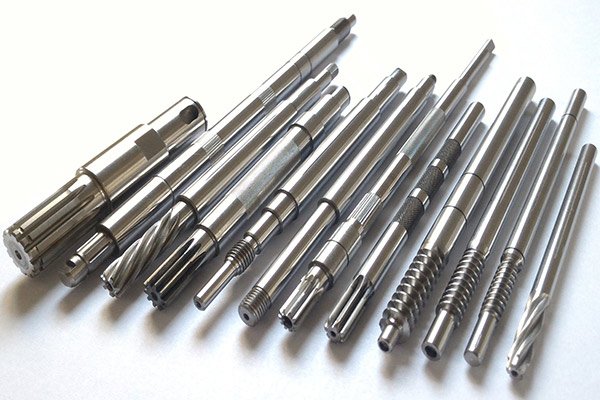
Executive Summary: Where Scale Meets Precision
As global OEMs and Tier 1 suppliers push component complexity to new extremes, two machining disciplines have emerged as critical bottlenecks in advanced manufacturing programs: gantry milling for oversized structural geometry and crankshaft grinding for ultra-precise rotational surfaces. Together, they define the upper performance boundary of what a precision machining supply chain must reliably deliver.
For procurement engineers and engineering managers evaluating suppliers, the central question is not whether a shop owns the right machine — it is whether that supplier controls the entire process chain from raw material qualification to final CMM inspection. A fragmented supply chain introduces scheduling risk, quality escape risk, and accountability gaps that erode program margins and delay production launches.
At IndustryApex Technology’s IndustryApex CNC division, we have spent over 30 years building a vertically integrated ODM manufacturing system specifically designed to eliminate those risks. This article examines the engineering principles behind gantry milling and crankshaft grinding, quantifies the supply chain advantage of a single-source precision partner, and maps these capabilities to the industry segments where they deliver the highest operational ROI.
Technical Deep Dive: Gantry Milling and Crankshaft Grinding
Gantry Milling: Controlling Deflection at Scale
Gantry milling — also referred to as bridge milling — positions spindle assemblies on a fixed or traveling gantry frame that spans a large worktable, with X-axis travel typically ranging from 3 to 20-plus meters. The defining engineering advantage of this architecture is symmetry: cutting forces are transmitted through twin columns rather than a cantilevered spindle, eliminating the deflection modes that limit conventional vertical machining centers at large workpiece scales.
High-specification gantry systems used in aerospace and heavy-industry applications routinely deliver the following performance envelope:
- Spindle power: 30 to 150 kW continuous, enabling aggressive stock removal in titanium and Inconel
- Positioning accuracy: ±0.01 mm across full table travel
- Table load capacity: 10 to 200-plus metric tons, accommodating turbine bedplates and aircraft structural assemblies
- Simultaneous 5-axis interpolation: enabling compound-angle features on complex structural pockets in a single setup
The most demanding gantry applications involve aerospace structural frames — wing spars, fuselage bulkheads, and landing gear bay structures — where feature tolerances of ±0.05 mm must be maintained across meter-scale titanium or aluminum billet surfaces. Thermal management is the dominant process variable: localized heat from high-speed milling alters workpiece geometry during the cut itself, requiring intelligent coolant delivery strategies and in-process probing to compensate for thermal growth in real time.
Crankshaft Grinding: Sub-Micron Accuracy on Rotating Geometry
Crankshaft grinding presents the inverse engineering challenge. Here, the objective is not to control deflection across a large span, but to eliminate it within a rotating cylindrical workpiece while simultaneously achieving surface and geometric tolerances that determine bearing life, combustion efficiency, and emissions compliance in the end product.
Modern CNC crankshaft grinders use CBN (cubic boron nitride) superabrasive wheels, active-gauging feedback loops, and thermal compensation algorithms to hold the following critical parameters:
- Journal roundness: within 0.003 mm (3 microns)
- Surface roughness: Ra ≤ 0.2 μm on bearing journal surfaces
- Cylindricity: controlled to eliminate taper and barrel form error within 0.002 mm
The pin journals of a crankshaft — offset from the rotational axis by the crankpin radius — introduce a kinematic complexity that distinguishes crankshaft grinding from straight cylindrical work. The grinding wheel must oscillate in synchrony with the workpiece rotation to maintain constant contact on the orbiting journal, a motion profile that demands sub-micron interpolation accuracy and rigid machine structure to prevent chatter marks that would fail bearing surface inspection. The same frictional heat management discipline that applies to gantry milling governs grinding cycle design: coolant pressure, wheel dressing frequency, and sparkout dwell time are all optimized to prevent surface burn and grinding-induced tensile residual stress.
The ODM and Supply Chain Advantage: Vertical Integration as a Risk Mitigation Strategy
For procurement teams sourcing large-scale machined components, supplier qualification is ultimately a risk quantification exercise. A single-source failure at the grinding stage can delay a crankshaft assembly program by weeks when the supplier relies on sub-contracted finishing operations that sit outside their quality management system. The sub-contractor introduces a handoff point — and every handoff point is a potential schedule slip, a quality escape pathway, and a liability gap in the traceability record.
The IndustryApex CNC supply chain model is architected to eliminate those handoff points. Our facility operates 3- to 5-axis CNC machining centers, wire and die-sink EDM, precision cylindrical and surface grinding lines, and industrial ceramics production under a single ERP-controlled workflow. When a Tier 1 customer places an order for a complex crankshaft family or a gantry-milled structural sub-assembly, every operation — roughing, semi-finishing, heat treatment coordination, precision grinding, hard chrome or PVD coating interface, and final CMM inspection — is scheduled, tracked, and quality-gated within one traceable system. No purchase orders to unqualified sub-tiers. No undisclosed process substitutions.
ODM Engineering Partnership: Beyond Print-to-Part Execution
The ODM model extends integration upstream into the design process itself. Rather than simply executing a customer’s released drawing, our applications engineering team participates in design-for-manufacturability reviews, material selection, and tolerance stack-up analysis before a single chip is cut. For customers sourcing hydraulic pump components, valve spools, and high-pressure fluid control parts, this collaboration routinely identifies tolerance specifications that can be relaxed in non-critical zones without functional impact — reducing cycle time and per-part cost without any change to end-use performance.
With a process library spanning over three decades, our material expertise covers 7075-T6 and 2024-T4 aluminum, grade-5 and grade-23 titanium, 17-4 PH and 316L stainless steel, Inconel 718, tungsten carbide, and advanced industrial ceramics. This breadth is strategically valuable for global OEM customers managing multi-material assemblies — such as a crankshaft sub-assembly combining a forged steel shaft, bronze thrust bearing surfaces, and ceramic-coated counterweight interfaces — where a single supplier managing all material streams reduces qualification overhead and simplifies supplier audit scope.
For global OEM and Tier 1 procurement organizations operating lean supply chain models, the arithmetic is straightforward: one qualified supplier with full process control, one quality plan, one audit, one point of accountability.
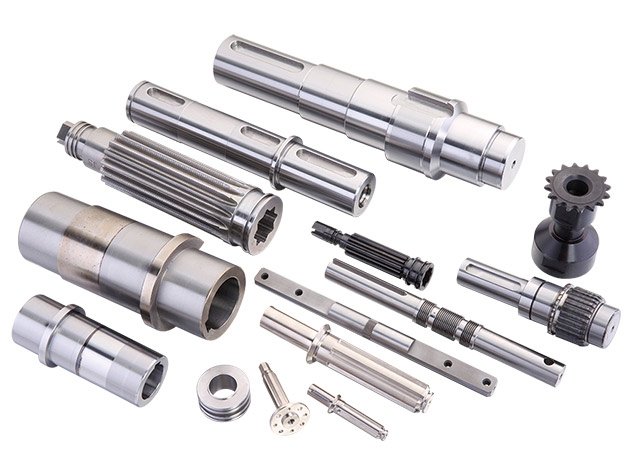
Industry Applications: Where Gantry Milling and Crankshaft Grinding Drive Value
Power Generation and Energy Infrastructure
Large turbine shafts, diesel generator crankshafts, and structural bedplates for wind turbine nacelles require both capabilities in sequence: gantry milling defines the structural envelope and bolt pattern geometry, while precision grinding delivers the journal and bearing interface surfaces that determine operational service life. Power generation OEMs demanding long mean-time-between-overhaul intervals specify journal roundness and surface finish parameters that only controlled CBN grinding can achieve at production volumes.
Heavy-Duty Automotive, Commercial Vehicles, and Marine
Diesel and large-displacement engine crankshafts for heavy trucks, off-highway mining equipment, and large marine propulsion systems represent the core commercial application of high-specification crankshaft grinding. Tier 1 engine manufacturers qualify suppliers not on sample-part capability alone, but on the demonstrated ability to hold 0.003 mm journal roundness across production lot sizes of hundreds to thousands of units per month. Active in-process gauging and statistical process control integration are non-negotiable qualification requirements at this tier.
Aerospace and Defense Structural Components
Wing root fittings, engine pylons, flight control actuator housings, and fuselage frame members are prime gantry milling applications where the ability to maintain ±0.05 mm tolerance across a 4-meter titanium billet is a hard capability threshold. Only a small number of global suppliers can reliably meet this specification at production rates consistent with aircraft delivery schedules. Our aerospace CNC machining capabilities for titanium aircraft parts and structural components are specifically developed to address this qualification barrier for aerospace OEMs and their first-tier structural suppliers.
Medical Device and Surgical Robotics
While crankshaft grinding is not a direct medical application, the CBN grinding process — with its sub-micron surface finish control and geometric accuracy — transfers directly to orthopedic implant shafts, surgical robot joint components, and MRI housing structures where surface integrity is a regulatory compliance requirement, not merely a performance specification. Our ISO-certified CNC machining for medical components, including titanium implants and surgical instruments, demonstrates how grinding process discipline developed in the crankshaft domain translates directly to medical device precision requirements.
Construction and Agricultural Machinery
Frame members for large excavators, mobile cranes, and agricultural harvester platforms represent a rapidly growing gantry milling segment as OEMs systematically replace multi-part welded fabrications with single-setup machined structural components. The dimensional consistency of a machined structural frame eliminates the assembly shimming and alignment labor that erodes final assembly efficiency in high-volume off-highway equipment production.
Partner with IndustryApex CNC for Your Next Large-Scale Machining Program
Whether you are qualifying a new supplier for large-format gantry milling, seeking a precision crankshaft grinding partner capable of production-volume CBN grinding, or evaluating an ODM integration model to consolidate a fragmented machining supply chain, IndustryApex CNC offers a verified 30-year track record across power generation, aerospace, heavy automotive, and industrial machinery programs.
Our applications engineering team is available to review your drawings, provide design-for-manufacturability feedback, and generate a technical quotation typically within 48 business hours. For customers managing complex multi-component assemblies, our ODM supply chain model allows us to coordinate material procurement, sub-process scheduling, and final inspection — delivering fully documented, CMM-verified sub-assemblies ready for your production line.
Visit IndustryApex CNC to explore our complete precision manufacturing capabilities across CNC machining, EDM, grinding, and industrial ceramics — or contact our applications engineering team directly to begin your supplier qualification or request a program-specific technical review today.