- Shaft
- Molds&Tools
- Hydraulics And Pump
- Hair transplant needle
- Hydraulics And Pump
- Precision CNC Shaft Machining Manufacturer for High Performance Applications
- Energy Industry CNC Machining Parts Supplier
- Aerospace CNC Machining Parts Manufacturer
- Aerospace CNC Machining Parts Manufacturer
- Automotive & EV CNC Machining Parts Supplier for OEM and Tier 1
- Medical CNC Machining Parts Supplier for Precision Medical Devices
Supply Chain Integrators in Agile Manufacturing: How ODM Precision Partners Accelerate OEM Competitive Advantage

Executive Summary
In today’s hypercompetitive global manufacturing environment, agility is no longer a differentiator—it is a baseline expectation. Original Equipment Manufacturers and Tier 1 suppliers across aerospace, medical, hydraulics, and advanced industrial sectors face relentless pressure to shorten development cycles, eliminate sourcing friction, and maintain zero-defect quality standards on geometrically complex components. Traditional multi-vendor procurement models introduce coordination overhead, quality inconsistencies, and lead time variability that systematically undermine operational agility at the program level.
Supply chain integrators—manufacturers that combine design engineering, precision production, and logistics orchestration within a unified operational framework—are emerging as the strategic answer to this challenge. By consolidating the supplier base around a single, technically capable ODM partner, global OEMs gain not just components, but a synchronized manufacturing intelligence layer that accelerates product realization, compresses NPI timelines, and de-risks the supply chain at its structural foundations.
This analysis examines the operational architecture, technical capabilities, and commercial logic of supply chain integration as a manufacturing strategy, and explores how precision ODM partners are reshaping what agile manufacturing looks like in practice for engineering and procurement leaders at forward-thinking industrial organizations worldwide.
Technical Deep Dive: The Architecture of Integrated Precision Manufacturing
The architecture of an effective supply chain integrator rests on three interdependent pillars: process breadth, production system control, and metrology-driven quality governance. Understanding how these pillars interact explains why integration delivers compounding performance advantages that no fragmented vendor network can replicate.
Process Breadth and Multi-Operation Workflow Ownership
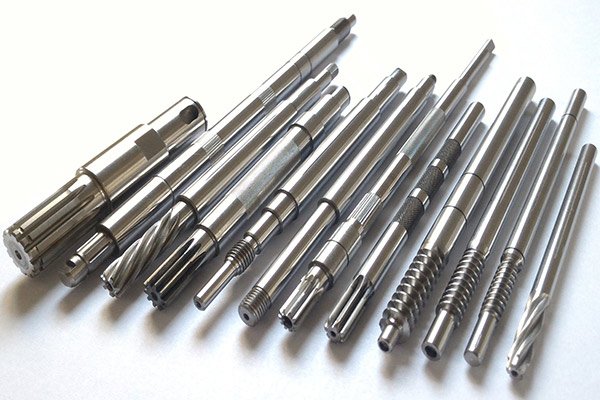
Modern precision components frequently require sequential manufacturing operations—multi-axis turning, 5-axis milling, electrical discharge machining (EDM), precision grinding, surface finishing, and functional inspection—before they meet drawing tolerances and customer quality records. A fragmented supply chain routes these operations across multiple facilities, introducing scheduling gaps, inter-facility tolerance stack-up risk, and accountability diffusion whenever a dimensional non-conformance arises. A true supply chain integrator houses these processes under a single operational roof, executing multi-operation workflows within a unified scheduling environment and with undivided quality traceability from raw material to finished component.
At IndustryApex CNC, manufacturing capabilities span 3-axis and 5-axis CNC machining centers, wire and die-sink EDM, precision cylindrical and surface grinding, and specialized industrial ceramic processing—enabling complete component families to be produced without inter-facility handoffs. This process breadth eliminates inter-vendor coordination overhead and compresses lead times by 25–40% on complex, multi-operation assemblies compared to distributed sourcing models.
ERP-Driven Production Control and Scheduling Agility
Enterprise Resource Planning integration transforms a manufacturing operation from a collection of independent machine tools into a coherent, intelligent production system. Real-time capacity scheduling, material inventory visibility, tooling management, and quality record workflows allow supply chain integrators to respond dynamically to OEM engineering change orders, prototype acceleration requests, volume ramp events, and end-of-quarter pull-forward scenarios that are routine in competitive product development environments. Without ERP-driven production control, even technically capable manufacturers cannot deliver the scheduling flexibility and transparency that agile product development demands from a primary supply chain partner.
Precision Metrology as a Quality Foundation
Agile manufacturing cannot come at the cost of dimensional accuracy or regulatory compliance. Components destined for aerospace structural assemblies, medical implant systems, or hydraulic power units operate within micron-level tolerance bands and require complete material and process traceability documentation. Supply chain integrators committed to OEM-grade quality maintain dedicated metrology capabilities—coordinate measuring machine (CMM) inspection, surface roughness analysis, roundness and cylindricity verification, and material certification workflows—ensuring that speed and precision advance in parallel rather than in structural tension. This integrated metrology posture is what separates a true precision manufacturing partner from a volume commodity supplier competing primarily on unit price.
The ODM and Supply Chain Integration Advantage
The distinction between a component vendor and an Original Design Manufacturer supply chain partner is fundamental, not cosmetic. A vendor executes drawings. An ODM partner contributes design for manufacturability (DfM) intelligence, process engineering expertise, and tooling strategy input that measurably improves program outcomes from the earliest stages of product development—reducing costly design iteration cycles and accelerating first-article approval timelines.
Three Decades of Precision Manufacturing Institutional Knowledge
Experience in high-precision manufacturing is not simply a marketing credential—it is an operational asset encoded in process parameter libraries, tooling geometry databases, fixturing inventories, material-specific cutting strategies, and institutional knowledge about component behavior under machining-induced stress. With over 30 years of precision manufacturing experience, IndustryApex Technology brings to each engagement a depth of process knowledge that measurably reduces first-article failure rates, accelerates new product introduction timelines, and minimizes the costly iteration cycles that erode program margins on complex component families. This institutional knowledge is particularly valuable in exotic material categories—titanium alloys, hardened tool steels, advanced ceramics, and tungsten carbide—where incorrect process parameters produce surface integrity failures invisible to dimensional inspection alone.
The Fully Controlled Manufacturing System Advantage
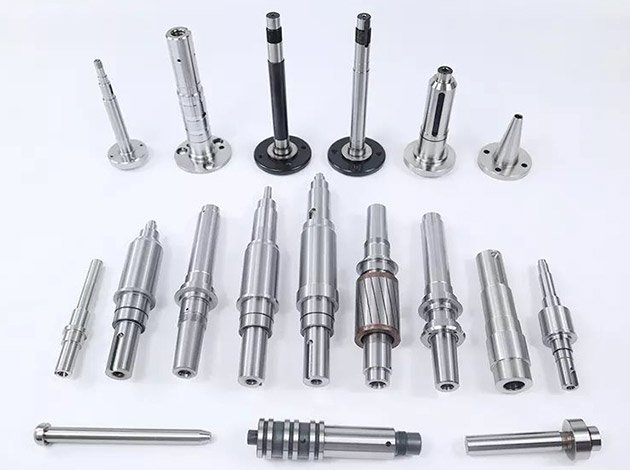
The most strategically significant advantage of a supply chain integrator is operational control. When manufacturing is distributed across a fragmented, multi-tier vendor network, each supplier optimizes for its own throughput efficiency—often at the direct expense of the OEM’s system-level program priorities. Quality accountability becomes diffuse, scheduling dependencies create cascading delays, and the OEM’s procurement team becomes an unwilling systems integrator managing conflicts between vendors who have no structural incentive to coordinate. By contrast, a vertically integrated manufacturing partner with a fully controlled production system aligns its operational rhythms, capacity allocation, and quality priorities with OEM program requirements rather than internal convenience.
IndustryApex CNC operates as exactly this type of vertically integrated precision ODM manufacturer, offering global OEM customers and Tier 1 suppliers a single-source solution for complex component families spanning mechanical, hydraulic, aerospace, and medical application domains. Internal coordination replaces external negotiation. Quality ownership is undivided. And the engineering relationship between OEM program teams and the manufacturing partner can mature from transactional to collaborative—unlocking value at the design interface that pure commodity sourcing permanently forecloses.
Supply Chain Resilience as a Competitive Parameter
Supply chain disruption—whether driven by geopolitical factors, material shortages, logistics bottlenecks, or demand volatility—consistently exposes the structural fragility of extended, multi-tier vendor chains. Supply chain integrators with controlled manufacturing environments, diversified process capabilities, and strategic material buffer inventory offer OEMs a resilience posture unavailable in fragmented sourcing architectures. The ability to re-sequence production across process lines, substitute within approved material equivalency frameworks, and maintain safety stock on long-lead strategic components transforms supply chain risk from a systemic existential vulnerability into a manageable engineering and procurement parameter with quantifiable mitigation options.
Industry Applications: Precision Integration Across High-Consequence Sectors
The operational model of the supply chain integrator delivers differentiated, measurable value across multiple high-consequence industrial sectors where dimensional precision, material integrity, regulatory compliance, and complete traceability are non-negotiable requirements. The following application domains illustrate the practical scope of precision manufacturing integration in production environments.
Aerospace Structural and Propulsion Components
Aerospace manufacturing represents the most demanding precision manufacturing environment in commercial industry, combining tight dimensional tolerances measured in microns, exotic material requirements centered on titanium and nickel superalloys, rigorous structural qualification testing, and comprehensive quality documentation mandates extending from raw material certificates to final inspection records. Titanium alloy structural airframe components, flight control actuation system elements, and propulsion system housings require 5-axis simultaneous machining capability, highly specialized cutting parameters optimized for titanium work-hardening behavior, and full AS9100-aligned material and process traceability chains.
IndustryApex CNC’s aerospace CNC machining capabilities are purpose-built around these exacting requirements, providing Tier 1 aerospace system integrators with a precision manufacturing partner capable of meeting the technical and quality management demands of flight-critical component programs.
Medical Device and Implant Precision Manufacturing
Medical-grade precision components—including titanium orthopedic implants, surgical instrument bodies, and diagnostic device structural elements—demand biocompatible material processing, micro-tolerance dimensional control, surface roughness specifications optimized for osseointegration or fluid compatibility, and cleanroom-compatible finishing protocols. Regulatory traceability requirements mandated by FDA, ISO 13485, and CE marking frameworks add further operational complexity, requiring complete and auditable documentation chains at every production stage. IndustryApex CNC’s ISO-certified medical CNC machining services address these requirements within a quality management framework purpose-designed for medical supply chain demands and audit readiness.
Hydraulic Power and Fluid Control Systems
Hydraulic pump and valve components operate under extreme pressure cycling conditions, requiring internal bore geometries, valve spool clearances, and sealing surface finishes that prevent leakage, minimize volumetric losses, and maintain system efficiency over demanding service life cycles. The hydraulic pump parts manufacturing capabilities at IndustryApex CNC are engineered to meet the dimensional precision and surface integrity requirements of high-performance hydraulic system OEMs, supporting fluid power applications from industrial automation machinery to mobile construction and agricultural equipment.
The common thread across all three application domains is precision, traceability, and operational integration—the defining characteristics of a supply chain partner that functions as a genuine engineering and manufacturing extension of the OEM’s own technical organization rather than an interchangeable commodity vendor competing solely on landed unit cost.
Partner with a Precision Supply Chain Integrator Built for Global OEM Programs
For engineering directors and procurement leaders evaluating precision component sourcing strategies, the operational and commercial case for supply chain integration is increasingly difficult to ignore. The combination of multi-process manufacturing breadth, ERP-driven production control, over 30 years of precision manufacturing institutional depth, and demonstrated performance across aerospace, medical, and hydraulic application domains positions IndustryApex Technology’s IndustryApex CNC as a high-value precision ODM partner for demanding global OEM and Tier 1 programs.
Whether your program requirements span aerospace structural assemblies requiring 5-axis titanium machining, medical implant components demanding ISO-certified quality management, hydraulic system elements requiring micron-level bore precision, or complex industrial machinery components challenging the limits of conventional precision manufacturing, IndustryApex CNC offers a fully integrated, single-source manufacturing solution built to the exacting technical and quality standards your supply chain demands.
Explore the complete precision manufacturing portfolio at IndustryApex CNC, or contact our engineering team directly to begin a technical consultation on how supply chain integration can reduce your sourcing complexity, compress your lead times, and strengthen your competitive position in 2026 and beyond.