- Shaft
- Molds&Tools
- Hydraulics And Pump
- Hair transplant needle
- Hydraulics And Pump
- Precision CNC Shaft Machining Manufacturer for High Performance Applications
- Energy Industry CNC Machining Parts Supplier
- Aerospace CNC Machining Parts Manufacturer
- Aerospace CNC Machining Parts Manufacturer
- Automotive & EV CNC Machining Parts Supplier for OEM and Tier 1
- Medical CNC Machining Parts Supplier for Precision Medical Devices
The Role of Supply Chain Integrators in Agile Manufacturing: How ODM Partners Drive OEM Competitiveness

Executive Summary
In an era defined by compressed product lifecycles, geopolitical supply disruptions, and escalating quality requirements, Original Equipment Manufacturers face mounting pressure to deliver precision-engineered components faster and more cost-effectively than ever before. The traditional model of managing fragmented supplier networks—where machining, finishing, inspection, and logistics are spread across disparate vendors—introduces latency, quality variance, and communication overhead that directly erode competitive advantage.
Supply chain integrators have emerged as the strategic answer to this challenge. Unlike conventional contract manufacturers, integrators consolidate design-for-manufacturability (DFM) consultation, multi-process precision machining, quality assurance, and logistics coordination under a single accountability framework. For global OEMs and Tier 1 suppliers seeking agile manufacturing partnerships, selecting the right integrator can reduce lead times by 30–50%, compress qualification cycles, and eliminate the hidden costs of multi-vendor coordination.
This analysis examines how supply chain integration principles apply to high-precision CNC manufacturing, explores the technical capabilities required for effective integration, and outlines the evaluation criteria procurement engineers should apply when qualifying ODM solution providers for mission-critical component programs.
Technical Deep Dive: The Architecture of Integrated Precision Manufacturing
Agile manufacturing in the precision components sector requires more than flexible scheduling. It demands a fully connected manufacturing ecosystem where engineering data flows seamlessly from customer CAD models through process planning, machine programming, in-process inspection, and final certification without manual handoffs or data translation losses.
Multi-Process Convergence
True supply chain integration requires converging multiple precision manufacturing processes within a controlled environment. A component that requires 5-axis CNC milling, wire EDM for intricate features, precision grinding to sub-micron surface finishes, and coordinate measuring machine (CMM) verification should not travel between four separate facilities. Each transfer introduces handling risk, transit time, re-fixturing deviation, and documentation complexity.
The integrated model collocates these capabilities—3-axis through 5-axis CNC machining, sinker and wire EDM, cylindrical and surface grinding, and advanced ceramics processing—within a unified production cell governed by a single ERP system. This architecture enables real-time scheduling optimization, immediate engineering change order (ECO) implementation, and closed-loop quality feedback between processes.
ERP-Driven Traceability and Responsiveness
Enterprise Resource Planning systems serve as the nervous system of agile manufacturing integrators. When a customer releases a revised drawing, the ERP cascades updates through bill-of-materials, tooling requirements, inspection protocols, and delivery scheduling simultaneously. This eliminates the days or weeks lost when change notices must propagate across multiple supplier organizations with incompatible systems.
For industries requiring full material traceability—such as aerospace CNC machining and medical device manufacturing—ERP-integrated production provides batch-level traceability from raw material certification through final inspection without the reconciliation burden of cross-referencing documentation from multiple vendors.
The DFM Feedback Loop
Agile integrators differentiate from passive contract manufacturers through proactive Design for Manufacturability engagement. When process engineers, tooling specialists, and quality personnel operate within the same organization, DFM recommendations incorporate real machine capability data rather than generic tolerance assumptions. This accelerates first-article approval rates and reduces the iterative revision cycles that plague fragmented supply chains.
The ODM & Supply Chain Advantage
Original Design Manufacturing partnerships extend beyond contract machining into collaborative problem-solving. Where a conventional supplier executes drawings as received, an ODM supply chain integrator contributes manufacturing intelligence that optimizes component performance, reduces unit cost, and compresses time-to-market.
IndustryApex Technology: A Case Study in Integration Maturity
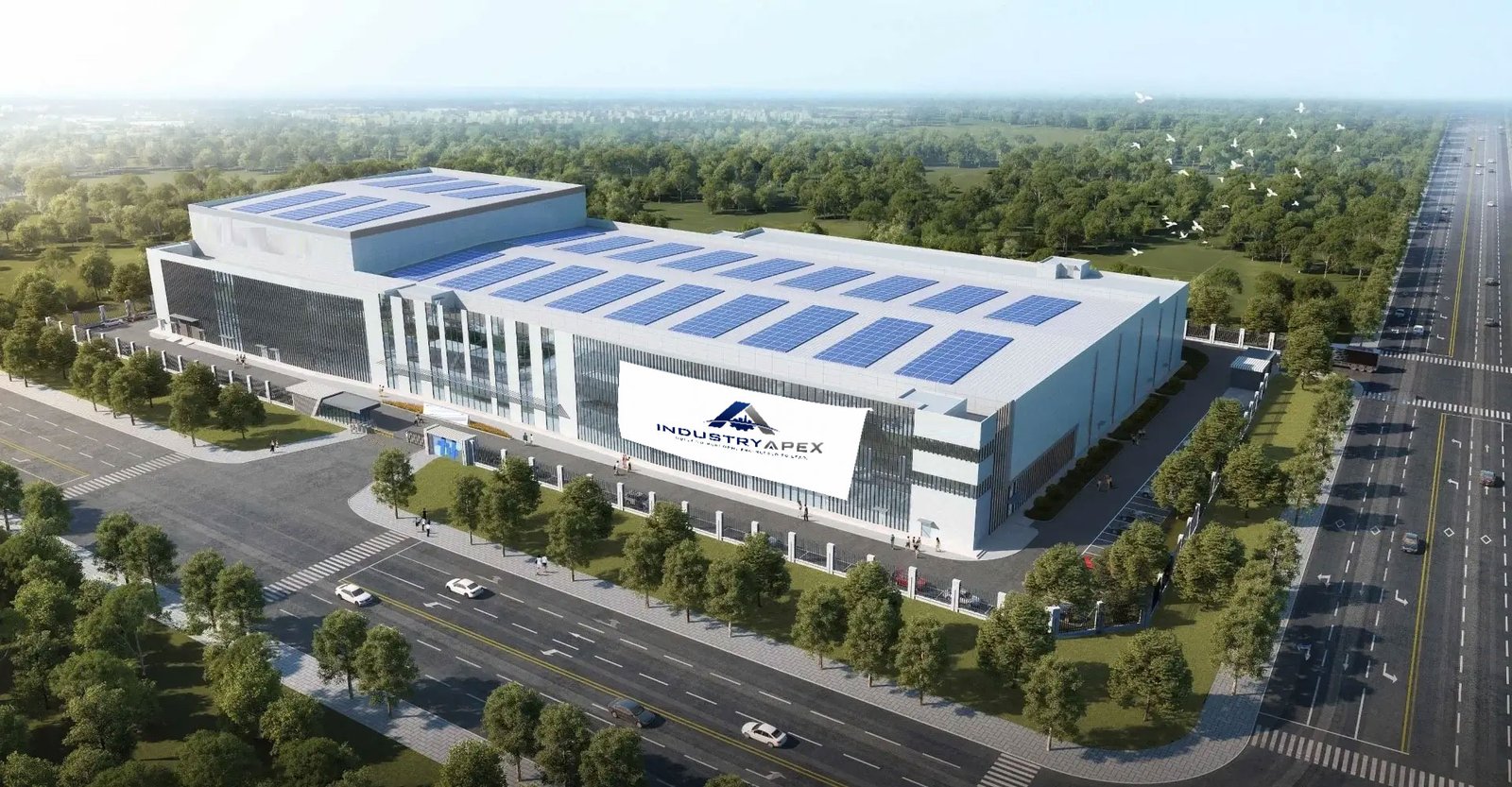
IndustryApex Technology (IndustryApex CNC) exemplifies the supply chain integrator model with over 30 years of precision manufacturing experience serving global OEM and Tier 1 supplier programs. As a purpose-built ODM solution provider, the organization consolidates the full spectrum of precision manufacturing under unified operational control.
The manufacturing system encompasses 3-axis to 5-axis CNC machining centers, EDM (wire and sinker), precision grinding (cylindrical, surface, and internal), and industrial ceramics processing—all governed by an integrated ERP platform that provides real-time production visibility and complete order traceability. This vertical integration eliminates inter-supplier coordination overhead and enables rapid response to engineering changes or volume fluctuations.
For procurement engineers evaluating potential partners, this integration maturity translates to measurable advantages:
- Single-source accountability: One purchase order, one quality system, one point of contact for complex multi-process components.
- Compressed lead times: Internal process routing eliminates transit time and re-qualification delays between operations.
- Institutional knowledge retention: Three decades of process data and application experience inform DFM recommendations that newer entrants cannot replicate.
- Scalability without quality variance: ERP-controlled production maintains process consistency whether producing prototype quantities or production volumes.
Risk Mitigation Through Integration
Supply chain risk management has become a board-level concern for manufacturing enterprises. Integrators mitigate risk through operational consolidation—reducing the number of external dependencies, minimizing logistics exposure, and maintaining quality system continuity that fragmented networks cannot guarantee. When a single qualified integrator manages critical-path components, the OEM eliminates the cascading failure modes inherent in multi-tier supply networks.
Industry Applications: Where Integration Delivers Maximum Impact
Aerospace and Defense
Aerospace programs demand exacting material specifications, complete traceability, and qualification processes that can consume months when conducted across multiple suppliers. Supply chain integrators with 5-axis aerospace machining capabilities consolidated with EDM and grinding eliminate the re-qualification burden at each process step, reducing first-article timelines significantly.
Medical and Life Sciences
ISO-certified medical component manufacturing requires validated processes, biocompatible material handling, and documentation rigor that multiplies complexity in fragmented supply chains. Integrated manufacturers maintain validated process control across all operations, simplifying regulatory submissions and audit responses for device OEMs.
Hydraulic Systems and Fluid Power
Hydraulic pump and valve components demand tight geometric tolerances, superior surface finishes, and material integrity that directly affect system performance and service life. Supply chain integrators deliver these components through controlled process sequences—rough machining, heat treatment coordination, finish grinding, and precision honing—without the dimensional drift that accumulates across multiple handling points.
Semiconductor and Precision Equipment
Capital equipment manufacturers in the semiconductor sector require exotic material machining (ceramics, tungsten carbide, specialty alloys) combined with sub-micron tolerances. Integrators with industrial ceramics and advanced materials capability eliminate the qualification complexity of sourcing these specialized operations from niche providers while maintaining the precision standards the industry demands.
Partner with a Proven Supply Chain Integrator
The transition from fragmented supplier management to strategic integration partnerships represents one of the highest-leverage improvements available to OEM procurement and engineering teams. Reduced lead times, simplified quality oversight, lower total cost of ownership, and improved supply chain resilience compound into measurable competitive advantage over product lifecycles.
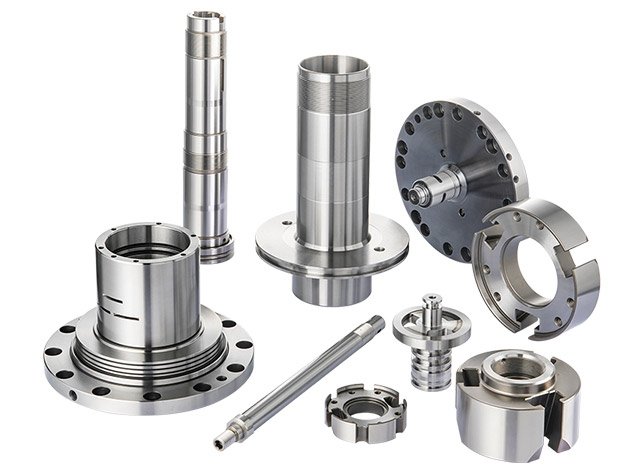
IndustryApex Technology brings over three decades of precision manufacturing expertise, multi-process integration under ERP control, and proven performance serving global OEM and Tier 1 programs across aerospace, medical, hydraulic, and semiconductor applications. Whether your requirement involves complex 5-axis titanium machining, precision ceramic components, or high-volume ground shafts and sleeves, our engineering team is prepared to evaluate your program requirements and propose optimized manufacturing solutions.
Contact our engineering team to discuss your precision component requirements, request DFM consultation, or schedule a virtual facility review. Let us demonstrate how integrated ODM manufacturing can strengthen your supply chain agility and accelerate your program timelines.