- Shaft
- Molds&Tools
- Hydraulics And Pump
- Hair transplant needle
- Hydraulics And Pump
- Precision CNC Shaft Machining Manufacturer for High Performance Applications
- Energy Industry CNC Machining Parts Supplier
- Aerospace CNC Machining Parts Manufacturer
- Aerospace CNC Machining Parts Manufacturer
- Automotive & EV CNC Machining Parts Supplier for OEM and Tier 1
- Medical CNC Machining Parts Supplier for Precision Medical Devices

Navigating ISO Standards for Medical CNC Machined Parts: A Strategic Guide for OEM Supply Chains

Navigating ISO Standards for Medical CNC Machined Parts: A Strategic Guide for OEM Supply Chains
1. Executive Summary
For medical device OEMs and Tier 1 suppliers, the gap between a precision-machined component and a market-ready medical part is measured not only in microns, but in pages of compliance documentation. ISO 13485, ISO 14971, ISO 10993, and ISO 9001 form the regulatory backbone that governs every chip removed from a titanium bone screw, every polished surface on a surgical instrument, and every traceable lot of a fluidic manifold destined for a dialysis machine. Sourcing strategies that overlook this framework expose buyers to recall risk, FDA 483 observations, EU MDR non-conformities, and costly redesign cycles.
This analysis unpacks how ISO standards translate into concrete manufacturing controls at the CNC machining level, what an ISO-aligned supplier looks like in practice, and why integrated ODM partners are increasingly displacing fragmented vendor networks. At IndustryApex Technology (IndustryApex CNC), three decades of precision manufacturing have shaped a quality system purpose-built for regulated industries, where documentation is treated as a deliverable equal in weight to the part itself. The goal of this article is to give procurement leaders, quality engineers, and design teams a clearer view of how to evaluate, qualify, and scale with a machining partner whose process maturity matches the regulatory demands of the medical sector.
2. Technical Deep Dive: What ISO Standards Actually Demand on the Shop Floor
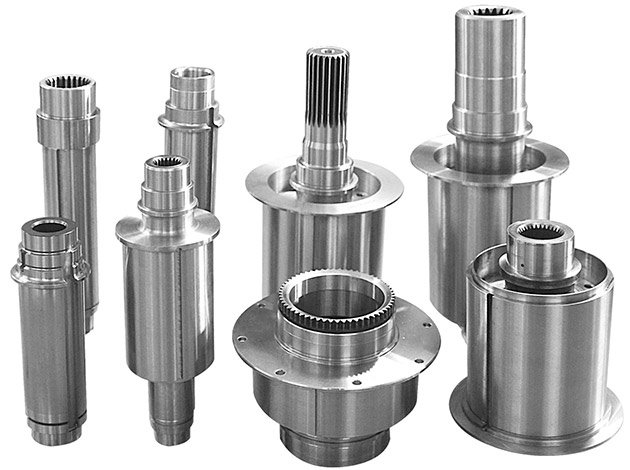
ISO 13485:2016 is the cornerstone standard for medical device quality management systems, and its requirements ripple all the way down to the spindle. Unlike ISO 9001, which emphasizes continuous improvement and customer satisfaction in general terms, ISO 13485 is risk-based and prescriptive. For a CNC machining supplier, that translates into specific shop-floor obligations: documented process validation (IQ, OQ, PQ) for critical operations, full forward and backward traceability from raw billet to finished lot, controlled change management for every fixture revision and tool path edit, and qualification of every operator who touches a regulated part.
Material traceability is often where suppliers stumble. Medical-grade Ti-6Al-4V ELI (ASTM F136), 316LVM stainless (ASTM F138), cobalt-chrome (ASTM F1537), and implant-grade PEEK each carry mill certifications that must be linked to specific work orders, heat-lot numbers, and finished serials. An ISO 13485-compliant CNC operation maintains this chain inside an ERP system, not on paper travelers prone to transcription error. When a regulator or notified body asks which heat of titanium produced the screws in a specific shipment three years ago, the answer must come back in minutes.
ISO 10993 governs biological evaluation, and although it is the device manufacturer’s responsibility, the machinist’s process directly influences outcomes. Cutting fluid selection, residue control, deburring methods, and passivation per ASTM A967 all influence cytotoxicity and sensitization test results. Suppliers running mixed-industry shops without dedicated cleaning protocols can introduce contaminants that surface only at final biocompatibility testing, often after thousands of parts are produced.
Dimensional control under ISO 13485 demands more than a capable CMM. It requires validated measurement systems analysis (MSA), gauge R&R studies under 10 percent for critical features, and statistical process control on key characteristics identified in the device master record. For features such as the taper angle on a bone screw head, the surface roughness inside a cannulated shaft, or the concentricity of an orthopedic reamer, Cpk values above 1.33 are typically the minimum acceptance threshold, with 1.67 preferred for safety-critical dimensions.
Risk management per ISO 14971 closes the loop. Process FMEAs must be living documents tied to actual non-conformance data, with mitigations validated through requalification. A mature supplier treats every customer complaint, internal scrap event, and CAPA as input to the risk file.
3. The ODM and Supply Chain Advantage
Medical device companies have spent the last decade consolidating their supplier bases. The math is straightforward: every qualified supplier carries an audit burden, a documentation overhead, and a risk surface. Procurement organizations that once managed forty machining vendors now aim for ten, and the survivors are those who can absorb engineering scope, not just execute drawings.
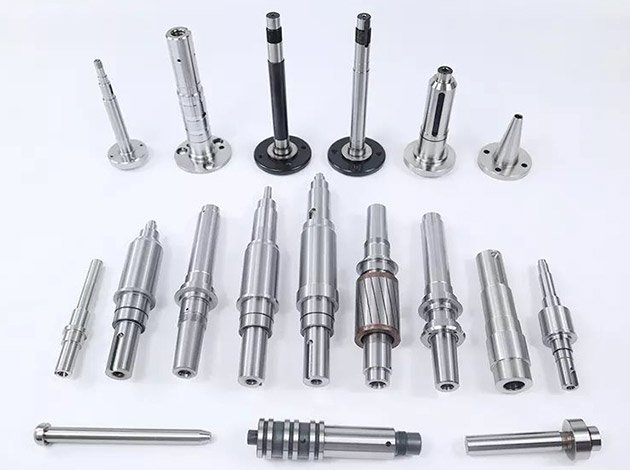
IndustryApex Technology positions itself as a supply chain integrator and ODM solution provider rather than a contract shop. The distinction is operational. Where a contract shop quotes from a print and ships to tolerance, an ODM partner engages at the design-for-manufacturing stage, proposes material and process alternatives, and assumes responsibility for outcomes across the entire build, not just the cutting operation. Over thirty years of precision manufacturing experience have produced a fully controlled internal system spanning 3-axis through 5-axis CNC machining, wire and sinker EDM, precision cylindrical and surface grinding, and industrial ceramics processing. This breadth matters because medical parts rarely live inside a single process. An orthopedic instrument may require 5-axis milling of complex geometry, EDM for sharp internal corners that cannot be reached with a tool, and precision grinding to achieve the surface finish required for fatigue performance.
ERP-driven production control is the connective tissue. Work orders, material lots, tool life data, inspection results, and shipping records sit inside a single system, which means traceability is not a special-project effort but a default state. For global OEM and Tier 1 customers operating across FDA, MDR, PMDA, and NMPA jurisdictions, this integration eliminates the patchwork of spreadsheets and PDFs that typically slow audit response. Buyers comparing this model to lower-cost shops should weigh the total cost of ownership, including supplier audits, deviation handling, expedite fees, and the opportunity cost of design engineering time spent troubleshooting vendor issues. The ODM model usually wins that calculation, particularly as part complexity rises. Teams evaluating their current sourcing footprint can begin a structured conversation through our engineering engagement portal.
4. Industry Applications
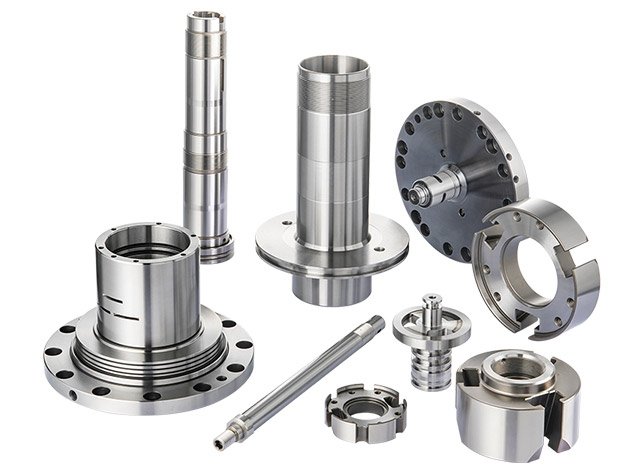
The ISO framework applies across a broad portfolio of medical CNC work, each with its own technical fingerprint. Orthopedic implants, including spinal cages, bone plates, pedicle screws, and joint components, demand titanium and cobalt-chrome machining with surface treatments that promote osseointegration. Tolerances on thread profiles, taper interfaces, and locking mechanisms typically run in the five-micron range, with surface finish requirements as tight as Ra 0.2 micrometers on articulating surfaces. Our ISO-certified medical machining capability is built around these requirements, with dedicated cells, separated tooling, and validated cleaning protocols.
Surgical instruments, from reusable forceps and retractors to single-use cutting tools, require 316L and 17-4 PH stainless steel work with passivation, electropolishing, and laser marking traceability. The same principles apply to high-precision device components such as endoscope housings, robotic surgery linkages, and infusion pump manifolds, where the intersection of mechanical accuracy and biocompatibility drives the process plan.
The cross-pollination across regulated industries is one of the underappreciated advantages of a broad-capability supplier. Process discipline developed for aerospace titanium and 5-axis structural components transfers directly to titanium implant work, since both demand validated cutting strategies, residual stress control, and full material traceability under AS9100 and ISO 13485 respectively. Similarly, tolerance and contamination control expertise from hydraulic pump spool and sleeve manufacturing informs the production of medical fluidic components, where leak-tight seating and submicron surface integrity govern device performance. A supplier that has spent decades in these adjacent fields brings a calibrated process library that a medical-only shop cannot easily replicate.
5. Call to Action
ISO compliance is not a certificate on the wall. It is a daily operating discipline that touches every fixture, every tool change, every measurement, and every shipment. Medical device OEMs and Tier 1 suppliers seeking a machining partner who treats it that way are invited to engage IndustryApex Technology’s engineering team for a capability review, a DFM assessment on an active program, or a pilot build to validate process fit. With over three decades of precision manufacturing, full in-house control across 3-5 axis CNC, EDM, precision grinding, and industrial ceramics, and an ERP-driven quality system aligned to ISO 13485 expectations, we are built to absorb the technical and regulatory complexity of your next medical program. Start a conversation through the IndustryApex engineering contact channel and move from RFQ to qualified supply with a partner whose documentation moves as precisely as its spindles.