- Shaft
- Molds&Tools
- Hydraulics And Pump
- Hair transplant needle
- Hydraulics And Pump
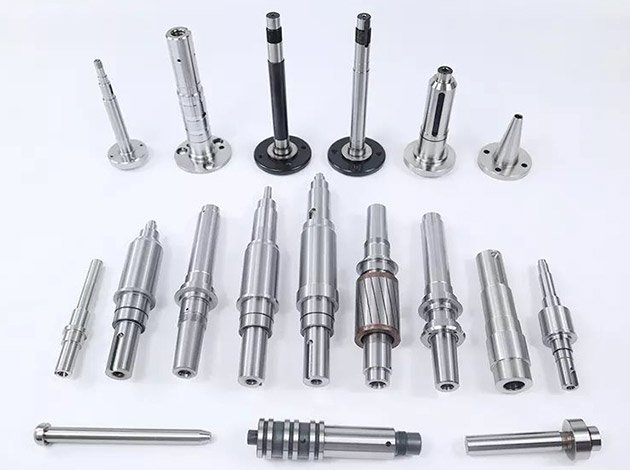
- Precision CNC Shaft Machining Manufacturer for High Performance Applications
- Energy Industry CNC Machining Parts Supplier
- Aerospace CNC Machining Parts Manufacturer
- Aerospace CNC Machining Parts Manufacturer
- Automotive & EV CNC Machining Parts Supplier for OEM and Tier 1
- Medical CNC Machining Parts Supplier for Precision Medical Devices

How ERP Systems Ensure Quality Control in CNC Mass Production: A Manufacturing Engineer’s Guide

How ERP Systems Ensure Quality Control in CNC Mass Production
1. Executive Summary
In modern CNC mass production, quality is no longer a downstream inspection activity. It is a data-driven, closed-loop discipline that begins the moment a purchase order arrives and continues long after the finished component is shipped. The engine that makes this discipline scalable is the Enterprise Resource Planning (ERP) system. When properly integrated with CNC machinery, CMM inspection equipment, MES layers, and PLM data, an ERP transforms quality control from a reactive checkpoint into a predictive, traceable, and continuously improving process.
For OEMs and Tier 1 suppliers evaluating a manufacturing partner, the maturity of the ERP-driven quality architecture is often a more accurate indicator of long-term reliability than any single machine specification. A shop with 20 five-axis machining centers but no closed-loop ERP will produce inconsistent lots. A shop with a fully integrated ERP layer, even with fewer machines, will deliver Cpk values above 1.67 lot after lot. At IndustryApex Technology (IndustryApex CNC), more than three decades of precision manufacturing experience have been codified into an ERP-driven quality framework that governs every stage of production, from raw material verification to final packaging. This article examines exactly how that framework works, why it matters for high-stakes industries such as aerospace and medical, and how buyers should evaluate ERP-backed quality systems when selecting a machining partner.
2. Technical Deep Dive: The ERP-Driven Quality Control Architecture
At the technical level, ERP-enabled quality control in CNC mass production rests on four interlocked pillars: material traceability, process parameter locking, in-process data capture, and non-conformance closed-loop management. Each pillar generates structured data that the ERP consolidates into a single, auditable record for every serialized part or lot.
2.1 Material Traceability and Incoming Inspection
The quality chain begins at goods-receipt. When titanium bar stock, tungsten carbide blanks, or precision-ground steel arrives, the ERP system automatically links each heat number, mill certificate (EN 10204 3.1 or 3.2), and PMI (Positive Material Identification) result to a unique material batch ID. That batch ID follows the material through every subsequent operation. If a customer reports a field failure two years later, engineers can retrieve the exact heat, the incoming hardness reading, the operator who released it, and the CNC program revision used to machine it, in under 60 seconds.
2.2 Process Parameter Locking
ERP integration with the MES and DNC layer ensures that only the released, PLM-approved CNC program revision can be transferred to the machine controller. Feed rates, spindle speeds, tool offsets, and coolant concentrations for critical features are locked against the routing card. Any attempt to override a parameter triggers an authorization workflow. This eliminates one of the most common root causes of quality drift in high-volume production: undocumented operator adjustments.
2.3 In-Process Data Capture and SPC
During machining, probing cycles, tool-wear monitoring, and CMM-based first-article inspection results are streamed directly into the ERP quality module. Statistical Process Control (SPC) charts are generated in real time, and control limits are automatically compared against the customer’s PPAP or FAI-defined tolerances. When a subgroup mean drifts toward a control limit, the ERP triggers an alert to the process engineer before any out-of-spec part is produced. For features with GD&T tolerances tighter than ±5 microns, this predictive intervention is what separates a 200 PPM supplier from a 20 PPM supplier.
2.4 Non-Conformance and CAPA Closed Loop
When a non-conformance occurs, the ERP opens an NCR record, quarantines the affected lot, and routes the case through an 8D or CAPA workflow. Root cause, containment, corrective action, and effectiveness verification are all logged against the original batch ID. Over time, these records become a searchable knowledge base that feeds back into APQP for future programs, systematically reducing recurrence rates.
3. The ODM and Supply Chain Advantage
An ERP system delivers its full value only when the manufacturer operates as more than a job shop. As a supply chain integrator and ODM solution provider, IndustryApex Technology positions the ERP at the center of a fully controlled precision manufacturing ecosystem. Over 30 years of accumulated process know-how, tooling libraries, and supplier qualification data are embedded in the system, allowing engineering teams to move from RFQ to validated mass production faster than a conventional contract manufacturer.
3.1 Vertical Integration Under a Single ERP Instance
IndustryApex’s technical capabilities span 3-axis, 4-axis, and 5-axis CNC machining, wire and sinker EDM, precision grinding, and industrial ceramics processing. Because every one of these processes reports to the same ERP instance, a single component that requires turning, milling, hard grinding, and EDM finishing carries one continuous quality record. There are no data handoffs between disconnected subcontractors, which is where traceability breaks down in most extended supply chains.
3.2 ODM Engineering Value for OEM and Tier 1 Buyers
For global OEMs and Tier 1 suppliers, the ODM model means the manufacturer participates in DFM, tolerance stack-up analysis, and material selection before the design is frozen. ERP-linked cost models and historical Cpk data allow engineers to advise customers on which tolerances are truly necessary and which are cost drivers with no functional benefit. This is a fundamentally different conversation than a job shop can offer, and it typically reduces per-part cost by 8 to 15 percent while improving first-pass yield.
3.3 Supply Chain Resilience
ERP-driven MRP and supplier scorecards give buyers visibility into raw material lead times, tooling readiness, and capacity commitments. For programs with long-term agreements, this translates into predictable delivery performance and the ability to absorb demand swings without compromising quality gates.
4. Industry Applications
ERP-governed quality control is not a theoretical benefit. It is the operational foundation that enables IndustryApex to serve regulated and high-reliability industries where a single non-conforming part can shut down an assembly line or, worse, endanger end users.
4.1 Aerospace Structural and Engine Components
In aerospace CNC machining of titanium aircraft parts and 5-axis structural components, AS9100 compliance requires full forward and backward traceability for every serialized part. The ERP system automates the generation of FAI reports per AS9102, links each part to its material certification, and preserves records for the mandatory retention period. Without ERP integration, meeting these requirements at production volumes is effectively impossible.
4.2 Medical Devices and Implantable Components
For ISO 13485 certified CNC machining of titanium implants, surgical instruments, and high-precision device parts, the ERP enforces the design history file linkage, cleanroom lot segregation, and the electronic device history record (eDHR). Every process parameter, every operator signature, and every inspection result is captured in a validated, 21 CFR Part 11 compliant environment.
4.3 Hydraulic and Fluid Control Systems
In the production of hydraulic pump parts, valve spools, and sleeves, cylindricity and surface finish tolerances often fall below 2 microns. ERP-driven SPC monitors grinding wheel wear and dresser cycles in real time, triggering automatic tool changes before dimensional drift can occur. The result is consistent leakage performance across production lots measured in the hundreds of thousands.
4.4 Precision Ceramics and Carbide Components
Industrial ceramic and tungsten carbide parts present unique quality challenges because rework is generally impossible. The ERP system enforces a stricter first-pass yield discipline for these processes, with tighter SPC control limits and mandatory pre-machining inspection of blanks. This is where 30 years of process data becomes a genuine competitive moat.
5. Call to Action
ERP-driven quality control is the difference between a shop that machines parts and a partner that delivers manufacturing outcomes. For OEMs and Tier 1 suppliers scaling a new program, the questions to ask a prospective supplier are no longer only about spindle counts and axis configurations. They are about data architecture, traceability depth, and the maturity of the closed-loop quality process.
If you are evaluating a CNC partner for aerospace, medical, hydraulic, or precision ceramic components, IndustryApex Technology invites you to review our ERP-driven quality framework in the context of your specific program requirements. Our engineering team can walk you through sample traceability records, Cpk performance data for comparable geometries, and DFM recommendations tailored to your design intent. Contact us to schedule a technical review, request a capability audit, or submit an RFQ. We look forward to demonstrating what three decades of precision manufacturing, unified under a single ERP-governed quality system, can deliver for your next program.